Autumn transitions and morning rituals

leaftwins

With the first true autumn air having arrived in the Chicago area this past week, I get to revel in my favorite season. I always savor every moment of fall, particularly because it is so very short-lived here.

For me, it’s a great time to capture some of that beautiful fall color (so much of it is at our feet, on the sidewalk, and I just can’t stop taking pictures of leaves!), to reflect on where I am in my life and what’s next for me, and to notice how my inner landscape mirrors the changes I see in the natural world.

I am also reminded in the fall of the importance of a morning ritual to my overall well-being. (Since my morning ritual involves walking and, sometimes, “sit spotting” — taking a seat somewhere and simply noticing what is around me — the gorgeous color and crisp air enhances the experience for sure.)

My clients also tell me regularly that when they create a morning ritual — or return to one — they feel more balanced, more grounded, more soothed and more hopeful.

It’s easy to dismiss our need for ritual in a culture that values “busy”. But when we do, we often find more chaos showing up in our lives (both internal and external!).

I talk more about the specifics of my morning ritual in the video below, but I’ll add that I have a couple of guidelines for myself when it comes to my morning ritual:

• I keep it simple. Nothing overly structured or complicated. The morning ritual must be easy and enjoyable.

• I must complete my morning ritual before I engage with technology. No internet or phone calls until my morning ritual is done. (Obviously, on occasion life will dictate that I deviate from this guideline — that’s why I call it a guideline and not a rule! The key is to stick to it most of the time, for my own well-being.)

In the video below, I talk a bit about morning rituals and why they’re particularly important for sensitive people (and introverts!) and to our creative process.

P.S. If you are in transition this fall and need some support in navigating that “in-between” space, I’d love to help.  Check out my specially-priced Autumn Transition Coaching Sessions here. You can sign up for one through Nov. 1, 2016.

Do you have a morning ritual? What do you value about it? I’d love to hear from you.

Above image © Jill Winski, 2016

Inauthentic — or unfamiliar?

carouselhorses

There’s something I sometimes notice in people who are sensitive, creative, and for whom authenticity is a deeply-held value.

We frequently believe we can’t/shouldn’t/won’t do something because it feels wrong to us. It feels inauthentic — not like who we are.

And it’s important to notice that feeling, to see what it has to tell us.

When something feels inauthentic, it seems like we should run from it, or at the very least, let go of it. And sometimes, that’s exactly what we need to do. We need to recognize that we’ve come into contact with something which just isn’t in sync with who we are, and we need to move away from it.

But: sometimes we’ve come into contact with something that is unfamiliar, and because it feels unfamiliar, our minds immediately label it “inauthentic”.

Let me give you an example of how this showed up for me at the tender age of, oh, about five.

A little friend of mine (most of my friends were little then, I was five!) went to a different school than I did, and her school was having a “fun fair.” She kept talking about the fun fair and how excited she was about it, and how she wanted me to go to it with her.

And I began to dread this “fun fair”. Just the idea of something that existed for the sole purpose of “FUN” felt overwhelming to me. (What exactly was this mysterious fun that was to be had?)

I had already decided, at five (though not consciously), that something like a fun fair was not me. I would rather play quietly with one or two friends — that was me.

I could never have articulated this at the time, of course. I just knew that there was no way I was going to the fun fair! The fun fair was definitely not going to be fun for me!

At this point, my parents and I had already had quite a few go-rounds with me not wanting to do things. They found this quite confounding. Everyone else wants to do it! they’d say. Why not you?

In fact, there was something else at work, something I wouldn’t understand for years: my sensitive nervous system got easily overstimulated by situations that were unfamiliar to me. I even got overstimulated by thinking about new situations. Which was why I was dreading the fun fair that my friend couldn’t wait for.

However, on this particular occasion (in what, looking back, I see as a stroke of brilliant parenting) my mother told me something like this: “You don’t have to go to the fun fair. You can go if you want to, but you don’t have to go. Take some time to decide.”

This took a great weight off my five-year-old mind. Instead of being dragged somewhere against my will, I was being given the opportunity to choose.

I pondered the idea of the fun fair over the next several days, and eventually I went up to my mother while she was working in the kitchen and said, “Mom? I’ve decided to go to the fun fair.”

Now, the fun fair WAS most definitely overstimulating. There were echoey noises of kids yelling and running, and there were clowns (eek), and games where you could win a goldfish in a bag (my friend and I each won one, which at the time greatly excited me, but poor goldfish!), and I came home with a lacquered figurine of a bright orange squirrel with sparkly green eyes, which I had also won.

The fun fair was overstimulating, and it was FUN. Both/and.

And had there been another fun fair the following month, I might have gone without getting quite so overstimulated, because the fun fair would no longer have been unfamiliar to me. And because it was no longer unfamiliar, I would have gotten to know myself in that environment, and understood how I could show up there authentically, if I wanted to do that.

***

Our minds tend to do a fascinating (and not always helpful) thing: when something is unfamiliar to us, but maybe seems a little like some other experience we had that we really didn’t like, we put it into the category of “oh no! not that again,” and decide we’d better avoid it.

There are SO many good things (and people) in my life that I’d have missed out on if I hadn’t questioned my mind’s tendency to do this.

When we’re overstimulated because something is new and unfamiliar to us, of course we don’t feel authentic. Being overstimulated doesn’t feel good; we don’t feel like who we truly are when we are overstimulated.

But if we can choose to ride out the overstimulation in favor of exploration, of being curious about something new, as my five-year-old self did, we can give ourselves more options. And we can learn that what is “authentically us” may be vaster than we’d imagined.

(It’s definitely worth mentioning here that, for those of us with sensitive nervous systems, managing overstimulation is vital to our well-being. So I’m not saying “just throw yourself into overstimulating situations all the time and go ahead and burn yourself out.” We must choose wisely for ourselves and bring ourselves back into balance. The key is to remember that we have choices, usually more than we think we do.)

Have you labeled something “inauthentic” for you when in fact it was simply unfamiliar? I’d love to hear from you.

P. S.  In celebration of my favorite season, my Autumn Transition Coaching Sessions are back! I offered these last fall and worked with some wonderful folks. If you’re in “creative transition” this fall and feeling stuck or scared, you might benefit from one of these sessions. The format is the same as last year, but I’ve made them 45 minutes in length this time around. Check them out, here.

Above image © Jack Schiffer | Dreamstime Stock Photos

Daily saving graces for hard times

whiskers

Whether you’re in transition and not sure which end is up,  just beginning something that requires a completely new skill set, or letting go of something (or someone) very dear to you, sometimes the hard just doesn’t seem to stop.

“I keep thinking this is going to get easier,” one of my clients who had moved to a new city and started a new job said a while back. “But every day is a challenge I’m not sure I want!”

Something I’ve been noticing over the past several years is that fewer and fewer of us seem to be experiencing those extended periods of time where we just kind of “coast”. I think there are a number of reasons for this, a big one being that our world and our planet are reaching very critical points where change must happen. We can’t “coast”, globally, in certain ways any longer.

And we, as individuals, are never disconnected from the whole of the world we live in. Many of us may have worked hard to cultivate independence, but the fact is that we are undeniably interdependent. What happens to the whole affects us, and vice versa.

***

Today I walked over to Petco to buy some pill pockets for my cat, who’s on medication for inflammatory bowel disease (yes, it’s as lovely as it sounds). My cat is old, but still active, and I want to keep him as comfortable as possible for as long as I can, for as long as he’s around.

In Petco, there were cats up for adoption. Four cats, in cages. Well-kept cages, with comfy beds and food and perches, but cages nonetheless.

One of the cats, a tortoiseshell whose sign informed me that her name was Trooper and that she’d been given up for adoption because “my owner’s girlfriend didn’t like me”, sat up straight and met my gaze with her green eyes. She gave me a commanding meow. She was extremely curious and open to me and everyone in the store. Her adoption fee was only $42.50.

Let me tell you, sometimes I hate going into Petco. I would have loved to take Trooper and another of those cats and offer them a stable and loving home. My gut tells me, though, that it would be too much stress for my existing fur child, whose immune system is not what it once was.

But Trooper served as my “saving grace” today.

Locking eyes with her in Petco circled me back to this truth: I want to be able to take care of me the best I can, so that I can be of greatest service to the people and animals who can best benefit from whatever it is I have to offer.

We can never separate “self-care” from “other-care”. It’s all the same thing when it comes down to it. 

***

And that brings me back to “the hard”.

It’s often when things feel the hardest that we throw self-care out the window. Because “self-care” can feel like just one more thing on an ever-growing, ever-changing to-do list.

But so often self-care is not about doing but about undoing. About letting go of what is not necessary and coming back, every single day, to what is most fundamental for us.

And when we get away from it, life is there to point us back toward it, often in the most unexpected places, as Trooper in Petco did for me this morning.

Here are some ways to weave those everyday “saving graces” into your life, especially when things are hard:

If you are physically able, get out and walk. Your feet on the ground and noticing trees, bird, squirrels, is fundamentally nourishing. You can also combine this with “sit spotting” — finding a good bench and planting yourself there and just noticing for a while. During my last sit spot, I watched the bees interact with a plot of heather, their gold bodies moving in and out of the thick purple, and I saw how the sparrows were keen on the heather too, and how they weren’t bothered by the bees.

Take responsibility for what enters your ears and eyes. When I walk, I often listen to recordings of gifted coaches, teachers, and writers who remind me of the importance of what I do.  In keeping with this, limit social media time to only the aspects of it that feel truly supportive to you. When I’m “in the hard” I don’t spend much time in the Facebook newsfeed, for example, and mostly hang out in Facebook groups that feel the most supportive and connecting to me.

Have a morning ritual. Morning rituals allow us to take responsibility for our state of mind as soon as we wake up — this is extra-important when we’re in tough times. Don’t wait until later when, as writer Edna O’Brien has put it, “the shackles of the day are around you.” Mine is walking, coffee, and morning pages. What about you?

Take time — if only a moment or two — to be truly present with at least one other living being. Your partner, your child, your pet, the person ringing up your purchase at Bed, Bath & Beyond. Presence with another person is rejuvenating and reminds us of that continuum of “self” and “other”.  When things are hard, it’s so easy to slip into isolation, but something as “small” as a smile from a stranger can break us out of it.

And finally: Be open to the grace. Sometimes, in our yearning and longing and weariness for things to change, we adopt a “been there, done that” attitude and don’t notice the exact things that can support us.

What are your daily saving graces when it feels like things are hard? What helps you reconnect with what really matters to you when you’re not at your best? I’d love to hear from you.

By the way, if you’re in the U.S. in the Chicago area and interested in giving a home to a cat like Trooper, I hope you’ll check out Catnap from the Heart. These giant-hearted folks have done so much for homeless animals over the years and will be expanding their facility soon so they can help even more.

Please note my Stellar Self-Care Program is now closed until early 2017, but you can still sign up to work with me one-on-one in other ways. Interested? Find out more, here.

Above image is “Whiskers” © Marilyn Barbone | Dreamstime Stock Photos

One more day to sign up for Stellar Self-Care

leavesinsect

A quick post today with a reminder that tomorrow, August 31, is the last day this year to enroll in my one-on-one coaching program, Stellar Self-Care. (I will not be taking on any new clients in this particular program until early 2017.)

On my walk this morning, I noticed the bare beginnings of fall — the leaves at the very top of a lush green tree had turned pomegranate-red, and one or two had even fallen to the sidewalk. This tree is a little ahead of the game, but fall is on its way!

Fall is (in my humble opinion as a fierce lover of all things autumn) a great time for new beginnings. It can also be a time where, for many of us, obligations and overwhelm start up again. We get busy, and when we get busy (especially those of us who are introverts and/or have sensitive nervous systems) we can be vulnerable to that frazzled, overcommitted, overstimulated feeling that’s just … icky.

If this sounds like you, feel free to take a look at my Stellar Self-Care Coaching Program. In this program, I partner with you to create a foundation of more peace, wellness, confidence in who you are and connection to what truly sustains you. Find out more here — I still have room for two more participants.

Above image is “Curiosity” © Max Hirsch | Dreamstime Stock Photos

Why the downtime you “sneak” doesn’t really count

hamster


The other night, I stayed up much later than usual, watching a marathon of the HGTV show Fixer Upper and eating taco-flavored Doritos.

It seemed like a good idea at the time, but I paid for it with stomach discomfort all night and lousy sleep.

The odd thing about it was that, although I had told myself I “needed” this TV and Doritos “binge”, it didn’t really feel good. It didn’t quite seem to scratch the itch I’d thought it would.

I then remembered that my mother had once told me that, before he retired several years ago, my dad would often stay up late watching TV on weeknights, even though he was very tired. “It’s his only way to have time to himself,” she said.

And then I knew what my Fixer Upper-Doritos binge was about (because — honestly? — I don’t even like Doritos that much — they were only in the house because my partner loves them): It was my way of “sneaking” downtime that I wasn’t openly giving to myself. 

What’s going on when we “sneak” things for ourselves? When we do it in secret  — even if the only person we’re hiding from is us?

Geneen Roth, author of many wonderful books on our relationship with food, wrote that as she healed from emotional eating, an important part of her process was to eat in full view of others. Even if what she was eating was a whole chocolate cake.

I realized after my TV-and-Doritos escapade failed to give me what I’d hoped it would that I’d fallen back into an ancient pattern (and ancient IS the right word here, as my ancestors did it, too): believing that I only deserve open-ended time for myself once I’ve “earned” it through achieving.

Through “upping my game”. Through “checking off the to-do list.” Through challenging myself and “succeeding.”

Many people I work with tell me I am gentle, and while gentleness is indeed part of my true nature, I am also very driven. This driven-ness has a positive aspect — I stick to things, I usually do what I say I’m going to do, and I (definitely) know how to push myself.

But this driven part of me has a downside, too — it doesn’t know when to quit. It doesn’t have an “off” switch. It doesn’t always let go when it’s time to let go, either.

So part of the reason I am gentle is because I need to teach myself gentleness. Or maybe I am continually learning to embrace the gentleness that was part of me as a child.

This gentle part of me (and the driven part of me, too!) needs open-handed rest, rejuvenation, kindness, solitude, and daydreaming. It needs it not because I’ve “earned” it, but because I exist and it’s a true need at times. In fact, it’s a true need regularly.

Over and over I revisit the same learning: It’s okay to give myself something just because I feel the need for it.

As my teacher Mark Silver says, we don’t eat or drink once and never need to eat or drink again. We get hungry and thirsty multiple times per day and we fill those needs. We don’t expect that we will never again be hungry or thirsty just because we ate and drank one day.

The same goes for other needs that may not be as apparent (or as culturally acceptable!). I don’t have to “earn” downtime. It is a need, and the need for it will arise again and again. And I can give it to myself because I exist. Not because I “deserve” it.

But I had forgotten this. And the part of me that felt angry and neglected and sad that I had forgotten wanted some kindness, some gentleness, some acknowledgement. It reminded me by staying up late in “binge” mode.

It’s totally okay to watch multiple episodes of Fixer Upper (I love Fixer Upper!) and eat delicious food. As long as I am giving it to myself as a gift. As long as I am enjoying it. A little indulgence can be a truly good thing, especially for those of us who tend to go too far in the other direction and push and deprive ourselves.

But when we can catch ourselves going too far in the other direction — when we notice before we swing too far out of balance — we are giving ourselves the true gift.

And when we’re “sneaking”, there’s a part of us, in that act, that wants to be seen. To be acknowledged. (A client told me a while back that she was “sneaking” time to write in her journal — some part of her wouldn’t allow her full permission to openly connect with herself.)

Our egos can be very tricky here. In my case, I was giving myself downtime here and there — but it was conditional downtime: you can have this, but only if you make up for it by working really hard later.

So the key here is giving ourselves what we need with no strings attached. (Check out my post on the difference between self-care and self-indulgence, here.)

Do you notice yourself “sneaking” something? Is there a message there for you? I’d love to hear from you.

And, if you’re feeling overwhelmed or disconnected from yourself and are needing support, I hope you’ll check out my Stellar Self-Care Coaching Program. I’ll continue enrolling clients in this one-on-one program through August 31, 2016.

Above image © Johanna Goodyear | Dreamstime Stock Photos

Noticing (and celebrating!) small changes

frenchlizard

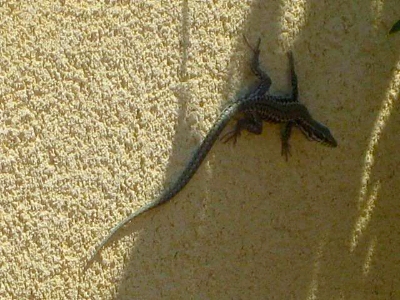
This lizard I saw in France reminds me that it’s okay to hang out when I need to rest and regain my energy.

I am having so much fun this summer supporting several of my clients in creating better self-care (you can learn more about my Stellar Self-Care Coaching Program here).

When I work with folks, I often see themes that are “up” for all of them (it’s amazing how this happens — the themes that jump out at me are, no doubt, themes that I’ve noticed in myself as well, and that’s why they stand out for me!).

One of the themes I’m noticing right now is our collective tendency to be “in a hurry”, to have it done yesterday, to finally “get it” once and for all. A couple of my clients have said, “How can I not know this stuff by now?” or “How can I still be struggling with this?”

Oh, wow, have I said this myself. In fact, I probably hear this weekly in various conversations.

It’s like we believe we should get to a point — hopefully fairly early in our lives — where we understand ourselves completely and there’s nothing more to learn. Because then we’d — what? Be perfect? Do everything “the right way”? Have it all figured out?

Wouldn’t that be awfully boring? The most exciting thing about life to me is learning more and more about who I am.

In fact, when I notice I’m comparing myself to others, one of my favorite ways to move out of that is to turn it right around and compare myself to myself. What do I know about myself now that I didn’t know twenty years ago, or ten? How am I better able to take care of myself and thrive and do my true work in the world because of that knowing?

A huge part of this is allowing ourselves to celebrate the changes we see — and not just the external changes, but the inner knowing that prompts that change. And I really encourage all of us to celebrate the small changes, even the tiny changes, we see.

Don’t fall for the idea that “it has to be ‘big’ to count.” So many of the changes we make in our lives that seem huge are made up of teeny tiny incremental changes that happened over time.

(I’m talking here about changes we pursue of our own volition — sometimes change is thrust upon us from the outside and, let’s face it, it’s just big, and in those cases we need support in handling the change, not in creating it!).

***

One of the changes I notice in myself over the past few years that has contributed to my practicing better self-care is that I pause more before acting (when it feels right). And I ask others to support me in allowing this pause.

This might look like saying, “I need to think about that before I make a decision.” Or, “Do you mind if we sit on this bench for a while and just hang out before we go on to our next activity?” It’s all about honoring my natural energy.

When I travel (especially long distances), I decide ahead of time that most of my first day in the new place will be spent resting, and I’ll move into more activity on the second day. When I went to France a few years ago, I spent an entire day hanging out in the villa we rented while everyone else went exploring. I floated in the pool and noticed the lizards and marveled at that white-hot South of France sun. It was what I needed.

But earlier in my life, I would have forced myself to go with everyone else because I didn’t want to feel left out, and ended up exhausted, unable to give myself the recharge I so badly needed after the trip. It felt so good to own my need for time to rest, keep myself company, and join everyone else the next day, fully energized.

Similarly, I’ve made plenty of poor decisions in my life because I sensed the other person wanted me to hurry up and decide, so I did — wrongly. I’ve discovered I don’t make my best decisions when I’m in a hurry.

And today, I own this. My partner said that when he and I first starting seeing each other, he was sometimes frustrated that it took me (what seemed to him) a long time to make decisions. But the other day he told me he now truly appreciates my (sometimes lengthy) decision-making process because, as he put it, “When you make a decision it is so right for you, and ultimately I can see how that’s right for us.” (Can I tell you how much I love that he said this?)

So, I celebrate these “small” changes in myself (which are really not that small, when it comes down to it). It’s all about supporting myself in who I truly am.

What small changes are you celebrating today? I’d love to hear about them.

If you’d like support in taking care of yourself in a way that honors who you truly are, I encourage you to check out my Stellar Self-Care Coaching Program. I’ll be enrolling new clients through August 31, 2016.  I’d love it if you’d join me if it feels like the time is right for you!

The choices that make you who you are

moonplantFrom my living room windows, as I sit in my blue chair, I often see a woman out on her balcony in the condo building across the way.

Her balcony is filled with beautiful plants and flowers and even a small tree in a terra cotta base.  She’s about my age — 40s — and seems peaceful and purposeful as she moves with her watering pitcher from plant to plant, disappearing inside occasionally and reemerging with a full pitcher through the sliding glass door.

I think I am living vicariously through this woman — just a little — because I like the idea of lots of plants, but I’ve learned I don’t want them.

In my old home, from which I moved last year (and wrote about here), I had a room devoted solely to plants.

Many of them were my mother’s plants, lovingly tended for years and years, which I inherited when she moved to the East Coast in 2005. And in 2014, when my sister moved to Michigan, I took her plants as well, several cacti and some succulents known as “chickens and hens”.

The plant room got to be very full, and although I had liked the idea of all these plants when I moved into the house, over time I came to realize that I am simply not a plant person. I am an animal person, and I adore taking care of pets, but plants exhaust me.

A little orange tree that had thrived under my mother’s care for more than thirty years eventually withered under mine. Most of my sister’s plants died after she gave them to me.

A friend of mine saw the metaphor in all this and pointed out to me that I’d been taking care of plants all these years that did not truly belong to me.

It wasn’t that I didn’t like the plants, but I admit I cared for them resentfully. I didn’t really want all these plants but had taken them on because I felt like if I didn’t, they’d end up on the trash heap.

My friend said, “Of course you don’t want them — they’re other people’s cast-offs. You never did want them; you just couldn’t say no.” (I make it sound like she was brutally blunt, but she is actually very kind when she says things like this.)

My friend had a point. It was my mother, not me, who desired a large house filled with plants. And my sister’s plants had been given to her mostly by my mother. And why was I caring for the parts of people’s lives that they’d left behind, when they were no longer willing to do it?

Today, the plant room of my old house a thing of the past, I stare out my window at this woman tending her plants and wonder: what if I actually do want a balcony full of plants? What if I actually want a life like this woman’s? (I have no idea what kind of life this woman has — only that, when the weather turns warm, she turns her attention to her plants). Shouldn’t I have what she has?

***

In truth, I can say for sure — yes, for sure — that I do not want to care for a balcony full of plants.

At least once a week — more than ten months after my move — I feel relief and peace in the fact that I no longer care for those plants.

But I notice — in myself, in the clients I work with, in the communities of which I am part — that we so often look out at others and make assumptions about their lives, and believe we should have what they have, do what they do, be what we perceive them to be.

I’ve noticed myself assuming that the woman across the way must be “successful” in life because she has all these beautiful plants and is able to help them thrive. She’s willing to put in that time and energy and devotion to plants, and I am not. That must mean something good about her, and something bad about me, right?

The fact that I actually do not enjoy caring for plants does not register to my critical mind when it’s comparing my insides to other people’s outsides.

And maybe, just maybe, this woman actually truly wanted all these plants and picked each one out with care, herself. Maybe they were not an inheritance she never wanted to begin with.

Two things bubble to the surface for me as I write this:

1) In the future, starting now, I will remember to say no more to things I really do not want. I will remember that my “no” does not necessarily relegate innocent plants to the trash heap — in fact, my “no” may create currently unseen possibilities, for plants AND people.

2) When I’m comparing myself to “surely-more-successful-than-me” others, I will remember that I have good reasons for my choices, and that making choices based on who I really am and what I truly want is one of my definitions of success. So while a balcony full of thriving plants may equal success for my neighbor, it doesn’t for me — even though I can deeply appreciate the view it creates.

What do you notice about the difference between who you truly are and who you (sometimes) think you should be? How do you connect with what you truly want, as opposed to what you think you should have? I’d love to hear from you.

Do you need support in making your creative work a priority, in a way that works for YOU (not the way you think you should do it)? I’d love to help. Find out if we might be a fit, here.

Above image is “Future Forest”, © Deca Raluca | Dreamstime Stock Photos

Recognizing your options (all of them!)

rusty signI was talking with an old friend of mine the other day and we remembered a situation we’d been in during college. It was a crappy situation, but we didn’t do anything about it.

“What the heck were we thinking?” we asked ourselves (our “today” selves). “Why the heck didn’t we just get out of there? It would have made things so much easier.”

Well, the answer is, our younger selves didn’t just get the heck out of there because we didn’t see getting the heck out of there as an option. We didn’t know we could just leave.

With the benefit of hindsight (and more than twenty years of life experience!), we could clearly see that we had many more options available to us than we recognized at the time. We could have chosen to leave the situation. We could have spoken up to change it. We could have brought humor to it.

But we did none of those things. We resigned ourselves to “just getting through it.”

***

I notice that I feel much more powerful and expansive than I did then. Sure, there are periods where I feel fragile, depending on what I am going through. But overall, I have a sense of standing on this earth with more steadiness, more perspective, a wider vision.

And I’m pretty sure this is directly related to the fact that I am aware that I have more choices than I believed I did in the past.

These can be actual, physical-world choices. But the choice that is most obvious to me today is in how I respond to what’s happening for me.

Back then, when I had the belief that I was stuck or trapped, it would send me into a flurry of frantic activity in which I would try to flee my circumstances, or, as in the situation with my friend, I would freeze, assuming I had no options.

What’s striking to me today is recognizing that, back then, I didn’t notice my belief. The belief “I’m trapped” was actually outside of my conscious awareness — I was reacting to a belief I didn’t even know I had!

Awareness of how our thoughts are triggering our feelings, and how our actions are triggered by those feelings, is key in recognizing our options. There are so many options we can’t see when our lives are being run by beliefs we never question.

***

Just today, I got triggered by an email request that seemed ridiculous and unfair to me. I felt a sense of anger and injustice rise up in me and I was ready to tell this person off. I started writing my email response in my head, in the most sharp-tongued tone I could imagine.

At the same time, I felt I had to take care of the sender’s feelings, so I felt a conflict — taking care of myself and taking care of the sender. Within probably thirty seconds of reading the email, my feelings were about to propel me to action based on this swirl of anger and confusion.

But: I stopped. I stopped and simply noticed the feelings coming up in me. After I sat with the feelings for a bit and just let them be, I could see that my feelings were based on the following thoughts:

How dare this person request this of me! Don’t they know I have a life?

I need to set them straight! They can’t think they have the right to request this of me!

What the heck is wrong with my life that I have to deal with this kind of thing? What am I doing wrong?

Wow. Look how quickly the thoughts evolved into a blanket statement about my life and its “wrongness”.

Now, I’ll be honest — ten years ago I would have acted on my anger and righteousness. I would have shot back a scathing email (probably cloaked in sarcastic politeness) and gone on to regret it. I likely would have escalated things with the sender and felt out of control and crappy and mean.

But when I stopped (and believe me, it wasn’t easy to stop, even after years of practice) and simply felt the emotions, I could trace them back to the thoughts the email had triggered in me.

And then I began to reconnect with my power. I began to see where I have control and where I don’t.

I can’t control what the sender thinks about me or wants from me.

But I can control the way I respond to it, and I can (from a place of peace) communicate that I would prefer the sender not make these sorts of requests of me. What that may look like, I’m not sure — I’m not calm enough yet! 🙂

What I do know for sure is that I have many more options here than to shoot back an angry email or to believe this person has some kind of power over me. And the key is to see those options.

***

Sometimes in situations like this, I write down dozens of things I could do instead of the thing my knee-jerk emotional reaction would have me do — even silly and ridiculous ones, like “climb up on the roof and do a manic dance in the rain” or “paint my toenails deep purple” or “kiss the top of my cat’s head”. Or “spray-paint LOVE on all the cars in the parking lot.”

I wouldn’t necessarily do all these things, of course (or maybe I would!), but you get my drift. There are tons of ways we can choose to respond that we may not be noticing — until we make a point to notice.

So, how do we notice?

• When your feelings are strong, don’t act, sit. Count to ten if you want to. Notice that sitting with strong feelings is only that — sitting with strong feelings. It will not kill you if you don’t act on them in that moment. You will not dissolve.

• Once you’ve felt the feelings, notice what thoughts bubble up, as I did above. (Sometimes it takes a while — maybe a few hours or a day in some cases — to allow your feelings to settle enough to recognize the thoughts that are driving you. Other times it’s a quicker process.)

• Question the thoughts you notice. Are they true? Are they helpful? What thoughts would feel better and more helpful and more true?

• Come up with at least ten ways you could respond. Notice your options, even if they’re seemingly silly ones like those I listed above.

• Now, ask yourself: is action necessary? Yes? What action do you want to take? Does it feel settled and peaceful? Then, do it. Action is good, when it’s inspired action.

It is always, always, the way we choose to respond in this moment that determines the course of our lives, because our lives are nothing more — or less — than moments, strung together, like thousands and thousands of fairy lights.

What do you do when you feel trapped or “up against it”? What happens when, instead of taking immediate action, you pause and notice your options? I’d love to hear from you.

Are you in “creative transition” and needing support? I’d love to help. I currently have openings for new one-on-one coaching clients. Find out more, here.

Above image © Alptraum | Dreamstime Stock Photos

Welcoming the conscious pause

image

Conscious paws are always welcome 🍃

Somewhere on the continuum between torturous procrastination and frenetic “just so I feel like I’m doing something” action is a place of pausing. Of breathing. Of looking around, looking within, and inquiring: what do I really want here? What is it I truly need?

Or perhaps this place, which I call conscious pausing, is not on that continuum at all. Maybe it is actually off that continuum — the silent, sometimes-sacred space you step off the path to claim, like the big rock next to the river that runs along the highway.

I mention this place of conscious pausing because it took me four days to recognize that I was forgetting it was available to me. I returned from visiting my family for Christmas a week ago, and allowed myself a couple of days to recharge (which a younger me would have felt like a slacker for allowing myself, so, yay! Progress!).

But after those two days, I began to ping-pong between a feeling of severe procrastination (I should be doing something, but what? how?) and impulsive activity that felt pointless and disconnected.

(One sign that I, a Myers-Briggs INFP, am “in the grip” — read: under stress — is that I start taking urgent actions that actually make things worse. If you’re at all interested in personality type theory, it’s worth reading up on what your type looks like when it’s “in the grip.” You can start to recognize these behaviors in yourself and regroup.)

Once I noticed how I was acting, I realized my desire to “start the New Year off right” had caused me to fall back on old black-and-white thinking: “If you’re not doing productive things, you must be procrastinating. And if you’re procrastinating, you suck. And now 2016 sucks. Bah!” (Humbug.)

But the key, my friends, as always, is in noticing — a seemingly benign word with a ton of power.

Because once I noticed my swing from one end of that aforementioned spectrum to the other and back, I was able to consider the possibility that I had another choice. That, instead of beating myself up for procrastinating or jumping into frenetic doing, I could take that conscious pause and reconnect with what I truly wanted and needed.

***

Here are some questions I find helpful when I realize it’s time for a conscious pause.

(It’s good to ask them while placing awareness on your breath. I often find that writing the questions and my answers in my journal gives me a bit of detachment from myself so I can see what’s going on in me more clearly. But you can also speak them aloud, or have a friend read the questions to you.)

How exactly am I feeling right now? What emotions are coming up? (If you’re not sure, start here: are you more mad, sad, glad or scared?)

How does it feel in my body right now? (I have a headache, my chest is tight, my knees hurt.)

How do I want to feel right now? (excited, hopeful, peaceful, relaxed?)

How does my body feel when I’m in that place? (get specific here: my spine straightens, my pulse slows, I breathe more deeply.)

What thoughts am I having about the immediate future?

(Here are some of mine as examples: I can’t get it all done. I’m already behind. I won’t make the deadline. I can’t show up fully for my client.)

How can I change these thoughts to thoughts that feel better but also feel true? (When you work with your thoughts, you must believe your new thoughts — your essential self will not be fooled by hollow “positive affirmations”!)

Here’s how I changed my examples above:

I don’t have to get it all done, only the priority stuff. (I believed that.)

Exactly WHAT am I behind? A semi truck? (The frantic part of me didn’t have an answer for this; she just sort of laughed, nervously.)

If I absolutely can’t make the deadline, I can find a work-around. I’ll see it better when I’m in a place of peace.

I can offer my client my imperfect presence, my listening, my best for today. That is all I can ever do. It’s been enough in the past, so why wouldn’t it be enough now? (My frantic self rolled her eyes and scowled at me a bit here, but I could see her shoulders relaxing despite her best efforts to act intimidating.)

***

After you check in with these exercises, you’ll notice that what you’re wanting and needing will be all over your answers to the questions. (It’s amazing how easily and automatically we forget to ask ourselves what we want and need!)

It really helped that my cat climbed into my lap while I was checking in with myself. Is there anything more grounding than a warm feline?

By the way, you don’t have to answer all of these questions (you don’t HAVE to do anything!). You can start with the first one, and move on as it feels right. You may find relief after the first two.

Or, you can nix the questions altogether and simply focus on your breath and the fact that you are, indeed, choosing to consciously pause and stop the madness! What I love about going through these questions, though, is the clarity I come out with on the other side. Every time I see my behavior, my thinking, my feelings, with more clarity, it’s that much easier to navigate the stress when it arises the next time around.

Here’s to conscious pausing and a juicily creative 2016! How might you integrate the power of the conscious pause into your intentions and goals for the new year?

Walking my talk about self-care + Happy Fall!

pumpkins15Maybe the hardest thing for me about going through a time of heightened activity (or, insanely heightened activity) is coming down from it all.

After the last couple of months of transitioning from my old home to the new one — and the accompanying “too much to do” feeling on a daily basis — things are starting to settle down just a bit.

And I’ve actually found myself at loose ends on certain days. My mind and body have gotten used to “too much to do.” It’s that “coming down from the adrenaline of momentum” feeling that I’ve written about before. The adrenaline that helps us to get through the period of heightened activity actually starts to feel normal to us.

This is where I can get into trouble if I don’t pay attention. Last week Saturday was the first day I really took an opportunity to fully catch my breath — and it felt wonderful. But the very next day, I noticed myself overscheduling and stuffing in activities here and there because, why not? I’ve gotten used to having too much on my plate.

And noticing this in myself clued me in to the fact that I’d fallen for it all over again — our culture’s glorification of “busy”.

Remember that saying, “If you need to get something done, give it to a busy person”? I heard that often from my parents and teachers when I was growing up, and again in college, and, heck, somebody just said it to me the other day.

And to a degree, being busy feels good and IS good, as long as we are occupied with things that are meaningful to us and notice our need to rest.

But there’s something insidious in the way we praise “busy”. We apologize for being “so busy”, and yet it also seems to give us some kind of quick validation. We’re busy, therefore we must be important, we must have value.

And: being super-busy also gives us a good reason to (finally) take a huge time-out and take care of ourselves.

But what if we didn’t need a “good” reason, or any reason at all? What if noticing our need to rest and then our need to be active and then our need to rest again, was simply part of our daily lives, part of our ongoing self-care? What if this kind of self-care was a must, a foundation for our lives, rather than something we have to hit a (sometimes very painful) wall to finally allow in?

For the past several months, I’ve been leading clients through my Stellar Self-Care program, which I created because I recognized that far too few of us truly anchor self-care into our lives at the foundational level. We wait until we’re in so much physical, mental or emotional pain that we simply can’t ignore the part of us that, ultimately, cannot be denied if we actually want to thrive and not just cling by a thread to survival.

And, here’s the thing I came to: I wasn’t walking my talk. I’d been seduced by the idea that I would practice better self-care after my move was over. When things calmed down. When things got less hectic. 

In these past few days, I’ve reminded myself that it’s okay to feel at loose ends as my body adjusts to living life in a less heightened way.

It’s okay to let go of activities that I’m tempted to “schedule in” but simply don’t feel necessary.

And it’s okay to do it all completely imperfectly as I discover how I want to live now (because now is not then!)

One thing I’ve learned while working with people in this new program is that we all have a tendency to turn self-care into “one more big to-do on the list.” And that’s exactly what I did when I starting telling myself I’d take better care of myself when the move was over. I already had such a giant to-do list I felt like I couldn’t possibly take on any more.

And I was right. I couldn’t.

But I was also wrong — because taking care of myself wasn’t about adding to the list; it was about leaning away from the list. About letting the list sit. If there was anything to “do”, it was simply to shift my relationship to the list. To trust that those things on the list would be done when they’d be done, rather than to hold my breath until I’d “tackled them.”

There’s nothing like “heightened times of activity” to trigger stress in us, and there’s nothing like stress to trigger our “fight, flight, freeze” reactions. Once we’re in fight, flight, freeze, we’re in survival mode and we try to “just get through it.”

If we can intervene before we get to that point, we absolutely should. And right now, as I’m writing this post, I’m noticing that part of me that is feeling like it’s pushed hard enough and is ready to stop. It’s saying “enough for today”.

Listening to that soft voice — right here, right now, not later, not when I’m sure this post is “good enough” — is key to me taking care of myself today. So I’m going to act on that urging. And stop. 🙂

I’d love to hear how YOU take care of yourself before getting to the “fight, flight, freeze” point. And you can learn more about my Stellar Self-Care program here.

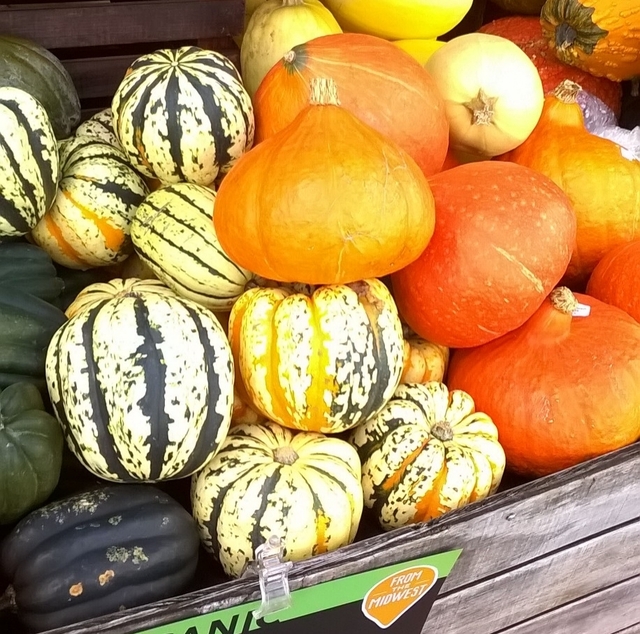
Gorgeous gourds: confirmation that fall has arrived!

Gorgeous gourds: confirmation that fall has arrived!

Good stuff this week:

  • My good friend, artist, writer, and creativity consultant Dawn Herring, interviewed me about journaling for one of her “Creative Conversations”. I had a terrific time chatting with Dawn (she got me thinking and making connections between my journaling and the rest of my life that I don’t know if I’d have gotten to otherwise!).
  • I absolutely love this interview with Elizabeth Gilbert about creativity on Marie Forleo’s site. I particularly love what Elizabeth had to say about being a “trickster” when it comes to our creative work as opposed to a “martyr.”
  • Fall is here! The pictures accompanying this post are gourds I saw on one of my walks this week. I wish you the spaciousness to relish this gorgeous season as it sweeps in.

Images © Jill Winski, 2015