Slowing down to speed up: embracing gentle on Valentine’s Day

Slowing down to speed up

I gave myself a Valentine’s gift today: the gift of sleeping in. I slept until 9:30 (though not without the usual 4 a.m. wake-up call from kitty!).

This was a conscious choice — I decided yesterday evening that I would allow myself to sleep in this morning, since I had nothing on my schedule early.

And there’s something about consciously choosing that makes a real difference. It was a much different feeling than, “Damn, I slept late! Now I’m already behind!” You can feel the difference, right?

I woke up having already honored myself (with extra sleep) the way I’d planned to. And I feel really happy that I actually put “allow myself to sleep in” on my schedule for the day. I made it that important.

As I mentioned a couple of posts ago, I entered 2015 with a feeling of burnout. And little by little over the weeks, I’ve been feeling myself move out of it, in teeny, tiny increments.

Small glimmers of new energy have arrived; I’ve been working with a wonderful mentor (Yollana Shore of Heart of Business) to expand into new directions with my coaching work.

Sometimes almost imperceptibly, I can feel myself moving forward in small but important ways.

But here’s the thing: When I start putting pressure on myself to move more quickly, I can feel myself shrinking back.

This has been a longstanding pattern with me — wanting myself to move more quickly than the whole of me can actually capably move.

I’ve learned something over the years that has been reinforced by my work with my coaching clients. Many of us have a “visionary” part of our selves that moves very quickly and can often manifest things in the physical world with a lot of speed.

But this visionary aspect of us is only one aspect. There are other parts of us, too, which may need to move at a different pace.

I learned this bigtime when I was in my mid twenties. I bottomed out on my inner visionary’s need for speed.

It wanted to move so quickly that it didn’t take the “slower” parts of me into account: the child in me who feels vulnerable and needs a safe space (and, as Julia Cameron points out in The Artist’s Way, the “inner child” is very much connected to the part of us that creates); and my (highly sensitive) physical body which can become overstimulated by too much activity and movement and needs slowness and quiet to recharge itself.

When I bottomed out, I developed a chronic illness which eventually put a halt to my ability to hold a job and to create at all. For much of my twenty-fifth year, I was too ill to function “normally”. My “new normal” was lying in bed or dragging myself down the hall to use the bathroom. I eventually ended up in the hospital, dehydrated and being fed through a tube.

When I came out of the hospital, the realization crept in over time that I had to learn to take care of the part of me that needed to move slowly.

I had to learn to accept — in fact, to love — the part of me that needed to move at its own pace (which to the visionary part of myself sometimes seems excruciatingly glacial).

The fact is, we are all touched by a constellation of components — heart, soul, physical body, genetics, our family history and any trauma from “back then” that may still get triggered from time to time, our changing needs and selves, our current and past relationships and the ways they affect us and we affect them, and the culture and environment we live in. Although we in Western culture are often encouraged to be “independent”, we are, without exception, interdependent.

And this means that, sometimes, in acknowledging the needs of all parts of us, we move more slowly than we’d like.

A while back I gave a presentation and after it a man in the audience came up and remarked on how gentle I was in answering questions from the audience. Yes, I am gentle when I sense struggle. But I’ve had to learn to be gentle. I learned it because it was necessary for me to be gentle with myself in order to grow.

I found during my illness all those years ago that the harder I was on myself, the more I demanded of myself that I get well quickly, the sicker I felt. I finally had to accept that I might stay sick forever, and I had to learn to be okay with that. Only gentleness — treating myself with kindness and softness, even though it felt foreign to me — allowed me to rest fully enough to get well.

I think, many years later, this learning is circling back around to me as I’m navigating the current transition in my life. And I’ve seen it in various forms with my coaching clients, too. The more I notice myself putting pressure on myself to move quickly, the more imperative it is that I allow myself to slow down.

This is especially true when we are going through difficult transition periods. We want to be out of them quickly because they are so uncomfortable, but the irony is that the more we try to rush them along, the longer they last!

So: I look around at my life right now and I notice that I am not sick. I notice all the ways I am better at taking care of myself than I was at twenty-five. I notice that I no longer hold my breath and leap in order to ignore the fear that comes with transitions. I notice I am more able to be present with what is coming up for me.

I notice that it is Valentine’s Day and I am in a loving relationship — and while I do have a significant other I love very much, that is not the relationship I’m referring to here. I am talking about me. My loving relationship with me. It’s been a long road and I look forward to where it leads next.

Wishing you a Valentine’s Day filled with love, whether you are spending it with yourself or with someone else. (And I love Robyn Posin’s article here, on “going only as fast as the slowest part of you feels safe to go”. Her site is wonderful.)

What do you notice about navigating transitions? What helps you move at the speed that feels right to all of you?

And: In the coming weeks, I will be making some changes to my coaching offerings. If you’d like to work with me in the current way, you can take a look at my offerings here.

Above image is “Valentine Ribbon” © Radu Razvan Gheorghe | Dreamstime Stock Photos
How showing up too much can thwart your creativity

pinkbloom

The title of this post might sound a little backwards. After all, isn’t showing up regularly — through a daily or almost-daily habit or ritual — key to doing to our creative work?

Absolutely. And that’s not what I’m talking about here.

The showing up I’m referring to has to do with a kind of perfectionistic, I-can’t-afford-to-take-a-day-off mentality which causes us to neglect replenishing our reserves.

There are times when we need to work on showing up. This can be true when we’re building a habit, like exercising or writing or maybe expressing ourselves more to our significant other!

But for some of us (and I definitely include myself here), there’s an “unconscious” kind of showing up that can propel us into the zone of compulsion or addiction.

In other words, it’s not “I choose to show up,” but “I have to show up — in fact, I’m showing up on autopilot without even noticing that I have a choice in the matter.”

What this perfectionistic kind of showing up has looked like for me:

* Never taking a day off from work, not because I didn’t need to take a day off, but because it didn’t occur to me that I could, unless there was an emergency or I was deathly ill

* Always responding to calls, emails and other requests for time very quickly

* Talking to friends or family members who called when my intention was to have time to myself

* Checking social media sites “just in case” I missed something that I “should” be attending to (what a slippery slope that one is!)

* Never missing a class or a workshop or a group meeting even though I was feeling very tired or even ill

* Scheduling client sessions during the time I take my morning walk

* Continuing to move a project forward even though something felt “off”, just so I could feel “productive”

I remember, way back in college, showing up late to a class one day, feeling stressed and slightly mortified that I’d disrupted the group already-in-progress. My teacher graciously welcomed me into the semi-circle, telling the other students to make room for me.

A week or so later, another student showed up late and my teacher gave him a severe bawling out which shocked the whole class. My curiosity got the better of me, and during a conference with my teacher I asked him why he had yelled at this other student for being late, and yet when I was late, he was so kind to me.

He thought about it a moment, and then said, smiling, “It’s kind of like this: you need to learn to be late, and he needs to learn to be early.”

My teacher was perceiving — quite accurately — that my tendency was to drive myself hard and beat myself up when I didn’t “do enough.” Apparently he’d perceived the opposite tendency in this other student.

I felt the vulnerability — and relief — of having been seen.  My teacher helped me recognize that I could start to allow a little bit of spaciousness around my compulsion to show up, to never be late, to never miss a day, to never take planned time off.

I still notice this tendency in myself, many years later, along with a tendency to make myself overly available to others. And when I get into this “overdoing”, “over-responding” place, I find that anything I create has a forced, thin, surface feel to it. The richness has been stripped away; there’s little within me to draw out, or, at the very least, I have trouble accessing what is there.

When we can sit with a request from another without responding to it immediately; when we can say “no” in order to preserve space in our schedules for non-doing; when we can “show up” 90 percent of the time instead of 110, we are feeding our creativity.

We are feeding it by noticing our breath, by noticing our surroundings, by noticing how we are truly feeling. We are allowing ourselves to fill up, rather than running on empty, or on adrenaline. We remember that, sometimes, we can let the world come to us — and it will.

When we slow down enough to invest in the present moment, our words on the page, our paint on the canvas, our listening during a coaching session is more vibrant, more there, more true.

So how do we prevent ourselves from carrying this idea too far and using it as an excuse to not show up when we do need to be showing up?

There’s no easy answer to this.

But if there were an easy answer to it, I’d say it’s this: Know yourself.

Know your own tendencies and your own struggles like the back of your hand. And then trust. Trust yourself to show up as much as you choose to, but never as much as you “should.” Choose. Trust yourself to choose, and choose again.

Do you ever find yourself showing up compulsively? What do you notice about the effect this has on your creativity? I’d love to know!

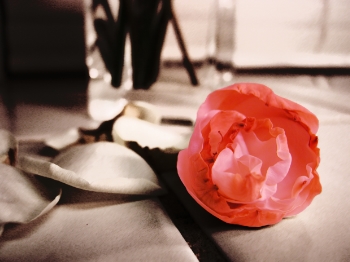
Image is “Beautiful Flower” © Matthias33 | Dreamstime Stock Photos

Momentum is not always obvious

frozenwaterfall

A friend and I had a conversation the other day about those times in life when we feel like we just can’t get any momentum going, and it got me thinking.

It can be painful to feel like we’re not moving forward. Part of this is due to external stuff (we live in a world that has little tolerance for the idea of “standing still”) and part of it is due to our innate desire to grow and become more of who we are.

If I look back over my life and pinpoint the periods of a lot of “obvious” momentum, it becomes clear that they were almost always preceded by a time (sometimes a long one) where I swore I was stagnating and that nothing would ever change.

Why is this?

In my experience, it’s because the part of us that has outgrown where we are is the one who is experiencing “where we are” as stagnant.

But: there’s another part of us, the slower part that isn’t quite ready to let go, that is NOT experiencing “where we are” as stagnant at all. This part of us is still receiving benefits, comfort, nourishment, even joy, from being exactly where we are.

When I look back on my life from the standpoint of “who I am now”, the “me” I am now sees the periods of my life that preceded a lot of change as stagnant.

But, when I actually was LIVING those periods, a part of me was okay with them. A part of me needed them to be exactly as they were. And until that part of me was ready to let go, they weren’t truly “stagnant” periods to ALL of me.

Maybe the truth is that when we feel a lack of momentum, and think we are “stagnating,” what’s really going on is we’re feeling an increasing sense of incongruence.  Who we are becoming is feeling incongruent with who we have been, but we are still ALSO who we have been.

I’ve found that it’s not helpful to rush along the part of me that needs to be exactly where it is for a while longer. When I do that, it holds on tighter out of fear and a kind of rebellion.

What’s more helpful is to reassure the part of me that wants to gallop ahead that it WILL have its day, and that, in fact it IS moving forward as we speak, and that’s why the divide between it and the part of me that wants to stay put is becoming more and more painful.

The pain is a good thing! The pain of incongruence is a sign of momentum, rather than evidence that there is NO momentum.

If you find yourself thinking that momentum has to look a certain way, play around with rethinking it. Are there signs of momentum in your life that may not be obvious or tangible? Does the fact that something is not obvious or tangible mean it isn’t real?

Nature is always a good role model for us here. During the winter, growth does not stop altogether. Growth goes into a different phase. Trees do not die; they sprout new buds in the spring. Some animals go into hibernation, conserving energy for their eventual reemergence. The fact that they’re inactive during this period does not mean they are dead!

Before you assume you have “no momentum,” look for ways that momentum may be showing up in your life that are not totally obvious. And check for signs that you may be in the middle of your personal “winter,” where growth is occurring in oh-so-subtle ways, deep beneath the surface.

Trust is helpful here. Trust and momentum make good partners.

What do you notice about what momentum looks like for you? What do you do when you feel your momentum is “lost”? I’d love to hear how this works for you, in the comments.

 Image is “Iced Waterfall” © Patricia Cale | Dreamstime Stock Photos

On opportunities and trust

squirrel

This past week, I almost signed up for a course that sounded really good to me. In fact, it sounded awesome and perfect. I know the creator of the course is amazing, and I’ve been wanting support in the area of the course material, and the pricing was just right.

It seemed like a no-brainer, but when it came to signing up, I was on the fence.

The deadline loomed and I couldn’t make up my mind. A part of me was convinced that if I didn’t take this course I’d regret it. And yet I couldn’t get myself to press the sign-up button.

I became really curious about what was going on for me here. I noticed that my mind was telling me it sounded great and it might be just what I needed and it was so inexpensive how could I not take it?

But when I dropped down from my mind, into my body, the idea of participating in the course felt heavy, even exhausting. It felt unnecessary. You don’t need it, my body said.

My mind started chattering, but … but … it has all these things you’ve been saying you need! It’s a chance for more learning, more connection, more growth! And it’s affordable! What’s wrong with you that you’re not signing up? The deadline, the deadline …

I dropped down into my body again, and got this message: We have enough learning, enough connection, enough growth for now. For right now, we have enough. Nothing more is needed.

I sat with this and I began to feel how supported I already am — even though my mind often tells me that I need “more support.”

As the deadline came and went, my mind did a wild, frantic dance. How can you pass up this opportunity? You must be mad. Mad, I tell you! You are going to regret this, bigtime!

The saner, quieter part of me sat and mused about all the noise my mind was making.

I saw my mind’s belief that the “right” opportunity only comes once, and that if I don’t grab it, I will be filled with regret. Forever.

I saw my mind’s belief that the “right” opportunity could totally transform my life. Forever.

I saw my mind’s belief that I need more of what I already have. Learning, connection, growth. Even if, at the moment, I feel “full.”

Then I thought about how the “true right” opportunities for me have usually had an organic feel to them. Like there was no decision to be made; the decision was making me, as Byron Katie might say.

When I am heavily on the fence, when there’s a forcing quality to a decision, usually the timing is not right — or perhaps I do not yet have enough information about the opportunity. Or, maybe, I just don’t need or want it.

Sometimes, it is difficult for me to say “I don’t want that.” And maybe even more difficult to say, “I don’t need it.”

But … what if I want it later? What if I need it later, and I don’t have it?

This comes up for me a lot when I decide to donate clothing or other things (which I’ve been doing a lot of this year). I’m convinced if I let something go, I’ll later regret that choice, or I’ll suddenly really need it and be without it.

What if that were to happen? What if I decide to let go of something and later realize I want it or need it? What then?

Can I tolerate the feeling of wanting? Of needing? Can I find alternative ways to meet that particular want or need?

(What more typically happens, at least with letting go of material things, is that I let go and never think of them again. This is not always so for other, more complex types of letting go.)

As for the course I decided not to take, my body is still fine with my decision, whereas from time to time over the past several days my mind has had a little fit — you should have signed up! What might you be missing out on?

The truth is, right now I don’t know exactly why my intuition (body wisdom) guided me away from this particular course. I may discover why later (maybe another opportunity that feels like a true YES will present itself). But, as I’ve written about before, intuition doesn’t always give us a reason. It simply knows. It’s trusting it that’s the tricky part.

And there’s something here, for me, about trusting that my needs will be met — sometimes, often, not in the exact way I think they will be, but they will be met. How many times do I consume more than I need because I am afraid that at some future point I will be deprived of what I need?

I think about the squirrels I see out and about all the time now, burying sustenance in the ground for the cold winter months. I’ve read that squirrels often forget where they bury things. I am like this, too, stocking up on things just in case and then forgetting.

What do you notice about trusting in your intuitive sense of what is enough for you? Is it difficult for you, too? I’d love it if you’d share, in the comments.

Image is “Squirrel with Peanut” © Kathy Davis | Dreamstime Stock Photos

Welcome, fall + the pure pleasure of making cake

fallforest

Last week, I did something I’ve wanted to do for twenty-five years: I made Truvy’s Cuppa Cuppa Cuppa cake.

Truvy is the character played by Dolly Parton in the movie “Steel Magnolias”, and there’s a point in the movie where she lists the ingredients for a cake she calls “Cuppa Cuppa Cuppa” — a cup of flour, a cup of sugar, and a cup of fruit cocktail with the juice. (“I serve it over ice cream to cut the sweetness,” says Truvy.)

Ever since I saw this movie in the theater in 1989, I’ve wanted to make Cuppa Cuppa Cuppa cake. I don’t know why. It just sounded fun. And I love baking, but I hardly ever do it.

A little bit after I saw the movie, I was a theater major in college and in my acting classes we did scenes from “Steel Magnolias” (which was a play before it was a movie). And again I was reminded of Cuppa Cuppa Cuppa, and again I didn’t make it.

And then one summer a little later I auditioned for a community theater production of “Steel Magnolias” (I really wanted to play kooky Adele, the part Daryl Hannah plays in the movie), but I was not cast. The woman sitting next to me was auditioning for Truvy, and to calm our nerves we kept giggling and reciting the Cuppa Cuppa Cuppa recipe. And I thought, after this, whether I am cast in this play or not, I’m going to go home and make Cuppa Cuppa Cuppa. But I didn’t.

And then, over many years, I’d see the movie here and there on TV and I’d think, I really want to make that cake! But I didn’t.

Well, last week, I came across the recipe on Pinterest. I got all excited and said to my boyfriend, “Oh my God, it’s Cuppa Cuppa Cuppa! I’ve always wanted to make this!”

“Well, you should make it,” my boyfriend said.

“Maybe I will,” I said. But I really had no intention of making it; I just collected it on my Pinterest Cake-O-Rama board, along with many other cakes I will never make.

Then a day or so later we were at the grocery store and I saw the fruit cocktail. I threw it in the cart.

“Are you doing it?” said my boyfriend, grinning.

“I’m doing it,” I said. (This is something I’ve noticed about me and decisions: I often only know I’ve actually made a decision because, suddenly, I’m doing it.)

And I did make it, and I have to tell you, it was an amazing success. It was more delicious than I could have imagined — moist, golden, sugary, and it smelled so much like something my Grandmas would have made (or maybe the smell of fruit cocktail just reminds me of my Grandmas).

But, in truth, I wouldn’t have cared if the Cuppa Cuppa Cuppa didn’t turn out well or was even on the disgusting side. The thing is that making it was fun. That was all it was and that was my only reason for doing it.

How often in my life have I put something off, or never really intended to do it at all, because although I loved the idea of it, it didn’t seem “serious” or important enough? Because it didn’t seem like it would yield “long-term results”?

Making the Cuppa Cuppa Cuppa produced its own, immediate results. It gave me an experience — stirring the batter as that just-about-fall crisp air came in through the kitchen window, licking the spoon like I did when I was a kid, the fruit-and-sugar scent of the cake filling the house as it baked. Marveling with my boyfriend over how something with only three ingredients could taste so amazing (especially given that I’m really not a fan of fruit cocktail).

And here’s the interesting thing: the fact that I actually went ahead and DID this thing that I wanted to do, this thing purely for fun, gave me the most curious sense of accomplishment. I felt deeply satisfied, just in the doing.

I want to do more things that are just “for fun”. I want to stop saying I’ll do them “some day.” I want to notice when I’m squashing the part of me that wants these simple joys because another part of me thinks I “should” be doing something else.

I’ve also been saying since 1987 that I want to make the eggs-in-bread fried up by Olympia Dukakis in “Moonstruck” (a.k.a. “Moonstruck Eggs”). I’ll report back.

(Here’s the recipe for Cuppa Cuppa Cuppa Cake that I found on Pinterest.)

Where do you notice yourself saying “maybe” or “someday” to things that strike you as pure joy, pure fun? What if you were to say “yes” and “today” instead?

Also: To welcome fall, my very favorite season, and all the endings and beginnings that fall always brings, I am offering my Mini Unsticky Sessions at half price through Halloween, October 31. That’s because, as all good things must come to an end, I’ll be retiring my Mini Unsticky Sessions after Halloween, so something juicy and new can take their place.

I’ve now done nearly one hundred of these sessions and I daresay I have gotten pretty good at them. If you’re feeling stuck on a creative project or around your creativity in general, you might want to give one a shot. Because speaking of fun, these sessions really are! Find out more, here.

Image is “Autumn in the Forest” © Uschi Hering | Dreamstime Stock Photos

Curiosity … and decluttering!

cat in grass

I’ve been focused on two concepts for the past several weeks and today as I did my morning pages, I found myself writing about what a difference this focus has made.

The first:

Curiosity, not judgment.

I’ve had a longstanding, automatic habit of feeling discomfort or dissatisfaction about some area of my life and immediately jumping to judging myself for feeling that way. Then my mind dives into the past and starts finding evidence for all the ways I’ve made poor choices to get me to where I am today. So not helpful.

Over the past several years (particularly since going through coach training with Martha Beck), I’ve learned more and more how just getting really curious about what’s going on for me is WAY more effective than judging it.

When I judge myself (or some part of my life), I create a war. The judging voice says, “How could you have created this situation? What were you thinking?” And another part of me shouts back, “Hey! Stop judging me! I hate you!

Curiosity shifts that. Curiosity is neutral. Actually — curiosity is playful.

I love the curiosity my cat exhibits on a daily basis. It’s so much a part of him. He’s curious about his surroundings, checking them out literally every day as though they are completely new to him, even though he never leaves the same 900 or so square feet. Hey, what’s in this corner over here? Holy field mouse, it’s a dust bunny! How did this get here? How fun is this? I’m playing with it, now!

I like to take that kind of playful curiosity and apply it to the places I’m feeling stuck. Hmm … what’s going on here? What’s really going on here? Is this situation really like that one ten years ago? Or am I actually a different person than I was then, who has a larger range of choices? Hmm …

And so on. Curiosity takes the charge out of judgment and allows me to breathe, reframe, and see all my options.

The second thing I’m focused on lately is decluttering.

I have a deep, deep fear of loss of any kind. And I tend to get attached to objects, very attached. So for the past few weeks, I’ve committed to putting a bag of stuff together to donate every Sunday. I drop it into a donation box on my way to the grocery on Sunday mornings.

This has felt so good. I started small with this — one or two items — and it felt so amazing to let go of things that I’ve worked my way up to lots and lots of stuff.

My only rule has been that if I’m really hesitant to let go of something, I’m not yet ready to let go of it.

Frequently, what I’m not ready to let go of one week, I’m ready to let go of the next week. Fascinating, right? I can let go more quickly by not forcing myself to let go. Good to know!

And that’s it for today. Hope you’re having a beautiful weekend full of curiosity and play.

Speaking of which, I have a guest blog post on Jenna Avery’s wonderful site this week, about how I’m learning to finish my novel drafts, after years of getting stuck, and how awareness and curiosity figured into that process.  If you struggle to finish any project, I hope you’ll head over and take a look!

Image is “Cat in Grass” © Genarosilva | Dreamstime Stock Photos

What would make it easier?

Drop of water

Several months ago, I led a small group of my clients through a support session to help them with fears that were coming up around their creative projects. They were all nearing the finish line and feeling a lot of resistance to completing, so I thought, maybe we could all support each other in this.

Something we noticed during our session was that we all had a tendency to complicate things to the point that we felt utterly paralyzed about how to move forward. The closer we got to finishing, the more questions about what might happen when we brought our projects into the “real world” came up.

A lot of the stuckness, we found, was based on fears of what might — or might not — happen in the future, if we actually did finish the projects. What if we put them out into the world and no one noticed? What if we put them out there and offended someone close to us with our content? What if we put them out there and got criticized or booed?

All of these things, of course, are distinct possibilities when we put our work out into the world. Focusing on these possibilities can also be effective ways to distract ourselves from actually finishing our work so it can BE out there.

So we came up with this question to ask ourselves when analysis paralysis set in: What would make it easier? What would make it easier, right now?

Just asking this question, we noticed, created a feeling of relief (which good questions usually do — and most of us are not in the habit of asking ourselves good questions!).

We brainstormed a list of possibilities this question generated, and here are some of the things we came up with:

* I could, just for today, commit to staying in the present moment with my work.

* I could stay in my own business. (This comes from Byron Katie’s “three kinds of business” — my business, your business, and God’s business [you might also call this the universe’s business or simply “reality”]. As I’ve written here before, much of the time I feel stress it’s because I’m in someone else’s business. That includes worrying about how my creative work will affect others in the future. There’s a place for this concern, but it’s not while we’re creating the work.)

* I could go to bed earlier and wake up earlier.

* I could check in with someone who helps me gain perspective when I’m stuck.

* I could drink more water. (This might sound silly and completely unrelated, but truly, dehydration can cause us to feel stuck, because water helps our physical systems move and flow. And, particularly if your system is highly sensitive, you may be susceptible to the effects of dehydration.)

* I could take more walks. (Sitting at a desk, especially if you use a computer to do your creative work, can cause you to feel sluggish and static. Moving your body shakes things up and help you shift perspective.)

* I could employ tunnel vision (in a good sense). Think of a racehorse who has blinders on so he is not distracted by what’s on either side of him — he’s only focused on the immediate few yards ahead.

* I could shift my work time to earlier (or later) in the day.

* I could work in a warmer (or cooler) room.

* I could take more frequent breaks when I work.

* I could aim for a B- rather than an A+ (this one is especially important for perfectionists, which most of my clients are). If it didn’t have to match your perfect vision, how much freer would you be to finish? Think about your favorite books, movies, music, artwork. Are they perfect, or are they inspired? There’s a big difference.

* I could, just for today, let go of the idea that I can please everyone with my work.

* I could, just for today, let go of the idea that I can please everyone in my existing audience with my new work.

These are only a few examples of what we came up with. But notice how simple most of them are. Sometimes there’s one small tweak we can make that really helps. And we noticed that the phrase “just for today” was especially helpful.

It’s very human to make things much more complicated than they are. Usually, when I find myself in the land of analysis paralysis, it simply means that I’m scared and I need some support. Notice if this might be the case for you.

What might make your current project easier — particularly if you’re getting close to finishing? I’d love to hear, in the comments.

And: If you’re stuck near the finish line and need some support in completing a large project, I’ll be forming another small, low-cost support group soon. Feel free to contact me if you’d like to be put on the list to learn more.

Image © zaliha yussof | Dreamstime Stock Photos

Saturday Gratitude #8

sparrow

Time for another Saturday Gratitude post! I haven’t even gotten into my list yet and I’m already thinking about how grateful I am for these posts themselves. They always help me get present and notice what’s already here, when it is so easy for me to get lost in wanting.

So here’s what I’m grateful for today:

1) On Sunday, I celebrated Easter with my boyfriend’s family.

My own family is spread out across the country and we haven’t celebrated Easter together in ages. And … well, getting me to socialize, especially around a holiday, is not always the easiest task. But I had this sense that I needed to get away for a while, and my boyfriend’s grandma had a vintage-looking tablecloth printed with rabbits, and rabbit napkins, and there were Easter eggs with our names on them! (All of this reminded me so much of my own grandmas, whom I miss dearly.)

And it was just fun. And sometimes, when I get into a really driven, must-get-things-done sort of place, the last thing that occurs to me is to stop and have some fun. (And the introvert in me sometimes forgets that being with others can be, um, fun, and exactly what I need to get out of my own tunnel vision.)

2) I remembered to ask for help.

And when I asked, I got what I needed. Which was wonderful. And it reminded me that, even if I ask and I do not get what I’m asking for (which certainly happens, sometimes more often than not), the act of asking in and of itself reconnects me with possibility, as well as my own power.

When I forget to ask for help (which I often do — I’m amazed at the number of times a friend has said to me, you needed help with that? Why didn’t you ask me?), I also forget that there is lots of support out there. And that, much of the time, people like to be asked. (The person I asked for help told me that it made her feel good to respond to my request.)

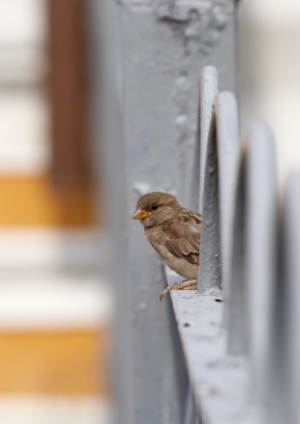
3) A quiet moment yesterday where I sat at my dining room table with my cat on my lap and just listened to the bird songs coming in through the slightly-open window. (Watching my cat chatter at birds that come dangerously close to the screens has been fun, too. I swear the birds, especially the sparrows, know they are teasing my cat.)

What about you — what are you grateful for this week? I’d love to hear from you.

Image is “Tramp Sparrow” © Olgalis | Dreamstime Stock Photos

Trusting the deep pull inward

rowboat

Looking back over the past twenty years of my life, I notice that times of a lot of external change were usually preceded by a deep pull inward: a period of maybe a week, or two, or more, where I needed to become very still, write in my journal more than usual, and detach from the external world.

I remember a period like this in my early twenties where I took lots of long walks in the evening after work for several weeks. And another period years later where instead of going out on the weekends like I usually did, I stayed in and wrote intensely in my journal. I didn’t have the money to actually quit work or take a long vacation in order to go within, but it was like some force compelled me to figure out a way, anyway; it was a taking stock of where I’d been and where I was so that I could move forward in a clear and powerful way.

Except I didn’t really know this at the time. I can only see it in retrospect.

I have a couple of clients right now who are feeling this pull to move inward. And, not surprisingly, they’re having a hard time listening to it.

We often resist this inner calling for a while before we finally surrender to it. I think there are a several reasons for this:

1) We have an increasing number of distractions at our fingertips (the other night I was watching American Horror Story on my laptop WHILE looking up trivia about it on imdb on my iPad — and not fully present for either activity). I believe that our ability to focus — or maybe simply our willingness to concentrate on one thing — is becoming seriously impaired, and we need to take charge of this, STAT. It’s killing our souls.

2) We’re afraid of what we might find if we do go inward and be really present with what’s there. What if we discover that we need to make big, painful changes in order to live the life we want? Sometimes we’d rather not know and live in a murky sort of limbo.

3) We’re afraid of the intimacy that comes from having a relationship with ourselves. Truly tuning in and heeding that inward pull means we actually get to know ourselves on a really deep level. (I’ve had clients tell me that they don’t want to do morning pages for this reason. They aren’t sure they want to know themselves that well. They aren’t sure they’ll like the person who shows up on those pages.) Just as becoming more and more intimate with another person is a risk, so is getting to know ourselves. What happens when we encounter pieces of us that we just don’t want to be with?

The good news is that, whether sooner or later, our intolerance for a disconnect with our essential self wins out, and we do go inward. (It’s just usually better for us when we listen to the call sooner rather than later.) Our souls won’t tolerate the numbness that comes from a life half-lived, and eventually we are forced to listen.

Here are some suggestions, though, for making it easier to trust that pull inward, when it comes:

1) Take a weekly break from the online world. A total break, for a few hours, or more, if it feels workable for you. During this break, pay attention to your body, go out for a walk; remind yourself that you are a physical being in a body with a connection to the earth, not a just fingers and a brain connected to a device.

2) Just as you are allowed to take your time in getting to know another person (in fact, true intimacy with another often develops slowly, over time — the quick kind tends to evaporate), you are also allowed to take time in getting to know yourself. If you have resistance to connecting with yourself, it may be because you’re trying to do too much too soon. You can connect with yourself in small doses, whether that’s through journaling or just being present with what you’re feeling for a couple of minutes at a time.

3) Promise yourself that you don’t have to take action on anything you discover about yourself. Recognizing that you really want to move to Europe does not mean you have to take action on that knowledge, now or ever. You may choose to act on it (and hopefully, if it’s truly right for you, you will!). But, as I so often say to my clients, it’s simply good to know. That’s the point of connecting with yourself — to know the truth about yourself. It is not about forcing yourself to completely overhaul your life. I’ve seen time and again that we are far more willing to know our truth, and own it, when we trust that we do NOT have to take immediate action on it.

Have you struggled to trust the pull to go within and connect with yourself? What made it a challenge for you, and what helped? I’d love to hear, in the comments.

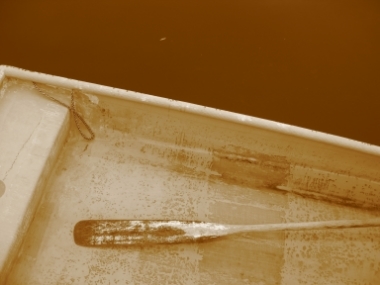
Image is “One Sepia Rowboat” © Tatiana Sayig | Dreamstime Stock Photos

Invisible progress

spiral

My friend Julia Roberts, an awesome creativity coach, posted on Facebook a couple of weeks ago that she “made lots of invisible progress today.”

I loved her term “invisible progress,” and told her so. Julia elaborated: “I think of pregnancy. It buoys us to know that even on the most uneventful day, we baked the baby a bit that day. We’ve already had a hand in altering the universe. Most days have more progress than we know.”

To that I say, YES! And I wanted to muse a little on the concept of invisible progress today.

Years ago, when I was a chronic overachiever, perfectionist, and dieter, I read these words by Geneen Roth: “Sometimes doing it looks like not doing it.”

What? I thought. How can that be? We’re either doing something, making tangible progress on it that we can see, or we’re not doing it, not making progress, and, therefore, falling behind.

And yet, even as my logical, rational mind rejected this idea, when I read the words, something resonated for me, deep in my abdomen. It felt true.

I realized (I was about twenty-two at the time) that I could live the rest of my life only believing in what I saw, or I could live my life trusting that sometimes things were happening beneath the surface, even if I couldn’t see them in the physical world (yet).

Trusting in invisible progress means recognizing that we need to balance our doing with being. While “perfect balance” between doing and being is not possible, we can acknowledge that we do need both in our lives. Most of us are better at one than the other. And some of us have trouble transitioning between the two (me!).

For me, invisible progress often happens when I am in a “being” state. For example, when I’m out walking, I sometimes get ideas for my next blog post or the next scene in my novel, or a completely unexpected solution to some problem I’ve been struggling with pops into my head. I’m not consciously “trying” to come up with ideas; in fact, they come because I’m letting my subconscious chew on things while I’m focused on my walk.

Invisible progress can also happen when we’re being distracted from what we intend to do. This week, I had to take my cat to the vet, something that seriously freaks me out. Both the stress and the actual act of going to the vet took a big chunk out of the day and I had to let some things go.

While I was at the vet, though, the vulnerable feeling that came over me actually ended up being precisely the feeling I’d been trying to get in touch with as I wrote the short story I’m working on. Even though I wasn’t able to put in much actual work in on the short story that day, the vet visit — the act of living life! — gave me exactly what I needed. I was able to return to my story and give that vulnerability to my character, which was exactly what the story needed in order to move forward.

And sometimes, as Julia pointed out so eloquently above, invisible progress is like gestation. Something is growing in us, but it’s not yet ready to burst forth into the world.

We may not even have words to describe it yet (fifteen years ago, I couldn’t have told you I was going to become a life coach one day — I didn’t even know then what a life coach was). We can try to push it and hurry it up, but ultimately, whether we’re growing a baby or a book, it will be born when it’s ready to be born and not one second before.

There are also days where we don’t notice our progress because it has become second-nature to us. Maybe we did something and did it well but since we’re so used to doing it, we don’t “count” it as progress or even think of it that way. It’s worth taking time to notice our accomplishments, maybe particularly the ones we tend to discount.

And, Melody Beattie has written that on some days, we need to congratulate ourselves for what we didn’t do. This, too, is “invisible progress.” I remember when I was having a particularly crappy day a few years ago and at the end of it I realized that, well, despite everything, I didn’t call my ex-boyfriend back even though he was trying to get in touch with me again, and I didn’t eat a box of Twinkies even though hearing from him really made me want to. And that a few years earlier I totally would have called him back and I totally would have eaten the Twinkies afterwards. Invisible progress for the win!

What does the idea of “invisible progress” mean to you? I’d love it if you’d share.

Also: I’ll be raising my coaching rates slightly in one week. If you’ve been thinking of working with me but haven’t gotten around to it, now’s a good time to get in on my current rates!

Image is “Spiral Diagonal” © David Coleman | Dreamstime Stock Photos