Setting boundaries around your creative space: Part two

fence2

In Part One of this post, I wrote about how important it is to honor the transitions between our “creative space” and our time interacting with others. It’s recognizing those transitions (even if they happen very quickly) that allows us to set boundaries that support our creativity.

(And when I talk about creative space, I mean not only the period of time in which we are actually tangibly creating, but also our solitary reflecting/processing/being time — which is vital for so many of us.)

It can be difficult enough to honor our own commitment to show up for creating regularly, whether that’s journaling, painting, working on our business or writing a book. But what about when those around us don’t support us in our regular habit of creating?

This can be a truly frustrating place to be.

In Part One, I wrote about how when I was a child I had a deep need to go off by myself and write, draw, or simply daydream.

What I didn’t say in that post was that my family and friends were not always terribly thrilled with my doing this.

At a certain point, the people around me began encouraging me not to be so “introverted”, and before I knew it my life became a flurry of activity and achievement with hardly any solitary “being” time. In fact, it wasn’t until I was out of college that I actually — slowly — began to recognize my need for solitude and to — slowly — give it to myself.

And that took a certain amount of courage, in a culture that worships “busy” and “tangible goals.”

In fact, I remember frequenting a cafe when I was twenty-three and working at a bookstore. When I was done with work, I’d stop at the cafe, have a coffee, and do Natalie Goldberg‘s “writing practice” (I was a huge fan of Natalie’s books at the time and still am).

After I’d done this for a while, the owner of the cafe came up to me one day and said, “I see you here almost every day, writing. Are you writing a book?”

“No,” I said, “I’m doing something called ‘writing practice’.” I explained to him Natalie’s concept of writing as a daily practice, as a way of grounding and connecting with ourselves.

The cafe owner shook his head and let out a deep sigh. “This is no good,” he said. “You won’t get anywhere doing that.”

I could see the sincerity in his eyes and I honestly think he was trying to be helpful. But I never went back to that cafe. I felt stupid writing there after that.

And I didn’t even know the guy! When it’s our family or friends who don’t support our creative practice, that can really sting.

So what to do if those around us aren’t supportive, or even blatantly disrespect, our need for creative space?

This isn’t an easy one, but here are a few things that may help:

1) Reaffirm on a daily basis WHY it is important for you to have this time and space to yourself. When you’re regularly connected to why you’re doing it — at a deep level — it matters much less if others “get it” and support it.

2) In keeping with point #1, remember that others act as a mirror for our beliefs.

Part of the reason I was so bothered by the cafe owner’s statement all those years ago was because I had not yet owned the importance of my writing for ME. I wasn’t yet sure that I wasn’t doing something pointless by showing up to the cafe to write, so his words easily shook my not-yet-sound foundation.

Today, if someone were to say that to me, I’d probably be curious about his belief, but it wouldn’t throw me off balance (though I’d choose to be around more supportive energy). I’ve bitten down on the root of my need to write regularly so deeply that it doesn’t matter to me if a stranger questions what I’m doing.

3) Know that your commitment to your creative process may trigger those who want to do the same but just aren’t there yet. It may also shift your relationship with loved ones a little (or a lot). Remember you can always reassure them that this time is for you and that it will actually contribute to you having a better relationship with them. And let them know that it’s totally okay for them to establish their own creative practice, in their own way — you’ll support them in it, too.

4) Get clear on what kind of support you need. Sometimes our loved ones don’t know HOW to support us. It’s okay to tell them what feels supportive and what doesn’t.

5) Take note of the people in your life who DO support you in creating and seek out more of that support, whether that’s in person or online (preferably both as we can use true support in BOTH worlds!).

6) Be willing to let go of your need to be nice. I used to think I had to let go of certain relationships in order to feel more supported in my creative practice (and occasionally that’s been true). But I came to see that, more often, what I truly needed to let go of was my desire to be “nice” and constantly available for those relationships in ways that interfered with carving out my own creative space.

What do you have to add? How do you set boundaries around your creative practice when others aren’t supportive? I’d love to know.

Image is “Fence at Dusk” © Kurt | Dreamstime Stock Photos

Setting boundaries around your creative space: Part one

fence4

A conversation on one of our community calls for The Writer’s Circle (a wonderful group I’ve been involved with for a long time now, which supports me in my writing habit and process) got me thinking about how difficult it can be to truly own and set boundaries around our creative space.

What do I mean by creative space? I mean physical space, yes, but also mental, emotional and spiritual space. Psychological space. And that space means our own energy as well.

From the time I was a little girl, I liked to go off by myself with a big pad of paper and a pencil and write and draw. I also liked to sit by myself — sometimes on our front porch — and talk out loud, making up stories, creating characters and acting out all the roles. Although I often organized neighborhood kids into plays and skits and “pretend movies”, I had a deep need to spend much of my “creating time” in my own company, with no one else around.

This is still true for me. Being solely in my own company (and spending time with animals or in nature) is part and parcel to my writing process, just as my writing process is part and parcel to knowing and understanding myself, and knowing and understanding myself informs what I want to write and what I choose to do with my life.

Geesh, what a cycle! See how it’s all connected?

So, I can’t “just let go of” time alone — daydreamy, musing, reflective time spent in solitude — without letting go of a vital part of the organism that is my functioning life.

And along with that, I can’t “just let go of” my actual writing time, where I put pen to paper or fingers to keyboard.

But, as we discussed on our Writer’s Circle call, how challenging it can be to set boundaries around this sacred creative space on a daily basis!

Recently I had family visiting, and I noticed acutely (again) how I cannot “just shift” from socializing to writing, or socializing to reflecting time. I need to transition from one to the other.

This need for transitions, though, is a blessing. It is the transitioning that allows us to reinforce our boundaries around our creative space and creative energy.

For example, when I sat down to write this blog post, I did not “just sit down and start writing.” I first told my boyfriend, “Okay, I’m going to go work on a blog post now,” and I went into the next room to be away from his energy and more in my own. Then, I took a few deep breaths at my desk. And then I read a couple of blog posts by writers whose voices I love.

This all took only a few minutes, but within this transition space, I respected and protected my creative blog-writing space and energy.

Similarly, when I had family visiting last month, after spending most of the morning with my brother and his girlfriend, I didn’t “just” sit down and work on the presentation I had coming up. I told them I was going to the library for a while, gathered up my things, walked the two blocks to the library (walking is a great way to transition from one energetic space to another) and sat in a corner cubicle in the cool, quiet library environment. I took a few deep breaths, and starting in on writing notes for my presentation.

Taking note of how we will transition from “social space” to “creative space” is a great way to put solid boundaries around our solitary creating time, space, and energy.

Karla McLaren, in her wonderful book “The Art of Empathy,” calls this “thresholding.” She gives the example of actors who move from the state of being backstage, with others bustling around them, to actually being onstage, in the performance space. Anyone who’s performed on a stage of any kind knows there is quite a transition from being backstage to being onstage, and very quickly you go from one type of energy to another. It’s awareness and respect for the threshold that allows this transition.

Try this: Think about how you might create protective, supportive rituals and routines that act as boundaries around your creative energy and space. My walk for my morning coffee always puts me into “reflective, creative mode”, which is like tapping my writer self on the shoulder and whispering, “Hey — we’re going to be putting words on paper in a little bit.”

In Part Two of this post, we’ll talk about how we can own our right to our creative energy and space, especially when it’s challenged by others around us.

What about you? How do you set boundaries around your creative space, time, and energy?

Image is “Fenceline” © Digitalphotonut | Dreamstime Stock Photos

Saturday Gratitude #10

dreamstimefree_100106

It’s been a while since I’ve done a Saturday Gratitude post and it’s really time for another. The past few weeks have been kind of insane around here, in mostly good ways. But my HSP introvert self has been desperate for a little solid downtime, which, thankfully, I am able to have this weekend.

So here are some things I’ve been grateful for since my last Saturday Gratitude post:

1) My “senior” cat (the vet says he’s a senior, but Sullivan doesn’t agree with this at all) came through his dental surgery just fine, minus three teeth. The couple of days after were no fun for any of us around here, but on the third day he was back to his shelf-climbing, window-gazing, chattering-at-birdies self. Pheewwww. I’m grateful to the folks at Prairie State Animal Hospital for giving him extra love.

(Quite inexplicably, he’s still hanging out in the cat carrier, apparently no longer relating to it as an instrument of doom.)

catcarrier

2) I participated in Kristin Noelle’s I Choose Authentic Joy Healing Wave, and we had a number of wonderful conversations in the Facebook group, including one about gratitude. I’ve signed up for a number of Kristin’s Healing Waves and they truly inspire me; if you’re not familiar with her terrific artwork, do check her out!

3) Last Sunday, I gave a presentation to Chicago IONS on “Time and Conscious Doing.” We talked a lot about how our thoughts can give us this (false) idea that there isn’t enough time, and how we can choose to create and take action from a feeling of “enough”. I was so grateful for the deep participation in the exercises and insightful questions from the audience, and to those who came up afterward to continue the conversation.

4) Squirrel monkeys! My boyfriend and I rewarded ourselves for work completed by taking a trip to Brookfield Zoo, and there are now squirrel monkeys in Tropic World, swinging like they own the place and have always been there (though what happened to my beloved capuchins?). Monkeys continue to be a kind of power animal for me, reminding me that I am always inspired when I focus on play, curiosity, and hanging out upside down (if only metaphorically).

What about you? What are you grateful for today? I’d love it if you’d share, in the comments.

Top image © Dr_harry | Dreamstime Stock Photos

Where self-acceptance and creativity meet

sand heart

For me, self-acceptance — the deep kind that warms the very center of my chest — and creativity are kind of like buddies.

On Pinterest yesterday I came across this pin of a dog that trots down the road to meet up with its buddy, a cat, who jumps down from a roof so they can pal around and go on adventures together.

That’s self-acceptance and creativity, in my world. It’s hard for me to have one without the other.

I notice that when I am feeling “uncreative,” it’s very often because I am not feeling very self-accepting.

How does this play out?

Noticing “shoulds” is a good place to start.

And we often don’t notice them. But the presence of “I should” is (most of the time) a good indicator that I am out of self-acceptance.

I used to frequent a message board where somebody had this signature: “As soon as I say ‘I should,’ I am somebody else.” (I wish I knew who to attribute that to — I think it’s brilliant.)

So if I’m feeling uncreative, my first step is to do what I call a “scan for shoulds.”

One of my clients is a poet.* She writes these awesome short poems that vibrate right off the page.  I love them because they’re so fun and real and colorful.

But she wasn’t feeling very good about them, and when we did a scan for shoulds, this popped up: My poems aren’t “real writing.” I should be writing a novel.

I asked her why.

She said, “Because then I’ll be taken more seriously.”

I asked her, by whom?

She said, “By serious writers.”

We broke down “serious writers.” Her definition of “serious writers” consisted of exactly two people: a snooty professor she’d had twenty years ago, and a perfectionistic friend she’d also been out of touch with for years. Interestingly, she’d always felt really uncomfortable around both of them.

I asked her what she believed she would have if she could get this professor and this “friend” to take her seriously.

The answer was, “I could take myself seriously.”

At some point, we both started laughing because we’d had many conversations about how she actually wanted less “seriousness” in her life and more play, more joy. (And I so get this, by the way. Nothing thwarts creativity like the idea that we should be doing, as Julia Cameron puts it, “Art with a capital A.”)

Being in self-acceptance, for my client, meant she didn’t really want to write a novel, and that she wanted to write even more of her awesome poetry.

It also meant letting go of the idea that “serious writers” (a.k.a. these two people who actually had never supported her true self) could somehow accept her if she wrote what she didn’t want to write.

And embracing the fact that it wasn’t their acceptance she needed. It was her own.

Maybe this is why we often skip over the very idea of self-acceptance. Because if we make it important, it means that we’ll likely have some letting go to do.

The other place where self-acceptance comes in is in noticing our needs and allowing ourselves to have them — even if a part of us is convinced they can’t be met.

Years ago there was a writing workshop I wanted to go to, except that I was told there were no single rooms available and I’d need to share a cabin with two other people for the duration of the workshop. I had a strong hunch that wasn’t going to work for me, because after so much socializing during the day at the workshop, I’d definitely want to recharge in the evening by myself.

I almost decided against going, until it occurred to me that maybe there was some currently unseen way I could have a room to myself. Just maybe, somehow.

I talked to the coordinator and she said, “Well, it so happens that someone who had reserved a single room just dropped out of the workshop. Would you like that room?”

I grabbed it immediately. I felt really happy with myself because in the past, I would have either gone ahead and stayed in the cabin with other people, spread way too thin because of no way to recharge alone, OR I would have assumed I just couldn’t do the workshop at all.

But I’d been able to be self-accepting enough to realize that my need was important enough to voice — even if it was a need some people wouldn’t have at all — and doing so opened the way for, guess what? Creativity!

What do you notice about the relationship between self-acceptance and creativity, for you? I’d love to hear from you!

* Please note that when I share stories about my coaching clients, it is always with their full permission to do so.

“You can’t use up creativity. The more you use, the more you have.” ~ The amazing Maya Angelou. RIP.

Image © Mamz | Dreamstime Stock Photos

Curiosity … and decluttering!

cat in grass

I’ve been focused on two concepts for the past several weeks and today as I did my morning pages, I found myself writing about what a difference this focus has made.

The first:

Curiosity, not judgment.

I’ve had a longstanding, automatic habit of feeling discomfort or dissatisfaction about some area of my life and immediately jumping to judging myself for feeling that way. Then my mind dives into the past and starts finding evidence for all the ways I’ve made poor choices to get me to where I am today. So not helpful.

Over the past several years (particularly since going through coach training with Martha Beck), I’ve learned more and more how just getting really curious about what’s going on for me is WAY more effective than judging it.

When I judge myself (or some part of my life), I create a war. The judging voice says, “How could you have created this situation? What were you thinking?” And another part of me shouts back, “Hey! Stop judging me! I hate you!

Curiosity shifts that. Curiosity is neutral. Actually — curiosity is playful.

I love the curiosity my cat exhibits on a daily basis. It’s so much a part of him. He’s curious about his surroundings, checking them out literally every day as though they are completely new to him, even though he never leaves the same 900 or so square feet. Hey, what’s in this corner over here? Holy field mouse, it’s a dust bunny! How did this get here? How fun is this? I’m playing with it, now!

I like to take that kind of playful curiosity and apply it to the places I’m feeling stuck. Hmm … what’s going on here? What’s really going on here? Is this situation really like that one ten years ago? Or am I actually a different person than I was then, who has a larger range of choices? Hmm …

And so on. Curiosity takes the charge out of judgment and allows me to breathe, reframe, and see all my options.

The second thing I’m focused on lately is decluttering.

I have a deep, deep fear of loss of any kind. And I tend to get attached to objects, very attached. So for the past few weeks, I’ve committed to putting a bag of stuff together to donate every Sunday. I drop it into a donation box on my way to the grocery on Sunday mornings.

This has felt so good. I started small with this — one or two items — and it felt so amazing to let go of things that I’ve worked my way up to lots and lots of stuff.

My only rule has been that if I’m really hesitant to let go of something, I’m not yet ready to let go of it.

Frequently, what I’m not ready to let go of one week, I’m ready to let go of the next week. Fascinating, right? I can let go more quickly by not forcing myself to let go. Good to know!

And that’s it for today. Hope you’re having a beautiful weekend full of curiosity and play.

Speaking of which, I have a guest blog post on Jenna Avery’s wonderful site this week, about how I’m learning to finish my novel drafts, after years of getting stuck, and how awareness and curiosity figured into that process.  If you struggle to finish any project, I hope you’ll head over and take a look!

Image is “Cat in Grass” © Genarosilva | Dreamstime Stock Photos

Saturday Gratitude #8

sparrow

Time for another Saturday Gratitude post! I haven’t even gotten into my list yet and I’m already thinking about how grateful I am for these posts themselves. They always help me get present and notice what’s already here, when it is so easy for me to get lost in wanting.

So here’s what I’m grateful for today:

1) On Sunday, I celebrated Easter with my boyfriend’s family.

My own family is spread out across the country and we haven’t celebrated Easter together in ages. And … well, getting me to socialize, especially around a holiday, is not always the easiest task. But I had this sense that I needed to get away for a while, and my boyfriend’s grandma had a vintage-looking tablecloth printed with rabbits, and rabbit napkins, and there were Easter eggs with our names on them! (All of this reminded me so much of my own grandmas, whom I miss dearly.)

And it was just fun. And sometimes, when I get into a really driven, must-get-things-done sort of place, the last thing that occurs to me is to stop and have some fun. (And the introvert in me sometimes forgets that being with others can be, um, fun, and exactly what I need to get out of my own tunnel vision.)

2) I remembered to ask for help.

And when I asked, I got what I needed. Which was wonderful. And it reminded me that, even if I ask and I do not get what I’m asking for (which certainly happens, sometimes more often than not), the act of asking in and of itself reconnects me with possibility, as well as my own power.

When I forget to ask for help (which I often do — I’m amazed at the number of times a friend has said to me, you needed help with that? Why didn’t you ask me?), I also forget that there is lots of support out there. And that, much of the time, people like to be asked. (The person I asked for help told me that it made her feel good to respond to my request.)

3) A quiet moment yesterday where I sat at my dining room table with my cat on my lap and just listened to the bird songs coming in through the slightly-open window. (Watching my cat chatter at birds that come dangerously close to the screens has been fun, too. I swear the birds, especially the sparrows, know they are teasing my cat.)

What about you — what are you grateful for this week? I’d love to hear from you.

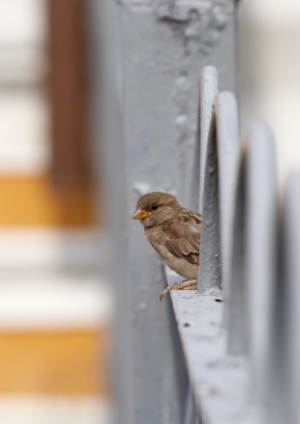
Image is “Tramp Sparrow” © Olgalis | Dreamstime Stock Photos

Saturday Gratitude #7

firstflower

Here we are at Saturday Gratitude post number seven already. These posts really help me slow down and connect to myself, and I hope they trigger good stuff for you, too. (Please share in the comments if you’d like!)

So, here are three things I’m grateful for this week:

1) The robins have arrived, signaling that it really and truly IS spring.

And they are everywhere. There is something moving to me about the way they are completely absent from the landscape during the winter, but they always return when the weather warms up and claim their territory as if they never left. Seeing them again reminds me of the mama robin who built a nest on our front porch a few years ago. She protected this nest so fiercely that I had to tell the mailman to leave the mail in the back, because the robin would fly at the head of anyone who ventured up on the porch. We left the porch to her until her babies grew up enough to leave the nest. I was tempted to call her mean, but what looked like meanness was actually excellent parenting.

2) Anger. And recognizing I needed to act on it.

Anger and I have not always had a very, shall we say, friendly relationship. My tendency has been to press it down or pretend it’s not there. But actually, anger is a friend — and a good one, if I listen to its message and make a conscious choice about whether or not to act on that message. Karla McLaren calls our healthy anger “the honorable sentry.” She says it helps us protect what needs to be protected, and restore what needs to be restored. Yes. I’m grateful I was able to honor my honorable sentry this week.

3) Four fluffy little dogs moved in across the street.

They move as a chaotic little group, each wearing a different colored harness, pulling their owner all over the sidewalk. It’s a delight to watch and I look forward to seeing it frequently.

What are you grateful for this week? I’d love to hear, and I wish you plenty of moments to be grateful for in the week ahead.

Image is “First Flower” © Tomas Stasiulaitis | Dreamstime Stock Photos

Saturday Gratitude #6

rainbowsprinkles

Time for another Saturday Gratitude post.

So much to choose from this week — and I feel blessed to be able to say that.

1) So it was my birthday this past week.

And I’m not a big celebrator of my birthday. I never have expectations for it or anything. But something about this birthday felt extra-special, extra-celebratory. The day unfolded in such a lovely way — I spent it with some of my favorite people (and cats!) — and I felt so loved and appreciated.

And the funny thing was, I had decided to give myself the gift of a day away from the internet. And that felt so peaceful, so replenishing, so grounding. I needed it. But then, when I did return to the internet, there were all these lovely birthday wishes on Facebook, and some emails from good friends.

And I was reminded that so much love flows through the internet, too. I just need to balance my internet time with my “in the physical world” time, or I start feeling like a strange, cramped, distorted version of myself.

2) While writing and revising a short story this week, I made some discoveries about why fiction writing has felt extra-hard for me lately.

Interestingly, I had to step away from my main project (a novel) in order to make these discoveries. The short story actually served as a metaphor for the struggle of the novel — but it was easier to see and grasp because a short story is a less vast and unwieldy thing than a novel (for me, anyway. I certainly don’t mean to say that writing a short story is not hard or confusing.). Metaphor! It can make things so much more clear. (More on this is a future post.)

3) Finally taking action on something I’d been on the fence about for a long time.

And then the noticing that what unfolded after I took action was not nearly as scary or overwhelming as I’d feared. And that I can create safety for myself along the way, with each step of the continued unfolding. In other words, I have more control than I think I do. Good to know!

I’d love it if you’d play along with me, if that feels good to you. What are you grateful for this week? What comes up for you? Feel free to do this silently, on your own, too, if you don’t want to share. But either way, do notice how focusing on the good stuff creates more of it. It’s true!

Image is “Rainbow Sprinkles” © Cyrus Cornell | Dreamstime Stock Photos

Creating during the rough times

twinflowers

A reader wrote me with this question recently (and gave me permission to share it here):

Lately I have a number of unexpected stresses in my life that have descended on me all at once. Almost every day I reach a point of overwhelm where I just have to do the minimum and then rest. My work on my novel has gone out the window. It feels like I spend every day just keeping up and managing my emotions, and have no energy left for anything creative. I keep trying harder to “do the work” and it’s just not happening. Any words of wisdom for me?

Oh! Creating during the rough times. What a challenge it is to get hit with a lot of “life stuff” and try to keep on keepin’ on as we have been.

In answering this question, I want to look at it from two different angles.

The first has to do with embracing reality.

When life throws a lot at us — whether that change is external or internal, or both — things are not as they were before. Pretty obvious, right? But let me repeat: life has changed.

I really want to underline this, because what I see again and again (and I see it in myself for sure) is that when our lives change radically — or sometimes even when we are afraid that they could change radically in the near future — we have a tendency to go into denial for a while.

Sometimes this looks like freezing and not doing anything. Often, though, it looks like trying to keep on exactly as we have been — even though things are not as they have been.

Which is perfectly normal. But — after a point — not totally helpful.

What embracing reality means from the standpoint of doing our creative work is that when things change, it’s pretty much a given that we won’t be able to approach it exactly as we have been.

If we are suddenly taking care of a sick child (or parent), that is taking up time. If we have to take on a full-time job when previously we worked part-time, that is taking up time. We literally don’t have as many hours in the day available for our creative work: it’s a fact.

Another aspect of embracing reality is who we are.

How do you tend to handle a lot of sudden change, especially certain types of change? How emotional and sensitive do you tend to be? Some of these things are innate in us: we’re not going to change them — even if we want to — beyond a certain point.

I value the fact that I have a very emotional nature (I’m a Myers-Briggs “feeling type,” for sure) and I’m also highly sensitive.

But this means that, for example, when I lost two loved ones in the same week several years ago, it rocked me to my core and I could not “just keep on.” I remember people suggested to me at the time that my grief could be good for my creative work, and that I could “write through the pain.”

That felt wrong in every fiber of my being. I didn’t want to create at that time. I wanted to grieve. Things had changed, and I needed to ask myself if there was value in forcing myself to continue writing during that time.

For me, there wasn’t. For someone else, there certainly may have been. But we need to take ALL of us into account during the difficult times — not just the part that wants to create and keep momentum with creative work. If it feels right to scale back, we need to give ourselves permission to do that.

The other angle I want to take here has to do with our emotions themselves and the way we approach them.

If, like my reader (and me!), you tend to be “emotionally intense,” the way you approach your emotions in and of itself can create more stress for you during the hard times — or not.

When a lot was going “wrong,” I used to say things like, “This sucks! I am so overwhelmed!”

Venting is a good thing sometimes. But it’s also important to look at what we say when we vent.

Here’s why: When I say “I’m overwhelmed,” I’m fusing my identity with the emotion. And, even if I value how deeply and intensely emotional I can be, my emotions are not me. They are simply energies moving through me.

Probably one of the things I say most frequently to a client when they share how they’re feeling about something is “Good to notice.” That’s because noticing is pure gold. We can’t change a thing if we don’t first have awareness of it.

And, at the bottom of it all, “who we are” is simply that awareness — not what we’re doing, what’s happening to us, the emotions we’re having or how we’re reacting.

So, now, when I catch myself saying “I’m overwhelmed,” I say instead, “I’m noticing that I’m overwhelmed” or “I’m noticing a feeling of overwhelm within me.”

Do you see how this immediately creates a space between you and the feeling?

From this space, you are both the person experiencing the emotion and the observer of that emotion, how it feels in your body, the way you are reacting to it, the thoughts you are thinking around it. And from that space, you are not rocked and thrown by your emotions; you are not fused with them; you are simply experiencing them.

So, during the difficult times, here are two places to start. I’d love to know if anything here resonates for you, or if you have other suggestions, in the comments.

And: If you’re in a rough patch right now and you need a shift, my awesome friend Dawn Herring, founder of Refresh with Dawn Herring and #JournalChat Live on Twitter, will be offering a Refresh Intensive e-course, starting April 3 (the deadline to sign up is April 1). And it’s only $21! Want to learn more? Find out, here.

Image is “Out of the Darkness” © Emi Pascuzzo | Dreamstime Stock Photos

Saturday Gratitude #5

c42e8964-0e9d-4019-b8c5-734b1a8efc99_zpsaea0689b

This week’s Saturday Gratitude reminds me of the fact that, sometimes, we need other living beings to act as anchors for us. We can’t do it all alone.

Sometimes, I am spinning off into space, and I need someone to help me tether myself to the Earth.

If, like me, you tend to live “up in your head” a lot, you may need some support in grounding yourself, in coming back to your body, to the “real world” (which actually can be a lovely and nourishing place to be, even if the world in your head often seems more appealing).

Here are the grounding, tethering beings I was grateful for this week:

1) A dear friend who called unexpectedly at a perfect time to talk.

2) My amazing coach who reminded me of who I am.

3) My cat, who stretched out on my thighs while I was giving myself permission to just relax on the couch for a while yesterday afternoon. Oh, so grounding.

What are you grateful for this week? I’d love it if you’d share.

Note: My Saturday Gratitude posts will continue from here on every other Saturday.

Image is “View From a Plane,” © Alexander Briel Perez | Dreamstime Stock Photos