Is it worth it? (and other helpful questions)

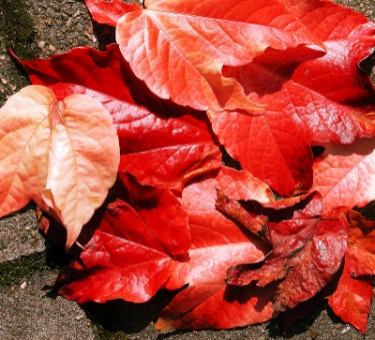
redleaves

This morning I took one of my beautiful fall walks and noticed that my mind kept going to several things I’ve had on my to-do list for a long time that are just not getting done.

I stepped back a little and let my mind go — the practice of walking helps me immensely with getting into “observe my thoughts” mode — and pretty soon I saw that the thought that kept coming to the top of the rotation was this one: “What’s wrong with you that you’re not getting these things done? Anyone else would have gotten these things done months, years, ago.”

“What’s wrong with me?” is kind of a default, underlying, unhelpful thought for many of us. I’ve been a coach for about four years now, and I notice this particular thought come up at some point for most people.

There’s no satisfactory answer to this question. There’s no encouraging, supportive answer to this question. It’s a good example of a question that closes off possibility and keeps us spinning our wheels.

As I walked, and got out of my thoughts and into the present moment, noticing the row of trees that has erupted into lava-reds, the squirrels fighting for supremacy at the neighbor’s bird feeder, my mind began to get more peaceful.

And when I got home, I went to my journal (as I so often do), and experimented with better questions to ask myself about these things I am not getting done.

Why aren’t I getting them done? (“Why?” can be a good question, for sure, but in this case, it felt impossibly heavy.)

How do I want to feel about these things on my to-do list? (This created an instant feeling of lightness.)

What kind of relationship do I want to have with these things? (More lightness. Relief.)

Is it worth it to me to do these things? (Ahhh. Here I hit the jackpot.)

I could tell that last question was the one that opened up possibility and movement, because exploring it felt really juicy to me.

So I went through the list of these things that have been nagging at me, these things I’m not doing, and for each of them, I asked myself, “Is it worth it to me to do this thing?”

The answers were revealing. For the first thing on the list, the answer was a clear no. It simply wasn’t worth doing. But I was telling myself I needed to do it. Is it true I need to do it? No. I crossed it off the list.

For the second thing on the list, the answer was a clear yes. Yes, the thing is definitely worth doing. And here is where “why” comes in. It’s worth doing — good to know! — but I’ve gotten out of touch with WHY I want to do it. Time to reconnect with that.

With the third thing on my list, I realized I’m not sure if the thing is worth doing or not. Sometimes not being sure is code for “no”, but other times, there’s fear there that is masking the “yes.” So this one will require some inquiry, some investigation.

I feel so much lighter right now, like I’ve cleared a path before me.

What do you notice about the questions you’re asking yourself? Does your mind jump to “default questions” that may not be helpful, but you keep trying to act on them anyway? Try experimenting with finding some more helpful questions. And let me know how it goes.

Hope you are enjoying the changes that fall brings (both outer and inner) as much as I am.

And: My Mini Unsticky Sessions are half-price through Halloween, when I’ll be retiring them. My intention with these sessions is to help you make a quick shift that allows you to move forward on a project you’re feeling stuck on. I approach these sessions with a sense of curiosity and play, and they’re often a lot of fun. Check them out, here.

Image is “Red Leaves” © Bart Van Oijen | Dreamstime Stock Photos

What if it’s not as hard as you think?

redonstone

The other day I had to do something that I thought was going to be very hard.

In fact, I’d been putting it off for a while because I thought it was going to be so hard, so uncomfortable, so taxing. I imagined all kinds of stressful scenarios that were going to result from my doing this thing, how a chain of negative events would be set into motion if I did it, how maybe I’d regret doing it.

So I didn’t do it as quickly as I might have. In fact, I started getting very irritated with myself for “procrastinating.” (I like to put procrastinating in quotes because there’s a big difference between procrastination and waiting for the right time, and we need to do a little digging sometimes to recognize which is which.)

Basically, the “thing” involved saying no to someone who had asked me to collaborate with her. I was torn at first because in some ways I wanted to do it, but the reality of my life right now is that I simply don’t have the time or the energy for this level of collaboration.

So I put off saying no, even after my intuition had clearly let me know that “no” was the way to go. (Sorry for the Dr. Seuss-ian sentence — actually, I love it!)

Finally, I made the call. I said, “A part of me would love to, but I’m choosing to say no to this right now.”

Guess what? It wasn’t that hard. My heart raced, yes; my hand slipped a little on the phone because it was wet with sweat.

But all in all? Not that hard. Not nearly as hard as I’d built it up to be. In fact, the person involved thanked me for being direct (she didn’t even think I’d taken that long to get back to her), and then we had a conversation about how much we prefer hearing “no” to hearing nothing at all and being left hanging. (That’s a topic for a whole other post!)

Sometimes, something we need to do proves to be harder than we’d imagined it would be.

But, sometimes, much of the “hard” has to do with our thought that “it’s going to be really hard”. So we don’t do whatever the thing is, and in the not doing it, we create more hard on top of our idea that it’s going to be hard.

Another thing we sometimes do when a task we perceive as “hard” looms before us is we tell ourselves, “I need to have courage. I need to muster up the courage to face this.”

This can actually create yet another hurdle. This “mustering up the courage.” The idea that we need “courage” to face whatever it is actually makes the “thing” seem even harder. Our brain goes, “We need courage here? Wow, it must be really hard! It must be extra hard!”

What if we didn’t need courage? What if, instead of courage, what was more helpful turned out to be acceptance of the situation, acceptance of our fears about it, and trust in our ability to handle it?

It’s worth considering.

Image is “Red on Stone” © Cristina | Dreamstime Stock Photos

Knowing yourself: what words inspire you?

colorfulpens

Here’s a super-simple journaling exercise that can be a quick way of reconnecting with ourselves. It’s also truly helpful for those times when we’re feeling really UNcreative.

I once did this with a class of ten-year-olds, and after I described the exercise to them, I said, “What do you think this exercise is about?”

A kid shot up his hand and said, “Noticing!”

That’s it, exactly.

Noticing words.

The words we use are important. And they say a lot about us.

I have an intention to choose my words carefully. Not out of some kind of perfectionism, but because words have power.

(I’m also noticing more and more that, often, I need to invoke the superpower of listening just when I’m tempted to throw in my two cents. Whether I’m talking to a friend or coaching a client.)

Some words feel heavy and exhausting to me. That’s not because there’s anything “wrong” with them, but because they are not in line with what inspires and activates my essential self.

Other words light me up, help me come alive, remind me of what is true and real — for me.

So here’s the exercise:

1) Make a list of words that drag you down, words that don’t light you up or that make you feel disconnected.

These can be ANY words. Adjectives, verbs, nouns. Keep listing — don’t stop until you’ve got a list of at least twenty words. (They can also be phrases or sentences you can’t stand — for example, my boyfriend absolutely hates it when people say, “Let’s do this!”)

The purpose of this is not to focus on negative stuff — any word or phrase is not “objectively” negative. This is about gaining more awareness into what makes you “you.”

2) Now, make a list of words that DO light you up, words that elevate you or connect you to who you are. Again, phrases and sentences are okay, too.

3) Now, look over both lists.

What do you notice?

Here are some examples from my lists:

Words that drag me down: overcome, overpower, world domination, should, must, crush it, anything having to do with war, get your butt in the seat, push, shove, force, conquer, rule, hard, tough, have to

Words that lift me up: discover, quest, kindness, spark, play, curiosity, adventure, fun, mischief, silky, fluid, deep, reflective, subtle, piercing, pure, intense, affectionate, compassion, journey, choose

Even if you’ve never read my blog before, you can learn a lot about me by looking at my lists, right?

It’s pretty clear that I’m not inspired by the idea of overcoming or conquering or going to war with something. I’m not inspired by pushing or forcing myself or anything or anyone else to “get it done.”

It’s not because I think that mentality is “bad.” It’s because it isn’t the way I naturally relate to the world. It’s foreign to me; it doesn’t make intuitive sense to me (though, to be honest, for many years I tried to take on this mentality because I believed I “should”).

The idea of discovery, of looking deeper, of getting curious, with lots of kindness and compassion and fun and play in the mix — for me, that’s adventure. That second list automatically reminds me of who I am and inspires me. It gets me moving.

We can also see, by looking at my lists, where my shadow may lurk. It might do me some good to notice when I’m disowning the parts of me (because they’re there!) that DO like to overcome and conquer and WIN. (These parts of me come out when I play certain video games or get into arguments with family members. Note to fiction writers: Incorporating your shadow traits into your characters can be extremely liberating.)

The thing for me to know, though, is that if I let these aspects of me run the show, I’m not going to feel in line with my essential self, and I won’t feel I’m living a life that’s truly in keeping with who I am. I don’t need to disown these aspects of myself — or of others — I just need to recognize that they don’t truly inspire me.

So, if I’m trying to get myself to do something through pushing, forcing, or the idea of “crushing it” or “overcoming,” it’s inevitably ineffective — for me. There are others who love the idea of overcoming or “heading into battle”. It gets them going and lights them up.

And that’s awesome. Because if there’s anything I believe, it’s that we all need to know ourselves well enough to keep on moving closer and closer to what truly brings us to life.

What do you notice about the words that inspire you, versus the words that deaden, disconnect you, or exhaust your energy? I’d love it if you’d share, in the comments.

Image is “Pastel Pens” © Rabbitsfoot | Dreamstime Stock Photos

What would make it easier?

Drop of water

Several months ago, I led a small group of my clients through a support session to help them with fears that were coming up around their creative projects. They were all nearing the finish line and feeling a lot of resistance to completing, so I thought, maybe we could all support each other in this.

Something we noticed during our session was that we all had a tendency to complicate things to the point that we felt utterly paralyzed about how to move forward. The closer we got to finishing, the more questions about what might happen when we brought our projects into the “real world” came up.

A lot of the stuckness, we found, was based on fears of what might — or might not — happen in the future, if we actually did finish the projects. What if we put them out into the world and no one noticed? What if we put them out there and offended someone close to us with our content? What if we put them out there and got criticized or booed?

All of these things, of course, are distinct possibilities when we put our work out into the world. Focusing on these possibilities can also be effective ways to distract ourselves from actually finishing our work so it can BE out there.

So we came up with this question to ask ourselves when analysis paralysis set in: What would make it easier? What would make it easier, right now?

Just asking this question, we noticed, created a feeling of relief (which good questions usually do — and most of us are not in the habit of asking ourselves good questions!).

We brainstormed a list of possibilities this question generated, and here are some of the things we came up with:

* I could, just for today, commit to staying in the present moment with my work.

* I could stay in my own business. (This comes from Byron Katie’s “three kinds of business” — my business, your business, and God’s business [you might also call this the universe’s business or simply “reality”]. As I’ve written here before, much of the time I feel stress it’s because I’m in someone else’s business. That includes worrying about how my creative work will affect others in the future. There’s a place for this concern, but it’s not while we’re creating the work.)

* I could go to bed earlier and wake up earlier.

* I could check in with someone who helps me gain perspective when I’m stuck.

* I could drink more water. (This might sound silly and completely unrelated, but truly, dehydration can cause us to feel stuck, because water helps our physical systems move and flow. And, particularly if your system is highly sensitive, you may be susceptible to the effects of dehydration.)

* I could take more walks. (Sitting at a desk, especially if you use a computer to do your creative work, can cause you to feel sluggish and static. Moving your body shakes things up and help you shift perspective.)

* I could employ tunnel vision (in a good sense). Think of a racehorse who has blinders on so he is not distracted by what’s on either side of him — he’s only focused on the immediate few yards ahead.

* I could shift my work time to earlier (or later) in the day.

* I could work in a warmer (or cooler) room.

* I could take more frequent breaks when I work.

* I could aim for a B- rather than an A+ (this one is especially important for perfectionists, which most of my clients are). If it didn’t have to match your perfect vision, how much freer would you be to finish? Think about your favorite books, movies, music, artwork. Are they perfect, or are they inspired? There’s a big difference.

* I could, just for today, let go of the idea that I can please everyone with my work.

* I could, just for today, let go of the idea that I can please everyone in my existing audience with my new work.

These are only a few examples of what we came up with. But notice how simple most of them are. Sometimes there’s one small tweak we can make that really helps. And we noticed that the phrase “just for today” was especially helpful.

It’s very human to make things much more complicated than they are. Usually, when I find myself in the land of analysis paralysis, it simply means that I’m scared and I need some support. Notice if this might be the case for you.

What might make your current project easier — particularly if you’re getting close to finishing? I’d love to hear, in the comments.

And: If you’re stuck near the finish line and need some support in completing a large project, I’ll be forming another small, low-cost support group soon. Feel free to contact me if you’d like to be put on the list to learn more.

Image © zaliha yussof | Dreamstime Stock Photos

Saturday Gratitude #8

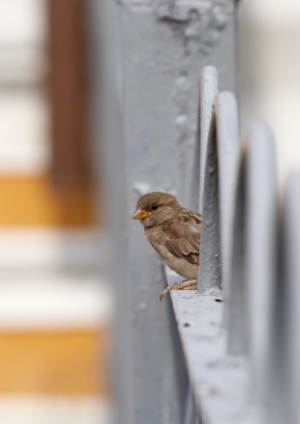
sparrow

Time for another Saturday Gratitude post! I haven’t even gotten into my list yet and I’m already thinking about how grateful I am for these posts themselves. They always help me get present and notice what’s already here, when it is so easy for me to get lost in wanting.

So here’s what I’m grateful for today:

1) On Sunday, I celebrated Easter with my boyfriend’s family.

My own family is spread out across the country and we haven’t celebrated Easter together in ages. And … well, getting me to socialize, especially around a holiday, is not always the easiest task. But I had this sense that I needed to get away for a while, and my boyfriend’s grandma had a vintage-looking tablecloth printed with rabbits, and rabbit napkins, and there were Easter eggs with our names on them! (All of this reminded me so much of my own grandmas, whom I miss dearly.)

And it was just fun. And sometimes, when I get into a really driven, must-get-things-done sort of place, the last thing that occurs to me is to stop and have some fun. (And the introvert in me sometimes forgets that being with others can be, um, fun, and exactly what I need to get out of my own tunnel vision.)

2) I remembered to ask for help.

And when I asked, I got what I needed. Which was wonderful. And it reminded me that, even if I ask and I do not get what I’m asking for (which certainly happens, sometimes more often than not), the act of asking in and of itself reconnects me with possibility, as well as my own power.

When I forget to ask for help (which I often do — I’m amazed at the number of times a friend has said to me, you needed help with that? Why didn’t you ask me?), I also forget that there is lots of support out there. And that, much of the time, people like to be asked. (The person I asked for help told me that it made her feel good to respond to my request.)

3) A quiet moment yesterday where I sat at my dining room table with my cat on my lap and just listened to the bird songs coming in through the slightly-open window. (Watching my cat chatter at birds that come dangerously close to the screens has been fun, too. I swear the birds, especially the sparrows, know they are teasing my cat.)

What about you — what are you grateful for this week? I’d love to hear from you.

Image is “Tramp Sparrow” © Olgalis | Dreamstime Stock Photos

Trusting the deep pull inward

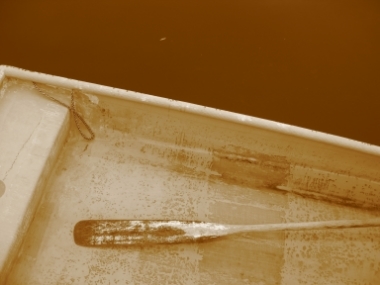
rowboat

Looking back over the past twenty years of my life, I notice that times of a lot of external change were usually preceded by a deep pull inward: a period of maybe a week, or two, or more, where I needed to become very still, write in my journal more than usual, and detach from the external world.

I remember a period like this in my early twenties where I took lots of long walks in the evening after work for several weeks. And another period years later where instead of going out on the weekends like I usually did, I stayed in and wrote intensely in my journal. I didn’t have the money to actually quit work or take a long vacation in order to go within, but it was like some force compelled me to figure out a way, anyway; it was a taking stock of where I’d been and where I was so that I could move forward in a clear and powerful way.

Except I didn’t really know this at the time. I can only see it in retrospect.

I have a couple of clients right now who are feeling this pull to move inward. And, not surprisingly, they’re having a hard time listening to it.

We often resist this inner calling for a while before we finally surrender to it. I think there are a several reasons for this:

1) We have an increasing number of distractions at our fingertips (the other night I was watching American Horror Story on my laptop WHILE looking up trivia about it on imdb on my iPad — and not fully present for either activity). I believe that our ability to focus — or maybe simply our willingness to concentrate on one thing — is becoming seriously impaired, and we need to take charge of this, STAT. It’s killing our souls.

2) We’re afraid of what we might find if we do go inward and be really present with what’s there. What if we discover that we need to make big, painful changes in order to live the life we want? Sometimes we’d rather not know and live in a murky sort of limbo.

3) We’re afraid of the intimacy that comes from having a relationship with ourselves. Truly tuning in and heeding that inward pull means we actually get to know ourselves on a really deep level. (I’ve had clients tell me that they don’t want to do morning pages for this reason. They aren’t sure they want to know themselves that well. They aren’t sure they’ll like the person who shows up on those pages.) Just as becoming more and more intimate with another person is a risk, so is getting to know ourselves. What happens when we encounter pieces of us that we just don’t want to be with?

The good news is that, whether sooner or later, our intolerance for a disconnect with our essential self wins out, and we do go inward. (It’s just usually better for us when we listen to the call sooner rather than later.) Our souls won’t tolerate the numbness that comes from a life half-lived, and eventually we are forced to listen.

Here are some suggestions, though, for making it easier to trust that pull inward, when it comes:

1) Take a weekly break from the online world. A total break, for a few hours, or more, if it feels workable for you. During this break, pay attention to your body, go out for a walk; remind yourself that you are a physical being in a body with a connection to the earth, not a just fingers and a brain connected to a device.

2) Just as you are allowed to take your time in getting to know another person (in fact, true intimacy with another often develops slowly, over time — the quick kind tends to evaporate), you are also allowed to take time in getting to know yourself. If you have resistance to connecting with yourself, it may be because you’re trying to do too much too soon. You can connect with yourself in small doses, whether that’s through journaling or just being present with what you’re feeling for a couple of minutes at a time.

3) Promise yourself that you don’t have to take action on anything you discover about yourself. Recognizing that you really want to move to Europe does not mean you have to take action on that knowledge, now or ever. You may choose to act on it (and hopefully, if it’s truly right for you, you will!). But, as I so often say to my clients, it’s simply good to know. That’s the point of connecting with yourself — to know the truth about yourself. It is not about forcing yourself to completely overhaul your life. I’ve seen time and again that we are far more willing to know our truth, and own it, when we trust that we do NOT have to take immediate action on it.

Have you struggled to trust the pull to go within and connect with yourself? What made it a challenge for you, and what helped? I’d love to hear, in the comments.

Image is “One Sepia Rowboat” © Tatiana Sayig | Dreamstime Stock Photos

Invisible progress

spiral

My friend Julia Roberts, an awesome creativity coach, posted on Facebook a couple of weeks ago that she “made lots of invisible progress today.”

I loved her term “invisible progress,” and told her so. Julia elaborated: “I think of pregnancy. It buoys us to know that even on the most uneventful day, we baked the baby a bit that day. We’ve already had a hand in altering the universe. Most days have more progress than we know.”

To that I say, YES! And I wanted to muse a little on the concept of invisible progress today.

Years ago, when I was a chronic overachiever, perfectionist, and dieter, I read these words by Geneen Roth: “Sometimes doing it looks like not doing it.”

What? I thought. How can that be? We’re either doing something, making tangible progress on it that we can see, or we’re not doing it, not making progress, and, therefore, falling behind.

And yet, even as my logical, rational mind rejected this idea, when I read the words, something resonated for me, deep in my abdomen. It felt true.

I realized (I was about twenty-two at the time) that I could live the rest of my life only believing in what I saw, or I could live my life trusting that sometimes things were happening beneath the surface, even if I couldn’t see them in the physical world (yet).

Trusting in invisible progress means recognizing that we need to balance our doing with being. While “perfect balance” between doing and being is not possible, we can acknowledge that we do need both in our lives. Most of us are better at one than the other. And some of us have trouble transitioning between the two (me!).

For me, invisible progress often happens when I am in a “being” state. For example, when I’m out walking, I sometimes get ideas for my next blog post or the next scene in my novel, or a completely unexpected solution to some problem I’ve been struggling with pops into my head. I’m not consciously “trying” to come up with ideas; in fact, they come because I’m letting my subconscious chew on things while I’m focused on my walk.

Invisible progress can also happen when we’re being distracted from what we intend to do. This week, I had to take my cat to the vet, something that seriously freaks me out. Both the stress and the actual act of going to the vet took a big chunk out of the day and I had to let some things go.

While I was at the vet, though, the vulnerable feeling that came over me actually ended up being precisely the feeling I’d been trying to get in touch with as I wrote the short story I’m working on. Even though I wasn’t able to put in much actual work in on the short story that day, the vet visit — the act of living life! — gave me exactly what I needed. I was able to return to my story and give that vulnerability to my character, which was exactly what the story needed in order to move forward.

And sometimes, as Julia pointed out so eloquently above, invisible progress is like gestation. Something is growing in us, but it’s not yet ready to burst forth into the world.

We may not even have words to describe it yet (fifteen years ago, I couldn’t have told you I was going to become a life coach one day — I didn’t even know then what a life coach was). We can try to push it and hurry it up, but ultimately, whether we’re growing a baby or a book, it will be born when it’s ready to be born and not one second before.

There are also days where we don’t notice our progress because it has become second-nature to us. Maybe we did something and did it well but since we’re so used to doing it, we don’t “count” it as progress or even think of it that way. It’s worth taking time to notice our accomplishments, maybe particularly the ones we tend to discount.

And, Melody Beattie has written that on some days, we need to congratulate ourselves for what we didn’t do. This, too, is “invisible progress.” I remember when I was having a particularly crappy day a few years ago and at the end of it I realized that, well, despite everything, I didn’t call my ex-boyfriend back even though he was trying to get in touch with me again, and I didn’t eat a box of Twinkies even though hearing from him really made me want to. And that a few years earlier I totally would have called him back and I totally would have eaten the Twinkies afterwards. Invisible progress for the win!

What does the idea of “invisible progress” mean to you? I’d love it if you’d share.

Also: I’ll be raising my coaching rates slightly in one week. If you’ve been thinking of working with me but haven’t gotten around to it, now’s a good time to get in on my current rates!

Image is “Spiral Diagonal” © David Coleman | Dreamstime Stock Photos

Creating during the rough times

twinflowers

A reader wrote me with this question recently (and gave me permission to share it here):

Lately I have a number of unexpected stresses in my life that have descended on me all at once. Almost every day I reach a point of overwhelm where I just have to do the minimum and then rest. My work on my novel has gone out the window. It feels like I spend every day just keeping up and managing my emotions, and have no energy left for anything creative. I keep trying harder to “do the work” and it’s just not happening. Any words of wisdom for me?

Oh! Creating during the rough times. What a challenge it is to get hit with a lot of “life stuff” and try to keep on keepin’ on as we have been.

In answering this question, I want to look at it from two different angles.

The first has to do with embracing reality.

When life throws a lot at us — whether that change is external or internal, or both — things are not as they were before. Pretty obvious, right? But let me repeat: life has changed.

I really want to underline this, because what I see again and again (and I see it in myself for sure) is that when our lives change radically — or sometimes even when we are afraid that they could change radically in the near future — we have a tendency to go into denial for a while.

Sometimes this looks like freezing and not doing anything. Often, though, it looks like trying to keep on exactly as we have been — even though things are not as they have been.

Which is perfectly normal. But — after a point — not totally helpful.

What embracing reality means from the standpoint of doing our creative work is that when things change, it’s pretty much a given that we won’t be able to approach it exactly as we have been.

If we are suddenly taking care of a sick child (or parent), that is taking up time. If we have to take on a full-time job when previously we worked part-time, that is taking up time. We literally don’t have as many hours in the day available for our creative work: it’s a fact.

Another aspect of embracing reality is who we are.

How do you tend to handle a lot of sudden change, especially certain types of change? How emotional and sensitive do you tend to be? Some of these things are innate in us: we’re not going to change them — even if we want to — beyond a certain point.

I value the fact that I have a very emotional nature (I’m a Myers-Briggs “feeling type,” for sure) and I’m also highly sensitive.

But this means that, for example, when I lost two loved ones in the same week several years ago, it rocked me to my core and I could not “just keep on.” I remember people suggested to me at the time that my grief could be good for my creative work, and that I could “write through the pain.”

That felt wrong in every fiber of my being. I didn’t want to create at that time. I wanted to grieve. Things had changed, and I needed to ask myself if there was value in forcing myself to continue writing during that time.

For me, there wasn’t. For someone else, there certainly may have been. But we need to take ALL of us into account during the difficult times — not just the part that wants to create and keep momentum with creative work. If it feels right to scale back, we need to give ourselves permission to do that.

The other angle I want to take here has to do with our emotions themselves and the way we approach them.

If, like my reader (and me!), you tend to be “emotionally intense,” the way you approach your emotions in and of itself can create more stress for you during the hard times — or not.

When a lot was going “wrong,” I used to say things like, “This sucks! I am so overwhelmed!”

Venting is a good thing sometimes. But it’s also important to look at what we say when we vent.

Here’s why: When I say “I’m overwhelmed,” I’m fusing my identity with the emotion. And, even if I value how deeply and intensely emotional I can be, my emotions are not me. They are simply energies moving through me.

Probably one of the things I say most frequently to a client when they share how they’re feeling about something is “Good to notice.” That’s because noticing is pure gold. We can’t change a thing if we don’t first have awareness of it.

And, at the bottom of it all, “who we are” is simply that awareness — not what we’re doing, what’s happening to us, the emotions we’re having or how we’re reacting.

So, now, when I catch myself saying “I’m overwhelmed,” I say instead, “I’m noticing that I’m overwhelmed” or “I’m noticing a feeling of overwhelm within me.”

Do you see how this immediately creates a space between you and the feeling?

From this space, you are both the person experiencing the emotion and the observer of that emotion, how it feels in your body, the way you are reacting to it, the thoughts you are thinking around it. And from that space, you are not rocked and thrown by your emotions; you are not fused with them; you are simply experiencing them.

So, during the difficult times, here are two places to start. I’d love to know if anything here resonates for you, or if you have other suggestions, in the comments.

And: If you’re in a rough patch right now and you need a shift, my awesome friend Dawn Herring, founder of Refresh with Dawn Herring and #JournalChat Live on Twitter, will be offering a Refresh Intensive e-course, starting April 3 (the deadline to sign up is April 1). And it’s only $21! Want to learn more? Find out, here.

Image is “Out of the Darkness” © Emi Pascuzzo | Dreamstime Stock Photos

Saturday Gratitude #4

2bbee1eb-7b72-45aa-92e3-414e397bc4f1_zpsfb213900

Last week’s Saturday Gratitude didn’t happen due to the fact that I had finally surrendered to sickness (see #2, below). But today, we’re back! Here are three things I’m truly grateful for this week. Play along with me if you’re so inclined.

1) Clarity.

I’ve been struggling for a long time with some issues that just wouldn’t seem to budge, no matter what I did, no matter how hard I tried to push through them. Once again, I had to come to the realization that pushing through does not always work. In fact, when I’m dealing with a complex tangle of stuff, it almost never does. I had to reach a place of acceptance — at a deep level — and now that I have, clarity is starting to peek through the clouds. Yay for clarity!

2) Health (and self-acceptance!).

Well, relative health — I’m almost feeling like me again. For eight days, I struggled with a bad cold and really could not function in a normal way. Of course — as tends to be my way — I fought the fact that I was sick for about four days and tried to function normally anyway. As above, I defaulted to trying to push through when, in the long run, it would have made things easier and simpler to accept that I was sick and give myself the rest I needed. But it took me four days to get to that place. Letting go does not come easily or automatically for me, even after twenty years of practicing. So, here’s where self-acceptance sweeps in to save the day.

3) Weather and walking!

Today, it feels like winter in Chicago again, but yesterday — oh! For the first time in ages, I was able to take a long walk in the sunshine and enough treacherous ice had melted off that I wasn’t slipping all over the place. I could even feel the onset of spring, and the birds and squirrels chattered wildly everywhere I went.

And I reconnected with how incredibly valuable — vital, even — it is to get out and be in nature. Walking outside solves my problems. Really, it does. Or maybe the more accurate way to put it is, it shows me that what I thought was a problem is actually not a problem. I just get so stuck in looking at it a certain way that I believe it’s a problem.

Walking, connection with the earth beneath my feet, shakes up the stuck. So, gratitude, too, for being healthy enough to walk, to move; for being able to hear the sounds of the birds and squirrels; for the ability to see the sun glinting on the melting snow, the dog trotting by, the smile on the face of the woman walking it.

What are you grateful for this week? I’d love it if you’d share.

Image is “Frozen Sun,” © Sebastian Corneanu | Dreamstime Stock Photos

Saturday Gratitude #2

After I wrote my first Saturday Gratitude post last week, I noticed how my attention shifted ever so slightly over the following days from what I was lacking to what is here already. And it’s funny how much more clear my choices and focus become when I am not in that panicky, lack-filled place.

It’s also so interesting to notice that, often, I don’t need nearly as much as I think I do. My needs only seem enormous when I am in that place of lack, and assuming that it is reality.

Then yesterday I happened to run across a Martha Beck piece on Oprah’s website where Martha mentioned that research shows that it is impossible to experience appreciation and fear at the same time. Yes! I noticed that so often this week.

So here is my Saturday Gratitude list for today — three things I am grateful for as this week draws to a close. We’ll see how today’s focus on gratitude shapes the coming week! And I’d love it if you’d join me in my experiment, if that feels good to you!

1) Writing in warmth. After last week’s computer crash, I finally have a new computer up and running, and because it’s a laptop, I can write anywhere in the house instead of sitting in my rather-cold office, which, truth be told, I had been feeling less and less inclined to do. This is kind of perfect, I realize, because I have been needing to approach my writing with warmer energy — more safety, more permission, more “it’s okay to be exactly where you are with this writing. It’s okay to let it be what it is, nothing more, nothing less.”

2) Recognizing when it was time for me to get offline, particularly off Facebook, and following up on that awareness by — getting offline! And how incredibly grounding and replenishing that turned out to be. As wonderful as the online world can be, as I stayed unplugged for a good while yesterday, I felt the remembrance that there is so much here, in the physical world, and in my own inner world. And it is good, and rich, and nourishing. With nothing else added.

3) Noticing old patterns coming up for me, and then noticing the thought that I shouldn’t be still doing this! Not after all these years. And then (here’s the part I’m truly grateful for), recognizing that, yes, the patterns are still here, but the way I interact with them, the way I deal with them, is much, much different than it was ten years ago. Or even five. And that, to me, is some kind of miracle.

Want to share yours? What are you grateful for this week?