Creating during the rough times

twinflowers

A reader wrote me with this question recently (and gave me permission to share it here):

Lately I have a number of unexpected stresses in my life that have descended on me all at once. Almost every day I reach a point of overwhelm where I just have to do the minimum and then rest. My work on my novel has gone out the window. It feels like I spend every day just keeping up and managing my emotions, and have no energy left for anything creative. I keep trying harder to “do the work” and it’s just not happening. Any words of wisdom for me?

Oh! Creating during the rough times. What a challenge it is to get hit with a lot of “life stuff” and try to keep on keepin’ on as we have been.

In answering this question, I want to look at it from two different angles.

The first has to do with embracing reality.

When life throws a lot at us — whether that change is external or internal, or both — things are not as they were before. Pretty obvious, right? But let me repeat: life has changed.

I really want to underline this, because what I see again and again (and I see it in myself for sure) is that when our lives change radically — or sometimes even when we are afraid that they could change radically in the near future — we have a tendency to go into denial for a while.

Sometimes this looks like freezing and not doing anything. Often, though, it looks like trying to keep on exactly as we have been — even though things are not as they have been.

Which is perfectly normal. But — after a point — not totally helpful.

What embracing reality means from the standpoint of doing our creative work is that when things change, it’s pretty much a given that we won’t be able to approach it exactly as we have been.

If we are suddenly taking care of a sick child (or parent), that is taking up time. If we have to take on a full-time job when previously we worked part-time, that is taking up time. We literally don’t have as many hours in the day available for our creative work: it’s a fact.

Another aspect of embracing reality is who we are.

How do you tend to handle a lot of sudden change, especially certain types of change? How emotional and sensitive do you tend to be? Some of these things are innate in us: we’re not going to change them — even if we want to — beyond a certain point.

I value the fact that I have a very emotional nature (I’m a Myers-Briggs “feeling type,” for sure) and I’m also highly sensitive.

But this means that, for example, when I lost two loved ones in the same week several years ago, it rocked me to my core and I could not “just keep on.” I remember people suggested to me at the time that my grief could be good for my creative work, and that I could “write through the pain.”

That felt wrong in every fiber of my being. I didn’t want to create at that time. I wanted to grieve. Things had changed, and I needed to ask myself if there was value in forcing myself to continue writing during that time.

For me, there wasn’t. For someone else, there certainly may have been. But we need to take ALL of us into account during the difficult times — not just the part that wants to create and keep momentum with creative work. If it feels right to scale back, we need to give ourselves permission to do that.

The other angle I want to take here has to do with our emotions themselves and the way we approach them.

If, like my reader (and me!), you tend to be “emotionally intense,” the way you approach your emotions in and of itself can create more stress for you during the hard times — or not.

When a lot was going “wrong,” I used to say things like, “This sucks! I am so overwhelmed!”

Venting is a good thing sometimes. But it’s also important to look at what we say when we vent.

Here’s why: When I say “I’m overwhelmed,” I’m fusing my identity with the emotion. And, even if I value how deeply and intensely emotional I can be, my emotions are not me. They are simply energies moving through me.

Probably one of the things I say most frequently to a client when they share how they’re feeling about something is “Good to notice.” That’s because noticing is pure gold. We can’t change a thing if we don’t first have awareness of it.

And, at the bottom of it all, “who we are” is simply that awareness — not what we’re doing, what’s happening to us, the emotions we’re having or how we’re reacting.

So, now, when I catch myself saying “I’m overwhelmed,” I say instead, “I’m noticing that I’m overwhelmed” or “I’m noticing a feeling of overwhelm within me.”

Do you see how this immediately creates a space between you and the feeling?

From this space, you are both the person experiencing the emotion and the observer of that emotion, how it feels in your body, the way you are reacting to it, the thoughts you are thinking around it. And from that space, you are not rocked and thrown by your emotions; you are not fused with them; you are simply experiencing them.

So, during the difficult times, here are two places to start. I’d love to know if anything here resonates for you, or if you have other suggestions, in the comments.

And: If you’re in a rough patch right now and you need a shift, my awesome friend Dawn Herring, founder of Refresh with Dawn Herring and #JournalChat Live on Twitter, will be offering a Refresh Intensive e-course, starting April 3 (the deadline to sign up is April 1). And it’s only $21! Want to learn more? Find out, here.

Image is “Out of the Darkness” © Emi Pascuzzo | Dreamstime Stock Photos

Saturday Gratitude #5

c42e8964-0e9d-4019-b8c5-734b1a8efc99_zpsaea0689b

This week’s Saturday Gratitude reminds me of the fact that, sometimes, we need other living beings to act as anchors for us. We can’t do it all alone.

Sometimes, I am spinning off into space, and I need someone to help me tether myself to the Earth.

If, like me, you tend to live “up in your head” a lot, you may need some support in grounding yourself, in coming back to your body, to the “real world” (which actually can be a lovely and nourishing place to be, even if the world in your head often seems more appealing).

Here are the grounding, tethering beings I was grateful for this week:

1) A dear friend who called unexpectedly at a perfect time to talk.

2) My amazing coach who reminded me of who I am.

3) My cat, who stretched out on my thighs while I was giving myself permission to just relax on the couch for a while yesterday afternoon. Oh, so grounding.

What are you grateful for this week? I’d love it if you’d share.

Note: My Saturday Gratitude posts will continue from here on every other Saturday.

Image is “View From a Plane,” © Alexander Briel Perez | Dreamstime Stock Photos

How do we know we’re ready to let go?

twofeathers

In my first few coaching sessions of the New Year, I noticed this interesting theme of loss, fear of loss, and ambivalence about loss surfacing.

Some of it had to do with completing a piece of creative work and feeling the emptiness that can come with finishing. This thing that has taken up so much of our heart space and head space and waking hours is now up and walking on its own and it doesn’t need us the way it did. There’s sadness — and one heck of a void — in that.

Some of it had to do with letting go of a job or a relationship. And the big thing coming up around that was, is it truly time? How do I know?

And some of it was about giving ourselves permission to let a creative project, job, or relationship go — even though it did not feel “complete.” It was about deciding not to continue. (And that’s rough on perfectionists, which most of my clients tend to be. You mean I’m allowed to give up on it? I’m allowed to not see it to completion?)

My “big word” for this year is permission. I need to focus on permission because I’ve noticed that I can go for hours, sometimes days, forgetting that, yes, I actually do have permission to do things the way I need to do them. To feel things the way I feel them.

So I can’t help seeing these issues with letting go through the lens of permission.

And that leads me to this: Often, when we’re afraid of letting go, it’s because we haven’t given ourselves permission to NOT let go.

Some militaristic part of us jumps up and says, “Okay! Time to move on! Let’s get moving here!”

And those parts of us which are not ready to let go, sometimes not even NEARLY ready, get trampled in the stampede.

But, as I’ve written here before, we can’t truly arrive anywhere until ALL of us shows up. This concept came to me from the writings of Robyn Posin, whose beautiful website you can find here. She uses a stoplight analogy: We can race to the light, but if it’s red, we won’t actually move forward until it turns green.

There may be a part of us that is holding a green light, but many other parts of us are still cradling the red, tightly.

So, permission. To be right there.

That part of us that the light has already turned green for will probably be very impatient with the parts of us that need to go slower.

And working with the impatient part of us might mean saying to it, “Yes, I see that you’re really ready to go, and I get that. AND, the whole of us is not ready yet. You’re not allowed to let your impatience run the show. But you’re totally allowed to be impatient.”

As long as there is conflict between the parts of us that want to let go and the parts of us that don’t, we are not at peace.

And when we’re not at peace, when we’re locked in struggle, we’re in a poor place to make decisions about anything big. When we’re struggling, it’s painful, and any decision we make tends to be more about getting away from the pain than moving toward what actually feels right to us.

The questions to ask the impatient part of ourselves are: What’s scary about slowing down? What’s hard about being in the present moment?

The questions to ask the parts of us who aren’t ready to let go are: What’s scary about moving forward? What’s hard about stretching ourselves into the future?

Allow these parts to talk to each other. Write down what they have to say; you might try using a different color of pen for each part. When you can hear them all out (and notice that each of them has wisdom and truth), you can begin to integrate their needs.

And when you have integrity, you have peace. And from peace you can truly let go in wholeness.

What are your challenges around letting go? Do you tend to let go quickly, or do you really hang on? I’d love to know how it works for you, in the comments.

Image is Feathers Against the Sun © Kmitu | Dreamstime Stock Photos

Merry Christmas + tons of permission

image

As I was thinking back over 2013 and touching base in my heart with all the amazing people I connected with this year, I noticed that so often the one thing we forget to give ourselves is permission.

When fear comes up, we have this tendency to skip the step that says, “This is what’s happening for me right now, this is where I am and how I feel. And I have permission to be here, feeling all this and being where I am.”

We want to jump over this uncomfortable, vulnerable space. It feels out of control, it feels like the unknown, and we’re not sure anyone else would get it if we shared what’s happening for us.

As a coach, I have the honor of working with clients who are in this space. And I feel it’s my responsibility to let them know that, whatever’s happening for them, it’s totally legitimate and they have total permission to be there. For as long as they need to be there.

Usually, though, we’re in a hurry to get out of this space. Mostly because we think being here means something is wrong. It doesn’t. It means we’re getting ready, preparing for that next right step to reveal itself, letting go of anything that would be incongruent with us being where we need to be next.

What we need during these times is space around everything we’re feeling, everything we’re letting go of, and the trust that whatever’s happening within us — and without — is in motion. It’s not static; it’s constantly changing, if we can create enough space around it to really observe it.

So, my gift to you this Christmas: tons of permission! Yes, it’s truly okay — in fact, it’s necessary — to be on whatever step you’re on right now. Nothing is wrong and your timing is perfect.

Trusting in where your energy takes you

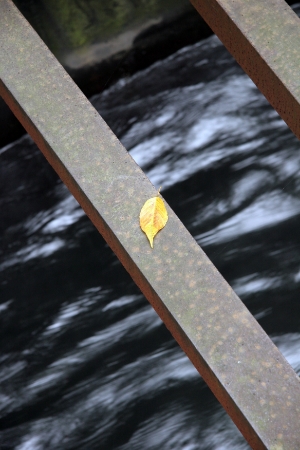
leafwater

One day last week I sat down to write and felt distracted. This is not uncommon. I often experience resistance, confusion, tedium, and occasionally even dread, when it comes to working on my novel.

In fact, I don’t usually call it (in my own head at least) “working on my novel” anymore. I call it “playing with my novel.” This feels much lighter and opens up possibility, curiosity, excitement. When I make it less grave and serious, I’m more in touch with why I actually want to do it in the first place.

That said, sometimes I feel stuck and it feels hard. And I hang in there with it anyway, because it is a commitment. And because sometimes I reach that lovely place of getting lost in my story. And the more I practice hanging in there with it, the more I reach that place.

But on that day last week, something else was going on. I sat and I sat and I sat, and I wrote and revised and tinkered. But my energy was not with the writing. I had the odd sense of pushing something away.

I glanced over at my open notebook, to some morning pages I’d done the day before. Jotted in the margin at the top of the page was a reminder to call a friend of mine, a dear friend whom I’d been meaning to call for a while. But I’d been putting it off because, although I knew that talking to my friend would be nourishing and fun, I’d told myself that she was probably busy and wouldn’t have much time to talk, anyway. I kept telling myself I’d wait and call “when we were both less busy.”

Now, the reminder note jumped off the page at me. And I realized that there was a ton of energy in calling my friend right then, right in that moment.

So, I stepped away from my computer and dialed my friend’s number. She was home and said she’d been thinking about calling me, too — that very morning. But she figured I was probably busy with coaching or writing and she’d wait to call me until the weekend.

We talked for an hour and it felt soooo good. It filled my creative well to — at least — a 10 (read Julia Cameron’s The Artist’s Way to find out more about the creative well). You know those friends who accept and love you so deeply that it doesn’t matter what’s happening for you, or not happening for you, because the connection is about your very essence? That is this friend, for me.

And something important came out of this call. I realized that I often make an assumption that the people I care about are busy and they need to “fit me in.” And this assumption is not reality. In fact, my friend was making the same assumption about me, but in truth I would have welcomed a call from her.

After we talked,  I returned to my novel with a sense of lightness and new possibility, and I no longer had that nagging sensation that there was something important I wasn’t attending to. I could give the writing my full attention.

If I hadn’t followed my energetic pull toward calling my friend, I would have missed out on that connection and that insight.

And yet, my rational mind wondered if I wanted to step away from the novel simply because it was hard and it was my way of “procrastinating.” It can be tempting to “power through” at these times, no matter what. And that’s not necessarily a bad thing to do when we’re developing a habit, whether it’s writing or something else.

But we get to the good stuff in life by acting on what feels juiciest for us in the moment. I don’t mean by acting on our every impulse, but by following our intuitive urges. Often, it’s as simple as asking, “What would light me up right now?”  On that day last week, contacting my friend was that thing. It was “up” for me, calling out for attention. And I needed to listen.

Sometimes, our “creative work” can serve as a means of avoiding doing our inner work. Just as we can avoid our creative work, we can also use our creative work to avoid — or push down the list — other things that are vital to our well-being. Like our relationships. Most particularly, our relationship to ourselves.

So notice the quality of your energy as you create. Is the creating connecting you with yourself, with the world, with that beautiful mysterious space we go to when we create — even if it’s a huge challenge at the moment?

Or, do you have the sense that you are using your writing, artwork, business brainstorming, or whatever it may be, to push something else away, as I did last week? Just notice. You don’t have to stop what you’re doing. Just tell yourself the truth, whatever it is for you.

Because, ultimately, creativity is being connected to what’s true for you in the moment. Because that is when you are most you. And that is what I wish for you — that you be most you as often as possible. That, more than anything else, is your gift to the world.

Image is “Leaf on Steel” © Chris Mccooey | Dreamstime Stock Photos

What gift can you give yourself?

swirlgift

Sometimes I start my day with this question: “What gift can I give myself today?”

On some days, a particular word immediately comes to me. Yesterday it was “stretch.” And I knew I wanted to move my body, so I went for a morning walk, even though we had a sweltering day here.

On another level, I knew stretch meant something else. And I made a phone call I’ve been putting off for a while — the conversation was going to be a stretch for me, but since “stretch” was the gift, I knew it would be okay. And it was.

Sometimes a word doesn’t immediately come to me. So then I let an image bubble up in my mind’s eye.

Once, I saw a heart, with wings. I wasn’t sure what it meant at first, but then some words came to me: courage, Cowardly Lion courage. And flight. On that particular day, flight meant literal flight — I gave myself permission to take a trip I’d been on the fence about, and booked my plane ticket.

And permission is another one. It’s one of the most powerful gifts I can give myself, but I have to be reminded of this often. And, I need to get specific about it. Permission to what? Once, I asked this question and an image of me sleeping bubbled up. I needed permission to rest that day.

Another day I asked, permission to what? And an image of me reading from my novel-in-progress to a large group of people bubbled up. Ahhh. Permission to be seen.

What other gifts have I given myself? The gift of endings, of allowing things to end — even things that have been a success and are still successful. The gift of beginnings, of stepping into what is new, even when I’m unsure of the first step and the second is hazier still.

Some of my favorite gifts are curiosity, wonder, and play. Sometimes the gift is tenacity. Sometimes it’s sovereignty. Sometimes the gift sounds something like “no ground to give.” And I know I want to focus on holding boundaries that day.

The gift can be something concrete and material as well. One time the image that came to me was of an exceptionally gorgeous journal I’d seen in a shop down the street. It had a filigreed gold cover with a turtle on it. The journal was expensive and I knew I didn’t want to spend the money on it right then, but the image of the turtle reminded me of my belief in taking slow, steady steps; that so many of our worthwhile journeys are marathons, not sprints.

One day last week the gift was “soft.” I was feeling extra-hard on myself that morning and my energy felt tight, rigid. I knew I needed to shift into soft energy. And I moved through my day with so much more kindness toward myself, and therefore, toward the world.

That is why I make my focus what I can give to myself. I like to think I’m pretty good at giving to others, but in truth I can’t give what I don’t have.

Want to try it? What gift can you give yourself as you move forward in your day?

Work With Me: I have openings for new coaching clients beginning in September. Need some support in connecting with your gifts? Check out my offerings, here.

Image is “Swirl Gift with Echo Blur” [cropped] © Patricia Ulan | Dreamstime Stock Photos

Five things I’ve learned about trust

This is my second post for The Declaration of You BlogLovin’ Tour (scroll to the bottom of this post to find out more). This is the final week of the tour, and the topic is Trust.

ferriswheel

I used to think I couldn’t trust others and I couldn’t trust life. It took me a long time to see the turnaround: It was me I thought I couldn’t trust. Once I saw this, I wanted to really know what it meant to trust myself. Here are a few of the things I’ve learned:

1) Trusting myself means that I allow myself to experiment, to stretch, to make mistakes.

I first encountered the idea of trusting myself when I discovered the writing of Geneen Roth in my early twenties. I was a chronic dieter at the time, and Geneen’s concept of trusting myself to know when I was hungry and to stop eating when I was full was a radical thing to me.

When I first tried it, the perfectionist in me wanted to “do this trusting myself thing right.” I thought if I made a mistake, it was proof I couldn’t trust myself.

It took me a few years before I’d integrated the truth that trusting myself is about the way I relate to myself when things don’t go as I want them to — it is about the way I relate to myself, period. It has nothing to do with being “good” or “right” or even wise. It is a way of living in the world. It is a choice.

2) Self-trust is intimately linked to self-acceptance.

If I’m judging myself, you can bet I am not in a place of self-trust. In fact, I’ve found that my intuition will “hide out” when I’m judging myself harshly. Intuition is fierce, but it’s often quiet and subtle in how it comes to us.

My cat usually disappears when someone who speaks loudly and has heavy footsteps enters the house. Intuition is similar — it tends to hide out in the closet when my inner critic starts raging. It’s not that intuition is afraid of the inner critic (intuition fears nothing; it simply is). It’s more that intuition (like my cat) has a very low tolerance for drama. So it goes silent and seems to disappear when that harsh voice within me goes on a rampage.

I can always reconnect with my intuition, though. I just need to get quiet again. Intuition never fails to show up when I’m in a place of peace. And the more deeply I can accept myself, the more peaceful I feel.

3) Trusting myself means having faith that my intuition is there for a reason, and taking the risk to follow it.

It’s the process of acting on my intuition that makes me feel alive, not the outcome, which will never be completely within my control, and which, I’ve found, I often cannot accurately predict.

The more I trust myself to take action on my intuition, the better I get at it, because I create more and more evidence for the fact that it feels good and right and empowering when I trust myself. It’s like strengthening a muscle. (You may not be sure you have the “self-trust” muscle if you haven’t used it a lot — but you do. Trust me.)

4) No one else’s truth is a substitute for my own.

The best help from others is guidance that points me back to my own inner compass, and reminds me how important it is.

It’s good — and often necessary — to gather information and receive advice from others, especially those who’ve been where we are. But at some point, we need to sift through this guidance, integrate it, and check inside ourselves for what feels right for us.

How do we know it’s time to stop going to outside sources? When the information we’re getting is creating more confusion, not contributing to clarity.

5) “Trusting myself” is a belief system.

There are no guarantees of what the outcome will be if I trust myself.

I may trust myself, take action from that place, and find that things happen in a way I couldn’t have predicted.

I’d love to tell you that the way they happen is always better than I could ever have imagined — but while that is sometimes true, it doesn’t always feel like that. Sometimes, I trust myself and things don’t turn out the way I’d like them to — and I don’t understand why things happened the way they did until years later, if at all.

But regardless of outcome, it’s a heck of a lot easier for me to make decisions — and to live with them — when I operate from a platform of self-trust. It comes down to how I want to live: From a space of doubting myself, or from that solid foundation of knowing I’m worthy of my own trust.

I know this: It feels better to trust myself, and to act on that trust, than it does to spin my wheels in the sticky mud of indecision, doubt, and fear.

What have you learned about trust? I’d love to know — feel free to share, in the comments!

TDOY_bloglovintour_banner

The Declaration of You, published by North Light Craft Books and available now, gives readers all the permission they’ve craved to step passionately into their lives, discover how they and their gifts are unique and uncover what they are meant to do. This post is part of The Declaration of You’s BlogLovin’ Tour, which I’m thrilled to participate in alongside over 200 other creative bloggers. Learn more — and join us! — by clicking here.

Top image is “Ferris Wheel” © James Hearn | Dreamstime Stock Photos

What triggers your resistance?

brick wall

One of the benefits of being a rabid journaler is that I have ample evidence of my patterns and habits and defaults. All that stuff I “tend to do” when I’m scared, overwhelmed, panicked, what have you. It’s there in ink on actual, physical pages. Hard evidence.

A client who also journals told me recently that he picked up a notebook from ten years ago and was depressed to see that he was struggling with exactly the same stuff as he is today. He thought it meant that he hadn’t changed at all, had been stagnating for ten whole years.

Which is so not the case.

Of course you were struggling with the same stuff back then, I said. Those are your core issues.

We all have core issues, those deep, resonant conflicts within us that we’re on this earth to be with, work with, and, over time, learn from. These issues are our teachers. It’s not about overcoming them or even letting go of them. The work is to become more and more intimate with our core issues as we cycle through them again and again in our lives. We peel our layers like an onion, each time getting closer and closer to our center.

I still struggle with much of the same stuff I did at twenty — it just doesn’t throw me as much, because I understand it better. I know how to work with it, play with it, in ways I didn’t then. In fact, some of the areas where I’m strongest now are the areas I had most difficulty with at twenty, even if those areas still cause me trouble.

For me, this is the work of my life. This is my real work, above, beyond, and beneath any other “work” I do in the world.

It’s these core issues, though, that trigger our resistance. Of course they do. They’re painful. Nobody wants to delve into pain. When I feel like I’m spinning my wheels and I just don’t see a way out, I can be pretty sure that some core issue has risen to the forefront and I’m in resistance to it.

What’s tricky is that we can often be blind to our core issues when they’re “up” for us. This is why I keep lists of my “resistance triggers” in my journals.

When I’m feeling stuck, I go to one of my lists. Resistance triggers basically boil down to painful thoughts that reflect our core issues. Here are some sample triggers from one of my lists:

You have to write something special, original and amazing or there’s no point. People have to be totally wowed by your writing or why are you doing it?

If you take too much time to yourself, people you love won’t understand and they’ll leave you. You have to be available to others when they need you or you’ll end up alone.

Even when you work really hard, it isn’t enough — what’s the point?

It doesn’t matter if you’re tired. Just keep going.

These are some of the biggies for me. You get the idea. The reason I write this stuff down is because I often don’t recognize that these issues are “up” for me. All I know is I’m feeling sad, empty, or pissed off and like I can’t move forward. Often, when I consult one of my lists I immediately see the thought causing the resistance jump off the page at me. Ahhh. Now I have something to work with.

So let me show you how this resistance thing plays out: If I’m in the grip of a thought like, “If you take too much time to yourself, people you love won’t understand and they’ll leave you,” but I don’t know it, I’m often over-responding to others, overscheduling myself, saying yes more than feels good to me.

Pretty soon I’m fed up, angry, withdrawing from and resisting interaction — even interaction that could be helpful and nourishing to me (such as taking time to truly connect with myself or with a friend who deeply wants to hear me).

If I’m in the grip of a belief like, “You have to write something special, original and amazing or there’s no point,” I become extra-hard on my writing. I become unwilling to experiment. I belabor every sentence. Everything feels squeezed and distorted, like I’m trying to fit my words through a teeny, tiny keyhole and hope they can make it through to the other side as magical, life-altering prose.

Pretty soon I don’t want to sit down at my desk at all. Writing has become painful, not life-enhancing. And certainly not fun. So now I’m resisting writing at all; I’ve become disconnected from why I ever wanted to do it in the first place.

Writing these triggers down as we become aware of them is a huge act of self-care. It’s about knowing ourselves. Seeing your thoughts on paper is a good way to cut them down to size — sometimes, thoughts that feel horrifying when they’re stuck in our heads can look absolutely ridiculous when you see them written down.

Just the act of noticing that I’m being triggered by one of these thoughts can create a huge shift for me. I’m no longer merged with the thought — I’m now outside of it, observing it, so it’s over there where I can question it, and not a driving force within me. The next step is to question these thoughts, look for evidence of where they are not true. (The Work of Byron Katie is an excellent way to question your painful thoughts.)

What triggers resistance for you? How do you know you’re “in it”? Let me know in the comments!

Image is “Stone and Brick Wall” © Peter Szucs | Dreamstime Stock Photos

The shark is working well enough … really.

sharkkite

Anyone who knows me fairly well knows that I am obsessed with the movie Jaws. I’m not sure how many times I’ve seen Jaws, but … just … don’t get me started. (Writers, study Jaws if you want to see a movie where every single scene moves the story forward. Nothing is wasted.)

If you know anything about the making of Jaws, you know that the mechanical shark, a.k.a. “Bruce”, didn’t work very well. In fact, there were so many problems with the shark that it wasn’t seen on screen nearly as much as director Steven Spielberg had originally intended. During production on Martha’s Vineyard in 1974, the frequent refrain from the loudspeakers was “The shark is not working. The shark is not working.”

Welp. As we all know, the shark worked well enough. In fact, the semi-working shark worked so well that Jaws was the movie for which the term “summer blockbuster” was coined, back in 1975 when it first appeared in theaters.

One of the main things I do as a coach, when I have a session with a client, is listen for stressful thoughts. Thoughts are stressful when they are not deeply true for us, but we believe them anyway. So when I hear something that strikes me as painful or stressful for a client, I scribble it down in my notebook. If it seems important, I’ll point this thought out to the client and we’ll work with it.

I was going back over some notes before a session recently, and it really hit me just how often our thoughts are perfectionistic. They have to do with how we’re not doing enough, not doing it well enough (whatever it is), and how our reality is not matching the vision inside our heads. (I say “our” because, like my clients, I have a strong penchant for perfectionism. I’m always teaching what I most need to learn.)

I’ve written a lot here about perfectionism in the past (you can click on the categories link titled Perfectionism to the right to check out more). But I don’t know if I’ve emphasized how important it is for perfectionists to make a point of noticing what is working — and what is working well enough.

Because one of the biggest issues I see perfectionists struggling with is decision paralysis. We’re so terrified of making an imperfect decision and the havoc it will surely wreak that we hang out in indecision until it hurts. And then, then, we beat ourselves up for not making decisions quickly enough! It’s a totally lose-lose scenario.

And here’s the thing: We don’t struggle with decision paralysis as much when we give ourselves credit for having made good decisions in the past. Most perfectionists have a pretty big story about being poor decision-makers (it’s in keeping with the idea that we never quite measure up). We are also control freaks, so we tend to think we have much more control over our futures than we actually do.

Therefore, we think, we have to weigh each present or future decision very, very carefully, so we don’t repeat our past mistakes and don’t screw up our futures.

Why do we have this story? Probably because when life happens, as it will, it feels more familiar for us to blame ourselves than to admit the truth: Life is messy, and life is not fair. No matter how “good” we are, we can’t escape this reality.

So what if we were to flip this story on its head? What if we were to look back and notice how we made good enough decisions, and how some of them were even really good? How would we proceed if we basically believed that our lives worked well enough?

I think we’d go on making our movies, doing our writing, living our lives. We’d trust ourselves to create something good. What if Spielberg had decided to resign in the middle of production on Jaws because the shark wasn’t good enough? (Well, probably Universal would have replaced him with a different director. And we’d have had a very different Jaws. Which would have been a damn shame.)

At the bottom of it all, the stories we tell ourselves about ourselves, about our lives, are either helpful or not helpful.

I don’t mean that we should tell ourselves things we don’t truly believe. I’m not talking about piling positive affirmations on top of our fear like white-washing a rotted fence. I’m saying we need to really give ourselves some credit. I’m saying we need to lower our standards enough that we can show up in our lives and in our creative work (or creative play, as I prefer to call it).

Perfectionists, aim for the B rather than creating A+ work that exists only in your head. Make the decision that feels best to you and call it a day, knowing you can course-correct tomorrow. Admit that the shark at the core of your movie is working well enough to continue the filming. Create your flawed-but-amazing works of art and live your flawed-but-amazing lives.

Work With Me: I work with writers, artists, artisans and coaches who are feeling vulnerable and stuck. Learn more about how we might work together, here.

Image is Shark Kite by Ryan Somma at flickr; some rights reserved

Sometimes it’s simpler than we think

sunriseduck

I often write here about how anything we struggle with is usually more complex, and less black-and-white, than we make it. Which is good news. Black-and-white, all-or-nothing thinking is at least part of the issue about 99% of the time we’re stuck in fear.

But for some of us, and particularly for those of us who fall into my just-created category of “so-beautifully-complex-it’s-ridiculous” (and I say this with deep love and respect because I adore people who are ultra-complex), it can be good to remind ourselves that sometimes it’s actually kinda simple.

I’m thinking of that useful acronym, H.A.L.T. It stands for Hungry, Angry, Lonely, Tired. When we’re feeling crappy, it helps to ask if one of these things is going on for us. Hunger is one that sometimes sneaks up on me. If I don’t catch hunger before it becomes full-blown, I get into low-blood-sugar panic. This happened to me last week and I found myself grabbing food I’d never normally buy off the shelves in CVS, then ripping open a package of cookies in the car. I got so hungry I went into survival mode — food, now!

Luckily, this rarely happens because I don’t allow myself to get that hungry. But it was pretty simple: I derailed my afternoon because I convinced myself it was important to run errands before eating lunch. I didn’t need to make it mean anything other than that, even though I caught myself having thoughts about how clearly my life was spinning out of control as I stared through my windshield eating Mint Milanos in the CVS parking lot.

It’s good to notice what we’re making something mean. (In fact, if I were forced to choose my all-time favorite coaching question, it would be “What are you making that mean?”) Feeling crappy doesn’t always mean so awfully much.

Like today, I was sitting in my office about to start working on this blog post, and I started feeling uncomfortable and vulnerable. I often feel uncomfortable and vulnerable before I start writing a blog post. But in this case, I was also cold. (The heat doesn’t reach from the living room into my office very well, so I need to be extra-bundled-up while I’m in here during the winter months.) I put on a warmer sweater and I felt instantly more comfortable and a lot less vulnerable.

My writer friends and I have noted that when we’re tired, we’re a lot more judgmental about our writing. Geesh, when I’m tired, everything looks a little bit bleaker. And the same for when I’m dehydrated.

Sometimes, things truly are complex and need some heavy untangling. But sometimes, it really is as simple as putting on a sweater or drinking a glass of water or getting more sleep. When you’re so-beautifully-complex-it’s-ridiculous, this can be deeply comforting to remember.

Try this: The next time you find yourself grid-locked by analysis paralysis, apply H.A.L.T. (Hungry, Angry, Lonely, Tired) to your situation and see what you comes up for you. The last time I did this, I discovered I was actually lonely, called a close friend, and emerged from the conversation with an entirely new — and workable — perspective on my situation, even though we hadn’t actually discussed what I was worried about.

You can check out my previous article on analysis paralysis, here.

Image is “Sunrise Solitude” © Lyn Adams | Dreamstime.com