Are you at the top of your mountain?

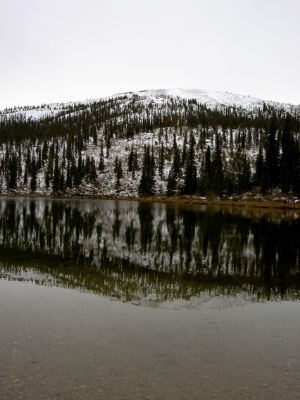
mountainreflectionI have to admit that I’ve felt overwhelmed by the flurry of goal-setting blog posts, announcements, and what have you as we’ve begun the new year. In fact, I’ve entered the new year in a bit of burnout.

Over the last couple of days, I’ve realized why.

I am in a season of needing to reflect on what I’ve accomplished over the past couple of years — to really take it in, acknowledge it, and absorb it a bit before I can move forward into a new season of envisioning fresh goals and horizons for myself.

And when I’m in a “reflective, introspective” season of my life, it can be difficult to rub up against a lot of “doing” energy. The energy doesn’t match my quieter, “being” energy, and it can also trigger quite a bit of “compare and despair” in me (“I should be doing more,” “I’ll never get to where he/she is,” etc.).

Back when I went through life coach training, my mentor Martha Beck often shared these words from The Buddha with us: “Just as you can tell it’s the ocean because it tastes of salt, you know it’s enlightenment because it tastes of freedom.”

My truth, my piece of enlightenment, for the moment, is that I’ve reached the top of my personal mountain and I need to sit here on a rock and take in the view.

And I realize, too, that I in fact needed to sit down and take in the view quite a while ago.

But I didn’t let myself.

I kept on pushing and goal-setting — even though I know all too well that “push” energy is not effective for me either in the short or long run — and now I am tired.

When we climb a mountain, we need to acknowledge it when we get to the top. We need to appreciate the gorgeousness of the view we’ve got from here. We need to acknowledge and integrate what we learned on the way up, at least for a while, before we start climbing again.

What we don’t need to do is immediately scan the landscape for an even higher mountain and decide it’s time to climb that one — right now. This is the way we get into burnout. This is the way we lose touch with ourselves, with our own inner compass which is specific to our journey, and not anyone else’s.

We live in a culture that believes busy is good. Doing is good. More goals, and pushing, and striving, are good.

I think goals are terrific, and necessary — but we are not always in “goal-setting season.” Sometimes we’re in “view-appreciating season.”

Here are some signs that we may not be in our personal “goal-setting season” and in fact may need to shift into our version of “view-appreciating.”

* The thought of doing anything “big” creates a feeling of instant exhaustion.

* We’re having trouble concentrating for more than a few minutes at a time.

* We notice that our “social self” — the self that cares a lot about what other people think — is chattering so much that our essential self is having a hard time getting a word in edgewise.

* We take lots of actions but they don’t seem to have much resonance for us. They don’t feel good or satisfying.

So, how can we appreciate (and really take in) the view we’ve arrived at?

* Think back on the accomplishments that truly pleased or delighted you that got you to where you are. Write them down or share them with someone. Writing them down and/or sharing them makes them more real. (And notice any tendency in yourself to downplay your accomplishments or compare them to someone else’s. This, too, contributes to burnout!)

* Commit to crossing the non-essentials off your to-do list for an entire week, or a month, or however long feels good to you.

* Acknowledge the person you were before you climbed this mountain, and notice the differences in yourself now that you’re at the top. Is there anything you let go of on the way up? A part of you? A job? A lifestyle? A way of being or doing? It’s important to acknowledge how we’ve changed so we can move forward from who we are now, not who we used to be!

* What are the “shoulds” that have been coming up for you? Are they based on what you really want — given who you are now — or are they based on the person you were before you reached the top of this mountain?

Are you at the top of your personal mountain? If you’ve been on a journey, have you really acknowledged what you’ve accomplished and let it sink in? I’d love to hear from you.

Image is “Snowy Reflection” © Martin Brown | Dreamstime Stock Photos
There’s no “right way” to be social during the holidays

pinecone

Sometimes when I look back, I cringe at all the pressure I used to put on myself to be “differently social” than I actually am, especially during holiday times. I am an introvert (and no, by that I do not mean that I am “shy”, but that I need plenty of alone time to recharge).

I am an introvert who loves people, deeply. But I also cannot be around people for more than a few hours without needing to withdraw and spend time alone.

Like many introverts, I really struggled with this in childhood, when my natural introversion was viewed as shyness that needed to be “cured”, or a “fear of people” that needed to be conquered.

Thankfully, I am now an adult (in some senses, anyway!) and I have a lot more control over my life and the ways I choose to socialize than I did when I was nine.

The holidays, nevertheless, can prove to be a challenge for my introvert self.

But I’ve learned to give myself lots of permission over the years.

Back when it was harder to give myself permission, I needed to get it from other people.

Sometimes people give us permission by their example and they don’t even know it. This is a beautiful thing. Like:

* The Christmas party I was at one year where, after three hours, I felt completely depleted but was sure if I left before the gifts were opened, my host would be offended. So I suffered through, feeling overstimulated and disconnected. At hour number four of the party, a couple breezed in, said hello to the host, and then added, “We’ll only be able to stay for fifteen minutes. We’re dropping by another party tonight.”

Doh! From that point on, I realized it was perfectly fine for me to stay at a party for the amount of time it felt comfortable for me to stay. I don’t really give parties (unless three people coming over is a party), but I know for sure that I would not want anyone I cared about hanging around my party if they were really ready to leave. So now I apply that logic to myself.

* The friend, way back in college, who said “no” to the spur of the moment concert invite I’d given her. After a thoughtful moment, she said, “It sounds great, but I really want to have some time to myself tonight and enjoy my own company.”

Not only was I not hurt by her honest “no”, but she’d unwittingly given me permission to freely tell others that I wanted to spend time by myself — not the easiest thing to do at any age, but especially not back when I was twenty or twenty-one and staying home on a Friday night was not exactly the “socially condoned” thing. Thanks to this friend for being who she was and owning it.

* My grandpa, who took his after-lunch nap no matter what, no matter who was around, whether it was Christmas Day or a regular old Monday. His naps were a part of his daily routine and I don’t think it ever occurred to him to not take them just because guests were staying over for the holidays. They were something he needed; part of his self-care regimen. When he was done with his nap, he woke up and started talking. But during his nap, he was “unavailable.”

Here are four kinds of “breaks” I employ nowadays to rebalance and recharge when I’m around people during the holidays.

* Walk breaks. I tell people I need to stretch my legs for a bit and I’m going out for a walk. This works especially well if it’s really cold, because if it’s cold enough, no one will offer to join me.

* Journaling breaks. I shut myself into a bedroom or even the bathroom and write a couple of paragraphs in my journal. Sometimes just writing what I see around me is helpful because it reconnects me to the present moment. Sometimes I write more of a vent or a rant or whatever it is I’m feeling.

* Pet breaks. If there’s a dog, cat, or other animal in the household, I go and hang out with it for a while. Animals always somehow reconnect me with myself and have that nonjudgmental energy that can be truly helpful during certain, er, moments of the holidays. And if there’s a cat around, you have the plus of the purr. It’s soothing and research says a cat’s purr can even heal broken bones.

* Go-and-get-something breaks. If something is needed — more 7-Up, more paper napkins — I offer to go to the store and get it.

These are just a few things I do — I’m always inventing others. Because here’s the truth of it: the better I can take care of myself during the holidays, or any time, the more present I am to connect with the people I love. Just a ten-minute walk outside can work wonders for my ability to remain present.

And, here’s an article I wrote last year at holiday time on what to do when don’t get your downtime.

How do you take care of yourself AND connect with those you love during the holidays? I’d love to hear, in the comments. And to readers in the U.S., Happy Thanksgiving!

Image is “Cone Alone” © Bx3t | Dreamstime Stock Photos

What would make it easier?

Drop of water

Several months ago, I led a small group of my clients through a support session to help them with fears that were coming up around their creative projects. They were all nearing the finish line and feeling a lot of resistance to completing, so I thought, maybe we could all support each other in this.

Something we noticed during our session was that we all had a tendency to complicate things to the point that we felt utterly paralyzed about how to move forward. The closer we got to finishing, the more questions about what might happen when we brought our projects into the “real world” came up.

A lot of the stuckness, we found, was based on fears of what might — or might not — happen in the future, if we actually did finish the projects. What if we put them out into the world and no one noticed? What if we put them out there and offended someone close to us with our content? What if we put them out there and got criticized or booed?

All of these things, of course, are distinct possibilities when we put our work out into the world. Focusing on these possibilities can also be effective ways to distract ourselves from actually finishing our work so it can BE out there.

So we came up with this question to ask ourselves when analysis paralysis set in: What would make it easier? What would make it easier, right now?

Just asking this question, we noticed, created a feeling of relief (which good questions usually do — and most of us are not in the habit of asking ourselves good questions!).

We brainstormed a list of possibilities this question generated, and here are some of the things we came up with:

* I could, just for today, commit to staying in the present moment with my work.

* I could stay in my own business. (This comes from Byron Katie’s “three kinds of business” — my business, your business, and God’s business [you might also call this the universe’s business or simply “reality”]. As I’ve written here before, much of the time I feel stress it’s because I’m in someone else’s business. That includes worrying about how my creative work will affect others in the future. There’s a place for this concern, but it’s not while we’re creating the work.)

* I could go to bed earlier and wake up earlier.

* I could check in with someone who helps me gain perspective when I’m stuck.

* I could drink more water. (This might sound silly and completely unrelated, but truly, dehydration can cause us to feel stuck, because water helps our physical systems move and flow. And, particularly if your system is highly sensitive, you may be susceptible to the effects of dehydration.)

* I could take more walks. (Sitting at a desk, especially if you use a computer to do your creative work, can cause you to feel sluggish and static. Moving your body shakes things up and help you shift perspective.)

* I could employ tunnel vision (in a good sense). Think of a racehorse who has blinders on so he is not distracted by what’s on either side of him — he’s only focused on the immediate few yards ahead.

* I could shift my work time to earlier (or later) in the day.

* I could work in a warmer (or cooler) room.

* I could take more frequent breaks when I work.

* I could aim for a B- rather than an A+ (this one is especially important for perfectionists, which most of my clients are). If it didn’t have to match your perfect vision, how much freer would you be to finish? Think about your favorite books, movies, music, artwork. Are they perfect, or are they inspired? There’s a big difference.

* I could, just for today, let go of the idea that I can please everyone with my work.

* I could, just for today, let go of the idea that I can please everyone in my existing audience with my new work.

These are only a few examples of what we came up with. But notice how simple most of them are. Sometimes there’s one small tweak we can make that really helps. And we noticed that the phrase “just for today” was especially helpful.

It’s very human to make things much more complicated than they are. Usually, when I find myself in the land of analysis paralysis, it simply means that I’m scared and I need some support. Notice if this might be the case for you.

What might make your current project easier — particularly if you’re getting close to finishing? I’d love to hear, in the comments.

And: If you’re stuck near the finish line and need some support in completing a large project, I’ll be forming another small, low-cost support group soon. Feel free to contact me if you’d like to be put on the list to learn more.

Image © zaliha yussof | Dreamstime Stock Photos

Creating during the rough times

twinflowers

A reader wrote me with this question recently (and gave me permission to share it here):

Lately I have a number of unexpected stresses in my life that have descended on me all at once. Almost every day I reach a point of overwhelm where I just have to do the minimum and then rest. My work on my novel has gone out the window. It feels like I spend every day just keeping up and managing my emotions, and have no energy left for anything creative. I keep trying harder to “do the work” and it’s just not happening. Any words of wisdom for me?

Oh! Creating during the rough times. What a challenge it is to get hit with a lot of “life stuff” and try to keep on keepin’ on as we have been.

In answering this question, I want to look at it from two different angles.

The first has to do with embracing reality.

When life throws a lot at us — whether that change is external or internal, or both — things are not as they were before. Pretty obvious, right? But let me repeat: life has changed.

I really want to underline this, because what I see again and again (and I see it in myself for sure) is that when our lives change radically — or sometimes even when we are afraid that they could change radically in the near future — we have a tendency to go into denial for a while.

Sometimes this looks like freezing and not doing anything. Often, though, it looks like trying to keep on exactly as we have been — even though things are not as they have been.

Which is perfectly normal. But — after a point — not totally helpful.

What embracing reality means from the standpoint of doing our creative work is that when things change, it’s pretty much a given that we won’t be able to approach it exactly as we have been.

If we are suddenly taking care of a sick child (or parent), that is taking up time. If we have to take on a full-time job when previously we worked part-time, that is taking up time. We literally don’t have as many hours in the day available for our creative work: it’s a fact.

Another aspect of embracing reality is who we are.

How do you tend to handle a lot of sudden change, especially certain types of change? How emotional and sensitive do you tend to be? Some of these things are innate in us: we’re not going to change them — even if we want to — beyond a certain point.

I value the fact that I have a very emotional nature (I’m a Myers-Briggs “feeling type,” for sure) and I’m also highly sensitive.

But this means that, for example, when I lost two loved ones in the same week several years ago, it rocked me to my core and I could not “just keep on.” I remember people suggested to me at the time that my grief could be good for my creative work, and that I could “write through the pain.”

That felt wrong in every fiber of my being. I didn’t want to create at that time. I wanted to grieve. Things had changed, and I needed to ask myself if there was value in forcing myself to continue writing during that time.

For me, there wasn’t. For someone else, there certainly may have been. But we need to take ALL of us into account during the difficult times — not just the part that wants to create and keep momentum with creative work. If it feels right to scale back, we need to give ourselves permission to do that.

The other angle I want to take here has to do with our emotions themselves and the way we approach them.

If, like my reader (and me!), you tend to be “emotionally intense,” the way you approach your emotions in and of itself can create more stress for you during the hard times — or not.

When a lot was going “wrong,” I used to say things like, “This sucks! I am so overwhelmed!”

Venting is a good thing sometimes. But it’s also important to look at what we say when we vent.

Here’s why: When I say “I’m overwhelmed,” I’m fusing my identity with the emotion. And, even if I value how deeply and intensely emotional I can be, my emotions are not me. They are simply energies moving through me.

Probably one of the things I say most frequently to a client when they share how they’re feeling about something is “Good to notice.” That’s because noticing is pure gold. We can’t change a thing if we don’t first have awareness of it.

And, at the bottom of it all, “who we are” is simply that awareness — not what we’re doing, what’s happening to us, the emotions we’re having or how we’re reacting.

So, now, when I catch myself saying “I’m overwhelmed,” I say instead, “I’m noticing that I’m overwhelmed” or “I’m noticing a feeling of overwhelm within me.”

Do you see how this immediately creates a space between you and the feeling?

From this space, you are both the person experiencing the emotion and the observer of that emotion, how it feels in your body, the way you are reacting to it, the thoughts you are thinking around it. And from that space, you are not rocked and thrown by your emotions; you are not fused with them; you are simply experiencing them.

So, during the difficult times, here are two places to start. I’d love to know if anything here resonates for you, or if you have other suggestions, in the comments.

And: If you’re in a rough patch right now and you need a shift, my awesome friend Dawn Herring, founder of Refresh with Dawn Herring and #JournalChat Live on Twitter, will be offering a Refresh Intensive e-course, starting April 3 (the deadline to sign up is April 1). And it’s only $21! Want to learn more? Find out, here.

Image is “Out of the Darkness” © Emi Pascuzzo | Dreamstime Stock Photos

When you feel like you’re not doing enough

sleepydog

Last week I had an awful moment one day where I felt like I was sitting squarely in that valley-wide gap between where I am and where I want to be.

I felt despair.

In that moment, I could not see clearly how I was going to get from here to there. It just did not feel possible.

When I feel this way, my initial impulse is usually to push myself really hard to do more.

Which doesn’t work very well. Not when my “doing” is coming from a place of despair. I can do more from that place, and only see mounting evidence for how very much there is to be done.

The other thing that happens when I approach doing from a place of fear is that everything seems to have equal priority. There might be twenty things on my list and they all rise up at once, calling out to be done yesterday.

And this isn’t true. They do not all need to be done now, and some of them probably don’t need to be done at all.

The good thing about despair is that there is not a lot of energy in it. So, in that space, instead of making to-do lists or scheming about all the steps I needed to take to get “there”, I sat down. (Notice if a feeling of despair sometimes follows an unmet need to ease up on yourself. It often does for me.)

From the blue chair in my living room, I began to focus on the blowing snow outside, the newly de-cluttered room, my cat’s snore. I picked up my journal and began to write not about what was bothering me, but about what I was noticing in my surroundings. (This is what Natalie Goldberg calls “writing practice”.)

And within a few minutes, I came solidly back to the present moment — in which, truth be told, I had everything I needed. Nothing was lacking.

I still had that feeling of wanting to grow, expand, move into newness and openness to change.

But it was coming, now, from a space of desire, of welcome, and not from that space of “I need to be there in order to be happy.”

It was coming from a space of “I am already enough — and wouldn’t that, too, be wonderful?”

Subtle shift; huge difference.

And from that space, my true priorities rose up before me. And there were only a couple, and they felt light. Not twenty equally heavy things.

So often, when I think I should be doing more, it’s because I believe doing more is going to get me something I don’t already have. In an external sense, this can certainly be true. And it’s important to honor that — I do need to take certain actions in order to get things done.

But what I sometimes forget is that nothing I accomplish “out there” can give me something that can only be generated internally. When I pursue something “out there” from a space of grasping, I only see evidence for how graspy I am and how much more I need.

The idea here is not to try “not” to be graspy; it’s not to stop pursuing what I want. The idea is to notice the back and forth between wanting and having, doing and being, between what it means to feel empty and what it means to feel satisfied. And to notice what “doing more” can help me achieve, and what it absolutely can’t.

Something to try:

For the next week, notice what happens when you have the thought “I’m not doing enough.”

How does it feel? Does it feel deeply true? Does it motivate clear action? If so, terrific! If it feels icky or stressful or — like me — you find yourself in despair when you have this thought, notice what happens if you slow down rather than speed up. See how you can return to the present moment. And when you’re there, notice the true priorities that make themselves known to you.

Hatched into the World …

This year, I want to start a ritual of pointing you to gifted writers, artists, and other creators — people who are putting healing, nourishing, and amazing things out into the world.

My friend Terri Fedonczak writes beautifully on parenting from a place of joy and abundance (rather than lack) in her new book  “Field Guide to Plugged-In Parenting … Even if You Were Raised by Wolves.” (I love that title.) I had the pleasure of looking in a bit on Terri’s daily process of writing this book as she participated with me in Jenna Avery’s Writer’s Circle. And although I’m not a parent myself, this is a topic close to my heart, as I believe we’re all in the process of parenting ourselves, throughout our lives. Terri’s also the CEO of Girl Power for Good, LLC. You can check out Terri’s amazing work in the world at her website (which is beautiful, by the way), here.

Image is “Sleepy Dog”, © Mihai Dragomirescu | Dreamstime Stock Photos

Ways to shift your energy when you’re stuck or overwhelmed

frozen berries

That feeling that you’re up against a wall and there’s nowhere to go: it’s the worst. It’s enough to keep you up nights, and then you’re sleep deprived, which makes everything look about a hundred times bleaker than it is.

Feelings of overwhelm and “stuckness” do not come from our circumstances; they come from our thoughts. That’s not to say that our circumstances do not trigger feelings of overwhelm and stuckness — they definitely can. The holidays, for example, trigger overwhelm for many of us. That’s because they add that much more to our to-do list.

But it’s the thoughts we’re having about everything on the to-do list that create the feeling of overwhelm, not the to-do list itself.

Now, you can try crossing things off the to-do list to lessen the overwhelm. And it can work, sometimes very well.

But I suggest doing something else first: shifting your energy.

The quality of the energy we bring to our circumstances interacts with those circumstances and transforms them. Sometimes, we try to change circumstances, only to end up in the same energetic space: stagnant, heavy.

So before we go about manipulating our circumstances by crossing things off the to-do list or diving in headfirst to “get it all done,” let’s look at ways to shift our energy.

1) Trim tabs!

Martha Beck wrote this article for O Magazine where she talked about how Buckminster Fuller invented something called the trim tab for large ships. The trim tab is this teeny-tiny rudder placed on the ship’s large rudder that allows the ship to turn with a very slight amount of pressure.

I like to remind myself of trim tabs when everything feels like too much. I don’t have to move the earth in order to create change; I only need to make one tiny change that creates new direction.

Every time I remember trim tabs, I realize that there is NO WAY I can make all the changes I think I need to make right now. And I don’t need to. I just need to focus on one small change that tilts my course in the right direction. And go from there. (As a bonus, thinking TRIM TABS! reminds me that it’s not all up to me. When I make one small choice, other forces are set into motion, and I’m not in control of all of them. This is good news! )

2) Think marathon, not sprint.

Back when I was in life coach training, Pam Slim was teaching us a class on marketing our businesses, and she said, “It’s a lot more helpful to think of marketing as a marathon, not a sprint.”

This knocked me upside the head. At the time, it was quite the revelation for me. I’d always been a sprinter. If I had an idea, I wanted to make it happen, fast. My sprinting ways made me extremely impatient, particularly in my twenties, when I gave up routinely when something I wanted to happen seemed to be “taking too long.”

The fact is, large-scale changes take time. Even small changes often do not occur within a day or a week. Humans are resistant to change (it’s part of our built-in survival mechanism), and change very often takes longer than we predict. (I usually find that if I want it to happen in six months, it will actually happen in a year. But it will happen.)

Remembering “marathon, not sprint” — taking the long view — reminds us that progress is not always immediately apparent, and allows us to take the pressure off.

I bet if I challenged you to write down all the progress you’ve made in your life in the past five years, you could easily fill an entire page without having to think too hard. But you probably wouldn’t have been able to recognize all of it while it was “progress in process.”

3) Move your body.

This is one of the simplest ways to shift energy — the trick is, you can’t let your mind talk you out of doing it! Taking a ten-minute walk and focusing on your stride, your breath visible in the cold air, the dog in the sweater who just trotted by, is an amazing way to get out of your mind and press the reset button. But your mind will tell you it won’t make a difference, there’s no time, yadda yadda. Don’t listen to it!

4) Water.

Taking a shower is one of my favorite ways to shift my energy. Even washing my hands can do it. And doing dishes! Yes, I actually enjoy doing dishes because it allows me to be in proximity to water. Standing near a body of water, or sitting near an aquarium, can do it, too. Or just drinking a glass of water. Again, give it a chance — don’t let your mind talk you out of it! It works.

5) Write it down.

There’s power to seeing something in words, on paper. (The act of moving your hand across paper also ties into point #3 — it moves your body. It’s a much more physical act than typing.) When you can get whatever’s keeping you up at night out of your head and allow it to be held by the paper, you’re reminded that it is not bigger than you are.

Another way to approach this is to do what Natalie Goldberg calls “writing practice.” Just write what you see, what’s in front of you right now. “My Christmas-tree-scented candle is flickering; my cat is staring out the window even though it’s dark outside; there’s a Jackie Chan marathon on TV and I have the sound down; I can hear the downstairs neighbor coughing.”

Just keep your hand moving and keep on writing whatever engages your five senses. This creates an anchor for your mind, putting you solidly in the present moment, the only place where you actually DO have any power.

Once you’ve shifted your energy — even if just a bit — you can take a look at that to-do list.

What are some ways you’ve noticed that help you shift your energy when you’re overwhelmed or in a stagnant place? I’d love to learn more.

Work With Me: I’ll have some openings for new one-on-one clients starting in mid January, 2014. Interested in working together? Find out more, here.

Image is Frozen Berries © Rod Chronister | Dreamstime Stock Photos

When your downtime doesn’t happen

emptybench

One of the most common issues that comes up for my clients, approximately 90% of whom identify as introverts (and most are also highly sensitive), is what I call Downtime Chasing.

It looks something like this: You were planning to stop working for the day at 5:30 p.m., eat some dinner, and have the evening to just hang out and experience some quiet and revamp your resources in preparation for tomorrow. Or, if you’re like me, maybe you wanted to get in a good solid hour of journaling before going to bed.

But: At 6 p.m., the phone rings. And even though you know you really need tonight’s downtime in order to reconnect with yourself and feel energized for tomorrow, it’s a family member and you wonder if something might be wrong. Or, it’s a work-related thing. Or, it’s a friend in a crisis and you want to be there for him.

So you pick up the phone, and before you know it, it’s time to go to bed and your much-needed downtime hasn’t happened.

Now you’re kind of irritated, maybe even angry, because you wanted downtime the night before, and last Thursday, and the same thing happened. And now you haven’t had any real time to yourself in over a week and you’re starting to feel like you’re running on empty.

Introverts need downtime alone to recharge. This is not optional; it is a necessity. We simply can’t renew our resources by being around other people the way extroverts can.

The tricky thing is, because introverts are usually very good at adapting to more “extroverted” ways, we may easily toss our need for downtime out the window. It might even be habitual for us.

If we’re highly sensitive as well, we’re often so attuned to what others need that it feels sometimes like their needs are just as pressing, if not moreso, than ours. So we jump into “helping” mode before we realize what we’re doing.

And then there’s this sneaky thought: “Well, so-and-so is an introvert, and she doesn’t seem to need the amount of downtime that I do. Maybe I need too much. Maybe I can go without it.”

I often see introverts going to two extremes with this issue:

The first is the introvert who gets angry and frustrated and locked into the “Desperately Seeking Downtime” cycle, which means that trying to get enough downtime becomes the main purpose in her life. Because she feels so deprived of time to herself, everything on her “to-do list” starts to feel like the enemy of downtime. This constant seeking doesn’t actually get her much downtime, but she thinks if she stays angry about not having it, somehow it will magically appear, someday.

The other extreme is the introvert who decides to just forget about downtime altogether and pretend she doesn’t need it. After all, she’s so good at adapting, maybe she doesn’t really need it! Maybe the problem is she’s trying to meet a need that simply can’t be met, and she’d be better off getting rid of that need, letting go of it.

Except … she actually does need downtime. It keeps her sane, keeps her connected to herself, keeps her energized and keeps her life in perspective.

Okay. So what’s the answer?

Well, I wish I could tell you the precise end-all-and-be-all solution to this issue for you. I can’t. Only you can do that. But here are some things I’ve found helpful for me, and my clients.

1) Know yourself.

How much downtime do you truly need to feel sane, to feel like you’re thriving and not just surviving? Be really honest here. 

The answer for me is: a significant amount. Definitely more than fifteen minutes grabbed here or there.

But, I often don’t need as much as I think I do.

When I deprive myself of downtime, I start to feel like I need it all the time. I don’t. Even though I’m pretty up there on the introversion scale, it’s not often that I actually need days of downtime. In fact, if I fully and freely give myself an entire day where my intention is mostly downtime, I usually find a couple of hours of true downtime will do just fine.

2) Notice where you’re getting into comparisons.

You need as much time to yourself as you need.

It doesn’t matter if Jane is also an introvert and doesn’t need as much downtime as you do. She’s not you; her constellation of needs, choices, and wiring is different.

When you can own how much downtime you actually need, without feeling like you “shouldn’t” need it, you are about a hundred times more likely to make that downtime happen.

We live in a world that believes “busy” is good. So we can feel pressure around owning our need to shift into “being mode,” whether we’re introverts or not. Sometimes, it takes real courage to own this need. Take that into account.

3) Notice where you are rigid around only getting your downtime in a certain way.

Be open to fluidity and flexibility around your downtime — without giving it up.

I once heard someone (I think it was Eckhart Tolle? — feel free to correct me!) use this analogy about money: We think money has to come in through the front door, when in fact it might also come in through the windows.

The same is true for downtime. It can come to us in myriad ways if we’re open to that idea.

If we think it must look like sitting in total quiet on the couch in our living room, we might miss out on the opportunity to have absolutely blissful, rejuvenating time to ourselves while walking home from our dentist appointment or cleaning up the kitchen (yes, it’s possible!).

4) There’s a discipline to downtime.

And I’m not a big fan of the word “discipline,” but, for introverts, it’s a commitment.

Notice the ways you’re too willing to break this commitment. Notice why you’re willing to give it up. Are there two tempting social opportunities this weekend, and deep down you know you can only handle one? What makes you want to schedule in both? What do you think you’ll be getting by doing the extra activity and cutting out your downtime?

It’s okay to drop the downtime to do something you want to do — as long as it’s a choice and you have a strategy for how you’re going to replenish yourself (it might mean you need next weekend totally to yourself, with absolutely nothing scheduled, so you can bounce back).

With the holidays right around the corner, it’s a great time to think about your needs for downtime. How do you make sure you get enough? I’d love to hear your thoughts on this.

Image is “Empty Park Bench” © Theresa Martinez | Dreamstime Stock Photos

When you’re not taking action (even though you want to)

birdonmirror2

Sometimes we’re in a space where there’s something we want to do, but we’re not taking any action toward actually doing it. This space is frustrating and icky. We can spin our wheels here for quite a while.

What I find especially stressful (and confusing) is when I do take a step toward whatever it is I want to do, but I don’t seem to build any momentum. Something feels off. I’m not getting caught up in whatever that thing is; there’s no passion, no fire.

What’s going on when we’re in this space? It’s tempting to try to bulldoze our way through and “just do it!” And there are times when that works.

But sometimes it doesn’t work — and, when we plow forward with sheer force, there’s a nasty lingering side effect: We don’t understand ourselves any better. We may get that thing done, but what happens the next time we’re in the “spinning our wheels” place? We force ourselves to plow through again?

I much prefer asking questions at times like these. More than anything, I want to understand myself better so I can have a better relationship with myself. If that relationship is vital to you, too, here are some questions to ask yourself when you’re spinning your wheels:

Do I truly want to do this thing, or do I believe I “should” want to do this thing?

The presence of a “should” is not necessarily an indication that you don’t want to do it; it often means that you have conflicting voices within you around taking this action. If you can untangle the “should” from the rest of it, you’ll have a much clearer sense of what you really want.

Is this something I used to want, but perhaps no longer do?

Does the person you are today actually want to do this, or is this something you wanted to do five years ago? Are you hanging on to an old dream? (“I can’t go back to yesterday because I was a different person then.” – Alice in Wonderland)

* Is there a deadline issue?

Some of us work better and more effectively with deadlines; some of us get panicky and overwhelmed when we have a deadline situation. And sometimes, the deadline is simply too close or too far away to work for us.

If there’s a deadline by which you’re supposed to do this thing, is it possible to push it back, or push it up? Would doing either of those things make a difference in how you felt about taking action on it? (Sometimes we’ve set our own deadlines. Most of my clients have a perfectionistic streak and expect themselves to complete things way sooner than is reasonable, or necessary.)

Am I making the task too big?

One of my clients had decided to apply to a graduate program, but she wasn’t taking any action toward it. The deadline loomed and the weeks were going by and nothing was happening.

We noticed that every day she had been writing on her to-do list “Grad school application.” But when we broke it down, we found that there were at least twenty individual steps involved in completing the entire application process, and some of those steps could be broken down into even smaller steps. Of course she wasn’t taking action on it when “grad school application” was not an actionable step.

We often don’t want to break things down into small steps because we’re in a hurry. We think we don’t have time to take small steps. Then we proceed to do nothing at all because the giant leap we think we have to take overwhelms us. In the long run, we move more quickly and steadily when we take small steps over time. Think turtle and hare.

Am I in somebody else’s business?

Byron Katie talks about the three kinds of business: My business, your business, and God’s business. Much of the time when I’m feeling stressed, confused, or unfocused, if I remember to ask myself who’s business I’m in, I discover the issue. When I’m in somebody else’s business, as Katie says, there’s no one here taking care of my own.

How does this keep me from moving forward? If I’m worried about what someone else thinks of me, or trying to control someone else’s reaction to my choices in some way, I keep on spinning my wheels. I may not allow myself to do what I truly want to do. It’s human to care about what others think; but if we’re paralyzed because of it, we’re way out of our own business and into somebody else’s.

* Is my creative well empty?

I often mention the creative well on this blog. Julia Cameron likens the creative well to a “trout pond” that, ideally, is fully stocked with fish, except, as artists, we stock our ponds with images that inspire. We stock our ponds with the wordlessness that comes from simply being.

When the pond is empty, we need to restock it. And this means we need to practice great self-care and recognize that there are ebbs and flows to our energy and our creativity. Sometimes, when I’m not taking action, it’s simply because I need to be in a place of inaction for a while.

Any of these questions is a good starting point if you find you’re not taking action on something you want to do. If one question doesn’t seem to apply to you, try the next. And come up with your own, too — write them in a notebook where you can refer to them the next time you’re up against the stuckity-stuck.

How do you deal with it when you want to move forward but can’t seem to take action? I’d love to hear from you!

Image is “Bird on a Mirror” © Shane Link | Dreamstime Stock Photos

Can you wrap a system around that?

field

I used to think that I didn’t like systems. Every time I found myself dealing with any kind of system — which implies structureI would rebel.

Part of this probably stems from having a childhood that felt way, way overstructured to me. My heart wanted to lounge in open fields with cows, sheep, books, and my journal (not that I lived near any fields), but my days always felt completely scheduled with activities from morning to night — not just riding the bus (an ordeal in and of itself) to school and back, but with afterschool activities, and then homework.

This seems so nuts to me now, but it was considered normal, and, thirty years later, though I don’t have kids myself, my sense is that many kids are even more overscheduled than I was (plus today’s kids have so much more technology to manage).

I think another reason I’ve tended to rebel against systems and structure is that I’m a Myers-Briggs INFP, and we “P” types like to keep things open-ended. Too much structure can feel overly planned and rigid for a “P” and trigger our rebelliousness.

At the same time, I’ve had to admit over the past several years, especially since becoming a coach and attracting clients who also tend to rebel against structure, that the right amount of structure can be a true godsend for those of us who cling to open-endedness (which can sometimes result in saying things like “I’ll write when I’m feeling inspired” or leaving ourselves one hour to complete something that actually takes four — woops!).

Systems and structure do not have to be elaborate or complicated. There just needs to be enough of a system to get it done — whatever “it” is.

Here’s my (very simple) example:

I was having a huge issue with mowing the lawn. It only takes me about 30 minutes, but it was becoming this thing that I so didn’t want to do and eventually I’d have to force myself to do it, angrily, usually swearing. Even though, once I’m doing it, I don’t hate it (except for that one time I mowed over some dog poop). It actually feels kinda good, moving my body, the smell of grass and dirt around me, the heft of the mower.

About a month ago, I figured out the issue. My brother, who used to live here and used to mow the lawn, had told me I should do it “about every ten days.” And I tried this. But it felt increasingly stressful to me. Because “every ten days” could fall on any day of the week. It might be a Wednesday, and then next time a Saturday, and then next time a Tuesday.

It occurred to me that if I mow the lawn every two weeks, it really doesn’t look all that much worse than if I do it every ten days. So I’ve made every other Sunday afternoon my mowing-the-lawn-time. And I think about it so, so much less. On Saturday, or Wednesday, I’m not thinking, “should I do it today?” because I know Sunday is lawn day. Every other Sunday, “mow lawn” is on my to-do list, and I know I’ll do it, and that’s that.

That was all the system that was required. It was actually way more stressful to keep the “when” I’d mow the lawn up in the air than it was to assign a day to do it.

This applies to anything I want to do on a regular basis, whether that’s writing or yoga or doing the dishes: Keeping the “when” up in the air creates stress and vagueness, and vagueness does not produce specific results.

And I think that’s worth consideration for us “open-ended” types. Is keeping something unstructured and open-ended giving us a feeling of peace and freedom, or stress and confusion?

The way to know you’ve hit on the right amount of “system” for you is that you use the system without a huge desire to rebel. (If you have a very strong inner rebel, as I do, you may be a little bit edgy around any amount of system, but when it’s the right amount, you’ll find yourself using it anyway.)

Your body is an excellent guide for whether or not a certain amount of structure is too much or too little. When I am overstructured, I feel frazzled, frenetic, like I’m on a treadmill. There’s a need to catch my breath (literally). When I have too little structure, I can feel sluggish, unfocused and fatigued.

There’s no right or wrong here; each of us has a “sweet spot” where we have enough structure, but not too much. So when I’m struggling with something that just won’t seem to get done, I’ve started to ask myself, “Can I wrap a system around this?” And then I brainstorm a little about what might feel like enough.

How do you feel about systems and structure? Do you tend to rebel against them, or do you find them helpful, or both? I’d love to know, in the comments.

Image is “Poppy Field with Powerlines” © Peter Gustafson | Dreamstime Stock Photos

A two-step journaling process (for when you’re feeling stuck or scared)

“My writer self is braver than the rest of me.” — Natalie Goldberg

On one of our recent group calls, a fellow participant in Jenna Avery’s Writer’s Circle asked me how I use journaling when I’m feeling stuck on my fiction writing. I thought I’d share my process, in case others might benefit from it.

My journal is one of the safest spaces I know.

And I’m someone who’s struggled a lot with safety. (I remember when I was an undergraduate, a teacher had us do an exercise that started with the sentence “Imagine you’re in a safe space.” At that time, I literally could not think of a safe space, so I couldn’t go on with the exercise.)

Safety is important. We’re often told to “take creative risks” and “really put ourselves out there,” but we’re doing ourselves a disservice if we pretend that isn’t scary, if we pretend that we feel safe, when in fact we do not. Nothing creates a feeling of stuckness like pretending we feel differently than we actually do.

So, a lot of the time, when I’m feeling stuck or scared as I’m trying to write, it’s because I’m not feeling safe.

Safe to what?

Safe to explore. Safe to write the worst crap imaginable. Safe to share only what I’m ready to share. Safe to be with the discomfort of whatever’s coming up for me. Safe to write that thing that brings up the pain of the past.

So getting away from my document on the computer (which can feel so oddly “formal”) and going to my journaling notebook is STEP ONE of creating safety. I think of the journal as a room, a room where there’s only me (and anyone else with whom I feel completely safe).

From this point on (STEP TWO), I ask myself questions on the page.

Any of the following questions are good jumping-off points.

* What do I really want to say that I’m not allowing myself to say?

* What’s the worst thing that can happen if I write the thing I’m afraid to write?

* Why don’t I want to write this thing?

* What’s the worst thing that can happen if I make a wrong turn?

* Do I actually need to step away from the story right now? (If the answer is yes, follow this one up with “How can I make that feel okay?”)

* Where is the tension (fear, stress, sadness) located in my body right now? If that tension had a voice, what would it say?

* What does this particular feeling of stuckness remind me of?

* If I had a guarantee that no one but me would ever read this writing, what would I write now? (This one can really point us to where we are censoring ourselves.)

* Am I truly ready to write this story? Why or why not?

* If I honestly don’t know where to go with the story right now, how might I open myself up to all the possibilities?

Take one of these questions, and run with it. Don’t deliberate too much over which question to choose — they’re all designed to create movement, which is what we need when we’re feeling stuck. Go with one of the questions and keep writing until you feel ready to stop. Often, new questions arise for me while I’m writing, and I ponder those, too, on the page.

A page from my journal: answering the questions, + doodling

A page from my journal: answering the questions, + doodling

This process does not have to take a lot of time — I often do it in ten minutes or so. The idea here is not to find the perfect answer to the question (there isn’t one). The idea is to dig beneath your surface “stuckness” and generate a new perspective. “Feeling stuck” is nothing more than believing something about your writing or yourself that is not helpful.

You can probably come up with other, better questions. Make a master list of them and have it on hand for times when you’re sitting in front of the computer and the sweat on your forehead feels like blood. We don’t have to make the act of writing so dramatic (put that drama on the page!).

(By the way, you can transfer this process to any art form, or anything at all that you’re feeling stuck on.)

What do you do when you’re feeling stuck on your writing, artwork, or any other creative project? Please share in the comments!

On that note, Aug. 15 is the last day I’ll be offering my Free Mini Unsticky Sessions! (I’ll be offering them for a low cost, in a slightly different format, after Aug. 15.) Want to grab one? Check them out, here.

And: This Thursday, Aug. 8, is the last day to register for the next session of Jenna Avery’s Writer’s Circle. I’ve been a member of this group for going on two years now (I’m also one of the coaches) and it’s been an amazing source of support for me. Interested? Read more, here.