Slowing down to speed up: embracing gentle on Valentine’s Day

Slowing down to speed up

I gave myself a Valentine’s gift today: the gift of sleeping in. I slept until 9:30 (though not without the usual 4 a.m. wake-up call from kitty!).

This was a conscious choice — I decided yesterday evening that I would allow myself to sleep in this morning, since I had nothing on my schedule early.

And there’s something about consciously choosing that makes a real difference. It was a much different feeling than, “Damn, I slept late! Now I’m already behind!” You can feel the difference, right?

I woke up having already honored myself (with extra sleep) the way I’d planned to. And I feel really happy that I actually put “allow myself to sleep in” on my schedule for the day. I made it that important.

As I mentioned a couple of posts ago, I entered 2015 with a feeling of burnout. And little by little over the weeks, I’ve been feeling myself move out of it, in teeny, tiny increments.

Small glimmers of new energy have arrived; I’ve been working with a wonderful mentor (Yollana Shore of Heart of Business) to expand into new directions with my coaching work.

Sometimes almost imperceptibly, I can feel myself moving forward in small but important ways.

But here’s the thing: When I start putting pressure on myself to move more quickly, I can feel myself shrinking back.

This has been a longstanding pattern with me — wanting myself to move more quickly than the whole of me can actually capably move.

I’ve learned something over the years that has been reinforced by my work with my coaching clients. Many of us have a “visionary” part of our selves that moves very quickly and can often manifest things in the physical world with a lot of speed.

But this visionary aspect of us is only one aspect. There are other parts of us, too, which may need to move at a different pace.

I learned this bigtime when I was in my mid twenties. I bottomed out on my inner visionary’s need for speed.

It wanted to move so quickly that it didn’t take the “slower” parts of me into account: the child in me who feels vulnerable and needs a safe space (and, as Julia Cameron points out in The Artist’s Way, the “inner child” is very much connected to the part of us that creates); and my (highly sensitive) physical body which can become overstimulated by too much activity and movement and needs slowness and quiet to recharge itself.

When I bottomed out, I developed a chronic illness which eventually put a halt to my ability to hold a job and to create at all. For much of my twenty-fifth year, I was too ill to function “normally”. My “new normal” was lying in bed or dragging myself down the hall to use the bathroom. I eventually ended up in the hospital, dehydrated and being fed through a tube.

When I came out of the hospital, the realization crept in over time that I had to learn to take care of the part of me that needed to move slowly.

I had to learn to accept — in fact, to love — the part of me that needed to move at its own pace (which to the visionary part of myself sometimes seems excruciatingly glacial).

The fact is, we are all touched by a constellation of components — heart, soul, physical body, genetics, our family history and any trauma from “back then” that may still get triggered from time to time, our changing needs and selves, our current and past relationships and the ways they affect us and we affect them, and the culture and environment we live in. Although we in Western culture are often encouraged to be “independent”, we are, without exception, interdependent.

And this means that, sometimes, in acknowledging the needs of all parts of us, we move more slowly than we’d like.

A while back I gave a presentation and after it a man in the audience came up and remarked on how gentle I was in answering questions from the audience. Yes, I am gentle when I sense struggle. But I’ve had to learn to be gentle. I learned it because it was necessary for me to be gentle with myself in order to grow.

I found during my illness all those years ago that the harder I was on myself, the more I demanded of myself that I get well quickly, the sicker I felt. I finally had to accept that I might stay sick forever, and I had to learn to be okay with that. Only gentleness — treating myself with kindness and softness, even though it felt foreign to me — allowed me to rest fully enough to get well.

I think, many years later, this learning is circling back around to me as I’m navigating the current transition in my life. And I’ve seen it in various forms with my coaching clients, too. The more I notice myself putting pressure on myself to move quickly, the more imperative it is that I allow myself to slow down.

This is especially true when we are going through difficult transition periods. We want to be out of them quickly because they are so uncomfortable, but the irony is that the more we try to rush them along, the longer they last!

So: I look around at my life right now and I notice that I am not sick. I notice all the ways I am better at taking care of myself than I was at twenty-five. I notice that I no longer hold my breath and leap in order to ignore the fear that comes with transitions. I notice I am more able to be present with what is coming up for me.

I notice that it is Valentine’s Day and I am in a loving relationship — and while I do have a significant other I love very much, that is not the relationship I’m referring to here. I am talking about me. My loving relationship with me. It’s been a long road and I look forward to where it leads next.

Wishing you a Valentine’s Day filled with love, whether you are spending it with yourself or with someone else. (And I love Robyn Posin’s article here, on “going only as fast as the slowest part of you feels safe to go”. Her site is wonderful.)

What do you notice about navigating transitions? What helps you move at the speed that feels right to all of you?

And: In the coming weeks, I will be making some changes to my coaching offerings. If you’d like to work with me in the current way, you can take a look at my offerings here.

Above image is “Valentine Ribbon” © Radu Razvan Gheorghe | Dreamstime Stock Photos

Your self-care bottom line

Your self-care bottom line

The brutal winter months always remind me of the importance of walking as a way of staying connected to myself. Mostly because, when the weather is really awful, I can’t get out for a very long walk, and sometimes I can’t get out at all because the sidewalks are simply too treacherous.

Walking is one of those “bottom line” activities that help me feel actively connected to myself. It’s about moving my body, it’s about watching my mind — detaching from it — instead of buying into everything it tells me, it’s about connecting with the people and animals I see on my walks (even if this is only to smile and nod “hello”).

When I don’t get a lot of walking in, I start feeling deprived and stagnant.

Walking is one of the “tent poles” in my daily self-care. Occasionally I’ll run into someone from my neighborhood who says, “I see you walking all over the place!” People have been telling me this for years and years. (And that’s kind of funny, because when I’m out walking, I feel invisible — I feel like “I” disappear and my focus is on my breath, on the world around me, on the next step on the pavement. Apparently I’m pretty visible when I’m feeling invisible — but that’s a topic for another post!)

Another tent pole in my self-care routine is journaling. About five days a week, I need to journal to connect with myself. It’s rare that I miss more than a couple of days in a row of journaling. I have so many filled notebooks I couldn’t even begin to count them, and it’s fairly rare that I actually reread old ones (though it can be extremely beneficial when I do).

Sometimes people ask me how I “make myself” do all this journaling, and I tell them I’ve never once had to “make myself” journal. It’s like the walking — I crave it, because it’s my process of connecting with myself, knowing myself better, and using that knowledge to forge my path in the world. And it goes beyond myself as well — just like with walking, when I commit to doing it, I feel like I’m more connected to the universe, the collective consciousness, the whole of everything.

Sleep — good sleep — is another self-care tent pole, and a truly foundational one. When I struggle to get good sleep (as I have been this week), everything’s a little (or a lot) harder. And I put eating well — in a balanced way that doesn’t overwhelm my system — and staying hydrated in there with the sleep tent pole.

The fourth tent pole for me is “do-nothing time.” This doesn’t necessarily mean that I’m actually doing nothing during this time. It means that I set aside some time every day where my intention is not to do but to be. The truth is, I might be puttering around the house, playing with my cat, or browsing Etsy during this “do-nothing” time. The important thing is that I’m not trying or striving or figuring things out during this time. The intention is presence.

I can reach this “being” place while walking or journaling, too — the difference for me is in the intention of simply being (which is different than the intention of moving my body or connecting with myself). I need to make sure I factor it in daily, even if it’s only fifteen or twenty minutes of “being” time.

So, my self-care tent is up, and there’s a lantern in it. That lantern is quality connection with — and support from — others. The reason I say “quality” connection is because I notice that if I don’t make a point of connecting with people I care about on a level deeper than jumping in and out of Facebook, it doesn’t necessarily happen. And during the weeks I have more depth of connection with loved ones — whatever form it may take, online or “real world” — I feel a LOT better, a lot more nourished and supported, and more able to pass on true support to others.

When I’m feeling drained, at loose ends, or like my life is insanely complicated, it really helps to check and see if one of my “tent poles” and/or my lantern have been consistently absent for a while. My self-care bottom line keeps me sane and reminds me that the only true power I have resides in the present moment, not in the past or the future.

What is your self-care bottom line? What are your absolute musts for taking good care of yourself and staying connected to yourself, on a daily basis? What do you notice about your overall sense of well-being when you practice solid daily self-care versus when you don’t practice it?

Image is “Vintage Raining Shoes1” © Pierrette Guertin | Dreamstime Stock Photos

Are you at the top of your mountain?

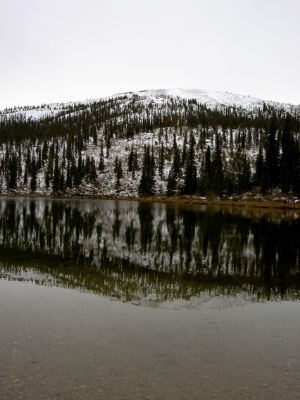
mountainreflectionI have to admit that I’ve felt overwhelmed by the flurry of goal-setting blog posts, announcements, and what have you as we’ve begun the new year. In fact, I’ve entered the new year in a bit of burnout.

Over the last couple of days, I’ve realized why.

I am in a season of needing to reflect on what I’ve accomplished over the past couple of years — to really take it in, acknowledge it, and absorb it a bit before I can move forward into a new season of envisioning fresh goals and horizons for myself.

And when I’m in a “reflective, introspective” season of my life, it can be difficult to rub up against a lot of “doing” energy. The energy doesn’t match my quieter, “being” energy, and it can also trigger quite a bit of “compare and despair” in me (“I should be doing more,” “I’ll never get to where he/she is,” etc.).

Back when I went through life coach training, my mentor Martha Beck often shared these words from The Buddha with us: “Just as you can tell it’s the ocean because it tastes of salt, you know it’s enlightenment because it tastes of freedom.”

My truth, my piece of enlightenment, for the moment, is that I’ve reached the top of my personal mountain and I need to sit here on a rock and take in the view.

And I realize, too, that I in fact needed to sit down and take in the view quite a while ago.

But I didn’t let myself.

I kept on pushing and goal-setting — even though I know all too well that “push” energy is not effective for me either in the short or long run — and now I am tired.

When we climb a mountain, we need to acknowledge it when we get to the top. We need to appreciate the gorgeousness of the view we’ve got from here. We need to acknowledge and integrate what we learned on the way up, at least for a while, before we start climbing again.

What we don’t need to do is immediately scan the landscape for an even higher mountain and decide it’s time to climb that one — right now. This is the way we get into burnout. This is the way we lose touch with ourselves, with our own inner compass which is specific to our journey, and not anyone else’s.

We live in a culture that believes busy is good. Doing is good. More goals, and pushing, and striving, are good.

I think goals are terrific, and necessary — but we are not always in “goal-setting season.” Sometimes we’re in “view-appreciating season.”

Here are some signs that we may not be in our personal “goal-setting season” and in fact may need to shift into our version of “view-appreciating.”

* The thought of doing anything “big” creates a feeling of instant exhaustion.

* We’re having trouble concentrating for more than a few minutes at a time.

* We notice that our “social self” — the self that cares a lot about what other people think — is chattering so much that our essential self is having a hard time getting a word in edgewise.

* We take lots of actions but they don’t seem to have much resonance for us. They don’t feel good or satisfying.

So, how can we appreciate (and really take in) the view we’ve arrived at?

* Think back on the accomplishments that truly pleased or delighted you that got you to where you are. Write them down or share them with someone. Writing them down and/or sharing them makes them more real. (And notice any tendency in yourself to downplay your accomplishments or compare them to someone else’s. This, too, contributes to burnout!)

* Commit to crossing the non-essentials off your to-do list for an entire week, or a month, or however long feels good to you.

* Acknowledge the person you were before you climbed this mountain, and notice the differences in yourself now that you’re at the top. Is there anything you let go of on the way up? A part of you? A job? A lifestyle? A way of being or doing? It’s important to acknowledge how we’ve changed so we can move forward from who we are now, not who we used to be!

* What are the “shoulds” that have been coming up for you? Are they based on what you really want — given who you are now — or are they based on the person you were before you reached the top of this mountain?

Are you at the top of your personal mountain? If you’ve been on a journey, have you really acknowledged what you’ve accomplished and let it sink in? I’d love to hear from you.

Image is “Snowy Reflection” © Martin Brown | Dreamstime Stock Photos

More sparkle, more ease: What will *you* welcome in 2015?

sparklylights

It’s easy to forget in this frenetic world that the deep well of connection to ourselves and to life is the soul of creativity.

So I’m taking some time off from my usual routine this week to reconnect.

What’s bubbling up, so far, from this spaciousness in the midst of pre-holiday activity is a set of questions. (Aren’t the answers we’re so often seeking actually just better questions?)

Here is my year-end meditation, or remembering, for you to try if you’d like. You can do this in a journal, as I did, or do it out loud with a friend, someone you feel really safe with.

You can answer all three questions, or choose one (I found that answering just the third one led me into the others).

When you are still and connected to yourself, what do you know to be true?

What do you know about what you need, what you desire?

What qualities do you want to welcome into your life as a new year begins?

Here is what I wrote in my journal:

More ease, more lightness. More belief that ease and lightness are possible.

More openness and reaching out.

More trusting in myself and in life.

More acting on my intuition, more quickly.

More noticing what works for me, less dwelling on what doesn’t.

More decision-making from a place of calm and peace, less decision-making from a place of fear and anxiety.

More time spent in nature, with animals and trees.

bluejays

More face-to-face meetings with friends and potential friends.

More kindness.

More patience.

More showing up for myself.

More acceptance of what is, and more recognition that accepting it doesn’t mean I won’t change it; it just means I’m not in resistance.

More sparkle, more dazzle, more glitter (I’m not sure what this means yet).

More fun and play.

More permission to ask for more, even when things are “good enough.”

What about you? What do you know to be true for you as we move into a new year? What qualities do you want to welcome?

Wishing my dear readers, clients and friends a beautiful and peaceful holiday season with plenty of connection to yourself.

above images ©2014, Jill Winski

How showing up too much can thwart your creativity

pinkbloom

The title of this post might sound a little backwards. After all, isn’t showing up regularly — through a daily or almost-daily habit or ritual — key to doing to our creative work?

Absolutely. And that’s not what I’m talking about here.

The showing up I’m referring to has to do with a kind of perfectionistic, I-can’t-afford-to-take-a-day-off mentality which causes us to neglect replenishing our reserves.

There are times when we need to work on showing up. This can be true when we’re building a habit, like exercising or writing or maybe expressing ourselves more to our significant other!

But for some of us (and I definitely include myself here), there’s an “unconscious” kind of showing up that can propel us into the zone of compulsion or addiction.

In other words, it’s not “I choose to show up,” but “I have to show up — in fact, I’m showing up on autopilot without even noticing that I have a choice in the matter.”

What this perfectionistic kind of showing up has looked like for me:

* Never taking a day off from work, not because I didn’t need to take a day off, but because it didn’t occur to me that I could, unless there was an emergency or I was deathly ill

* Always responding to calls, emails and other requests for time very quickly

* Talking to friends or family members who called when my intention was to have time to myself

* Checking social media sites “just in case” I missed something that I “should” be attending to (what a slippery slope that one is!)

* Never missing a class or a workshop or a group meeting even though I was feeling very tired or even ill

* Scheduling client sessions during the time I take my morning walk

* Continuing to move a project forward even though something felt “off”, just so I could feel “productive”

I remember, way back in college, showing up late to a class one day, feeling stressed and slightly mortified that I’d disrupted the group already-in-progress. My teacher graciously welcomed me into the semi-circle, telling the other students to make room for me.

A week or so later, another student showed up late and my teacher gave him a severe bawling out which shocked the whole class. My curiosity got the better of me, and during a conference with my teacher I asked him why he had yelled at this other student for being late, and yet when I was late, he was so kind to me.

He thought about it a moment, and then said, smiling, “It’s kind of like this: you need to learn to be late, and he needs to learn to be early.”

My teacher was perceiving — quite accurately — that my tendency was to drive myself hard and beat myself up when I didn’t “do enough.” Apparently he’d perceived the opposite tendency in this other student.

I felt the vulnerability — and relief — of having been seen.  My teacher helped me recognize that I could start to allow a little bit of spaciousness around my compulsion to show up, to never be late, to never miss a day, to never take planned time off.

I still notice this tendency in myself, many years later, along with a tendency to make myself overly available to others. And when I get into this “overdoing”, “over-responding” place, I find that anything I create has a forced, thin, surface feel to it. The richness has been stripped away; there’s little within me to draw out, or, at the very least, I have trouble accessing what is there.

When we can sit with a request from another without responding to it immediately; when we can say “no” in order to preserve space in our schedules for non-doing; when we can “show up” 90 percent of the time instead of 110, we are feeding our creativity.

We are feeding it by noticing our breath, by noticing our surroundings, by noticing how we are truly feeling. We are allowing ourselves to fill up, rather than running on empty, or on adrenaline. We remember that, sometimes, we can let the world come to us — and it will.

When we slow down enough to invest in the present moment, our words on the page, our paint on the canvas, our listening during a coaching session is more vibrant, more there, more true.

So how do we prevent ourselves from carrying this idea too far and using it as an excuse to not show up when we do need to be showing up?

There’s no easy answer to this.

But if there were an easy answer to it, I’d say it’s this: Know yourself.

Know your own tendencies and your own struggles like the back of your hand. And then trust. Trust yourself to show up as much as you choose to, but never as much as you “should.” Choose. Trust yourself to choose, and choose again.

Do you ever find yourself showing up compulsively? What do you notice about the effect this has on your creativity? I’d love to know!

Image is “Beautiful Flower” © Matthias33 | Dreamstime Stock Photos

There’s no “right way” to be social during the holidays

pinecone

Sometimes when I look back, I cringe at all the pressure I used to put on myself to be “differently social” than I actually am, especially during holiday times. I am an introvert (and no, by that I do not mean that I am “shy”, but that I need plenty of alone time to recharge).

I am an introvert who loves people, deeply. But I also cannot be around people for more than a few hours without needing to withdraw and spend time alone.

Like many introverts, I really struggled with this in childhood, when my natural introversion was viewed as shyness that needed to be “cured”, or a “fear of people” that needed to be conquered.

Thankfully, I am now an adult (in some senses, anyway!) and I have a lot more control over my life and the ways I choose to socialize than I did when I was nine.

The holidays, nevertheless, can prove to be a challenge for my introvert self.

But I’ve learned to give myself lots of permission over the years.

Back when it was harder to give myself permission, I needed to get it from other people.

Sometimes people give us permission by their example and they don’t even know it. This is a beautiful thing. Like:

* The Christmas party I was at one year where, after three hours, I felt completely depleted but was sure if I left before the gifts were opened, my host would be offended. So I suffered through, feeling overstimulated and disconnected. At hour number four of the party, a couple breezed in, said hello to the host, and then added, “We’ll only be able to stay for fifteen minutes. We’re dropping by another party tonight.”

Doh! From that point on, I realized it was perfectly fine for me to stay at a party for the amount of time it felt comfortable for me to stay. I don’t really give parties (unless three people coming over is a party), but I know for sure that I would not want anyone I cared about hanging around my party if they were really ready to leave. So now I apply that logic to myself.

* The friend, way back in college, who said “no” to the spur of the moment concert invite I’d given her. After a thoughtful moment, she said, “It sounds great, but I really want to have some time to myself tonight and enjoy my own company.”

Not only was I not hurt by her honest “no”, but she’d unwittingly given me permission to freely tell others that I wanted to spend time by myself — not the easiest thing to do at any age, but especially not back when I was twenty or twenty-one and staying home on a Friday night was not exactly the “socially condoned” thing. Thanks to this friend for being who she was and owning it.

* My grandpa, who took his after-lunch nap no matter what, no matter who was around, whether it was Christmas Day or a regular old Monday. His naps were a part of his daily routine and I don’t think it ever occurred to him to not take them just because guests were staying over for the holidays. They were something he needed; part of his self-care regimen. When he was done with his nap, he woke up and started talking. But during his nap, he was “unavailable.”

Here are four kinds of “breaks” I employ nowadays to rebalance and recharge when I’m around people during the holidays.

* Walk breaks. I tell people I need to stretch my legs for a bit and I’m going out for a walk. This works especially well if it’s really cold, because if it’s cold enough, no one will offer to join me.

* Journaling breaks. I shut myself into a bedroom or even the bathroom and write a couple of paragraphs in my journal. Sometimes just writing what I see around me is helpful because it reconnects me to the present moment. Sometimes I write more of a vent or a rant or whatever it is I’m feeling.

* Pet breaks. If there’s a dog, cat, or other animal in the household, I go and hang out with it for a while. Animals always somehow reconnect me with myself and have that nonjudgmental energy that can be truly helpful during certain, er, moments of the holidays. And if there’s a cat around, you have the plus of the purr. It’s soothing and research says a cat’s purr can even heal broken bones.

* Go-and-get-something breaks. If something is needed — more 7-Up, more paper napkins — I offer to go to the store and get it.

These are just a few things I do — I’m always inventing others. Because here’s the truth of it: the better I can take care of myself during the holidays, or any time, the more present I am to connect with the people I love. Just a ten-minute walk outside can work wonders for my ability to remain present.

And, here’s an article I wrote last year at holiday time on what to do when don’t get your downtime.

How do you take care of yourself AND connect with those you love during the holidays? I’d love to hear, in the comments. And to readers in the U.S., Happy Thanksgiving!

Image is “Cone Alone” © Bx3t | Dreamstime Stock Photos

Is it worth it? (and other helpful questions)

redleaves

This morning I took one of my beautiful fall walks and noticed that my mind kept going to several things I’ve had on my to-do list for a long time that are just not getting done.

I stepped back a little and let my mind go — the practice of walking helps me immensely with getting into “observe my thoughts” mode — and pretty soon I saw that the thought that kept coming to the top of the rotation was this one: “What’s wrong with you that you’re not getting these things done? Anyone else would have gotten these things done months, years, ago.”

“What’s wrong with me?” is kind of a default, underlying, unhelpful thought for many of us. I’ve been a coach for about four years now, and I notice this particular thought come up at some point for most people.

There’s no satisfactory answer to this question. There’s no encouraging, supportive answer to this question. It’s a good example of a question that closes off possibility and keeps us spinning our wheels.

As I walked, and got out of my thoughts and into the present moment, noticing the row of trees that has erupted into lava-reds, the squirrels fighting for supremacy at the neighbor’s bird feeder, my mind began to get more peaceful.

And when I got home, I went to my journal (as I so often do), and experimented with better questions to ask myself about these things I am not getting done.

Why aren’t I getting them done? (“Why?” can be a good question, for sure, but in this case, it felt impossibly heavy.)

How do I want to feel about these things on my to-do list? (This created an instant feeling of lightness.)

What kind of relationship do I want to have with these things? (More lightness. Relief.)

Is it worth it to me to do these things? (Ahhh. Here I hit the jackpot.)

I could tell that last question was the one that opened up possibility and movement, because exploring it felt really juicy to me.

So I went through the list of these things that have been nagging at me, these things I’m not doing, and for each of them, I asked myself, “Is it worth it to me to do this thing?”

The answers were revealing. For the first thing on the list, the answer was a clear no. It simply wasn’t worth doing. But I was telling myself I needed to do it. Is it true I need to do it? No. I crossed it off the list.

For the second thing on the list, the answer was a clear yes. Yes, the thing is definitely worth doing. And here is where “why” comes in. It’s worth doing — good to know! — but I’ve gotten out of touch with WHY I want to do it. Time to reconnect with that.

With the third thing on my list, I realized I’m not sure if the thing is worth doing or not. Sometimes not being sure is code for “no”, but other times, there’s fear there that is masking the “yes.” So this one will require some inquiry, some investigation.

I feel so much lighter right now, like I’ve cleared a path before me.

What do you notice about the questions you’re asking yourself? Does your mind jump to “default questions” that may not be helpful, but you keep trying to act on them anyway? Try experimenting with finding some more helpful questions. And let me know how it goes.

Hope you are enjoying the changes that fall brings (both outer and inner) as much as I am.

And: My Mini Unsticky Sessions are half-price through Halloween, when I’ll be retiring them. My intention with these sessions is to help you make a quick shift that allows you to move forward on a project you’re feeling stuck on. I approach these sessions with a sense of curiosity and play, and they’re often a lot of fun. Check them out, here.

Image is “Red Leaves” © Bart Van Oijen | Dreamstime Stock Photos

Welcome, fall + the pure pleasure of making cake

fallforest

Last week, I did something I’ve wanted to do for twenty-five years: I made Truvy’s Cuppa Cuppa Cuppa cake.

Truvy is the character played by Dolly Parton in the movie “Steel Magnolias”, and there’s a point in the movie where she lists the ingredients for a cake she calls “Cuppa Cuppa Cuppa” — a cup of flour, a cup of sugar, and a cup of fruit cocktail with the juice. (“I serve it over ice cream to cut the sweetness,” says Truvy.)

Ever since I saw this movie in the theater in 1989, I’ve wanted to make Cuppa Cuppa Cuppa cake. I don’t know why. It just sounded fun. And I love baking, but I hardly ever do it.

A little bit after I saw the movie, I was a theater major in college and in my acting classes we did scenes from “Steel Magnolias” (which was a play before it was a movie). And again I was reminded of Cuppa Cuppa Cuppa, and again I didn’t make it.

And then one summer a little later I auditioned for a community theater production of “Steel Magnolias” (I really wanted to play kooky Adele, the part Daryl Hannah plays in the movie), but I was not cast. The woman sitting next to me was auditioning for Truvy, and to calm our nerves we kept giggling and reciting the Cuppa Cuppa Cuppa recipe. And I thought, after this, whether I am cast in this play or not, I’m going to go home and make Cuppa Cuppa Cuppa. But I didn’t.

And then, over many years, I’d see the movie here and there on TV and I’d think, I really want to make that cake! But I didn’t.

Well, last week, I came across the recipe on Pinterest. I got all excited and said to my boyfriend, “Oh my God, it’s Cuppa Cuppa Cuppa! I’ve always wanted to make this!”

“Well, you should make it,” my boyfriend said.

“Maybe I will,” I said. But I really had no intention of making it; I just collected it on my Pinterest Cake-O-Rama board, along with many other cakes I will never make.

Then a day or so later we were at the grocery store and I saw the fruit cocktail. I threw it in the cart.

“Are you doing it?” said my boyfriend, grinning.

“I’m doing it,” I said. (This is something I’ve noticed about me and decisions: I often only know I’ve actually made a decision because, suddenly, I’m doing it.)

And I did make it, and I have to tell you, it was an amazing success. It was more delicious than I could have imagined — moist, golden, sugary, and it smelled so much like something my Grandmas would have made (or maybe the smell of fruit cocktail just reminds me of my Grandmas).

But, in truth, I wouldn’t have cared if the Cuppa Cuppa Cuppa didn’t turn out well or was even on the disgusting side. The thing is that making it was fun. That was all it was and that was my only reason for doing it.

How often in my life have I put something off, or never really intended to do it at all, because although I loved the idea of it, it didn’t seem “serious” or important enough? Because it didn’t seem like it would yield “long-term results”?

Making the Cuppa Cuppa Cuppa produced its own, immediate results. It gave me an experience — stirring the batter as that just-about-fall crisp air came in through the kitchen window, licking the spoon like I did when I was a kid, the fruit-and-sugar scent of the cake filling the house as it baked. Marveling with my boyfriend over how something with only three ingredients could taste so amazing (especially given that I’m really not a fan of fruit cocktail).

And here’s the interesting thing: the fact that I actually went ahead and DID this thing that I wanted to do, this thing purely for fun, gave me the most curious sense of accomplishment. I felt deeply satisfied, just in the doing.

I want to do more things that are just “for fun”. I want to stop saying I’ll do them “some day.” I want to notice when I’m squashing the part of me that wants these simple joys because another part of me thinks I “should” be doing something else.

I’ve also been saying since 1987 that I want to make the eggs-in-bread fried up by Olympia Dukakis in “Moonstruck” (a.k.a. “Moonstruck Eggs”). I’ll report back.

(Here’s the recipe for Cuppa Cuppa Cuppa Cake that I found on Pinterest.)

Where do you notice yourself saying “maybe” or “someday” to things that strike you as pure joy, pure fun? What if you were to say “yes” and “today” instead?

Also: To welcome fall, my very favorite season, and all the endings and beginnings that fall always brings, I am offering my Mini Unsticky Sessions at half price through Halloween, October 31. That’s because, as all good things must come to an end, I’ll be retiring my Mini Unsticky Sessions after Halloween, so something juicy and new can take their place.

I’ve now done nearly one hundred of these sessions and I daresay I have gotten pretty good at them. If you’re feeling stuck on a creative project or around your creativity in general, you might want to give one a shot. Because speaking of fun, these sessions really are! Find out more, here.

Image is “Autumn in the Forest” © Uschi Hering | Dreamstime Stock Photos

“I wrote to honor myself” ~ A conversation with memoirist Mary Montanye

MaryMontanye-w-credit-222x300

Mary Montanye is the author of the memoir Above Tree Line, which I had the joy of reading recently. To quote her website, it’s “the story of one woman’s spiral downward into physical and mental breakdown and her return to wholeness by courageously, and some would say recklessly, following her intuition.”

Mary and I got on the phone to talk about her experience of writing and publishing the memoir, and how she found support for the process of bringing it into the world. Mary is one of my fellow coaches in The Writer’s Circle, and she’s become one of my favorite people, too. I’m so pleased she took the time to talk with me, and my hope is that creators who are struggling to share their work with the world — or even to begin the process of creating — will gain courage and comfort from Mary’s writing journey.

You can learn more about Mary’s memoir (and read her terrific blog posts!) at her website, here.

Read highlights from our conversation below, or find the link to listen to our whole conversation at the bottom of the post (please note this more of a casual conversation, not a “formal” interview!).

* * *

Jill: I imagine some parts of this were much harder to write than others, emotionally.

Mary: Yeah, they were. And there were two things about that: Whenever I was getting close to writing something that I knew was gonna be really, really difficult, there were two things I did: One is, I reminded myself that all I had to do was write it. I didn’t have to share it; I didn’t have to publish it. There were many other reasons I was writing it. One is, I was learning how to write. Two, I was learning about me. I was honoring me.

That’s another thing, I think that many times writers have, somewhere in their childhood, been shut down. “Oh, we don’t want to hear about that,” or whatever. So, by me putting it down, I was honoring myself, and my voice, and my experiences, and my life.

So I told myself that, even if I choose not to publish this down the line somewhere, I still benefit. And when I did that, it made the writing of the hard stuff doable, and it also made it possible for me to be as honest as possible.

… And second of all, I told myself that even if I did choose to publish it somewhere down the line, I could remove anything that I didn’t want to have in there. If it was really too tough, if I was too afraid to have it out there, I would just remove it from the book.

And it ended up that I didn’t remove anything from the book. I mean, of course I tightened it … But it works to just let yourself do it, just write whatever. And then tighten, or delete.

Jill: So it sounds like there was a lot of permission to write it and not have to publish it, and then there was also permission to not have to put in those more difficult parts – that you could cut those out if you wanted to.

Mary: Yeah. I just had to constantly remind myself that, I have control over this. Just because I write it down doesn’t mean that I have to publish it. And it ended up that I did publish it, and actually, a lot of the fears that I had about that never came true: that other people would hate me, or judge me, or not want me in their life, or be hurt.

… I think you have to just bite off small pieces as you go along, and not think of it as some great big huge thing that’s gonna change the rest of your life, because that would be paralyzing. At least for me. But when I did it bits and pieces at a time, every piece that I did was beneficial.

And that even included the publishing. I mean, I’ve had people, especially younger women, that I never thought would even read it, say how much it has meant to them, and why. And that’s made it all worthwhile. This is why it was meant to be out there. And I can take fear.

Jill: So basically, then, it sounds like you were writing this for yourself. So would you say that if you had any audience in mind, it was just yourself? Kind of your own listening ear?

Mary: Yeah. Well, I also had a reader in that Mary [Allen, writer and writing teacher] was reading. She wasn’t changing things so much as she was just saying, “Tell me more about this. This is really interesting, could you write more here?”… So I had her as a reader, but she was a very loving, supportive, gentle reader. And in fact, having one person like that is really helpful in that she normalized some of this for me. Like, I was feeling so awful about myself, even this many years later, for doing some of the things that I did, and she would go, “Well, that’s really not all that bad.” And that sort of helped, too.

So I’m not saying never have a reader and just put it out there before you’ve ever had a reader, or never have a reader in mind. [But] have the perfect reader in mind: like, for a memoir, the most wonderfully accepting, gentle person that you could possibly imagine, who really wants to sit down and hear about your life, and not judge you for it. Because if you think about just a general “other” out there, like some big massive social media kind of other, it would be terrifying. I don’t know how anybody could write an honest memoir like that.

***

Jill: Another point that I wanted to bring up is self-care around this process of writing something that brings up so much stuff for us. That is bound to be emotionally taxing. And physically exhausting too, probably.

Mary: Yeah. Everything. Sometimes I’d just feel like all I wanted to do was go to bed. So I got to the point where I just let myself go to bed. You know, it’s okay. Or take time off, too. Take a week off. Or write something easier, write a little bit of history of the area, or something that isn’t like one trauma after another.

Jill: That makes a lot of sense. I think that as writers we can get into a mentally of, I’ve gotta sit there and I’ve gotta push through, especially maybe if we have some resistance coming up for us around a particular thing. And it sounds like you were very aware of your own exhaustion, and you must have had a lot of trust in your process in order to give yourself breaks when you needed it.

Mary: Well, I got it [trust]. I don’t think I had it right off the bat. But as time went on and I did it, I’d say, oh yeah, I’m noticing every time I write some really hard scene, that I don’t want to do anything but go to bed. Well, maybe it would be a good idea to just go to bed. It was through the process that I learned about me and what I needed, and what I could do and what I couldn’t. And that there was only a certain length of time I could write every day. About an hour, for this book, was it. When I got into editing, I could spend a lot more time, but the actual writing was not more than probably about an hour a day.

***

Jill: What would you say to people who have a story – or not even just a story but some piece of creative work, something they want to share with the world, but they’re feeling stuck or scared around that? Let’s say it’s a dream right now. It’s in sort of baby dream phase and nobody else knows about it, it’s just something they really feel strongly about but they haven’t taken any action to create it. What would be the first thing you would tell them?

Mary: Well, I would tell them first that, if they’re feeling this pull, this little dream, this tug, whatever you want to call it, that that’s your intuition saying that you need to do it. You don’t know why you need to do it, but there’s a tug there, there’s that intuition. I think we tend to ignore our intuition, and I’m somebody who doesn’t ignore her intuition most of the time.

And most of the time, or 99.9 percent of the time, I find out why it was important that I didn’t ignore it. It may not be what you think – it may not BE about publishing it in the world. It may be you’ll help one person. It may be that you will learn something about yourself that you need to learn. But whatever it is, the very first thing I would say is don’t ignore, don’t minimize the fact that we have that tug to do it. That would be my first.

And then my second would be to just begin. Don’t think very far in advance, and set aside some alone time where you won’t be bothered. And make it, like we say in the Writer’s Circle, make it sacred. And just begin. Simple. Twenty minutes, five minutes, ten minutes. And then just do something else the next day, and the next day. And just see where it goes. Because we can’t figure out in our head what the reason is. We can’t figure out the reason, we can’t figure out the end result. We can only figure that out by the actual doing of it.

So those would be my two main things. Don’t ignore, and then begin.

***

Check out the recording to hear more about Mary’s take on: being a writer who’s an introvert and a highly sensitive person; how Mary “discovered” she was writing a memoir; Mary’s process of sharing the draft of the book with people close to her; her publishing and marketing experience; and more!


Knowing yourself: what words inspire you?

colorfulpens

Here’s a super-simple journaling exercise that can be a quick way of reconnecting with ourselves. It’s also truly helpful for those times when we’re feeling really UNcreative.

I once did this with a class of ten-year-olds, and after I described the exercise to them, I said, “What do you think this exercise is about?”

A kid shot up his hand and said, “Noticing!”

That’s it, exactly.

Noticing words.

The words we use are important. And they say a lot about us.

I have an intention to choose my words carefully. Not out of some kind of perfectionism, but because words have power.

(I’m also noticing more and more that, often, I need to invoke the superpower of listening just when I’m tempted to throw in my two cents. Whether I’m talking to a friend or coaching a client.)

Some words feel heavy and exhausting to me. That’s not because there’s anything “wrong” with them, but because they are not in line with what inspires and activates my essential self.

Other words light me up, help me come alive, remind me of what is true and real — for me.

So here’s the exercise:

1) Make a list of words that drag you down, words that don’t light you up or that make you feel disconnected.

These can be ANY words. Adjectives, verbs, nouns. Keep listing — don’t stop until you’ve got a list of at least twenty words. (They can also be phrases or sentences you can’t stand — for example, my boyfriend absolutely hates it when people say, “Let’s do this!”)

The purpose of this is not to focus on negative stuff — any word or phrase is not “objectively” negative. This is about gaining more awareness into what makes you “you.”

2) Now, make a list of words that DO light you up, words that elevate you or connect you to who you are. Again, phrases and sentences are okay, too.

3) Now, look over both lists.

What do you notice?

Here are some examples from my lists:

Words that drag me down: overcome, overpower, world domination, should, must, crush it, anything having to do with war, get your butt in the seat, push, shove, force, conquer, rule, hard, tough, have to

Words that lift me up: discover, quest, kindness, spark, play, curiosity, adventure, fun, mischief, silky, fluid, deep, reflective, subtle, piercing, pure, intense, affectionate, compassion, journey, choose

Even if you’ve never read my blog before, you can learn a lot about me by looking at my lists, right?

It’s pretty clear that I’m not inspired by the idea of overcoming or conquering or going to war with something. I’m not inspired by pushing or forcing myself or anything or anyone else to “get it done.”

It’s not because I think that mentality is “bad.” It’s because it isn’t the way I naturally relate to the world. It’s foreign to me; it doesn’t make intuitive sense to me (though, to be honest, for many years I tried to take on this mentality because I believed I “should”).

The idea of discovery, of looking deeper, of getting curious, with lots of kindness and compassion and fun and play in the mix — for me, that’s adventure. That second list automatically reminds me of who I am and inspires me. It gets me moving.

We can also see, by looking at my lists, where my shadow may lurk. It might do me some good to notice when I’m disowning the parts of me (because they’re there!) that DO like to overcome and conquer and WIN. (These parts of me come out when I play certain video games or get into arguments with family members. Note to fiction writers: Incorporating your shadow traits into your characters can be extremely liberating.)

The thing for me to know, though, is that if I let these aspects of me run the show, I’m not going to feel in line with my essential self, and I won’t feel I’m living a life that’s truly in keeping with who I am. I don’t need to disown these aspects of myself — or of others — I just need to recognize that they don’t truly inspire me.

So, if I’m trying to get myself to do something through pushing, forcing, or the idea of “crushing it” or “overcoming,” it’s inevitably ineffective — for me. There are others who love the idea of overcoming or “heading into battle”. It gets them going and lights them up.

And that’s awesome. Because if there’s anything I believe, it’s that we all need to know ourselves well enough to keep on moving closer and closer to what truly brings us to life.

What do you notice about the words that inspire you, versus the words that deaden, disconnect you, or exhaust your energy? I’d love it if you’d share, in the comments.

Image is “Pastel Pens” © Rabbitsfoot | Dreamstime Stock Photos