Trusting in where your energy takes you

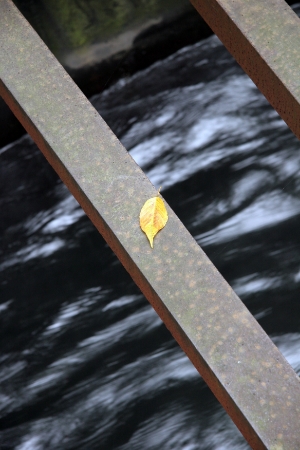
leafwater

One day last week I sat down to write and felt distracted. This is not uncommon. I often experience resistance, confusion, tedium, and occasionally even dread, when it comes to working on my novel.

In fact, I don’t usually call it (in my own head at least) “working on my novel” anymore. I call it “playing with my novel.” This feels much lighter and opens up possibility, curiosity, excitement. When I make it less grave and serious, I’m more in touch with why I actually want to do it in the first place.

That said, sometimes I feel stuck and it feels hard. And I hang in there with it anyway, because it is a commitment. And because sometimes I reach that lovely place of getting lost in my story. And the more I practice hanging in there with it, the more I reach that place.

But on that day last week, something else was going on. I sat and I sat and I sat, and I wrote and revised and tinkered. But my energy was not with the writing. I had the odd sense of pushing something away.

I glanced over at my open notebook, to some morning pages I’d done the day before. Jotted in the margin at the top of the page was a reminder to call a friend of mine, a dear friend whom I’d been meaning to call for a while. But I’d been putting it off because, although I knew that talking to my friend would be nourishing and fun, I’d told myself that she was probably busy and wouldn’t have much time to talk, anyway. I kept telling myself I’d wait and call “when we were both less busy.”

Now, the reminder note jumped off the page at me. And I realized that there was a ton of energy in calling my friend right then, right in that moment.

So, I stepped away from my computer and dialed my friend’s number. She was home and said she’d been thinking about calling me, too — that very morning. But she figured I was probably busy with coaching or writing and she’d wait to call me until the weekend.

We talked for an hour and it felt soooo good. It filled my creative well to — at least — a 10 (read Julia Cameron’s The Artist’s Way to find out more about the creative well). You know those friends who accept and love you so deeply that it doesn’t matter what’s happening for you, or not happening for you, because the connection is about your very essence? That is this friend, for me.

And something important came out of this call. I realized that I often make an assumption that the people I care about are busy and they need to “fit me in.” And this assumption is not reality. In fact, my friend was making the same assumption about me, but in truth I would have welcomed a call from her.

After we talked,  I returned to my novel with a sense of lightness and new possibility, and I no longer had that nagging sensation that there was something important I wasn’t attending to. I could give the writing my full attention.

If I hadn’t followed my energetic pull toward calling my friend, I would have missed out on that connection and that insight.

And yet, my rational mind wondered if I wanted to step away from the novel simply because it was hard and it was my way of “procrastinating.” It can be tempting to “power through” at these times, no matter what. And that’s not necessarily a bad thing to do when we’re developing a habit, whether it’s writing or something else.

But we get to the good stuff in life by acting on what feels juiciest for us in the moment. I don’t mean by acting on our every impulse, but by following our intuitive urges. Often, it’s as simple as asking, “What would light me up right now?”  On that day last week, contacting my friend was that thing. It was “up” for me, calling out for attention. And I needed to listen.

Sometimes, our “creative work” can serve as a means of avoiding doing our inner work. Just as we can avoid our creative work, we can also use our creative work to avoid — or push down the list — other things that are vital to our well-being. Like our relationships. Most particularly, our relationship to ourselves.

So notice the quality of your energy as you create. Is the creating connecting you with yourself, with the world, with that beautiful mysterious space we go to when we create — even if it’s a huge challenge at the moment?

Or, do you have the sense that you are using your writing, artwork, business brainstorming, or whatever it may be, to push something else away, as I did last week? Just notice. You don’t have to stop what you’re doing. Just tell yourself the truth, whatever it is for you.

Because, ultimately, creativity is being connected to what’s true for you in the moment. Because that is when you are most you. And that is what I wish for you — that you be most you as often as possible. That, more than anything else, is your gift to the world.

Image is “Leaf on Steel” © Chris Mccooey | Dreamstime Stock Photos

A two-step journaling process (for when you’re feeling stuck or scared)

“My writer self is braver than the rest of me.” — Natalie Goldberg

On one of our recent group calls, a fellow participant in Jenna Avery’s Writer’s Circle asked me how I use journaling when I’m feeling stuck on my fiction writing. I thought I’d share my process, in case others might benefit from it.

My journal is one of the safest spaces I know.

And I’m someone who’s struggled a lot with safety. (I remember when I was an undergraduate, a teacher had us do an exercise that started with the sentence “Imagine you’re in a safe space.” At that time, I literally could not think of a safe space, so I couldn’t go on with the exercise.)

Safety is important. We’re often told to “take creative risks” and “really put ourselves out there,” but we’re doing ourselves a disservice if we pretend that isn’t scary, if we pretend that we feel safe, when in fact we do not. Nothing creates a feeling of stuckness like pretending we feel differently than we actually do.

So, a lot of the time, when I’m feeling stuck or scared as I’m trying to write, it’s because I’m not feeling safe.

Safe to what?

Safe to explore. Safe to write the worst crap imaginable. Safe to share only what I’m ready to share. Safe to be with the discomfort of whatever’s coming up for me. Safe to write that thing that brings up the pain of the past.

So getting away from my document on the computer (which can feel so oddly “formal”) and going to my journaling notebook is STEP ONE of creating safety. I think of the journal as a room, a room where there’s only me (and anyone else with whom I feel completely safe).

From this point on (STEP TWO), I ask myself questions on the page.

Any of the following questions are good jumping-off points.

* What do I really want to say that I’m not allowing myself to say?

* What’s the worst thing that can happen if I write the thing I’m afraid to write?

* Why don’t I want to write this thing?

* What’s the worst thing that can happen if I make a wrong turn?

* Do I actually need to step away from the story right now? (If the answer is yes, follow this one up with “How can I make that feel okay?”)

* Where is the tension (fear, stress, sadness) located in my body right now? If that tension had a voice, what would it say?

* What does this particular feeling of stuckness remind me of?

* If I had a guarantee that no one but me would ever read this writing, what would I write now? (This one can really point us to where we are censoring ourselves.)

* Am I truly ready to write this story? Why or why not?

* If I honestly don’t know where to go with the story right now, how might I open myself up to all the possibilities?

Take one of these questions, and run with it. Don’t deliberate too much over which question to choose — they’re all designed to create movement, which is what we need when we’re feeling stuck. Go with one of the questions and keep writing until you feel ready to stop. Often, new questions arise for me while I’m writing, and I ponder those, too, on the page.

A page from my journal: answering the questions, + doodling

A page from my journal: answering the questions, + doodling

This process does not have to take a lot of time — I often do it in ten minutes or so. The idea here is not to find the perfect answer to the question (there isn’t one). The idea is to dig beneath your surface “stuckness” and generate a new perspective. “Feeling stuck” is nothing more than believing something about your writing or yourself that is not helpful.

You can probably come up with other, better questions. Make a master list of them and have it on hand for times when you’re sitting in front of the computer and the sweat on your forehead feels like blood. We don’t have to make the act of writing so dramatic (put that drama on the page!).

(By the way, you can transfer this process to any art form, or anything at all that you’re feeling stuck on.)

What do you do when you’re feeling stuck on your writing, artwork, or any other creative project? Please share in the comments!

On that note, Aug. 15 is the last day I’ll be offering my Free Mini Unsticky Sessions! (I’ll be offering them for a low cost, in a slightly different format, after Aug. 15.) Want to grab one? Check them out, here.

And: This Thursday, Aug. 8, is the last day to register for the next session of Jenna Avery’s Writer’s Circle. I’ve been a member of this group for going on two years now (I’m also one of the coaches) and it’s been an amazing source of support for me. Interested? Read more, here.

Don’t forget to check inside

girlwalking

As part of my practice of observing my thoughts and feelings and the patterns they create, I’ve noticed an interesting thing lately: I feel more upbeat, hopeful, and just plain happier, in the early part of the day.

Part of this is just my own personal rhythm — my most energetic time of day tends to be between about 9 a.m. and 3 p.m. But it’s something else, too.

I start off almost every day with a walk (only in the most extreme weather do I forgo my daily walk). Depending on what I have to do that day, the walk (which I combine with getting my morning coffee) is anywhere from fifteen to forty-five minutes long.

My walk is all about noticing — the morning sounds of traffic and squirrels and birds, the feel of the sidewalk beneath my sandals, the super-slow beetle who somehow avoids being crushed by pedestrians as he makes his journey from one side of a cement square to the other. I also notice what’s going on within me — am I sad, joyful, serene? Are my thoughts fixated on that interaction I had yesterday that felt kind of icky? Am I grinding my teeth again? Did I get great sleep, or not quite enough?

When I return from my walk, I do a few minutes of journaling (or morning pages, as Julia Cameron calls them) and record anything I noticed on the walk, anything really taking my interest and “up” for me.

Then, I’m ready to start my day, and most of the time, not always, but frequently, I feel really good.

At 7 p.m., not so much. That 6 p.m.  to bedtime window tends to be the toughest time of day for me. Why?

It’s taken me a while to get this, but I understand now.

Evening time is iPad time for me. I “reward” myself for doing my priority stuff during the day by sporadically checking my iPad throughout the evening. Some of this is fun and feels good; much of it involves checking Facebook, Twitter, and various blog articles; getting caught up in trails of links from one blog to the next; absorbing lots of “expert advice” that may or may not apply to me; listening to recordings from classes and coaches and writers and others I’ve been meaning to get to.

All of this is good, to a point. Information can be profoundly helpful at the right times. And I think we all understand the dangers of information overload and the overwhelm it can wreak.

But the problem is not the information itself.

The problem is forgetting to check inside ourselves to gauge whether or not this information a) is worth our time, b) actually supports our own values, and c) actually applies to us at all.

The crappy mood I tend to get into in the evenings — so much to the extreme of my “morning self” — has much to do with the fact that, in the mornings, I make a conscious choice to connect with myself, to check inside. My morning walk, the steady repetitive rhythm of my steps, creates a great space in which to observe myself, while also connecting me to my surroundings, and particularly, the natural world.

In the evenings, I’m letting go of that conscious choice to check inside myself, and as a result, I turn into a kind of ping-pong ball bounced around by the information I absorb online. I find myself getting agitated, confused — this “expert” says to do this, and this one over here says the opposite; this friend on Facebook is annoyed that people are posting X, while this other friend wishes people would post more of X; this writer seems to know a lot about X and has tons of followers but in fact I feel depressed every time I read one of her posts.

It’s a lot to take in — and a lot of it doesn’t matter.

In the morning, I reconnect with me. I remember to check inside. I realize what I really value and what I don’t. I’m able to make a distinction between what information is helpful and what isn’t, and how much information is too much. I remember what’s true for me.

Can I carry that morning connection I establish with myself into the evening? Can I unsubscribe from lists that don’t add to my life, even if some panicky part of me believes this information is “practical” and I “just might need it someday”? (No matter how “practical” information is, if it doesn’t feel good and right to me, it’s not practical for me.)

Tonight, I’m going to begin an evening ritual of reconnecting to myself. This doesn’t mean I won’t pick up my iPad — I have a lot of fun there. It just means my evening intention will be to notice how I’m feeling when I absorb information, and to recognize I can choose to reconnect with myself at any moment. Information can be helpful, even crucial, but only when I’ve established a solid connection with my own inner compass first.

(And by the way, some of what I connect with online definitely helps me reconnect to myself — and certainly helps me connect to others. I love many of the ways I connect online. The important thing is to notice, to check in.)

What about you? How do you remember to check in with yourself in a world where it’s increasingly easy to look outside ourselves for advice, for “the truth”? I’d love to hear, in the comments.

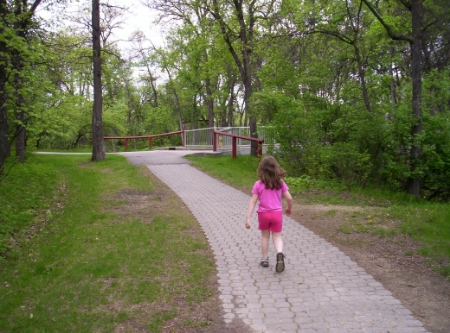
Image is “A Walk in the Park” © Janet Best | Dreamstime Stock Photos

Overwhelmed? Step back, then scale back.

bench&sky

So I spent the last three days trying to write a blog post. Now, I happen to truly enjoy writing blog posts. I look forward to writing them. They are fun and exciting for me, because I’m always discovering something about myself while I write them. Discovery! So much a “why” for me when it comes to writing.

And usually I can sit down and write a rough draft of a post in about an hour or so. The process doesn’t always work that way. But often, it does.

This week, however, it didn’t. I arrived at the computer determined to work on a blog post and I couldn’t manage to crank out more than a paragraph or two. And then I got frustrated. And then I got angry. And this happened three days in a row.

I said to my boyfriend,  “Maybe I’ve said all I want to say in my blog posts already. Maybe that’s it.”

“No way,” he said. “I don’t believe that.”

And I didn’t believe it either. But something was off, very off, and it made me panicky.

And I’ve been here before — maybe not recently in relation to blog posts, but in relation to other things. Like my novels. Like my relationships. Like cleaning the house, or taking that trip I’d planned. That place where I think that something is supposed to be happening and it shouldn’t be so hard, but it’s terribly, terribly hard. It’s a feeling of spinning my wheels in mud and just getting further entrenched. A feeling of doing and doing and nothing actually getting done.

I call it “the spin cycle.”

I found myself staring out the window instead of looking at the computer screen as I tried to write the blog post, and I realized my body, in its infinite wisdom, was pointing me to the fact that it was not time to write, it was time to be. Regardless of how “behind schedule” I was.

So, I went to the sofa and I lay down, staring at the ceiling for a while. And I began to relax. And I began to get it.

This time around in the spin cycle, here’s what I’ve learned:

1) When I feel this way, more often than not there is some type of resistance going on. Resistance to what is: a sure route to insanity. What have I been resisting this week? What’s the reality of this week?

Well, my parents came to visit one week ago and left today. And I had a freelance project I was working on in addition to my usual daily routine.

But I didn’t factor any of this in and kept right on with my “usual” schedule. I didn’t factor in the fact that I’m an introvert and I need alone time to recharge and I wasn’t getting much of it this week. I didn’t factor in the extra hours and toll on my energy the freelance project took.

The reality of my personal energy: I am a finite being with limited energy, much as I fantasize about being able to “do it all,” seamlessly.

The reality of time: There are 24 hours in a day.

2) When something that is usually enjoyable and do-able feels really hard, it is not a sign to step it up and push it harder. It is a sign to step back and ease up and ask what is going on.

But my mind will tell me I need to keep pushing and that easing up is a sign of weakness and a lack of discipline and commitment. This is what my mind does, and how it thwarts my need for self-care. But it is a lie.

How do I know it’s a lie? Because of the way it feels. If stepping it up and pushing harder were the truth in this case, it would feel challenging but expansive, like doing it was helping me grow. But that’s not how it felt. It felt like pushing myself to do it was diminishing me. (Interestingly, I kept getting an image of myself writing on a tiny notebook with a tiny flashlight inside of a tiny black tent, my legs bursting out of the flaps like Alice in Wonderland after she drank the potion that turned her into a giant.)

So, after I lay on the couch for half an hour or so, allowing myself to space out (and giving myself full permission NOT to write the blog post), I realized that writing just one paragraph of a blog post would actually feel good. And so what if I am “usually” able to write more than that? Different week, different guidelines. I went to the computer, wrote one paragraph, and then, as it turned out, I wrote the whole darned thing.

Which brings me to the third thing I learned, this time around in the spin cycle:

3) When I keep trying to get something done and it’s just not happening, it may be because I’ve lost my connection with why I’m doing it at all.

“Because it’s time to publish a blog post” was not enough motivation for me to write one when my creative well was empty and I was in spin. When I’m in that space, I’m like a ship without a rudder. Doing for the sake of doing is meaningless if I’m totally out of touch with why I’m doing it. My “why” is what propels me into inspired action.

As it turned out, giving myself what I really needed — a time-out — connected me back to my “why”.  And my “why” led me right back to writing the blog post that had felt so impossible to write only hours earlier.

What are your ways of dealing with “the spin cycle”? I’d love to hear your thoughts in the comments.

Work With Me: Do you need some support in practicing better self-care? I’d love to help. See if we might be a good fit, here.

Image is “Outlook” © Guyerwood | Dreamstime Stock Photos

Making it ridiculously easy

sharpenedpencil3

When I went through life coach training with the wonderful Martha Beck, I learned about what Martha calls “turtle steps.” Turtle steps are teeny-tiny increments that help us reach a goal. The main thing about a turtle step is it has to feel do-able. It has to feel, as Martha puts it, ridiculously easy.

When I coached my very first client, I suggested she break that overwhelming goal down into turtle steps, and she said, “Turtle steps sound great, but I’m forty-five years old. I don’t have time to move that slowly.”

The coaching session came — for a moment — to a screeching halt. She’d triggered one of my own big fears. She’s right! I thought. At the time, I had two unfinished novel drafts and an image of them sitting in the corner of my office flanked by dust bunnies and cat hair popped into my mind. If I use turtle steps with my novels, I’ll be ninety before I finish them!

Luckily, by then I had enough evidence from the experiences of Martha and my fellow coaches to know that turtle steps worked. In fact, the more ridiculously easy they felt, the better they worked.

My client wasn’t ready to try turtle steps — yet. A month later, when she’d done nothing to move her goal forward because she kept approaching it with her familiar “bite off more than I can chew” method, she showed up for a session and said, “I think I’m ready to try out turtle steps.”

That’s the funny thing about the way our minds tend to work: We’d rather hold on to the idea of taking giant leaps forward that only exist in our fantasies than take smaller, less glamorous steps that we actually do complete.

If you have a tenacious inner perfectionist (as I do), know that you are probably going to have a tough time accepting the idea of turtle steps.

When I was an undergraduate in college, literally every semester I signed up for five or six classes, even though by my third semester it became blatantly obvious that I could not take on more than four classes without feeling overwhelmed and scattered. My inner perfectionist (who is best friends with my “social self”) loved the idea that I was tackling a huge course load — and besides, other people took six classes and aced them all, so why couldn’t I?

Almost every semester I ended up withdrawing from a class or two at the last minute because I felt completely overwhelmed. Twice, I withdrew past the deadline and therefore received a grade of a big fat F. Twice. The person who couldn’t stand the thought of getting less than an A+ actually ended up with F’s on her transcripts simply because she voluntarily took on too much.

The idea that we can take small, easy steps is anathema to the perfectionist, whose identity is formed out of the belief that if she can take on more than is necessary and excel at it, she will finally be worthy, and therefore, loved.

But it doesn’t work this way, my sweet little inner perfectionist is slowly discovering. She is loved, deeply, simply for existing and for being who she is. And she does not get more accomplished when she takes on more — she actually accomplishes less that way.

Back to my two unfinished novels: they have long since stopped communing with the dust bunnies in the corner of my office. They’re up and dancing around now, dust-free and shiny. How did this miracle happen? Since September of 2011, I’ve been taking ridiculously easy steps, on a regular basis, to finish my novels. (Read more about how I’ve done that at the end of this post.)

Yes, sometimes that means I write for fifteen minutes a day. Yes, sometimes that means I write one sentence. And no, I do not write every single day. But I’ve completed two novel drafts and I’m 240 pages into a third.

The key is making it ridiculously easy, step by teeny-tiny step. Any step can feel ridiculously easy if it is small enough.

Ridiculously easy isn’t as easy as it could be, though, because we live in a culture that tells us that for something to have value, it has to feel impossibly hard. And so we take on enormous “to-do” steps like “write novel” or “get new job” or “lose twenty pounds.” Seriously! These are actual items I’ve seen on clients’ to-do lists. But they’re not action steps, they’re long-term goals. In fact, I’m loath to call them goals — they’re actually processes, ways of life, daily habits we develop.

So a huge part of all this is allowing ourselves to do what feels ridiculously easy. That might mean a daily goal of “write one paragraph” rather than “write ten pages.” But it’s one paragraph that gets written, rather then ten pages that don’t.

Often our minds won’t allow us to embrace ridiculously easy. It’s a total shift for most of us, right? If it feels easy — or, at the very least, not hard, we don’t trust it. “But life isn’t easy!” we think. And that is certainly true. But we don’t need to add hard to the hard.

This is one of my favorite beliefs to challenge with my clients. When we make the shift from “It has to be hard” to “I can allow it to be easier,” amazing things happen. Believe me. I’ve seen it.

If you need support in allowing your process to feel easier, I’d love to help. See if we might be a good fit, here.

And: One of the biggest reasons I’ve moved forward with my novels is due to my participation in Jenna Avery’s Writer’s Circle. This is where I’ve put my writing turtle steps into action. This group offers me daily support, accountability and community around my writing. The last day to register for the next session of the Writer’s Circle is tomorrow, May 16. Check it out, here!

Image is Sharpened Pencil © Uschi Hering | Dreamstime Stock Photos

Pausing is not the same as stopping

stopsign

Sometimes it is incredibly, excruciatingly hard for me to step away from something, when stepping away is exactly what I need to do.

Step away from that phone call that is not going anywhere and sucking up a lot of time.

Step away from my novel when I keep forcing it even though I’m beyond frustrated and realize I have gotten so far away from the heart of the story that I have no investment in what I’m writing.

Step away from the problem I’m desperately trying to solve (when it’s becoming more and more obvious that the mind that created the problem is not the one that can solve it).

Step away from the internet. Because, it’s the internet. And I need sizeable breaks from it if I’m going to remain sane.

I think one of the reasons it’s hard for me to step away is because of the idea that I am supposed to tackle things. Take control of them, wrestle them to the ground, and force them to cry uncle. This is the way I was taught to solve problems when I was very small, and, even though I’ve never been very good at it,  it’s deeply engrained in me.

Only, sometimes — often — it just isn’t effective. There’s a point where I’m trying so hard to control the outcome of something that I am way too emotional to be effective. It’s at this point that pressing the pause button can be so essential.

But there’s another reason it’s hard for me to step away. It’s because of trust, or the lack of it. Allowing myself to step away means I am trusting that I will get back to whatever it is I’m struggling with — whether it’s a phone conversation or a tough scene in my novel.

And this kind of trust takes some practice to cultivate. I’ve been working with this for years and yet I can still go way too far out of fear.

We can never solve an internal problem by changing an external circumstance. If something within me feels out of control, no amount of controlling the external world will change that. This is the recipe for compulsion and, eventually, addiction. I’ve got to get back into balance within myself before I meet the world again.

This is why I suggest to my coaching clients that they not make huge decisions when they’re feeling intense emotions. We don’t know what the truth is for us until we come back to center. Our emotions are messengers, but they’re often not the message. (Extreme anger at your boss may just be saying, hey, let’s take a look at what’s happening here, not hey, let’s quit!)

So we’ve got to make it okay for ourselves to step away when we’re getting into a place that feels out of balance — no matter how important we’re making what we’re doing. Stepping away for now does not mean stopping altogether — in fact, it can mean letting another part of us — our subconscious — take the wheel for a while.

So, how do we do this?

1) If you’re struggling with something you’re creating (a painting, a novel, a website) and you’re ready to take a knife to the canvas or put your fist through the computer screen, know you’ve reached that point where you need a little less perspiration and a little more inspiration.

I know, I know, there’s that awful saying about how creating is one percent inspiration and 99% perspiration. Please. I don’t believe we need to feel inspired all the time to create — inspiration often comes in the course of creating, and some days it doesn’t come at all — but if, in the long haul, you’re only feeling one-percent inspired, you need more inspiration. If the whole thing feels like a struggle every step of the way, you’re forgetting how important it is to fill your creative well.

2) If you’re having a really hard time in several areas of your life (if you’re in what we Martha Beck life coaches refer to as “Square One”, where you’re going through a massive identity shift and you don’t know what the hell is happening), realize you may need to move much more slowly.

You may need to take more time-outs. You need to practice really good self-care during these times. If you’re in Square One, the question is never “how can I get out of Square One?” but “how can I make it okay to go slow?” (I love Kristin Neff’s guided meditations on self-compassion for these times, and all times, really.)

3) Know the point at which you are getting in your own way. See if you can step outside of your emotional self and be the observer. What do you look like when you’re in need of pressing the pause button? What happens with your body, your behavior?

A few years ago, I was walking home in a seriously foul mood, and a car rolled through the stop instead of letting me cross the street. I actually reached out and hit the back of the car as I walked behind it. Feeling the sting of the hot metal on my fingers (it was like a 100-degree day, which was part of why I was ready to maim), I knew I’d crossed one of my personal boundaries into nutso territory, territory I did not want to stay in. It was time for me to stop wrestling and take a time out. Know these places in yourself, and find ways to clue yourself in to when you’re getting into this territory. Hopefully you will not have to slap a defenseless Honda Civic to know you’ve entered “that zone.”

4) Above all, cultivate trust in yourself. Take baby steps. If you’d normally force yourself through something to the point of frustration, try stepping back even five minutes before you usually would.

One of my clients recently made the decision, for a number of reasons, to take a month off from her artwork. (Namely, because it was feeling too much like art-WORK. She said she didn’t want to return to it until it felt like art-PLAY. I love this!) She was afraid a month was too long, but she felt like she needed it. The need for the break felt like it was coming from her intuition, not from a place of fear. It felt deeply right.

A week into the month off, she emailed me. As of today, she said, I am back to my art-PLAY. It turned out she didn’t need an entire month off after all. Something in her was more than willing to return to creating when it was ready. Now that’s self-trust.

For an article on a similar theme, check out Practicing Reverent Curiosity.

Image is “Reflected Stop Sign” © Vladimir Zanadvorov | Dreamstime Stock Photos

What triggers your resistance?

brick wall

One of the benefits of being a rabid journaler is that I have ample evidence of my patterns and habits and defaults. All that stuff I “tend to do” when I’m scared, overwhelmed, panicked, what have you. It’s there in ink on actual, physical pages. Hard evidence.

A client who also journals told me recently that he picked up a notebook from ten years ago and was depressed to see that he was struggling with exactly the same stuff as he is today. He thought it meant that he hadn’t changed at all, had been stagnating for ten whole years.

Which is so not the case.

Of course you were struggling with the same stuff back then, I said. Those are your core issues.

We all have core issues, those deep, resonant conflicts within us that we’re on this earth to be with, work with, and, over time, learn from. These issues are our teachers. It’s not about overcoming them or even letting go of them. The work is to become more and more intimate with our core issues as we cycle through them again and again in our lives. We peel our layers like an onion, each time getting closer and closer to our center.

I still struggle with much of the same stuff I did at twenty — it just doesn’t throw me as much, because I understand it better. I know how to work with it, play with it, in ways I didn’t then. In fact, some of the areas where I’m strongest now are the areas I had most difficulty with at twenty, even if those areas still cause me trouble.

For me, this is the work of my life. This is my real work, above, beyond, and beneath any other “work” I do in the world.

It’s these core issues, though, that trigger our resistance. Of course they do. They’re painful. Nobody wants to delve into pain. When I feel like I’m spinning my wheels and I just don’t see a way out, I can be pretty sure that some core issue has risen to the forefront and I’m in resistance to it.

What’s tricky is that we can often be blind to our core issues when they’re “up” for us. This is why I keep lists of my “resistance triggers” in my journals.

When I’m feeling stuck, I go to one of my lists. Resistance triggers basically boil down to painful thoughts that reflect our core issues. Here are some sample triggers from one of my lists:

You have to write something special, original and amazing or there’s no point. People have to be totally wowed by your writing or why are you doing it?

If you take too much time to yourself, people you love won’t understand and they’ll leave you. You have to be available to others when they need you or you’ll end up alone.

Even when you work really hard, it isn’t enough — what’s the point?

It doesn’t matter if you’re tired. Just keep going.

These are some of the biggies for me. You get the idea. The reason I write this stuff down is because I often don’t recognize that these issues are “up” for me. All I know is I’m feeling sad, empty, or pissed off and like I can’t move forward. Often, when I consult one of my lists I immediately see the thought causing the resistance jump off the page at me. Ahhh. Now I have something to work with.

So let me show you how this resistance thing plays out: If I’m in the grip of a thought like, “If you take too much time to yourself, people you love won’t understand and they’ll leave you,” but I don’t know it, I’m often over-responding to others, overscheduling myself, saying yes more than feels good to me.

Pretty soon I’m fed up, angry, withdrawing from and resisting interaction — even interaction that could be helpful and nourishing to me (such as taking time to truly connect with myself or with a friend who deeply wants to hear me).

If I’m in the grip of a belief like, “You have to write something special, original and amazing or there’s no point,” I become extra-hard on my writing. I become unwilling to experiment. I belabor every sentence. Everything feels squeezed and distorted, like I’m trying to fit my words through a teeny, tiny keyhole and hope they can make it through to the other side as magical, life-altering prose.

Pretty soon I don’t want to sit down at my desk at all. Writing has become painful, not life-enhancing. And certainly not fun. So now I’m resisting writing at all; I’ve become disconnected from why I ever wanted to do it in the first place.

Writing these triggers down as we become aware of them is a huge act of self-care. It’s about knowing ourselves. Seeing your thoughts on paper is a good way to cut them down to size — sometimes, thoughts that feel horrifying when they’re stuck in our heads can look absolutely ridiculous when you see them written down.

Just the act of noticing that I’m being triggered by one of these thoughts can create a huge shift for me. I’m no longer merged with the thought — I’m now outside of it, observing it, so it’s over there where I can question it, and not a driving force within me. The next step is to question these thoughts, look for evidence of where they are not true. (The Work of Byron Katie is an excellent way to question your painful thoughts.)

What triggers resistance for you? How do you know you’re “in it”? Let me know in the comments!

Image is “Stone and Brick Wall” © Peter Szucs | Dreamstime Stock Photos

The shark is working well enough … really.

sharkkite

Anyone who knows me fairly well knows that I am obsessed with the movie Jaws. I’m not sure how many times I’ve seen Jaws, but … just … don’t get me started. (Writers, study Jaws if you want to see a movie where every single scene moves the story forward. Nothing is wasted.)

If you know anything about the making of Jaws, you know that the mechanical shark, a.k.a. “Bruce”, didn’t work very well. In fact, there were so many problems with the shark that it wasn’t seen on screen nearly as much as director Steven Spielberg had originally intended. During production on Martha’s Vineyard in 1974, the frequent refrain from the loudspeakers was “The shark is not working. The shark is not working.”

Welp. As we all know, the shark worked well enough. In fact, the semi-working shark worked so well that Jaws was the movie for which the term “summer blockbuster” was coined, back in 1975 when it first appeared in theaters.

One of the main things I do as a coach, when I have a session with a client, is listen for stressful thoughts. Thoughts are stressful when they are not deeply true for us, but we believe them anyway. So when I hear something that strikes me as painful or stressful for a client, I scribble it down in my notebook. If it seems important, I’ll point this thought out to the client and we’ll work with it.

I was going back over some notes before a session recently, and it really hit me just how often our thoughts are perfectionistic. They have to do with how we’re not doing enough, not doing it well enough (whatever it is), and how our reality is not matching the vision inside our heads. (I say “our” because, like my clients, I have a strong penchant for perfectionism. I’m always teaching what I most need to learn.)

I’ve written a lot here about perfectionism in the past (you can click on the categories link titled Perfectionism to the right to check out more). But I don’t know if I’ve emphasized how important it is for perfectionists to make a point of noticing what is working — and what is working well enough.

Because one of the biggest issues I see perfectionists struggling with is decision paralysis. We’re so terrified of making an imperfect decision and the havoc it will surely wreak that we hang out in indecision until it hurts. And then, then, we beat ourselves up for not making decisions quickly enough! It’s a totally lose-lose scenario.

And here’s the thing: We don’t struggle with decision paralysis as much when we give ourselves credit for having made good decisions in the past. Most perfectionists have a pretty big story about being poor decision-makers (it’s in keeping with the idea that we never quite measure up). We are also control freaks, so we tend to think we have much more control over our futures than we actually do.

Therefore, we think, we have to weigh each present or future decision very, very carefully, so we don’t repeat our past mistakes and don’t screw up our futures.

Why do we have this story? Probably because when life happens, as it will, it feels more familiar for us to blame ourselves than to admit the truth: Life is messy, and life is not fair. No matter how “good” we are, we can’t escape this reality.

So what if we were to flip this story on its head? What if we were to look back and notice how we made good enough decisions, and how some of them were even really good? How would we proceed if we basically believed that our lives worked well enough?

I think we’d go on making our movies, doing our writing, living our lives. We’d trust ourselves to create something good. What if Spielberg had decided to resign in the middle of production on Jaws because the shark wasn’t good enough? (Well, probably Universal would have replaced him with a different director. And we’d have had a very different Jaws. Which would have been a damn shame.)

At the bottom of it all, the stories we tell ourselves about ourselves, about our lives, are either helpful or not helpful.

I don’t mean that we should tell ourselves things we don’t truly believe. I’m not talking about piling positive affirmations on top of our fear like white-washing a rotted fence. I’m saying we need to really give ourselves some credit. I’m saying we need to lower our standards enough that we can show up in our lives and in our creative work (or creative play, as I prefer to call it).

Perfectionists, aim for the B rather than creating A+ work that exists only in your head. Make the decision that feels best to you and call it a day, knowing you can course-correct tomorrow. Admit that the shark at the core of your movie is working well enough to continue the filming. Create your flawed-but-amazing works of art and live your flawed-but-amazing lives.

Work With Me: I work with writers, artists, artisans and coaches who are feeling vulnerable and stuck. Learn more about how we might work together, here.

Image is Shark Kite by Ryan Somma at flickr; some rights reserved

Feed yourself images — it’s good for you

parkbenches

“Filling the well involves the active pursuit of images to refresh our artistic reservoirs. Art is born in attention. Its midwife is detail.” — Julia Cameron, The Artist’s Way

Yesterday I slept in because I had woken up in the middle of the night, scared by a dream. (When I came to consciousness, I was lying flat on my back shouting “death angel!” My boyfriend tells me he thinks Death Angel was an ’80s metal band — can anyone confirm this? — but that is not what my dream was about.)

I was so afraid I’d see a death angel in my bedroom mirror that I got up and went into the living room and watched TV until my bedroom didn’t seem so scary anymore.

Anyway, because I let myself sleep late to compensate for being up in the middle of the night, I walked out of the house at 10:30 to get my morning coffee with my mind full of all I had to do, feeling irritated and stressed. I hate starting the day late. It screws up my to-do list, makes me feel I’m already behind just by virtue of not beginning when I thought I would.

I got my coffee and then walked over to the hardware store to buy some lightbulbs. The person working at the front desk was tied up with a return, so I walked to the back of the store to the other register.

And I noticed the store had an old-fashioned red-and-gold popcorn cart set up back there, complete with little bags of popcorn and a hand-written sign that said “Take one!” I didn’t take one — I was working on my coffee — but I loved this. It brought back another memory of free popcorn, when I was a kid, maybe in a similar setting, and my mom grabbing two little bags of popcorn just like this, and handing one to me.

And then I began to think about how I really like my hardware store. The employees are always friendly, and customers are allowed to bring their dogs in, and when I go in there I feel like I’ve stepped back into the 1980s, in a very good way.

The popcorn cart made me feel happy and I left the store with my lightbulbs feeling a little less stressed. And I thought, you know, it’s Saturday. There was a time when Saturday was my day of relaxation. Now I too often make it my day to “get a lot done that I didn’t get done earlier in the week.”

So I decided I would reclaim some of that old Saturday relaxed energy and take a little walk.

When I returned from it, I scribbled down bits of what I remembered from the walk in my journal:

A snowman dressed like he was on a tropical vacation — Hawaiian shirt, grass skirt, sunglasses perched above his carrot nose — with a tube of SPF 50 lying in the snow next to him.

A sleek black dog in a red collar, digging in the snow and retrieving a tennis ball. The dog pranced around its fenced-in yard with the ball in its mouth, peppy and proud. It was an adult dog, but it bounded and flopped like a puppy. It saw me, dropped the ball to its feet, and froze, staring at me brightly with its ears perked and a dusting of snow on its chin that looked like cake frosting.

The dog and I exchanged a long, contemplative look, and then I rounded the corner and saw the sheets of snow coating yard after yard. The snow appeared perfectly smooth, but when I looked closely, I saw that hundreds of tiny rabbit tracks peppered each blanket. Now, I haven’t actually seen a rabbit in months — unlike squirrels, who are the chatty, ever-visible extroverts of the neighborhood animal kingdom, rabbits keep their distance and when you do see them, they freeze until you move on. But I love that rabbits leave traces of themselves, so we know they’re around.

The popcorn cart in the hardware store drew me into the present moment, and I moved on through my day more alert to the sights around me. Filling up on these images and then writing them down felt so nourishing. It connected me with the wonder that is the world around me, and I forgot about the to-do list that had been hanging over me when I’d left the house. When I returned to it, I felt more grounded and saw that not everything on the to-do list needed to be done. The peace I thought I would have when I had completed everything on the list was already within me.

My walk turned into what Julia Cameron calls an Artist’s Date. The purpose of an Artist’s Date is to fill your “creative well” with nourishment, in whatever form that takes for you. For me it is often the beauty of the everyday. How could so much amazingness be just outside my door? Well, it’s always there, but most of the time I don’t see it. I had to consciously open myself to it — which I did by choosing to slow down and have a leisurely walk — in order for it to find me.

This kind of nourishment is always available, and it’s totally free.

Try this: Make a practice of writing down images that inspire you, in as much detail as you can. See how you feel while you do it, and afterward.

Image is “Benches in Snow”, © David Coleman | Dreamstime Stock Photos

Taking action on what you know

doves

One thing that I really like to drive home to my coaching clients is the importance of knowing ourselves.

I mean, really, really knowing ourselves — and particularly, the things we have a tendency to do that create chaos and disconnection for us.

Because very often, we know what doesn’t work for us, but we do it anyway.

Particularly if you are highly sensitive or an introvert, or both, the “general way” our society does things may not work for you. But it’s easy to toss away our particular, unique self-understanding when we convince ourselves that “everybody else” seems to be living, well, differently.

When we’ve been through the hell of learning something that brings us to our knees and connects us with our core (or, to put it another way, our essential self), we need to actually own that and act from what we know.

I call this acting from exquisite self-knowledge.

It is powerful to put this stuff into action. And you can often tell when you’re not putting it into action, by the way you feel.

This is true on both smaller points and large ones.

Like today, I was writing in my journal and I was completely caught up in the flow. As I’ve written about before, when my journal is truly calling to me, I have got to heed that call. Journaling has been, for many years now, the way I process and ultimately integrate what’s happening for me. It is my practice. If I don’t do it — especially when it’s really calling to me — I keep spinning my wheels and I don’t move forward.

But: I get really antsy and am easily distracted when I can feel something big about to come through in my journal. And I have a tendency to sabotage these “hardcore” journaling sessions by reacting to stuff in the external environment.

Today I actually grabbed my iPad in the middle of my journaling session — even though it was going brilliantly — and searched for youtube videos on Jaws 2. (Okay, not even a good movie, but I’ve been feeling oddly nostalgic for it lately.)

Before I knew it, I was watching shark attack videos which were obviously fake (and why in the heck would I do that to my HSP self?), and then somehow I was watching videos of cats stuffing themselves into small boxes (how do I always end up there?).

So I moved away from the iPad and picked the journaling session back up. A couple minutes later, the phone rang. I am like one of Pavlov’s dogs when the phone rings. I don’t know why I think I have to get up and see who it is. But get up I did.

It was a friend of mine who I really wanted to talk to. Normally, when the caller ID comes up as a close friend or a family member, it’s almost impossible for me not to pick up. I pick up as a kind of reflex. I figure I’ll make up the journaling time later; I tell myself the call will only take a couple minutes and then I’ll get back to my writing.

But experience has shown, this isn’t what happens. I get sucked into the call and when I get off the phone it’s hard to get my flow back. I put the journaling off. I toss away my practice. And I feel disconnected from myself.

So today, I didn’t pick up the phone. Why? Because I finally know myself well enough to know that if I pick up the phone during sacred journaling time, I will regret it.

And I have to tell you, acting on that exquisite self-knowledge felt really powerful. It felt congruent.

This might sound like a small point, not picking up the phone during a journaling session, but all these seemingly “small” points add up over the long haul. When I toss the needs of my essential self away on a regular basis and tell myself these “little things” don’t matter, I end up disconnected from myself, over time, in a big way.

There are larger points, too — like going back, out of fear or familiarity, to that job or that relationship we just know in our gut isn’t good for us. Or saying “yes” to something that we know from experience we simply have no desire to do.

None of this is about “doing it right” all the time or never making choices that don’t feel good to us. Part of the process of knowing ourselves is learning through trial and error what doesn’t work for us.

And sometimes, like with my Pavlovian response to the ringing phone, we have a very long learning curve. But when we do finally learn, it’s important to own what we know and take action on that knowing.

Try this: Make a habit of keeping a written record of things you’ve learned — the hard way — about yourself but have a tendency to forget. (I call this my Exquisite Self-Knowledge List.) Then check in with it from time to time, particularly if you’re feeling crappy and you’re not sure why.

What do you absolutely know about yourself that you might put on your own list? I’d love to hear from you.

And: Speaking of putting pen to paper, Thursday, Feb. 21, is the last day to register for the next session of Jenna Avery’s Just Do the Writing Accountability Circle. I’ve been a member of this group for going on a year and a half, and I’m also one of the coaches. You can read about the strides I’ve made with my writing in this group here. We’d love to have you join us! You can check it out here.

Image is “Doves” © Cook | Dreamstime.com