Practicing Reverent Curiosity

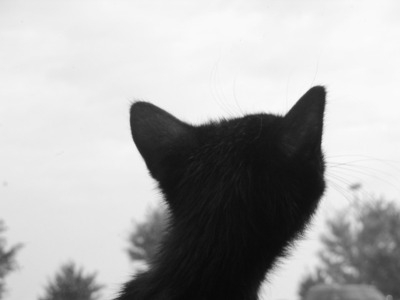
kittenwindow

“Novel-writing is not so much a profession as a yoga, or ‘way’, an alternative to ordinary life-in-the-world.” — John Gardner

On Thanksgiving Day, I was hit with a bad cold. I spent two days pretending the cold wasn’t actually there and that I could go on functioning as if I were well. By the third day, I had to admit that I really was sick — and this meant I had to let go of my need for that thing I fondly call “momentum.”

I like the feeling of momentum. I like the idea that I am moving forward. The trouble comes in when I start to believe I can truly control exactly how things move.

When I returned to working on my novel after being sick, I felt disconnected from what I really wanted to say, at a loss with the story. My characters seemed like they were doing silly things, just marking time, moving around the rooms of my pages for no purpose.

Yesterday, during a group writing sprint with other members of Jenna Avery’s Just Do the Writing Accountability Circle, I went to the page with the same feeling of stuckness and confusion about my story that I’ve had lately. “This is terrible!” a familiar voice inside me piped up. “You have to get over this! You need to make this story work!” (No pressure, or anything.)

When, as a coach, I work with a client who’s stuck, I often use metaphor to help them see their situation clearly. I asked for a helpful image to come to me, and the image that bubbled up in my mind was my cat, when we have a vet visit scheduled and he’s caught on to the fact that the cat carrier has entered the room. Once he gets under the bed, my mission is impossible: he knows he can hide there from me as long as he wants, because I can’t physically pick up the bed and get him out. And we’ve certainly had incidents where I’ve chased him around the house, and sometimes I end up standing the cat carrier on its end and stuffing him into it while he braces his back legs on its sides and writhes furiously. I hate this. And, of course, so does he.

There was this one time, though, when my cat snuck under the bed and I just didn’t have it in me to figure out a way to get him out and stuff him into the cat carrier. I set the carrier on the floor in the living room and sat down in a chair. I called the vet and told them we probably weren’t going to make it to our appointment.

The vet’s assistant was completely laidback about this. “Come on in if you catch him,” she said, laughing.

I sat quietly in my chair. Really, chasing my cat just didn’t seem worth it. He wasn’t ill; it was just a routine check-up since he’s getting into his senior years.

Within fifteen minutes, my cat emerged from beneath the bed and tentatively walked into the living room. He saw me sitting in the chair, looking quite harmless; he approached the cat carrier and sniffed at it. Then he began to investigate the carrier very thoroughly, with a kind of reverent curiosity. It was like he wanted to fully understand this instrument of his impending doom.

I realized that I was treating my story the way I treat my cat when I just want to get him to the damn vet. I stuff him into a box and endure his plaintive meows, feeling like a world-class jerk. Because I want to fix things. Because I want to make sure I’m doing the right thing. Because I’m driven by a kind of urgency.

Obviously, sometimes my cat needs to go to the vet and we do engage in this routine (though I’ve gotten quieter and better at doing sneak attacks, so neither of us struggle as much these days — usually).

But does this pattern work with my novel, with my characters?

I was stuck and overwhelmed because I was invested in the idea that my story needed to be “fixed,” that it contained a problem that needed to be solved. There are certainly plenty of books and advice out there that can tell me how to “fix my novel problem.” And some of them can be very helpful, at certain points in the process. But I realized yesterday that approaching my story in this top-down way, as if it was something I could fix from the outside by forcing it into a box of my choosing, was disconnecting me from anything the story had to show me, from letting it reveal itself.

When I sat back, relaxed, and made the choice to approach my story with that reverent curiosity my cat is so good at, I discovered a fascinating thing: I got really interested in my story again. I wasn’t trying to make it be, or do, anything; I was just interested in it. That all-important question, “What is it about?” welled up in me, and I realized I knew exactly what it was about. I also realized that this novel does not want to be as long as I’ve been thinking it should be. It just might want to be a novella. It knows what it is; and I’ve been so set on “fixing it” that I’ve lost touch with the thread that connects one scene to the next.

My story started to move again. I wrote beyond the 0ne-hour set time of the group sprint, I was so caught up in it.  Hallelujah! I understand my story better. And why did I get into this writing in the first place, if not to better understand?

Can I approach my life, too, from this space of reverent curiosity? Can I step back, breathe for a moment, and give my life the space and kind attention it needs in order to be what it wants to be?

Work With Me: I love helping writers and artists who are feeling stuck. Check out my one-on-one coaching, here.

Image is “Wonder Cat” © Eden Daniel | Dreamstime.com
Creative Ebbs: Not the Same as Stuckness

If you think about any relationship you’ve ever had, you’ll notice that there were phases to the relationship. Sometimes you were sitting on the couch shoulder to shoulder eating cookie dough ice cream and watching Netflixed episodes of “The Office” (British version, preferably) and you couldn’t stop laughing and finishing each other’s sentences. Other times, you were kind of quiet and it was just nice. Other times you went rollerskating and you couldn’t stop falling down, in a good way.

And then there were those times when there was just nothing to say. Phone calls felt heavy; there were lots of long pauses, and not the good kind. You got on each other’s nerves without meaning to; previously endearing odd little habits began to seem like dealbreakers.

Maybe in your younger years, the not-so-good times felt like sound reasons to end the relationship; but as you got older and had more experience, you began to see that it was important to ride them out because the ice-cream-on-the-couch times could always come back.

You have a relationship with your creativity, too. And it needs to be accepted, nurtured and protected just like any other relationship you care about. But a lot of times (and what I see happening most often with my clients) is that we either neglect this relationship or ignore it — or, at the other end of the spectrum, we push it so hard and try to control it so much that it withers or hides from us.

Accept that your relationship with your creativity has seasons, cycles, ebbs and flows. You can — believe it or not — trust these ebbs and flows. Most of us are afraid to trust them. We love the flow, but the ebb, not so much.

So I won’t talk about what to do when you’re in creative flow. Most of us love that place. I’ll address the dreaded ebb (though you shouldn’t dread it — it’s really simply the yin to the yang that is the flow).

A creative ebb is a period in which nothing much feels like it’s happening creatively for you. It’s not the same thing as feeling stuck — stuck has to do, usually, with your fears around what you’re creating, or when you’ve reached, say, the middle of your novel and you have no idea what happens next and nothing you try feels right. When we’re stuck, it’s important to bring our fears to light and give them voice so we don’t dig our wheels further into the mud.

An ebb is a bit different. You might feel it for a few days or weeks after you’ve had a period of unusually high creativity. I used to create and sell these little paintings, mostly of cats. The way my process worked was I’d get a very clear picture of what I wanted to paint in my mind, often when I was out walking, and then I’d come home and get out one of my little canvases and the image would flow out onto it, usually quite similar to what I’d envisioned.

For a period of time, I did about three of these paintings a week. And the more people bought them the more I wanted to create them. But after about nine months or so of this, the ideas gradually stopped coming. I didn’t rush to my canvases the way I had. The art I created didn’t feel as inspired to me. Some of it wasn’t selling.

I was at an ebb. How do I know it was an ebb? Well, luckily for me, in this case I’d thought of this artwork as pure fun, not at all my “life’s work” or “serious art” — I didn’t have any of those ideas attached to it that can create stuckness because we make it so big and important. So when the “flow” stopped happening, I didn’t freak out. I just kind of noticed. By now I was about to move into a new home anyway, so I focused on that. The part of me that did the paintings rested.

And within about six weeks, I was ready to go again. I starting getting new ideas and now I was incorporating collage into the paintings. I began selling them again and I got my first overseas customers.

Creative ebbs don’t necessarily last for weeks. The ebb can occur, on a smaller scale, on a daily basis, when you do your writing in the morning, say, and it goes amazingly well but by evening you’re wiped out. That evening time is what Julia Cameron calls “filling the well” time. Although it’s true that the more I create, the more creative energy I tend to have, it’s also true that a prime component to our creativity is this resting phase, whether that’s a few minutes, a few hours, or a few days.

So what do you do when you’re faced with a creative ebb? Ideally, not much of anything — putter, water plants, daydream. But I know that doesn’t sit well with you if you make your living through your creativity, or if you’re on a tight deadline. In those cases, let the resting, “be-ing” energy be there as much as you can, while keeping up a regular creative habit. Sometimes this looks like doing the minimum that needs to be done and calling it a day.

Whatever you do, don’t demand of yourself that you reach for the creative high you experience when you’re in creative flow. That, my friend, is a sure-fire recipe for getting stuck.

Allow the ebb. The ebb is your friend. When the flow returns, you’ll reap the benefits of the ebb and see just how much richness that “fallow” period has brought to your creativity.

Announcement: This Thursday, Aug. 2, is the last day to sign up for the next session of Jenna Avery’s Just Do the Writing Accountability Circle. I’m Jenna’s co-coach, and I’ve also been a participant in this group for nearly a year. It’s a great way to develop a regular writing habit and get group support. Check it out here!

Also: I’ll have openings for new coaching clients starting in mid August. If you’re feeling stuck or scared around your creativity, or it seems like life just won’t stop getting in the way, feel free to set up a free consultation with me.

Image is MUD FLATS © Slidepix | Dreamstime.com