Trusting in where your energy takes you

leafwater

One day last week I sat down to write and felt distracted. This is not uncommon. I often experience resistance, confusion, tedium, and occasionally even dread, when it comes to working on my novel.

In fact, I don’t usually call it (in my own head at least) “working on my novel” anymore. I call it “playing with my novel.” This feels much lighter and opens up possibility, curiosity, excitement. When I make it less grave and serious, I’m more in touch with why I actually want to do it in the first place.

That said, sometimes I feel stuck and it feels hard. And I hang in there with it anyway, because it is a commitment. And because sometimes I reach that lovely place of getting lost in my story. And the more I practice hanging in there with it, the more I reach that place.

But on that day last week, something else was going on. I sat and I sat and I sat, and I wrote and revised and tinkered. But my energy was not with the writing. I had the odd sense of pushing something away.

I glanced over at my open notebook, to some morning pages I’d done the day before. Jotted in the margin at the top of the page was a reminder to call a friend of mine, a dear friend whom I’d been meaning to call for a while. But I’d been putting it off because, although I knew that talking to my friend would be nourishing and fun, I’d told myself that she was probably busy and wouldn’t have much time to talk, anyway. I kept telling myself I’d wait and call “when we were both less busy.”

Now, the reminder note jumped off the page at me. And I realized that there was a ton of energy in calling my friend right then, right in that moment.

So, I stepped away from my computer and dialed my friend’s number. She was home and said she’d been thinking about calling me, too — that very morning. But she figured I was probably busy with coaching or writing and she’d wait to call me until the weekend.

We talked for an hour and it felt soooo good. It filled my creative well to — at least — a 10 (read Julia Cameron’s The Artist’s Way to find out more about the creative well). You know those friends who accept and love you so deeply that it doesn’t matter what’s happening for you, or not happening for you, because the connection is about your very essence? That is this friend, for me.

And something important came out of this call. I realized that I often make an assumption that the people I care about are busy and they need to “fit me in.” And this assumption is not reality. In fact, my friend was making the same assumption about me, but in truth I would have welcomed a call from her.

After we talked,  I returned to my novel with a sense of lightness and new possibility, and I no longer had that nagging sensation that there was something important I wasn’t attending to. I could give the writing my full attention.

If I hadn’t followed my energetic pull toward calling my friend, I would have missed out on that connection and that insight.

And yet, my rational mind wondered if I wanted to step away from the novel simply because it was hard and it was my way of “procrastinating.” It can be tempting to “power through” at these times, no matter what. And that’s not necessarily a bad thing to do when we’re developing a habit, whether it’s writing or something else.

But we get to the good stuff in life by acting on what feels juiciest for us in the moment. I don’t mean by acting on our every impulse, but by following our intuitive urges. Often, it’s as simple as asking, “What would light me up right now?”  On that day last week, contacting my friend was that thing. It was “up” for me, calling out for attention. And I needed to listen.

Sometimes, our “creative work” can serve as a means of avoiding doing our inner work. Just as we can avoid our creative work, we can also use our creative work to avoid — or push down the list — other things that are vital to our well-being. Like our relationships. Most particularly, our relationship to ourselves.

So notice the quality of your energy as you create. Is the creating connecting you with yourself, with the world, with that beautiful mysterious space we go to when we create — even if it’s a huge challenge at the moment?

Or, do you have the sense that you are using your writing, artwork, business brainstorming, or whatever it may be, to push something else away, as I did last week? Just notice. You don’t have to stop what you’re doing. Just tell yourself the truth, whatever it is for you.

Because, ultimately, creativity is being connected to what’s true for you in the moment. Because that is when you are most you. And that is what I wish for you — that you be most you as often as possible. That, more than anything else, is your gift to the world.

Image is “Leaf on Steel” © Chris Mccooey | Dreamstime Stock Photos

What gift can you give yourself?

swirlgift

Sometimes I start my day with this question: “What gift can I give myself today?”

On some days, a particular word immediately comes to me. Yesterday it was “stretch.” And I knew I wanted to move my body, so I went for a morning walk, even though we had a sweltering day here.

On another level, I knew stretch meant something else. And I made a phone call I’ve been putting off for a while — the conversation was going to be a stretch for me, but since “stretch” was the gift, I knew it would be okay. And it was.

Sometimes a word doesn’t immediately come to me. So then I let an image bubble up in my mind’s eye.

Once, I saw a heart, with wings. I wasn’t sure what it meant at first, but then some words came to me: courage, Cowardly Lion courage. And flight. On that particular day, flight meant literal flight — I gave myself permission to take a trip I’d been on the fence about, and booked my plane ticket.

And permission is another one. It’s one of the most powerful gifts I can give myself, but I have to be reminded of this often. And, I need to get specific about it. Permission to what? Once, I asked this question and an image of me sleeping bubbled up. I needed permission to rest that day.

Another day I asked, permission to what? And an image of me reading from my novel-in-progress to a large group of people bubbled up. Ahhh. Permission to be seen.

What other gifts have I given myself? The gift of endings, of allowing things to end — even things that have been a success and are still successful. The gift of beginnings, of stepping into what is new, even when I’m unsure of the first step and the second is hazier still.

Some of my favorite gifts are curiosity, wonder, and play. Sometimes the gift is tenacity. Sometimes it’s sovereignty. Sometimes the gift sounds something like “no ground to give.” And I know I want to focus on holding boundaries that day.

The gift can be something concrete and material as well. One time the image that came to me was of an exceptionally gorgeous journal I’d seen in a shop down the street. It had a filigreed gold cover with a turtle on it. The journal was expensive and I knew I didn’t want to spend the money on it right then, but the image of the turtle reminded me of my belief in taking slow, steady steps; that so many of our worthwhile journeys are marathons, not sprints.

One day last week the gift was “soft.” I was feeling extra-hard on myself that morning and my energy felt tight, rigid. I knew I needed to shift into soft energy. And I moved through my day with so much more kindness toward myself, and therefore, toward the world.

That is why I make my focus what I can give to myself. I like to think I’m pretty good at giving to others, but in truth I can’t give what I don’t have.

Want to try it? What gift can you give yourself as you move forward in your day?

Work With Me: I have openings for new coaching clients beginning in September. Need some support in connecting with your gifts? Check out my offerings, here.

Image is “Swirl Gift with Echo Blur” [cropped] © Patricia Ulan | Dreamstime Stock Photos

Five things I’ve learned about trust

This is my second post for The Declaration of You BlogLovin’ Tour (scroll to the bottom of this post to find out more). This is the final week of the tour, and the topic is Trust.

ferriswheel

I used to think I couldn’t trust others and I couldn’t trust life. It took me a long time to see the turnaround: It was me I thought I couldn’t trust. Once I saw this, I wanted to really know what it meant to trust myself. Here are a few of the things I’ve learned:

1) Trusting myself means that I allow myself to experiment, to stretch, to make mistakes.

I first encountered the idea of trusting myself when I discovered the writing of Geneen Roth in my early twenties. I was a chronic dieter at the time, and Geneen’s concept of trusting myself to know when I was hungry and to stop eating when I was full was a radical thing to me.

When I first tried it, the perfectionist in me wanted to “do this trusting myself thing right.” I thought if I made a mistake, it was proof I couldn’t trust myself.

It took me a few years before I’d integrated the truth that trusting myself is about the way I relate to myself when things don’t go as I want them to — it is about the way I relate to myself, period. It has nothing to do with being “good” or “right” or even wise. It is a way of living in the world. It is a choice.

2) Self-trust is intimately linked to self-acceptance.

If I’m judging myself, you can bet I am not in a place of self-trust. In fact, I’ve found that my intuition will “hide out” when I’m judging myself harshly. Intuition is fierce, but it’s often quiet and subtle in how it comes to us.

My cat usually disappears when someone who speaks loudly and has heavy footsteps enters the house. Intuition is similar — it tends to hide out in the closet when my inner critic starts raging. It’s not that intuition is afraid of the inner critic (intuition fears nothing; it simply is). It’s more that intuition (like my cat) has a very low tolerance for drama. So it goes silent and seems to disappear when that harsh voice within me goes on a rampage.

I can always reconnect with my intuition, though. I just need to get quiet again. Intuition never fails to show up when I’m in a place of peace. And the more deeply I can accept myself, the more peaceful I feel.

3) Trusting myself means having faith that my intuition is there for a reason, and taking the risk to follow it.

It’s the process of acting on my intuition that makes me feel alive, not the outcome, which will never be completely within my control, and which, I’ve found, I often cannot accurately predict.

The more I trust myself to take action on my intuition, the better I get at it, because I create more and more evidence for the fact that it feels good and right and empowering when I trust myself. It’s like strengthening a muscle. (You may not be sure you have the “self-trust” muscle if you haven’t used it a lot — but you do. Trust me.)

4) No one else’s truth is a substitute for my own.

The best help from others is guidance that points me back to my own inner compass, and reminds me how important it is.

It’s good — and often necessary — to gather information and receive advice from others, especially those who’ve been where we are. But at some point, we need to sift through this guidance, integrate it, and check inside ourselves for what feels right for us.

How do we know it’s time to stop going to outside sources? When the information we’re getting is creating more confusion, not contributing to clarity.

5) “Trusting myself” is a belief system.

There are no guarantees of what the outcome will be if I trust myself.

I may trust myself, take action from that place, and find that things happen in a way I couldn’t have predicted.

I’d love to tell you that the way they happen is always better than I could ever have imagined — but while that is sometimes true, it doesn’t always feel like that. Sometimes, I trust myself and things don’t turn out the way I’d like them to — and I don’t understand why things happened the way they did until years later, if at all.

But regardless of outcome, it’s a heck of a lot easier for me to make decisions — and to live with them — when I operate from a platform of self-trust. It comes down to how I want to live: From a space of doubting myself, or from that solid foundation of knowing I’m worthy of my own trust.

I know this: It feels better to trust myself, and to act on that trust, than it does to spin my wheels in the sticky mud of indecision, doubt, and fear.

What have you learned about trust? I’d love to know — feel free to share, in the comments!

TDOY_bloglovintour_banner

The Declaration of You, published by North Light Craft Books and available now, gives readers all the permission they’ve craved to step passionately into their lives, discover how they and their gifts are unique and uncover what they are meant to do. This post is part of The Declaration of You’s BlogLovin’ Tour, which I’m thrilled to participate in alongside over 200 other creative bloggers. Learn more — and join us! — by clicking here.

Top image is “Ferris Wheel” © James Hearn | Dreamstime Stock Photos

Embracing the everyday + the Sunshine Award!

childsshoes

Something that often comes up when I work with one of my lovely clients is the creative visionary’s resistance to accepting “the everyday”. Sometimes I call it “the mundane.” One of my clients calls it “real world crap.”

In my twenties, I ignored “real world crap” to the point that I became ill and had to be hospitalized. I was defining “real world crap” at the time as: paying bills, eating decent meals, getting good sleep, doing the dishes, doing the laundry.

The creative visionary part of me said: that stuff is boring and it won’t get me where I want to go. Focusing on that stuff is a drag.

Fast-forward fifteen years and I realize that the “everyday stuff” that I loathed so much back then is actually my friend.

Doing the dishes is an excellent way of being in the present moment and dealing with analysis paralysis.

Doing laundry is a great way of getting grounded, of coming back to earth, to the things of this rich material world, when my creativity has taken me far, far away from it.

Getting good sleep allows my physical body the rejuvenation it needs to move through another day with hope and resilience.

Paying bills is a way of acknowledging that money is part of the energy that supports me in living the life I love. (I didn’t want to accept this back then — money was boring, and “unspiritual.”)

And: because I, and many of my clients, are highly sensitive people, we tend to become easily overstimulated by the very creative work we love. There’s a point where, if we don’t stop when we’ve done enough, we are at risk of becoming ungrounded and burning out.

The “mundane” things of everyday life — walking to the mailbox to get the mail, mowing the lawn, saying hello to the neighbor — are actually vital ways of rooting us in the fabric of this earth, this world, the here and now.

So, if you feel like you’re spinning off away from yourself or swept up in a creative wave that feels a little scary, remember that “the mundane” can be your friend, dear highly sensitive creative visionary.

And, because you are who you are, I have no doubt that you will quickly discover the magic in the mundane, too.

And: The Sunshine Award!

The lovely Harula of wordsthatserve, who writes such amazingly true poetry, kindly nominated me for the Sunshine Award. Yay! I’m thrilled — thanks, Harula!

So, here’s me accepting, gratefully. 🙂

sunshineaward

Rules:

* Post a picture of the award on your blog
* Link back to the person who nominated you
* List ten random facts about yourself
* Nominate ten fellow bloggers who “positively and creatively inspire others in the blogosphere.” (I’m actually nominating six.)
* Comment on their blogs to notify them of their nomination

So here are ten random facts about me:

1) One of my earliest memories is getting sick on giant marshmallow chicks on Easter day. And of my mother warning me not to eat so many.

2) Last month, I achieved one of my lifelong dreams: seeing “Jaws” on the big screen — twice. Chills.

3) My favorite actress is Crystal the Monkey. Few human actors have this monkey’s range of expression — seriously.

4) My current favorite thing to watch on MeTV: “Rhoda.” The opening theme music is so whimsically weird.

5) I am happiest in weather between 30 and 70 degrees F. I love fall when it is brisk and slightly overcast.

6) My favorite book I’ve read recently is “It Chooses You” by Miranda July. So achingly real — and talk about embracing the everyday! This book proves that the extraordinary hides out in the ordinary.

7) Most of my favorite foods involve the potato in some form.

8) My shoe size is 7.5 M.

9) I’m kind of a chatty hermit. One of my gifts is connecting with others, but it needs to be balanced by lots of alone time.

10) I miss my grandparents more than I ever thought I would.

And my Sunshine Award nominees: every time I read one of their posts, I feel nourished and enlivened.

http://thesoulstoryjournal.wordpress.com

http://thisrosylife.com

http://alifeinbalance.com/blog

http://yourjoyfulheart.wordpress.com

http://kristinnador.wordpress.com

http://beautifullyzen.wordpress.com

Happy Saturday!

Top image is “Child’s Shoes” © Laukas | Dreamstime Stock Photos

Don’t forget to check inside

girlwalking

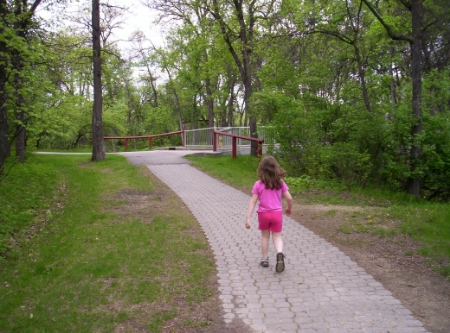
As part of my practice of observing my thoughts and feelings and the patterns they create, I’ve noticed an interesting thing lately: I feel more upbeat, hopeful, and just plain happier, in the early part of the day.

Part of this is just my own personal rhythm — my most energetic time of day tends to be between about 9 a.m. and 3 p.m. But it’s something else, too.

I start off almost every day with a walk (only in the most extreme weather do I forgo my daily walk). Depending on what I have to do that day, the walk (which I combine with getting my morning coffee) is anywhere from fifteen to forty-five minutes long.

My walk is all about noticing — the morning sounds of traffic and squirrels and birds, the feel of the sidewalk beneath my sandals, the super-slow beetle who somehow avoids being crushed by pedestrians as he makes his journey from one side of a cement square to the other. I also notice what’s going on within me — am I sad, joyful, serene? Are my thoughts fixated on that interaction I had yesterday that felt kind of icky? Am I grinding my teeth again? Did I get great sleep, or not quite enough?

When I return from my walk, I do a few minutes of journaling (or morning pages, as Julia Cameron calls them) and record anything I noticed on the walk, anything really taking my interest and “up” for me.

Then, I’m ready to start my day, and most of the time, not always, but frequently, I feel really good.

At 7 p.m., not so much. That 6 p.m.  to bedtime window tends to be the toughest time of day for me. Why?

It’s taken me a while to get this, but I understand now.

Evening time is iPad time for me. I “reward” myself for doing my priority stuff during the day by sporadically checking my iPad throughout the evening. Some of this is fun and feels good; much of it involves checking Facebook, Twitter, and various blog articles; getting caught up in trails of links from one blog to the next; absorbing lots of “expert advice” that may or may not apply to me; listening to recordings from classes and coaches and writers and others I’ve been meaning to get to.

All of this is good, to a point. Information can be profoundly helpful at the right times. And I think we all understand the dangers of information overload and the overwhelm it can wreak.

But the problem is not the information itself.

The problem is forgetting to check inside ourselves to gauge whether or not this information a) is worth our time, b) actually supports our own values, and c) actually applies to us at all.

The crappy mood I tend to get into in the evenings — so much to the extreme of my “morning self” — has much to do with the fact that, in the mornings, I make a conscious choice to connect with myself, to check inside. My morning walk, the steady repetitive rhythm of my steps, creates a great space in which to observe myself, while also connecting me to my surroundings, and particularly, the natural world.

In the evenings, I’m letting go of that conscious choice to check inside myself, and as a result, I turn into a kind of ping-pong ball bounced around by the information I absorb online. I find myself getting agitated, confused — this “expert” says to do this, and this one over here says the opposite; this friend on Facebook is annoyed that people are posting X, while this other friend wishes people would post more of X; this writer seems to know a lot about X and has tons of followers but in fact I feel depressed every time I read one of her posts.

It’s a lot to take in — and a lot of it doesn’t matter.

In the morning, I reconnect with me. I remember to check inside. I realize what I really value and what I don’t. I’m able to make a distinction between what information is helpful and what isn’t, and how much information is too much. I remember what’s true for me.

Can I carry that morning connection I establish with myself into the evening? Can I unsubscribe from lists that don’t add to my life, even if some panicky part of me believes this information is “practical” and I “just might need it someday”? (No matter how “practical” information is, if it doesn’t feel good and right to me, it’s not practical for me.)

Tonight, I’m going to begin an evening ritual of reconnecting to myself. This doesn’t mean I won’t pick up my iPad — I have a lot of fun there. It just means my evening intention will be to notice how I’m feeling when I absorb information, and to recognize I can choose to reconnect with myself at any moment. Information can be helpful, even crucial, but only when I’ve established a solid connection with my own inner compass first.

(And by the way, some of what I connect with online definitely helps me reconnect to myself — and certainly helps me connect to others. I love many of the ways I connect online. The important thing is to notice, to check in.)

What about you? How do you remember to check in with yourself in a world where it’s increasingly easy to look outside ourselves for advice, for “the truth”? I’d love to hear, in the comments.

Image is “A Walk in the Park” © Janet Best | Dreamstime Stock Photos

Honoring the pace of your dream

caterpillar

Often I hear from my clients that their dreams are progressing much more slowly than they’d like. Because I love to work with people on clearing out the “stuck stuff” that keeps them from deeply engaging with their creative work (or play, as I prefer to call it), clients usually come to me when they are in this space. Either they feel disconnected from their creativity, or they are judging their process for being “too slow” and therefore creating a feeling of stuckness around their process.

Our creative projects, our creative visions and dreams, have different ways of unfolding. Some of these unfold very quickly, so quickly it can feel frightening. I remember writing a short story that poured out of me so fast I felt like the top of my head was going to come off. Truly, it felt like I did not “write” this story — it had its own momentum and its own timing, and that happened to be an extremely fast “birth” from inside of me into the physical world.

I’ve experienced this type of velocity with other creative projects, but more often than not, the pace of my creative projects and dreams tends to be much slower. When the dream is large, like writing a book or creating a business, we often have a huge learning curve, even if it is something we’ve done before. The new book (or business) is a completely different entity from the old one, and the guideposts we created in the process of doing the previous thing may no longer apply. We must discover new ones.

It’s important to accept that we are not necessarily in control of the pace of a creative project. I know that can feel frustrating to hear when we have deadlines we want to meet, or if we feel we haven’t put our creative work into the world as much as we’d like, but it’s still important to honor. My friend and fellow writer and coach Terri Fedonczak (with whom I participate in Jenna Avery’s Writer’s Circle*), often said during the process of writing her forthcoming book, “I am not the timekeeper.”

I love this. It’s true — we can plan and plan, but within each creative dream lies the knowledge of its own unfolding. When we allow a dream to unfold at the pace that feels right and juicy to us — no matter how slow or fast we judge it to be — we are creating a solid foundation for that dream. We’re creating a dream that’s got legs.

If we rush our vision, or, at the other extreme, try to halt its momentum because the momentum is unsettling to us, the project can either burn itself out before it has a chance to truly take root within us, or lose its glow for us because it’s not allowed to fly as fast as it wants to.

If the process of creating your dream feels like it is moving too slow, ask yourself:

* Slow by whose standards?

* Why do I think I need to move faster? What do I believe would be gained, or lost, by moving faster? Is this true?

* Do I have enough support (inner and outer) for this project or dream?

* If I totally trusted myself and the unfolding of this dream, would I be okay with this pace?

If your project, vision or dream feels like it’s moving too fast and you’re getting scared, here are some things to remember:

* It’s essential to develop a practice of grounding and centering yourself regularly, particularly if you are highly sensitive. Your nervous system is going to be more reactive to rapid change than that of the “average” person, and you are going to need to practice radical self-care now more than ever.

* It’s important — and totally valid — to feel safe. At the same time, we can feel unsafe when in fact we truly are safe. Ask yourself: How can I create a feeling of deep inner safety for myself, even if my external world feels like it’s moving too quickly for me right now?

* When change is moving quickly — and that change feels like it is good for us — we are also growing and changing very quickly. When I’m in a period of rapid change, I know that the “me” who does not feel capable of handling the change today will be more than capable of handling that change tomorrow, or tonight, in the moment I am called on to handle it.

Accepting the pace of our dreams starts with deep self-acceptance. When we’re not accepting of an aspect of ourselves, we are going to project that onto our dream and thwart the growth of that dream.

Think of your creative dream as a child: some kids need lots of time to play in blissful solitude; others run right out into the throng and play until they drop. If the kid who needs to play mostly alone, at her own pace, is forced out into the throng, she suffers and withdraws. If the kid who wants to immediately join the pack and play hard until the sun sets is forced into slower, solitary play, he feels isolated and suffers.

If you can accept your own needs AND the needs of your particular vision, your dream will unfold in a way that’s good for you AND the dream.

How do you deal with the unfolding of your creative projects? What have you learned about yourself along the way? I’d love to hear in the comments.

Work With Me: Need some support in allowing your creative vision to unfold? I have openings for new coaching clients. Find out more, here!

*And: Tomorrow, June 13, is the last day to register for the next session of Jenna Avery’s Writer’s Circle. If you’d like to develop a more regular writing habit with group support, check it out here.

Image is “Caterpillar” © Christy Mitchell | Dreamstime Stock Photos

Making it ridiculously easy

sharpenedpencil3

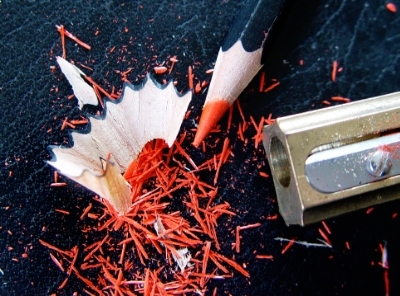
When I went through life coach training with the wonderful Martha Beck, I learned about what Martha calls “turtle steps.” Turtle steps are teeny-tiny increments that help us reach a goal. The main thing about a turtle step is it has to feel do-able. It has to feel, as Martha puts it, ridiculously easy.

When I coached my very first client, I suggested she break that overwhelming goal down into turtle steps, and she said, “Turtle steps sound great, but I’m forty-five years old. I don’t have time to move that slowly.”

The coaching session came — for a moment — to a screeching halt. She’d triggered one of my own big fears. She’s right! I thought. At the time, I had two unfinished novel drafts and an image of them sitting in the corner of my office flanked by dust bunnies and cat hair popped into my mind. If I use turtle steps with my novels, I’ll be ninety before I finish them!

Luckily, by then I had enough evidence from the experiences of Martha and my fellow coaches to know that turtle steps worked. In fact, the more ridiculously easy they felt, the better they worked.

My client wasn’t ready to try turtle steps — yet. A month later, when she’d done nothing to move her goal forward because she kept approaching it with her familiar “bite off more than I can chew” method, she showed up for a session and said, “I think I’m ready to try out turtle steps.”

That’s the funny thing about the way our minds tend to work: We’d rather hold on to the idea of taking giant leaps forward that only exist in our fantasies than take smaller, less glamorous steps that we actually do complete.

If you have a tenacious inner perfectionist (as I do), know that you are probably going to have a tough time accepting the idea of turtle steps.

When I was an undergraduate in college, literally every semester I signed up for five or six classes, even though by my third semester it became blatantly obvious that I could not take on more than four classes without feeling overwhelmed and scattered. My inner perfectionist (who is best friends with my “social self”) loved the idea that I was tackling a huge course load — and besides, other people took six classes and aced them all, so why couldn’t I?

Almost every semester I ended up withdrawing from a class or two at the last minute because I felt completely overwhelmed. Twice, I withdrew past the deadline and therefore received a grade of a big fat F. Twice. The person who couldn’t stand the thought of getting less than an A+ actually ended up with F’s on her transcripts simply because she voluntarily took on too much.

The idea that we can take small, easy steps is anathema to the perfectionist, whose identity is formed out of the belief that if she can take on more than is necessary and excel at it, she will finally be worthy, and therefore, loved.

But it doesn’t work this way, my sweet little inner perfectionist is slowly discovering. She is loved, deeply, simply for existing and for being who she is. And she does not get more accomplished when she takes on more — she actually accomplishes less that way.

Back to my two unfinished novels: they have long since stopped communing with the dust bunnies in the corner of my office. They’re up and dancing around now, dust-free and shiny. How did this miracle happen? Since September of 2011, I’ve been taking ridiculously easy steps, on a regular basis, to finish my novels. (Read more about how I’ve done that at the end of this post.)

Yes, sometimes that means I write for fifteen minutes a day. Yes, sometimes that means I write one sentence. And no, I do not write every single day. But I’ve completed two novel drafts and I’m 240 pages into a third.

The key is making it ridiculously easy, step by teeny-tiny step. Any step can feel ridiculously easy if it is small enough.

Ridiculously easy isn’t as easy as it could be, though, because we live in a culture that tells us that for something to have value, it has to feel impossibly hard. And so we take on enormous “to-do” steps like “write novel” or “get new job” or “lose twenty pounds.” Seriously! These are actual items I’ve seen on clients’ to-do lists. But they’re not action steps, they’re long-term goals. In fact, I’m loath to call them goals — they’re actually processes, ways of life, daily habits we develop.

So a huge part of all this is allowing ourselves to do what feels ridiculously easy. That might mean a daily goal of “write one paragraph” rather than “write ten pages.” But it’s one paragraph that gets written, rather then ten pages that don’t.

Often our minds won’t allow us to embrace ridiculously easy. It’s a total shift for most of us, right? If it feels easy — or, at the very least, not hard, we don’t trust it. “But life isn’t easy!” we think. And that is certainly true. But we don’t need to add hard to the hard.

This is one of my favorite beliefs to challenge with my clients. When we make the shift from “It has to be hard” to “I can allow it to be easier,” amazing things happen. Believe me. I’ve seen it.

If you need support in allowing your process to feel easier, I’d love to help. See if we might be a good fit, here.

And: One of the biggest reasons I’ve moved forward with my novels is due to my participation in Jenna Avery’s Writer’s Circle. This is where I’ve put my writing turtle steps into action. This group offers me daily support, accountability and community around my writing. The last day to register for the next session of the Writer’s Circle is tomorrow, May 16. Check it out, here!

Image is Sharpened Pencil © Uschi Hering | Dreamstime Stock Photos

Pausing is not the same as stopping

stopsign

Sometimes it is incredibly, excruciatingly hard for me to step away from something, when stepping away is exactly what I need to do.

Step away from that phone call that is not going anywhere and sucking up a lot of time.

Step away from my novel when I keep forcing it even though I’m beyond frustrated and realize I have gotten so far away from the heart of the story that I have no investment in what I’m writing.

Step away from the problem I’m desperately trying to solve (when it’s becoming more and more obvious that the mind that created the problem is not the one that can solve it).

Step away from the internet. Because, it’s the internet. And I need sizeable breaks from it if I’m going to remain sane.

I think one of the reasons it’s hard for me to step away is because of the idea that I am supposed to tackle things. Take control of them, wrestle them to the ground, and force them to cry uncle. This is the way I was taught to solve problems when I was very small, and, even though I’ve never been very good at it,  it’s deeply engrained in me.

Only, sometimes — often — it just isn’t effective. There’s a point where I’m trying so hard to control the outcome of something that I am way too emotional to be effective. It’s at this point that pressing the pause button can be so essential.

But there’s another reason it’s hard for me to step away. It’s because of trust, or the lack of it. Allowing myself to step away means I am trusting that I will get back to whatever it is I’m struggling with — whether it’s a phone conversation or a tough scene in my novel.

And this kind of trust takes some practice to cultivate. I’ve been working with this for years and yet I can still go way too far out of fear.

We can never solve an internal problem by changing an external circumstance. If something within me feels out of control, no amount of controlling the external world will change that. This is the recipe for compulsion and, eventually, addiction. I’ve got to get back into balance within myself before I meet the world again.

This is why I suggest to my coaching clients that they not make huge decisions when they’re feeling intense emotions. We don’t know what the truth is for us until we come back to center. Our emotions are messengers, but they’re often not the message. (Extreme anger at your boss may just be saying, hey, let’s take a look at what’s happening here, not hey, let’s quit!)

So we’ve got to make it okay for ourselves to step away when we’re getting into a place that feels out of balance — no matter how important we’re making what we’re doing. Stepping away for now does not mean stopping altogether — in fact, it can mean letting another part of us — our subconscious — take the wheel for a while.

So, how do we do this?

1) If you’re struggling with something you’re creating (a painting, a novel, a website) and you’re ready to take a knife to the canvas or put your fist through the computer screen, know you’ve reached that point where you need a little less perspiration and a little more inspiration.

I know, I know, there’s that awful saying about how creating is one percent inspiration and 99% perspiration. Please. I don’t believe we need to feel inspired all the time to create — inspiration often comes in the course of creating, and some days it doesn’t come at all — but if, in the long haul, you’re only feeling one-percent inspired, you need more inspiration. If the whole thing feels like a struggle every step of the way, you’re forgetting how important it is to fill your creative well.

2) If you’re having a really hard time in several areas of your life (if you’re in what we Martha Beck life coaches refer to as “Square One”, where you’re going through a massive identity shift and you don’t know what the hell is happening), realize you may need to move much more slowly.

You may need to take more time-outs. You need to practice really good self-care during these times. If you’re in Square One, the question is never “how can I get out of Square One?” but “how can I make it okay to go slow?” (I love Kristin Neff’s guided meditations on self-compassion for these times, and all times, really.)

3) Know the point at which you are getting in your own way. See if you can step outside of your emotional self and be the observer. What do you look like when you’re in need of pressing the pause button? What happens with your body, your behavior?

A few years ago, I was walking home in a seriously foul mood, and a car rolled through the stop instead of letting me cross the street. I actually reached out and hit the back of the car as I walked behind it. Feeling the sting of the hot metal on my fingers (it was like a 100-degree day, which was part of why I was ready to maim), I knew I’d crossed one of my personal boundaries into nutso territory, territory I did not want to stay in. It was time for me to stop wrestling and take a time out. Know these places in yourself, and find ways to clue yourself in to when you’re getting into this territory. Hopefully you will not have to slap a defenseless Honda Civic to know you’ve entered “that zone.”

4) Above all, cultivate trust in yourself. Take baby steps. If you’d normally force yourself through something to the point of frustration, try stepping back even five minutes before you usually would.

One of my clients recently made the decision, for a number of reasons, to take a month off from her artwork. (Namely, because it was feeling too much like art-WORK. She said she didn’t want to return to it until it felt like art-PLAY. I love this!) She was afraid a month was too long, but she felt like she needed it. The need for the break felt like it was coming from her intuition, not from a place of fear. It felt deeply right.

A week into the month off, she emailed me. As of today, she said, I am back to my art-PLAY. It turned out she didn’t need an entire month off after all. Something in her was more than willing to return to creating when it was ready. Now that’s self-trust.

For an article on a similar theme, check out Practicing Reverent Curiosity.

Image is “Reflected Stop Sign” © Vladimir Zanadvorov | Dreamstime Stock Photos

What triggers your resistance?

brick wall

One of the benefits of being a rabid journaler is that I have ample evidence of my patterns and habits and defaults. All that stuff I “tend to do” when I’m scared, overwhelmed, panicked, what have you. It’s there in ink on actual, physical pages. Hard evidence.

A client who also journals told me recently that he picked up a notebook from ten years ago and was depressed to see that he was struggling with exactly the same stuff as he is today. He thought it meant that he hadn’t changed at all, had been stagnating for ten whole years.

Which is so not the case.

Of course you were struggling with the same stuff back then, I said. Those are your core issues.

We all have core issues, those deep, resonant conflicts within us that we’re on this earth to be with, work with, and, over time, learn from. These issues are our teachers. It’s not about overcoming them or even letting go of them. The work is to become more and more intimate with our core issues as we cycle through them again and again in our lives. We peel our layers like an onion, each time getting closer and closer to our center.

I still struggle with much of the same stuff I did at twenty — it just doesn’t throw me as much, because I understand it better. I know how to work with it, play with it, in ways I didn’t then. In fact, some of the areas where I’m strongest now are the areas I had most difficulty with at twenty, even if those areas still cause me trouble.

For me, this is the work of my life. This is my real work, above, beyond, and beneath any other “work” I do in the world.

It’s these core issues, though, that trigger our resistance. Of course they do. They’re painful. Nobody wants to delve into pain. When I feel like I’m spinning my wheels and I just don’t see a way out, I can be pretty sure that some core issue has risen to the forefront and I’m in resistance to it.

What’s tricky is that we can often be blind to our core issues when they’re “up” for us. This is why I keep lists of my “resistance triggers” in my journals.

When I’m feeling stuck, I go to one of my lists. Resistance triggers basically boil down to painful thoughts that reflect our core issues. Here are some sample triggers from one of my lists:

You have to write something special, original and amazing or there’s no point. People have to be totally wowed by your writing or why are you doing it?

If you take too much time to yourself, people you love won’t understand and they’ll leave you. You have to be available to others when they need you or you’ll end up alone.

Even when you work really hard, it isn’t enough — what’s the point?

It doesn’t matter if you’re tired. Just keep going.

These are some of the biggies for me. You get the idea. The reason I write this stuff down is because I often don’t recognize that these issues are “up” for me. All I know is I’m feeling sad, empty, or pissed off and like I can’t move forward. Often, when I consult one of my lists I immediately see the thought causing the resistance jump off the page at me. Ahhh. Now I have something to work with.

So let me show you how this resistance thing plays out: If I’m in the grip of a thought like, “If you take too much time to yourself, people you love won’t understand and they’ll leave you,” but I don’t know it, I’m often over-responding to others, overscheduling myself, saying yes more than feels good to me.

Pretty soon I’m fed up, angry, withdrawing from and resisting interaction — even interaction that could be helpful and nourishing to me (such as taking time to truly connect with myself or with a friend who deeply wants to hear me).

If I’m in the grip of a belief like, “You have to write something special, original and amazing or there’s no point,” I become extra-hard on my writing. I become unwilling to experiment. I belabor every sentence. Everything feels squeezed and distorted, like I’m trying to fit my words through a teeny, tiny keyhole and hope they can make it through to the other side as magical, life-altering prose.

Pretty soon I don’t want to sit down at my desk at all. Writing has become painful, not life-enhancing. And certainly not fun. So now I’m resisting writing at all; I’ve become disconnected from why I ever wanted to do it in the first place.

Writing these triggers down as we become aware of them is a huge act of self-care. It’s about knowing ourselves. Seeing your thoughts on paper is a good way to cut them down to size — sometimes, thoughts that feel horrifying when they’re stuck in our heads can look absolutely ridiculous when you see them written down.

Just the act of noticing that I’m being triggered by one of these thoughts can create a huge shift for me. I’m no longer merged with the thought — I’m now outside of it, observing it, so it’s over there where I can question it, and not a driving force within me. The next step is to question these thoughts, look for evidence of where they are not true. (The Work of Byron Katie is an excellent way to question your painful thoughts.)

What triggers resistance for you? How do you know you’re “in it”? Let me know in the comments!

Image is “Stone and Brick Wall” © Peter Szucs | Dreamstime Stock Photos

Feed yourself images — it’s good for you

parkbenches

“Filling the well involves the active pursuit of images to refresh our artistic reservoirs. Art is born in attention. Its midwife is detail.” — Julia Cameron, The Artist’s Way

Yesterday I slept in because I had woken up in the middle of the night, scared by a dream. (When I came to consciousness, I was lying flat on my back shouting “death angel!” My boyfriend tells me he thinks Death Angel was an ’80s metal band — can anyone confirm this? — but that is not what my dream was about.)

I was so afraid I’d see a death angel in my bedroom mirror that I got up and went into the living room and watched TV until my bedroom didn’t seem so scary anymore.

Anyway, because I let myself sleep late to compensate for being up in the middle of the night, I walked out of the house at 10:30 to get my morning coffee with my mind full of all I had to do, feeling irritated and stressed. I hate starting the day late. It screws up my to-do list, makes me feel I’m already behind just by virtue of not beginning when I thought I would.

I got my coffee and then walked over to the hardware store to buy some lightbulbs. The person working at the front desk was tied up with a return, so I walked to the back of the store to the other register.

And I noticed the store had an old-fashioned red-and-gold popcorn cart set up back there, complete with little bags of popcorn and a hand-written sign that said “Take one!” I didn’t take one — I was working on my coffee — but I loved this. It brought back another memory of free popcorn, when I was a kid, maybe in a similar setting, and my mom grabbing two little bags of popcorn just like this, and handing one to me.

And then I began to think about how I really like my hardware store. The employees are always friendly, and customers are allowed to bring their dogs in, and when I go in there I feel like I’ve stepped back into the 1980s, in a very good way.

The popcorn cart made me feel happy and I left the store with my lightbulbs feeling a little less stressed. And I thought, you know, it’s Saturday. There was a time when Saturday was my day of relaxation. Now I too often make it my day to “get a lot done that I didn’t get done earlier in the week.”

So I decided I would reclaim some of that old Saturday relaxed energy and take a little walk.

When I returned from it, I scribbled down bits of what I remembered from the walk in my journal:

A snowman dressed like he was on a tropical vacation — Hawaiian shirt, grass skirt, sunglasses perched above his carrot nose — with a tube of SPF 50 lying in the snow next to him.

A sleek black dog in a red collar, digging in the snow and retrieving a tennis ball. The dog pranced around its fenced-in yard with the ball in its mouth, peppy and proud. It was an adult dog, but it bounded and flopped like a puppy. It saw me, dropped the ball to its feet, and froze, staring at me brightly with its ears perked and a dusting of snow on its chin that looked like cake frosting.

The dog and I exchanged a long, contemplative look, and then I rounded the corner and saw the sheets of snow coating yard after yard. The snow appeared perfectly smooth, but when I looked closely, I saw that hundreds of tiny rabbit tracks peppered each blanket. Now, I haven’t actually seen a rabbit in months — unlike squirrels, who are the chatty, ever-visible extroverts of the neighborhood animal kingdom, rabbits keep their distance and when you do see them, they freeze until you move on. But I love that rabbits leave traces of themselves, so we know they’re around.

The popcorn cart in the hardware store drew me into the present moment, and I moved on through my day more alert to the sights around me. Filling up on these images and then writing them down felt so nourishing. It connected me with the wonder that is the world around me, and I forgot about the to-do list that had been hanging over me when I’d left the house. When I returned to it, I felt more grounded and saw that not everything on the to-do list needed to be done. The peace I thought I would have when I had completed everything on the list was already within me.

My walk turned into what Julia Cameron calls an Artist’s Date. The purpose of an Artist’s Date is to fill your “creative well” with nourishment, in whatever form that takes for you. For me it is often the beauty of the everyday. How could so much amazingness be just outside my door? Well, it’s always there, but most of the time I don’t see it. I had to consciously open myself to it — which I did by choosing to slow down and have a leisurely walk — in order for it to find me.

This kind of nourishment is always available, and it’s totally free.

Try this: Make a practice of writing down images that inspire you, in as much detail as you can. See how you feel while you do it, and afterward.

Image is “Benches in Snow”, © David Coleman | Dreamstime Stock Photos