Momentum is not always obvious

frozenwaterfall

A friend and I had a conversation the other day about those times in life when we feel like we just can’t get any momentum going, and it got me thinking.

It can be painful to feel like we’re not moving forward. Part of this is due to external stuff (we live in a world that has little tolerance for the idea of “standing still”) and part of it is due to our innate desire to grow and become more of who we are.

If I look back over my life and pinpoint the periods of a lot of “obvious” momentum, it becomes clear that they were almost always preceded by a time (sometimes a long one) where I swore I was stagnating and that nothing would ever change.

Why is this?

In my experience, it’s because the part of us that has outgrown where we are is the one who is experiencing “where we are” as stagnant.

But: there’s another part of us, the slower part that isn’t quite ready to let go, that is NOT experiencing “where we are” as stagnant at all. This part of us is still receiving benefits, comfort, nourishment, even joy, from being exactly where we are.

When I look back on my life from the standpoint of “who I am now”, the “me” I am now sees the periods of my life that preceded a lot of change as stagnant.

But, when I actually was LIVING those periods, a part of me was okay with them. A part of me needed them to be exactly as they were. And until that part of me was ready to let go, they weren’t truly “stagnant” periods to ALL of me.

Maybe the truth is that when we feel a lack of momentum, and think we are “stagnating,” what’s really going on is we’re feeling an increasing sense of incongruence.  Who we are becoming is feeling incongruent with who we have been, but we are still ALSO who we have been.

I’ve found that it’s not helpful to rush along the part of me that needs to be exactly where it is for a while longer. When I do that, it holds on tighter out of fear and a kind of rebellion.

What’s more helpful is to reassure the part of me that wants to gallop ahead that it WILL have its day, and that, in fact it IS moving forward as we speak, and that’s why the divide between it and the part of me that wants to stay put is becoming more and more painful.

The pain is a good thing! The pain of incongruence is a sign of momentum, rather than evidence that there is NO momentum.

If you find yourself thinking that momentum has to look a certain way, play around with rethinking it. Are there signs of momentum in your life that may not be obvious or tangible? Does the fact that something is not obvious or tangible mean it isn’t real?

Nature is always a good role model for us here. During the winter, growth does not stop altogether. Growth goes into a different phase. Trees do not die; they sprout new buds in the spring. Some animals go into hibernation, conserving energy for their eventual reemergence. The fact that they’re inactive during this period does not mean they are dead!

Before you assume you have “no momentum,” look for ways that momentum may be showing up in your life that are not totally obvious. And check for signs that you may be in the middle of your personal “winter,” where growth is occurring in oh-so-subtle ways, deep beneath the surface.

Trust is helpful here. Trust and momentum make good partners.

What do you notice about what momentum looks like for you? What do you do when you feel your momentum is “lost”? I’d love to hear how this works for you, in the comments.

 Image is “Iced Waterfall” © Patricia Cale | Dreamstime Stock Photos

On opportunities and trust

squirrel

This past week, I almost signed up for a course that sounded really good to me. In fact, it sounded awesome and perfect. I know the creator of the course is amazing, and I’ve been wanting support in the area of the course material, and the pricing was just right.

It seemed like a no-brainer, but when it came to signing up, I was on the fence.

The deadline loomed and I couldn’t make up my mind. A part of me was convinced that if I didn’t take this course I’d regret it. And yet I couldn’t get myself to press the sign-up button.

I became really curious about what was going on for me here. I noticed that my mind was telling me it sounded great and it might be just what I needed and it was so inexpensive how could I not take it?

But when I dropped down from my mind, into my body, the idea of participating in the course felt heavy, even exhausting. It felt unnecessary. You don’t need it, my body said.

My mind started chattering, but … but … it has all these things you’ve been saying you need! It’s a chance for more learning, more connection, more growth! And it’s affordable! What’s wrong with you that you’re not signing up? The deadline, the deadline …

I dropped down into my body again, and got this message: We have enough learning, enough connection, enough growth for now. For right now, we have enough. Nothing more is needed.

I sat with this and I began to feel how supported I already am — even though my mind often tells me that I need “more support.”

As the deadline came and went, my mind did a wild, frantic dance. How can you pass up this opportunity? You must be mad. Mad, I tell you! You are going to regret this, bigtime!

The saner, quieter part of me sat and mused about all the noise my mind was making.

I saw my mind’s belief that the “right” opportunity only comes once, and that if I don’t grab it, I will be filled with regret. Forever.

I saw my mind’s belief that the “right” opportunity could totally transform my life. Forever.

I saw my mind’s belief that I need more of what I already have. Learning, connection, growth. Even if, at the moment, I feel “full.”

Then I thought about how the “true right” opportunities for me have usually had an organic feel to them. Like there was no decision to be made; the decision was making me, as Byron Katie might say.

When I am heavily on the fence, when there’s a forcing quality to a decision, usually the timing is not right — or perhaps I do not yet have enough information about the opportunity. Or, maybe, I just don’t need or want it.

Sometimes, it is difficult for me to say “I don’t want that.” And maybe even more difficult to say, “I don’t need it.”

But … what if I want it later? What if I need it later, and I don’t have it?

This comes up for me a lot when I decide to donate clothing or other things (which I’ve been doing a lot of this year). I’m convinced if I let something go, I’ll later regret that choice, or I’ll suddenly really need it and be without it.

What if that were to happen? What if I decide to let go of something and later realize I want it or need it? What then?

Can I tolerate the feeling of wanting? Of needing? Can I find alternative ways to meet that particular want or need?

(What more typically happens, at least with letting go of material things, is that I let go and never think of them again. This is not always so for other, more complex types of letting go.)

As for the course I decided not to take, my body is still fine with my decision, whereas from time to time over the past several days my mind has had a little fit — you should have signed up! What might you be missing out on?

The truth is, right now I don’t know exactly why my intuition (body wisdom) guided me away from this particular course. I may discover why later (maybe another opportunity that feels like a true YES will present itself). But, as I’ve written about before, intuition doesn’t always give us a reason. It simply knows. It’s trusting it that’s the tricky part.

And there’s something here, for me, about trusting that my needs will be met — sometimes, often, not in the exact way I think they will be, but they will be met. How many times do I consume more than I need because I am afraid that at some future point I will be deprived of what I need?

I think about the squirrels I see out and about all the time now, burying sustenance in the ground for the cold winter months. I’ve read that squirrels often forget where they bury things. I am like this, too, stocking up on things just in case and then forgetting.

What do you notice about trusting in your intuitive sense of what is enough for you? Is it difficult for you, too? I’d love it if you’d share, in the comments.

Image is “Squirrel with Peanut” © Kathy Davis | Dreamstime Stock Photos

Saturday Gratitude #9

kittyfeet

For today’s Saturday Gratitude post, I want to focus on small things, even tiny things, that made a big difference this week.

I notice how, often, when I’m convinced something is lacking in my life, I get fixated on the idea that I need a big change in order to feel better. But most of the time, it’s not a big change I need but a small shift in perspective, energy, or mood. Or maybe just a tiny reminder that I’m doing okay, I’m on a good path.

So here are three tiny things that helped in a big way this week:

1) The hand-written, snail-mailed thank you card from a friend that arrived at the perfect moment.

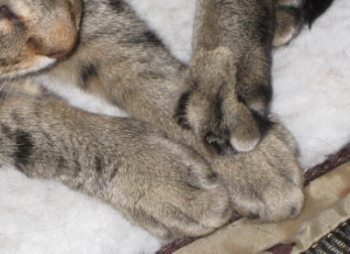
2) My cat jumping up on the couch and touching my forearm with his paw while I was having a moment of solitude. The coolness of his paw pads as he purred next to me. Somehow, cats never take away from solitude, only add to it.

3) That one line in my novel draft that I know I got right, and the laugh of recognition in my friend’s voice as I read it to her over the phone.

What tiny things helped you in a big way this week? What do you notice when you look back over your week that you really appreciated? I’d love to hear, in the comments.

What would make it easier?

Drop of water

Several months ago, I led a small group of my clients through a support session to help them with fears that were coming up around their creative projects. They were all nearing the finish line and feeling a lot of resistance to completing, so I thought, maybe we could all support each other in this.

Something we noticed during our session was that we all had a tendency to complicate things to the point that we felt utterly paralyzed about how to move forward. The closer we got to finishing, the more questions about what might happen when we brought our projects into the “real world” came up.

A lot of the stuckness, we found, was based on fears of what might — or might not — happen in the future, if we actually did finish the projects. What if we put them out into the world and no one noticed? What if we put them out there and offended someone close to us with our content? What if we put them out there and got criticized or booed?

All of these things, of course, are distinct possibilities when we put our work out into the world. Focusing on these possibilities can also be effective ways to distract ourselves from actually finishing our work so it can BE out there.

So we came up with this question to ask ourselves when analysis paralysis set in: What would make it easier? What would make it easier, right now?

Just asking this question, we noticed, created a feeling of relief (which good questions usually do — and most of us are not in the habit of asking ourselves good questions!).

We brainstormed a list of possibilities this question generated, and here are some of the things we came up with:

* I could, just for today, commit to staying in the present moment with my work.

* I could stay in my own business. (This comes from Byron Katie’s “three kinds of business” — my business, your business, and God’s business [you might also call this the universe’s business or simply “reality”]. As I’ve written here before, much of the time I feel stress it’s because I’m in someone else’s business. That includes worrying about how my creative work will affect others in the future. There’s a place for this concern, but it’s not while we’re creating the work.)

* I could go to bed earlier and wake up earlier.

* I could check in with someone who helps me gain perspective when I’m stuck.

* I could drink more water. (This might sound silly and completely unrelated, but truly, dehydration can cause us to feel stuck, because water helps our physical systems move and flow. And, particularly if your system is highly sensitive, you may be susceptible to the effects of dehydration.)

* I could take more walks. (Sitting at a desk, especially if you use a computer to do your creative work, can cause you to feel sluggish and static. Moving your body shakes things up and help you shift perspective.)

* I could employ tunnel vision (in a good sense). Think of a racehorse who has blinders on so he is not distracted by what’s on either side of him — he’s only focused on the immediate few yards ahead.

* I could shift my work time to earlier (or later) in the day.

* I could work in a warmer (or cooler) room.

* I could take more frequent breaks when I work.

* I could aim for a B- rather than an A+ (this one is especially important for perfectionists, which most of my clients are). If it didn’t have to match your perfect vision, how much freer would you be to finish? Think about your favorite books, movies, music, artwork. Are they perfect, or are they inspired? There’s a big difference.

* I could, just for today, let go of the idea that I can please everyone with my work.

* I could, just for today, let go of the idea that I can please everyone in my existing audience with my new work.

These are only a few examples of what we came up with. But notice how simple most of them are. Sometimes there’s one small tweak we can make that really helps. And we noticed that the phrase “just for today” was especially helpful.

It’s very human to make things much more complicated than they are. Usually, when I find myself in the land of analysis paralysis, it simply means that I’m scared and I need some support. Notice if this might be the case for you.

What might make your current project easier — particularly if you’re getting close to finishing? I’d love to hear, in the comments.

And: If you’re stuck near the finish line and need some support in completing a large project, I’ll be forming another small, low-cost support group soon. Feel free to contact me if you’d like to be put on the list to learn more.

Image © zaliha yussof | Dreamstime Stock Photos

Invisible progress

spiral

My friend Julia Roberts, an awesome creativity coach, posted on Facebook a couple of weeks ago that she “made lots of invisible progress today.”

I loved her term “invisible progress,” and told her so. Julia elaborated: “I think of pregnancy. It buoys us to know that even on the most uneventful day, we baked the baby a bit that day. We’ve already had a hand in altering the universe. Most days have more progress than we know.”

To that I say, YES! And I wanted to muse a little on the concept of invisible progress today.

Years ago, when I was a chronic overachiever, perfectionist, and dieter, I read these words by Geneen Roth: “Sometimes doing it looks like not doing it.”

What? I thought. How can that be? We’re either doing something, making tangible progress on it that we can see, or we’re not doing it, not making progress, and, therefore, falling behind.

And yet, even as my logical, rational mind rejected this idea, when I read the words, something resonated for me, deep in my abdomen. It felt true.

I realized (I was about twenty-two at the time) that I could live the rest of my life only believing in what I saw, or I could live my life trusting that sometimes things were happening beneath the surface, even if I couldn’t see them in the physical world (yet).

Trusting in invisible progress means recognizing that we need to balance our doing with being. While “perfect balance” between doing and being is not possible, we can acknowledge that we do need both in our lives. Most of us are better at one than the other. And some of us have trouble transitioning between the two (me!).

For me, invisible progress often happens when I am in a “being” state. For example, when I’m out walking, I sometimes get ideas for my next blog post or the next scene in my novel, or a completely unexpected solution to some problem I’ve been struggling with pops into my head. I’m not consciously “trying” to come up with ideas; in fact, they come because I’m letting my subconscious chew on things while I’m focused on my walk.

Invisible progress can also happen when we’re being distracted from what we intend to do. This week, I had to take my cat to the vet, something that seriously freaks me out. Both the stress and the actual act of going to the vet took a big chunk out of the day and I had to let some things go.

While I was at the vet, though, the vulnerable feeling that came over me actually ended up being precisely the feeling I’d been trying to get in touch with as I wrote the short story I’m working on. Even though I wasn’t able to put in much actual work in on the short story that day, the vet visit — the act of living life! — gave me exactly what I needed. I was able to return to my story and give that vulnerability to my character, which was exactly what the story needed in order to move forward.

And sometimes, as Julia pointed out so eloquently above, invisible progress is like gestation. Something is growing in us, but it’s not yet ready to burst forth into the world.

We may not even have words to describe it yet (fifteen years ago, I couldn’t have told you I was going to become a life coach one day — I didn’t even know then what a life coach was). We can try to push it and hurry it up, but ultimately, whether we’re growing a baby or a book, it will be born when it’s ready to be born and not one second before.

There are also days where we don’t notice our progress because it has become second-nature to us. Maybe we did something and did it well but since we’re so used to doing it, we don’t “count” it as progress or even think of it that way. It’s worth taking time to notice our accomplishments, maybe particularly the ones we tend to discount.

And, Melody Beattie has written that on some days, we need to congratulate ourselves for what we didn’t do. This, too, is “invisible progress.” I remember when I was having a particularly crappy day a few years ago and at the end of it I realized that, well, despite everything, I didn’t call my ex-boyfriend back even though he was trying to get in touch with me again, and I didn’t eat a box of Twinkies even though hearing from him really made me want to. And that a few years earlier I totally would have called him back and I totally would have eaten the Twinkies afterwards. Invisible progress for the win!

What does the idea of “invisible progress” mean to you? I’d love it if you’d share.

Also: I’ll be raising my coaching rates slightly in one week. If you’ve been thinking of working with me but haven’t gotten around to it, now’s a good time to get in on my current rates!

Image is “Spiral Diagonal” © David Coleman | Dreamstime Stock Photos

How do we know we’re ready to let go?

twofeathers

In my first few coaching sessions of the New Year, I noticed this interesting theme of loss, fear of loss, and ambivalence about loss surfacing.

Some of it had to do with completing a piece of creative work and feeling the emptiness that can come with finishing. This thing that has taken up so much of our heart space and head space and waking hours is now up and walking on its own and it doesn’t need us the way it did. There’s sadness — and one heck of a void — in that.

Some of it had to do with letting go of a job or a relationship. And the big thing coming up around that was, is it truly time? How do I know?

And some of it was about giving ourselves permission to let a creative project, job, or relationship go — even though it did not feel “complete.” It was about deciding not to continue. (And that’s rough on perfectionists, which most of my clients tend to be. You mean I’m allowed to give up on it? I’m allowed to not see it to completion?)

My “big word” for this year is permission. I need to focus on permission because I’ve noticed that I can go for hours, sometimes days, forgetting that, yes, I actually do have permission to do things the way I need to do them. To feel things the way I feel them.

So I can’t help seeing these issues with letting go through the lens of permission.

And that leads me to this: Often, when we’re afraid of letting go, it’s because we haven’t given ourselves permission to NOT let go.

Some militaristic part of us jumps up and says, “Okay! Time to move on! Let’s get moving here!”

And those parts of us which are not ready to let go, sometimes not even NEARLY ready, get trampled in the stampede.

But, as I’ve written here before, we can’t truly arrive anywhere until ALL of us shows up. This concept came to me from the writings of Robyn Posin, whose beautiful website you can find here. She uses a stoplight analogy: We can race to the light, but if it’s red, we won’t actually move forward until it turns green.

There may be a part of us that is holding a green light, but many other parts of us are still cradling the red, tightly.

So, permission. To be right there.

That part of us that the light has already turned green for will probably be very impatient with the parts of us that need to go slower.

And working with the impatient part of us might mean saying to it, “Yes, I see that you’re really ready to go, and I get that. AND, the whole of us is not ready yet. You’re not allowed to let your impatience run the show. But you’re totally allowed to be impatient.”

As long as there is conflict between the parts of us that want to let go and the parts of us that don’t, we are not at peace.

And when we’re not at peace, when we’re locked in struggle, we’re in a poor place to make decisions about anything big. When we’re struggling, it’s painful, and any decision we make tends to be more about getting away from the pain than moving toward what actually feels right to us.

The questions to ask the impatient part of ourselves are: What’s scary about slowing down? What’s hard about being in the present moment?

The questions to ask the parts of us who aren’t ready to let go are: What’s scary about moving forward? What’s hard about stretching ourselves into the future?

Allow these parts to talk to each other. Write down what they have to say; you might try using a different color of pen for each part. When you can hear them all out (and notice that each of them has wisdom and truth), you can begin to integrate their needs.

And when you have integrity, you have peace. And from peace you can truly let go in wholeness.

What are your challenges around letting go? Do you tend to let go quickly, or do you really hang on? I’d love to know how it works for you, in the comments.

Image is Feathers Against the Sun © Kmitu | Dreamstime Stock Photos

Merry Christmas + tons of permission

image

As I was thinking back over 2013 and touching base in my heart with all the amazing people I connected with this year, I noticed that so often the one thing we forget to give ourselves is permission.

When fear comes up, we have this tendency to skip the step that says, “This is what’s happening for me right now, this is where I am and how I feel. And I have permission to be here, feeling all this and being where I am.”

We want to jump over this uncomfortable, vulnerable space. It feels out of control, it feels like the unknown, and we’re not sure anyone else would get it if we shared what’s happening for us.

As a coach, I have the honor of working with clients who are in this space. And I feel it’s my responsibility to let them know that, whatever’s happening for them, it’s totally legitimate and they have total permission to be there. For as long as they need to be there.

Usually, though, we’re in a hurry to get out of this space. Mostly because we think being here means something is wrong. It doesn’t. It means we’re getting ready, preparing for that next right step to reveal itself, letting go of anything that would be incongruent with us being where we need to be next.

What we need during these times is space around everything we’re feeling, everything we’re letting go of, and the trust that whatever’s happening within us — and without — is in motion. It’s not static; it’s constantly changing, if we can create enough space around it to really observe it.

So, my gift to you this Christmas: tons of permission! Yes, it’s truly okay — in fact, it’s necessary — to be on whatever step you’re on right now. Nothing is wrong and your timing is perfect.

Two kinds of urgency

hourglass2

Have you ever gone through an extended period where nothing felt clear to you, where everything seemed muddled and off and you wondered if it was ever going to end?

I’ve been there — many times (and if you’re going through this right now, I send you so much compassion. Yes, it’s hard.)

Way back when, I thought going through these periods meant there was something wrong with me, or that I just wasn’t trying hard enough. Uggh.

I now know that these periods of sluggishness, lack of clarity, and downright suckiness are simply part of the process of change. They’re what happens when we’re letting go of a version of ourselves that no longer fits, but we haven’t yet stepped into whoever it is we’re becoming.

These are liminal periods, and I’ve written about them quite a bit on this blog (click on the Categories list to the right, particularly Transitions and Letting Go, to read more on liminal periods).

Another term for these transitional periods, which I learned while I trained to become a life coach with Martha Beck, is “Square One.”

During Square One, a kind of urgency can rise up in us. It feels like we’d better do something, now! We’d better get out of this crappy place! We’d better make some kind of decision, now! (Even though usually we have no idea what it is we’re deciding, because one of the hallmarks of Square One is a lack of clarity on what we really want. We know what we don’t want, and the rest of it feels like one giant slog through toffee.)

A frequent reminder that I, and the folks I work with, need while in Square One is this: The faster we try to get out of Square One, the longer we stay in it. It’s the ultimate paradox. Square One needs to be fully processed, fully felt. Yes, it sucks, but it’s the only way to get truly clear.

When we rush forward because our period of transition is so uncomfortable, we inevitably end up in more discomfort.

That’s because instead of moving toward what we want (because we’ve gotten clear on it), we’re moving away from discomfort and confusion because they scare us. And where do we end up? Right back in the discomfort and confusion, scared out of our minds. Wherever we go, there we are.

So, if you’re going through a transition, or approaching one, right now, and it feels scary and like you’ve completely lost your footing, the best path to peace is not to hurry out of the scary place.

It’s to slow down, remind your panicked brain that there is no true urgency here, and realize that (in the ultimate irony), you’ll actually move through this icky transition place much more quickly by embracing an easy, one-day-at-a-time (or, on the worst days, one-hour-at-a-time) pace.

Now, there’s another kind of urgency, too. That kind of urgency is a bit different. It’s what I’d call a “transmission from your soul.”

This kind of urgency has a kind of ache to it. It contains a yearning you can’t stave off or press down, no matter how many months or years you try to do just that.

This is the urgency that recognizes that life is relatively short and there are things your heart longs to be or do, and you’re not being or doing them yet. And you’re tired of putting them off.

Or, it’s the kind of urgency that tells you a certain situation isn’t good for you and it has to stop. And that if you don’t stop it, you’re going to keep on feeling this particular ache.

This kind of urgency is the urgency that signals you’re ready for change. Not ten years from now, but as soon as is humanly possible.

Yes, I know: I just contradicted myself. I suggested that if you’re feeling urgency, you need to slow way down, not speed up. And then I said that if you’re feeling urgency, you need to act, now!

Both are true. Can you allow your mind to wrap itself around that? It’s hard for me, too.

But notice my descriptions of the two kinds of urgency. One kind is about moving away from discomfort. And the other is about moving toward what you want. (An ache or longing points us toward something in us that wants to be born.)

We can feel both these kinds of urgency on the very same day! In the very same hour! And we can accept, and work with, both of them.

The tricky part is that, when we’re feeling a lot of the first type of urgency, we need to come to a place of peace before we take any action.

Otherwise, our actions are likely to be fueled by panic and a need to escape discomfort. (Have you ever quit a job, or left a relationship, and found yourself, almost magically, back in what seemed like the exact same job or relationship six months or a year later? That’s because your actions were fueled by a need to escape discomfort, rather than movement toward what enlivens you.)

So how do you know which urgency is driving you? You might want to share what’s going on with someone you trust, or jot down the thoughts you’re having in a journal. Then ask yourself (or let someone reflect back to you): Does what I just said (or wrote) come from the part of my brain that is strictly concerned with my physical and/or social survival? Or does it feel like a mandate from my soul?

Whichever answer you get, the next step is acceptance. And remembering that fully processing what’s going on for you is, in the long run, the fastest way to actually create what you truly desire.

What do you think? What have you noticed when urgency comes up for you? I’d love to hear, in the comments.

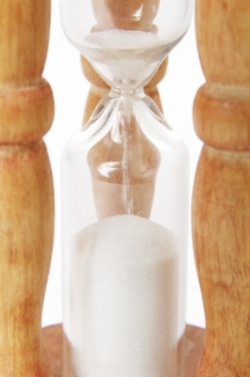
Image is “Time’s Up!” © Nspimages | Dreamstime Stock Photos

Five things I’ve learned about trust

This is my second post for The Declaration of You BlogLovin’ Tour (scroll to the bottom of this post to find out more). This is the final week of the tour, and the topic is Trust.

ferriswheel

I used to think I couldn’t trust others and I couldn’t trust life. It took me a long time to see the turnaround: It was me I thought I couldn’t trust. Once I saw this, I wanted to really know what it meant to trust myself. Here are a few of the things I’ve learned:

1) Trusting myself means that I allow myself to experiment, to stretch, to make mistakes.

I first encountered the idea of trusting myself when I discovered the writing of Geneen Roth in my early twenties. I was a chronic dieter at the time, and Geneen’s concept of trusting myself to know when I was hungry and to stop eating when I was full was a radical thing to me.

When I first tried it, the perfectionist in me wanted to “do this trusting myself thing right.” I thought if I made a mistake, it was proof I couldn’t trust myself.

It took me a few years before I’d integrated the truth that trusting myself is about the way I relate to myself when things don’t go as I want them to — it is about the way I relate to myself, period. It has nothing to do with being “good” or “right” or even wise. It is a way of living in the world. It is a choice.

2) Self-trust is intimately linked to self-acceptance.

If I’m judging myself, you can bet I am not in a place of self-trust. In fact, I’ve found that my intuition will “hide out” when I’m judging myself harshly. Intuition is fierce, but it’s often quiet and subtle in how it comes to us.

My cat usually disappears when someone who speaks loudly and has heavy footsteps enters the house. Intuition is similar — it tends to hide out in the closet when my inner critic starts raging. It’s not that intuition is afraid of the inner critic (intuition fears nothing; it simply is). It’s more that intuition (like my cat) has a very low tolerance for drama. So it goes silent and seems to disappear when that harsh voice within me goes on a rampage.

I can always reconnect with my intuition, though. I just need to get quiet again. Intuition never fails to show up when I’m in a place of peace. And the more deeply I can accept myself, the more peaceful I feel.

3) Trusting myself means having faith that my intuition is there for a reason, and taking the risk to follow it.

It’s the process of acting on my intuition that makes me feel alive, not the outcome, which will never be completely within my control, and which, I’ve found, I often cannot accurately predict.

The more I trust myself to take action on my intuition, the better I get at it, because I create more and more evidence for the fact that it feels good and right and empowering when I trust myself. It’s like strengthening a muscle. (You may not be sure you have the “self-trust” muscle if you haven’t used it a lot — but you do. Trust me.)

4) No one else’s truth is a substitute for my own.

The best help from others is guidance that points me back to my own inner compass, and reminds me how important it is.

It’s good — and often necessary — to gather information and receive advice from others, especially those who’ve been where we are. But at some point, we need to sift through this guidance, integrate it, and check inside ourselves for what feels right for us.

How do we know it’s time to stop going to outside sources? When the information we’re getting is creating more confusion, not contributing to clarity.

5) “Trusting myself” is a belief system.

There are no guarantees of what the outcome will be if I trust myself.

I may trust myself, take action from that place, and find that things happen in a way I couldn’t have predicted.

I’d love to tell you that the way they happen is always better than I could ever have imagined — but while that is sometimes true, it doesn’t always feel like that. Sometimes, I trust myself and things don’t turn out the way I’d like them to — and I don’t understand why things happened the way they did until years later, if at all.

But regardless of outcome, it’s a heck of a lot easier for me to make decisions — and to live with them — when I operate from a platform of self-trust. It comes down to how I want to live: From a space of doubting myself, or from that solid foundation of knowing I’m worthy of my own trust.

I know this: It feels better to trust myself, and to act on that trust, than it does to spin my wheels in the sticky mud of indecision, doubt, and fear.

What have you learned about trust? I’d love to know — feel free to share, in the comments!

TDOY_bloglovintour_banner

The Declaration of You, published by North Light Craft Books and available now, gives readers all the permission they’ve craved to step passionately into their lives, discover how they and their gifts are unique and uncover what they are meant to do. This post is part of The Declaration of You’s BlogLovin’ Tour, which I’m thrilled to participate in alongside over 200 other creative bloggers. Learn more — and join us! — by clicking here.

Top image is “Ferris Wheel” © James Hearn | Dreamstime Stock Photos

Honoring the pace of your dream

caterpillar

Often I hear from my clients that their dreams are progressing much more slowly than they’d like. Because I love to work with people on clearing out the “stuck stuff” that keeps them from deeply engaging with their creative work (or play, as I prefer to call it), clients usually come to me when they are in this space. Either they feel disconnected from their creativity, or they are judging their process for being “too slow” and therefore creating a feeling of stuckness around their process.

Our creative projects, our creative visions and dreams, have different ways of unfolding. Some of these unfold very quickly, so quickly it can feel frightening. I remember writing a short story that poured out of me so fast I felt like the top of my head was going to come off. Truly, it felt like I did not “write” this story — it had its own momentum and its own timing, and that happened to be an extremely fast “birth” from inside of me into the physical world.

I’ve experienced this type of velocity with other creative projects, but more often than not, the pace of my creative projects and dreams tends to be much slower. When the dream is large, like writing a book or creating a business, we often have a huge learning curve, even if it is something we’ve done before. The new book (or business) is a completely different entity from the old one, and the guideposts we created in the process of doing the previous thing may no longer apply. We must discover new ones.

It’s important to accept that we are not necessarily in control of the pace of a creative project. I know that can feel frustrating to hear when we have deadlines we want to meet, or if we feel we haven’t put our creative work into the world as much as we’d like, but it’s still important to honor. My friend and fellow writer and coach Terri Fedonczak (with whom I participate in Jenna Avery’s Writer’s Circle*), often said during the process of writing her forthcoming book, “I am not the timekeeper.”

I love this. It’s true — we can plan and plan, but within each creative dream lies the knowledge of its own unfolding. When we allow a dream to unfold at the pace that feels right and juicy to us — no matter how slow or fast we judge it to be — we are creating a solid foundation for that dream. We’re creating a dream that’s got legs.

If we rush our vision, or, at the other extreme, try to halt its momentum because the momentum is unsettling to us, the project can either burn itself out before it has a chance to truly take root within us, or lose its glow for us because it’s not allowed to fly as fast as it wants to.

If the process of creating your dream feels like it is moving too slow, ask yourself:

* Slow by whose standards?

* Why do I think I need to move faster? What do I believe would be gained, or lost, by moving faster? Is this true?

* Do I have enough support (inner and outer) for this project or dream?

* If I totally trusted myself and the unfolding of this dream, would I be okay with this pace?

If your project, vision or dream feels like it’s moving too fast and you’re getting scared, here are some things to remember:

* It’s essential to develop a practice of grounding and centering yourself regularly, particularly if you are highly sensitive. Your nervous system is going to be more reactive to rapid change than that of the “average” person, and you are going to need to practice radical self-care now more than ever.

* It’s important — and totally valid — to feel safe. At the same time, we can feel unsafe when in fact we truly are safe. Ask yourself: How can I create a feeling of deep inner safety for myself, even if my external world feels like it’s moving too quickly for me right now?

* When change is moving quickly — and that change feels like it is good for us — we are also growing and changing very quickly. When I’m in a period of rapid change, I know that the “me” who does not feel capable of handling the change today will be more than capable of handling that change tomorrow, or tonight, in the moment I am called on to handle it.

Accepting the pace of our dreams starts with deep self-acceptance. When we’re not accepting of an aspect of ourselves, we are going to project that onto our dream and thwart the growth of that dream.

Think of your creative dream as a child: some kids need lots of time to play in blissful solitude; others run right out into the throng and play until they drop. If the kid who needs to play mostly alone, at her own pace, is forced out into the throng, she suffers and withdraws. If the kid who wants to immediately join the pack and play hard until the sun sets is forced into slower, solitary play, he feels isolated and suffers.

If you can accept your own needs AND the needs of your particular vision, your dream will unfold in a way that’s good for you AND the dream.

How do you deal with the unfolding of your creative projects? What have you learned about yourself along the way? I’d love to hear in the comments.

Work With Me: Need some support in allowing your creative vision to unfold? I have openings for new coaching clients. Find out more, here!

*And: Tomorrow, June 13, is the last day to register for the next session of Jenna Avery’s Writer’s Circle. If you’d like to develop a more regular writing habit with group support, check it out here.

Image is “Caterpillar” © Christy Mitchell | Dreamstime Stock Photos