Merry Christmas + tons of permission

image

As I was thinking back over 2013 and touching base in my heart with all the amazing people I connected with this year, I noticed that so often the one thing we forget to give ourselves is permission.

When fear comes up, we have this tendency to skip the step that says, “This is what’s happening for me right now, this is where I am and how I feel. And I have permission to be here, feeling all this and being where I am.”

We want to jump over this uncomfortable, vulnerable space. It feels out of control, it feels like the unknown, and we’re not sure anyone else would get it if we shared what’s happening for us.

As a coach, I have the honor of working with clients who are in this space. And I feel it’s my responsibility to let them know that, whatever’s happening for them, it’s totally legitimate and they have total permission to be there. For as long as they need to be there.

Usually, though, we’re in a hurry to get out of this space. Mostly because we think being here means something is wrong. It doesn’t. It means we’re getting ready, preparing for that next right step to reveal itself, letting go of anything that would be incongruent with us being where we need to be next.

What we need during these times is space around everything we’re feeling, everything we’re letting go of, and the trust that whatever’s happening within us — and without — is in motion. It’s not static; it’s constantly changing, if we can create enough space around it to really observe it.

So, my gift to you this Christmas: tons of permission! Yes, it’s truly okay — in fact, it’s necessary — to be on whatever step you’re on right now. Nothing is wrong and your timing is perfect.

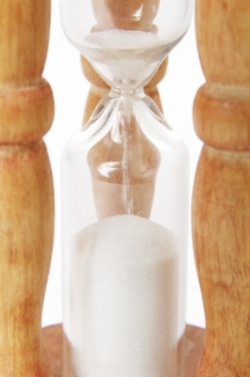
Two kinds of urgency

hourglass2

Have you ever gone through an extended period where nothing felt clear to you, where everything seemed muddled and off and you wondered if it was ever going to end?

I’ve been there — many times (and if you’re going through this right now, I send you so much compassion. Yes, it’s hard.)

Way back when, I thought going through these periods meant there was something wrong with me, or that I just wasn’t trying hard enough. Uggh.

I now know that these periods of sluggishness, lack of clarity, and downright suckiness are simply part of the process of change. They’re what happens when we’re letting go of a version of ourselves that no longer fits, but we haven’t yet stepped into whoever it is we’re becoming.

These are liminal periods, and I’ve written about them quite a bit on this blog (click on the Categories list to the right, particularly Transitions and Letting Go, to read more on liminal periods).

Another term for these transitional periods, which I learned while I trained to become a life coach with Martha Beck, is “Square One.”

During Square One, a kind of urgency can rise up in us. It feels like we’d better do something, now! We’d better get out of this crappy place! We’d better make some kind of decision, now! (Even though usually we have no idea what it is we’re deciding, because one of the hallmarks of Square One is a lack of clarity on what we really want. We know what we don’t want, and the rest of it feels like one giant slog through toffee.)

A frequent reminder that I, and the folks I work with, need while in Square One is this: The faster we try to get out of Square One, the longer we stay in it. It’s the ultimate paradox. Square One needs to be fully processed, fully felt. Yes, it sucks, but it’s the only way to get truly clear.

When we rush forward because our period of transition is so uncomfortable, we inevitably end up in more discomfort.

That’s because instead of moving toward what we want (because we’ve gotten clear on it), we’re moving away from discomfort and confusion because they scare us. And where do we end up? Right back in the discomfort and confusion, scared out of our minds. Wherever we go, there we are.

So, if you’re going through a transition, or approaching one, right now, and it feels scary and like you’ve completely lost your footing, the best path to peace is not to hurry out of the scary place.

It’s to slow down, remind your panicked brain that there is no true urgency here, and realize that (in the ultimate irony), you’ll actually move through this icky transition place much more quickly by embracing an easy, one-day-at-a-time (or, on the worst days, one-hour-at-a-time) pace.

Now, there’s another kind of urgency, too. That kind of urgency is a bit different. It’s what I’d call a “transmission from your soul.”

This kind of urgency has a kind of ache to it. It contains a yearning you can’t stave off or press down, no matter how many months or years you try to do just that.

This is the urgency that recognizes that life is relatively short and there are things your heart longs to be or do, and you’re not being or doing them yet. And you’re tired of putting them off.

Or, it’s the kind of urgency that tells you a certain situation isn’t good for you and it has to stop. And that if you don’t stop it, you’re going to keep on feeling this particular ache.

This kind of urgency is the urgency that signals you’re ready for change. Not ten years from now, but as soon as is humanly possible.

Yes, I know: I just contradicted myself. I suggested that if you’re feeling urgency, you need to slow way down, not speed up. And then I said that if you’re feeling urgency, you need to act, now!

Both are true. Can you allow your mind to wrap itself around that? It’s hard for me, too.

But notice my descriptions of the two kinds of urgency. One kind is about moving away from discomfort. And the other is about moving toward what you want. (An ache or longing points us toward something in us that wants to be born.)

We can feel both these kinds of urgency on the very same day! In the very same hour! And we can accept, and work with, both of them.

The tricky part is that, when we’re feeling a lot of the first type of urgency, we need to come to a place of peace before we take any action.

Otherwise, our actions are likely to be fueled by panic and a need to escape discomfort. (Have you ever quit a job, or left a relationship, and found yourself, almost magically, back in what seemed like the exact same job or relationship six months or a year later? That’s because your actions were fueled by a need to escape discomfort, rather than movement toward what enlivens you.)

So how do you know which urgency is driving you? You might want to share what’s going on with someone you trust, or jot down the thoughts you’re having in a journal. Then ask yourself (or let someone reflect back to you): Does what I just said (or wrote) come from the part of my brain that is strictly concerned with my physical and/or social survival? Or does it feel like a mandate from my soul?

Whichever answer you get, the next step is acceptance. And remembering that fully processing what’s going on for you is, in the long run, the fastest way to actually create what you truly desire.

What do you think? What have you noticed when urgency comes up for you? I’d love to hear, in the comments.

Image is “Time’s Up!” © Nspimages | Dreamstime Stock Photos

How kindness helps you create

ducks

So often when I’m feeling unhappy and stuck (whether in my life or in my creative work), I find myself frantically trying to control circumstances.

My thoughts go something like this: “If I could just get rid of [X circumstance] and find [X circumstance], and get [X amount of money], and if [X person] wasn’t so hard to deal with, I could stop feeling so bad.”

Or sometimes it goes like this: “If I could just figure out if what I really want is [X] or [Z], then I could move forward. But I’m so confused; I can’t figure it out. So I’m unhappy and I’ll be unhappy until I figure it out.”

There’s a kind of paralysis that sets in when I believe that circumstances are causing my unhappiness. It’s often a breed of analysis paralysis, closely tied to perfectionism, where I’m sure that if I choose the “wrong” thing, I’ll increase my current unhappiness in spades. So I don’t choose.

It usually takes me a while in this spin cycle before I remember: Ohhh. Waiiittt.

It’s not about circumstances. It’s not about making the “right” decision.

It’s about kindness. The kindness I’m forgetting to give to myself.

I don’t know about you, but when I remember to treat myself with kindness, there’s a palpable shift within myself. I feel it in my abdomen first, then my jaw — my entire body softens. I literally feel the rigidity seeping out of me, almost like it forms a puddle around my feet. And then I feel a surprising thing: hope.

From this place, there is fluidity — there is movement. How can that be? I haven’t changed my external circumstances, and yet, there’s movement?

Yes. Martha Beck, with whom I trained to become a life coach, likes to remind her coaches that our circumstances do not create our feeling states; it’s the opposite. Our feeling states create our circumstances.

When our focus is outside ourselves, on what we’re sure the “right” circumstances will bring us, we are disconnected from what’s inside us. We forget where our power actually lies — in our ability to choose how we relate to ourselves, and how relate to the world around us.

And here’s how this relates to our creativity: As I’ve often written on this blog, creativity, as I define it, is nothing more or less than the life force within us.

That life force needs to move. It needs to flow, and to ebb.

When I try to control circumstances, or second-guess my decisions, or try to make the “perfect” choice, that life force gets frozen in time. I’m teetering on the edge of the belief that the “reward” lies on the other side of “right” or “wrong” — when, in fact, the “reward” is right here, within me, if I can remember to treat myself with kindness.

Some of my clients say at first that they simply don’t know how to treat themselves with kindness — or that it seems self-indulgent, or a waste of time.

But my clients are often the kindest people I know — they are truly skilled at directing kindness outside of themselves, toward others. They just haven’t practiced directing it toward themselves.

And there’s a distinct difference between kindness toward ourselves and self-indulgence: Kindness creates movement that comes from the heart; it radiates outward. It’s intimately linked to “inspired action.” Self-indulgence, like a clenched fist, closes us off from ourselves, from the world. Rather than engaging the heart, self-indulgence feels like avoidance of something we fear. Kindness feels like an openness to what we love, to what inspires us.

Sometimes, when I think about doing something like, say, write a blog post about the importance of remembering to treat ourselves with kindness, there’s a hard, embittered piece of me that says things like, “Kindness? How cliche and cheesy and abstract is that?”

And then I have to laugh, because that’s exactly the voice that makes treating myself with kindness my last resort so much of the time. I often come to kindness — or it comes to me — because I’m at the end of my rope with treating myself harshly.

I come to kindness because I realize I’ve literally exhausted all my options if I’m viewing myself, and life, with harshness. Most importantly, I’ve forgotten to acknowledge that I am suffering. Of course it seems like I need to manipulate circumstances and choose perfectly if I’m coming from a harsh, rigid place. Wherever I go, there I am.

So, if I feel backed into a corner, if I believe I’m trapped and there are no good options — whether in my real life or in my creative work — it may be that I’ve forgotten this oh-so-basic step: Treat myself kindly. Exquisitely kindly. Time and again, I learn that from that space of kindness, unseen options emerge.

(To learn more about the amazing benefits of treating ourselves with kindness, check out Kristin Neff’s work at http://selfcompassion.org.)

Do you remember to treat yourself with kindness? Do you think it’s worth doing? Do you apply it in your creative process? I’d love to hear, in the comments.

Image is “Hand Feeding” © David Coleman | Dreamstime Stock Photos

When you’re not taking action (even though you want to)

birdonmirror2

Sometimes we’re in a space where there’s something we want to do, but we’re not taking any action toward actually doing it. This space is frustrating and icky. We can spin our wheels here for quite a while.

What I find especially stressful (and confusing) is when I do take a step toward whatever it is I want to do, but I don’t seem to build any momentum. Something feels off. I’m not getting caught up in whatever that thing is; there’s no passion, no fire.

What’s going on when we’re in this space? It’s tempting to try to bulldoze our way through and “just do it!” And there are times when that works.

But sometimes it doesn’t work — and, when we plow forward with sheer force, there’s a nasty lingering side effect: We don’t understand ourselves any better. We may get that thing done, but what happens the next time we’re in the “spinning our wheels” place? We force ourselves to plow through again?

I much prefer asking questions at times like these. More than anything, I want to understand myself better so I can have a better relationship with myself. If that relationship is vital to you, too, here are some questions to ask yourself when you’re spinning your wheels:

Do I truly want to do this thing, or do I believe I “should” want to do this thing?

The presence of a “should” is not necessarily an indication that you don’t want to do it; it often means that you have conflicting voices within you around taking this action. If you can untangle the “should” from the rest of it, you’ll have a much clearer sense of what you really want.

Is this something I used to want, but perhaps no longer do?

Does the person you are today actually want to do this, or is this something you wanted to do five years ago? Are you hanging on to an old dream? (“I can’t go back to yesterday because I was a different person then.” – Alice in Wonderland)

* Is there a deadline issue?

Some of us work better and more effectively with deadlines; some of us get panicky and overwhelmed when we have a deadline situation. And sometimes, the deadline is simply too close or too far away to work for us.

If there’s a deadline by which you’re supposed to do this thing, is it possible to push it back, or push it up? Would doing either of those things make a difference in how you felt about taking action on it? (Sometimes we’ve set our own deadlines. Most of my clients have a perfectionistic streak and expect themselves to complete things way sooner than is reasonable, or necessary.)

Am I making the task too big?

One of my clients had decided to apply to a graduate program, but she wasn’t taking any action toward it. The deadline loomed and the weeks were going by and nothing was happening.

We noticed that every day she had been writing on her to-do list “Grad school application.” But when we broke it down, we found that there were at least twenty individual steps involved in completing the entire application process, and some of those steps could be broken down into even smaller steps. Of course she wasn’t taking action on it when “grad school application” was not an actionable step.

We often don’t want to break things down into small steps because we’re in a hurry. We think we don’t have time to take small steps. Then we proceed to do nothing at all because the giant leap we think we have to take overwhelms us. In the long run, we move more quickly and steadily when we take small steps over time. Think turtle and hare.

Am I in somebody else’s business?

Byron Katie talks about the three kinds of business: My business, your business, and God’s business. Much of the time when I’m feeling stressed, confused, or unfocused, if I remember to ask myself who’s business I’m in, I discover the issue. When I’m in somebody else’s business, as Katie says, there’s no one here taking care of my own.

How does this keep me from moving forward? If I’m worried about what someone else thinks of me, or trying to control someone else’s reaction to my choices in some way, I keep on spinning my wheels. I may not allow myself to do what I truly want to do. It’s human to care about what others think; but if we’re paralyzed because of it, we’re way out of our own business and into somebody else’s.

* Is my creative well empty?

I often mention the creative well on this blog. Julia Cameron likens the creative well to a “trout pond” that, ideally, is fully stocked with fish, except, as artists, we stock our ponds with images that inspire. We stock our ponds with the wordlessness that comes from simply being.

When the pond is empty, we need to restock it. And this means we need to practice great self-care and recognize that there are ebbs and flows to our energy and our creativity. Sometimes, when I’m not taking action, it’s simply because I need to be in a place of inaction for a while.

Any of these questions is a good starting point if you find you’re not taking action on something you want to do. If one question doesn’t seem to apply to you, try the next. And come up with your own, too — write them in a notebook where you can refer to them the next time you’re up against the stuckity-stuck.

How do you deal with it when you want to move forward but can’t seem to take action? I’d love to hear from you!

Image is “Bird on a Mirror” © Shane Link | Dreamstime Stock Photos

Trusting in where your energy takes you

leafwater

One day last week I sat down to write and felt distracted. This is not uncommon. I often experience resistance, confusion, tedium, and occasionally even dread, when it comes to working on my novel.

In fact, I don’t usually call it (in my own head at least) “working on my novel” anymore. I call it “playing with my novel.” This feels much lighter and opens up possibility, curiosity, excitement. When I make it less grave and serious, I’m more in touch with why I actually want to do it in the first place.

That said, sometimes I feel stuck and it feels hard. And I hang in there with it anyway, because it is a commitment. And because sometimes I reach that lovely place of getting lost in my story. And the more I practice hanging in there with it, the more I reach that place.

But on that day last week, something else was going on. I sat and I sat and I sat, and I wrote and revised and tinkered. But my energy was not with the writing. I had the odd sense of pushing something away.

I glanced over at my open notebook, to some morning pages I’d done the day before. Jotted in the margin at the top of the page was a reminder to call a friend of mine, a dear friend whom I’d been meaning to call for a while. But I’d been putting it off because, although I knew that talking to my friend would be nourishing and fun, I’d told myself that she was probably busy and wouldn’t have much time to talk, anyway. I kept telling myself I’d wait and call “when we were both less busy.”

Now, the reminder note jumped off the page at me. And I realized that there was a ton of energy in calling my friend right then, right in that moment.

So, I stepped away from my computer and dialed my friend’s number. She was home and said she’d been thinking about calling me, too — that very morning. But she figured I was probably busy with coaching or writing and she’d wait to call me until the weekend.

We talked for an hour and it felt soooo good. It filled my creative well to — at least — a 10 (read Julia Cameron’s The Artist’s Way to find out more about the creative well). You know those friends who accept and love you so deeply that it doesn’t matter what’s happening for you, or not happening for you, because the connection is about your very essence? That is this friend, for me.

And something important came out of this call. I realized that I often make an assumption that the people I care about are busy and they need to “fit me in.” And this assumption is not reality. In fact, my friend was making the same assumption about me, but in truth I would have welcomed a call from her.

After we talked,  I returned to my novel with a sense of lightness and new possibility, and I no longer had that nagging sensation that there was something important I wasn’t attending to. I could give the writing my full attention.

If I hadn’t followed my energetic pull toward calling my friend, I would have missed out on that connection and that insight.

And yet, my rational mind wondered if I wanted to step away from the novel simply because it was hard and it was my way of “procrastinating.” It can be tempting to “power through” at these times, no matter what. And that’s not necessarily a bad thing to do when we’re developing a habit, whether it’s writing or something else.

But we get to the good stuff in life by acting on what feels juiciest for us in the moment. I don’t mean by acting on our every impulse, but by following our intuitive urges. Often, it’s as simple as asking, “What would light me up right now?”  On that day last week, contacting my friend was that thing. It was “up” for me, calling out for attention. And I needed to listen.

Sometimes, our “creative work” can serve as a means of avoiding doing our inner work. Just as we can avoid our creative work, we can also use our creative work to avoid — or push down the list — other things that are vital to our well-being. Like our relationships. Most particularly, our relationship to ourselves.

So notice the quality of your energy as you create. Is the creating connecting you with yourself, with the world, with that beautiful mysterious space we go to when we create — even if it’s a huge challenge at the moment?

Or, do you have the sense that you are using your writing, artwork, business brainstorming, or whatever it may be, to push something else away, as I did last week? Just notice. You don’t have to stop what you’re doing. Just tell yourself the truth, whatever it is for you.

Because, ultimately, creativity is being connected to what’s true for you in the moment. Because that is when you are most you. And that is what I wish for you — that you be most you as often as possible. That, more than anything else, is your gift to the world.

Image is “Leaf on Steel” © Chris Mccooey | Dreamstime Stock Photos

Can you wrap a system around that?

field

I used to think that I didn’t like systems. Every time I found myself dealing with any kind of system — which implies structureI would rebel.

Part of this probably stems from having a childhood that felt way, way overstructured to me. My heart wanted to lounge in open fields with cows, sheep, books, and my journal (not that I lived near any fields), but my days always felt completely scheduled with activities from morning to night — not just riding the bus (an ordeal in and of itself) to school and back, but with afterschool activities, and then homework.

This seems so nuts to me now, but it was considered normal, and, thirty years later, though I don’t have kids myself, my sense is that many kids are even more overscheduled than I was (plus today’s kids have so much more technology to manage).

I think another reason I’ve tended to rebel against systems and structure is that I’m a Myers-Briggs INFP, and we “P” types like to keep things open-ended. Too much structure can feel overly planned and rigid for a “P” and trigger our rebelliousness.

At the same time, I’ve had to admit over the past several years, especially since becoming a coach and attracting clients who also tend to rebel against structure, that the right amount of structure can be a true godsend for those of us who cling to open-endedness (which can sometimes result in saying things like “I’ll write when I’m feeling inspired” or leaving ourselves one hour to complete something that actually takes four — woops!).

Systems and structure do not have to be elaborate or complicated. There just needs to be enough of a system to get it done — whatever “it” is.

Here’s my (very simple) example:

I was having a huge issue with mowing the lawn. It only takes me about 30 minutes, but it was becoming this thing that I so didn’t want to do and eventually I’d have to force myself to do it, angrily, usually swearing. Even though, once I’m doing it, I don’t hate it (except for that one time I mowed over some dog poop). It actually feels kinda good, moving my body, the smell of grass and dirt around me, the heft of the mower.

About a month ago, I figured out the issue. My brother, who used to live here and used to mow the lawn, had told me I should do it “about every ten days.” And I tried this. But it felt increasingly stressful to me. Because “every ten days” could fall on any day of the week. It might be a Wednesday, and then next time a Saturday, and then next time a Tuesday.

It occurred to me that if I mow the lawn every two weeks, it really doesn’t look all that much worse than if I do it every ten days. So I’ve made every other Sunday afternoon my mowing-the-lawn-time. And I think about it so, so much less. On Saturday, or Wednesday, I’m not thinking, “should I do it today?” because I know Sunday is lawn day. Every other Sunday, “mow lawn” is on my to-do list, and I know I’ll do it, and that’s that.

That was all the system that was required. It was actually way more stressful to keep the “when” I’d mow the lawn up in the air than it was to assign a day to do it.

This applies to anything I want to do on a regular basis, whether that’s writing or yoga or doing the dishes: Keeping the “when” up in the air creates stress and vagueness, and vagueness does not produce specific results.

And I think that’s worth consideration for us “open-ended” types. Is keeping something unstructured and open-ended giving us a feeling of peace and freedom, or stress and confusion?

The way to know you’ve hit on the right amount of “system” for you is that you use the system without a huge desire to rebel. (If you have a very strong inner rebel, as I do, you may be a little bit edgy around any amount of system, but when it’s the right amount, you’ll find yourself using it anyway.)

Your body is an excellent guide for whether or not a certain amount of structure is too much or too little. When I am overstructured, I feel frazzled, frenetic, like I’m on a treadmill. There’s a need to catch my breath (literally). When I have too little structure, I can feel sluggish, unfocused and fatigued.

There’s no right or wrong here; each of us has a “sweet spot” where we have enough structure, but not too much. So when I’m struggling with something that just won’t seem to get done, I’ve started to ask myself, “Can I wrap a system around this?” And then I brainstorm a little about what might feel like enough.

How do you feel about systems and structure? Do you tend to rebel against them, or do you find them helpful, or both? I’d love to know, in the comments.

Image is “Poppy Field with Powerlines” © Peter Gustafson | Dreamstime Stock Photos

Making it ridiculously easy

sharpenedpencil3

When I went through life coach training with the wonderful Martha Beck, I learned about what Martha calls “turtle steps.” Turtle steps are teeny-tiny increments that help us reach a goal. The main thing about a turtle step is it has to feel do-able. It has to feel, as Martha puts it, ridiculously easy.

When I coached my very first client, I suggested she break that overwhelming goal down into turtle steps, and she said, “Turtle steps sound great, but I’m forty-five years old. I don’t have time to move that slowly.”

The coaching session came — for a moment — to a screeching halt. She’d triggered one of my own big fears. She’s right! I thought. At the time, I had two unfinished novel drafts and an image of them sitting in the corner of my office flanked by dust bunnies and cat hair popped into my mind. If I use turtle steps with my novels, I’ll be ninety before I finish them!

Luckily, by then I had enough evidence from the experiences of Martha and my fellow coaches to know that turtle steps worked. In fact, the more ridiculously easy they felt, the better they worked.

My client wasn’t ready to try turtle steps — yet. A month later, when she’d done nothing to move her goal forward because she kept approaching it with her familiar “bite off more than I can chew” method, she showed up for a session and said, “I think I’m ready to try out turtle steps.”

That’s the funny thing about the way our minds tend to work: We’d rather hold on to the idea of taking giant leaps forward that only exist in our fantasies than take smaller, less glamorous steps that we actually do complete.

If you have a tenacious inner perfectionist (as I do), know that you are probably going to have a tough time accepting the idea of turtle steps.

When I was an undergraduate in college, literally every semester I signed up for five or six classes, even though by my third semester it became blatantly obvious that I could not take on more than four classes without feeling overwhelmed and scattered. My inner perfectionist (who is best friends with my “social self”) loved the idea that I was tackling a huge course load — and besides, other people took six classes and aced them all, so why couldn’t I?

Almost every semester I ended up withdrawing from a class or two at the last minute because I felt completely overwhelmed. Twice, I withdrew past the deadline and therefore received a grade of a big fat F. Twice. The person who couldn’t stand the thought of getting less than an A+ actually ended up with F’s on her transcripts simply because she voluntarily took on too much.

The idea that we can take small, easy steps is anathema to the perfectionist, whose identity is formed out of the belief that if she can take on more than is necessary and excel at it, she will finally be worthy, and therefore, loved.

But it doesn’t work this way, my sweet little inner perfectionist is slowly discovering. She is loved, deeply, simply for existing and for being who she is. And she does not get more accomplished when she takes on more — she actually accomplishes less that way.

Back to my two unfinished novels: they have long since stopped communing with the dust bunnies in the corner of my office. They’re up and dancing around now, dust-free and shiny. How did this miracle happen? Since September of 2011, I’ve been taking ridiculously easy steps, on a regular basis, to finish my novels. (Read more about how I’ve done that at the end of this post.)

Yes, sometimes that means I write for fifteen minutes a day. Yes, sometimes that means I write one sentence. And no, I do not write every single day. But I’ve completed two novel drafts and I’m 240 pages into a third.

The key is making it ridiculously easy, step by teeny-tiny step. Any step can feel ridiculously easy if it is small enough.

Ridiculously easy isn’t as easy as it could be, though, because we live in a culture that tells us that for something to have value, it has to feel impossibly hard. And so we take on enormous “to-do” steps like “write novel” or “get new job” or “lose twenty pounds.” Seriously! These are actual items I’ve seen on clients’ to-do lists. But they’re not action steps, they’re long-term goals. In fact, I’m loath to call them goals — they’re actually processes, ways of life, daily habits we develop.

So a huge part of all this is allowing ourselves to do what feels ridiculously easy. That might mean a daily goal of “write one paragraph” rather than “write ten pages.” But it’s one paragraph that gets written, rather then ten pages that don’t.

Often our minds won’t allow us to embrace ridiculously easy. It’s a total shift for most of us, right? If it feels easy — or, at the very least, not hard, we don’t trust it. “But life isn’t easy!” we think. And that is certainly true. But we don’t need to add hard to the hard.

This is one of my favorite beliefs to challenge with my clients. When we make the shift from “It has to be hard” to “I can allow it to be easier,” amazing things happen. Believe me. I’ve seen it.

If you need support in allowing your process to feel easier, I’d love to help. See if we might be a good fit, here.

And: One of the biggest reasons I’ve moved forward with my novels is due to my participation in Jenna Avery’s Writer’s Circle. This is where I’ve put my writing turtle steps into action. This group offers me daily support, accountability and community around my writing. The last day to register for the next session of the Writer’s Circle is tomorrow, May 16. Check it out, here!

Image is Sharpened Pencil © Uschi Hering | Dreamstime Stock Photos

What triggers your resistance?

brick wall

One of the benefits of being a rabid journaler is that I have ample evidence of my patterns and habits and defaults. All that stuff I “tend to do” when I’m scared, overwhelmed, panicked, what have you. It’s there in ink on actual, physical pages. Hard evidence.

A client who also journals told me recently that he picked up a notebook from ten years ago and was depressed to see that he was struggling with exactly the same stuff as he is today. He thought it meant that he hadn’t changed at all, had been stagnating for ten whole years.

Which is so not the case.

Of course you were struggling with the same stuff back then, I said. Those are your core issues.

We all have core issues, those deep, resonant conflicts within us that we’re on this earth to be with, work with, and, over time, learn from. These issues are our teachers. It’s not about overcoming them or even letting go of them. The work is to become more and more intimate with our core issues as we cycle through them again and again in our lives. We peel our layers like an onion, each time getting closer and closer to our center.

I still struggle with much of the same stuff I did at twenty — it just doesn’t throw me as much, because I understand it better. I know how to work with it, play with it, in ways I didn’t then. In fact, some of the areas where I’m strongest now are the areas I had most difficulty with at twenty, even if those areas still cause me trouble.

For me, this is the work of my life. This is my real work, above, beyond, and beneath any other “work” I do in the world.

It’s these core issues, though, that trigger our resistance. Of course they do. They’re painful. Nobody wants to delve into pain. When I feel like I’m spinning my wheels and I just don’t see a way out, I can be pretty sure that some core issue has risen to the forefront and I’m in resistance to it.

What’s tricky is that we can often be blind to our core issues when they’re “up” for us. This is why I keep lists of my “resistance triggers” in my journals.

When I’m feeling stuck, I go to one of my lists. Resistance triggers basically boil down to painful thoughts that reflect our core issues. Here are some sample triggers from one of my lists:

You have to write something special, original and amazing or there’s no point. People have to be totally wowed by your writing or why are you doing it?

If you take too much time to yourself, people you love won’t understand and they’ll leave you. You have to be available to others when they need you or you’ll end up alone.

Even when you work really hard, it isn’t enough — what’s the point?

It doesn’t matter if you’re tired. Just keep going.

These are some of the biggies for me. You get the idea. The reason I write this stuff down is because I often don’t recognize that these issues are “up” for me. All I know is I’m feeling sad, empty, or pissed off and like I can’t move forward. Often, when I consult one of my lists I immediately see the thought causing the resistance jump off the page at me. Ahhh. Now I have something to work with.

So let me show you how this resistance thing plays out: If I’m in the grip of a thought like, “If you take too much time to yourself, people you love won’t understand and they’ll leave you,” but I don’t know it, I’m often over-responding to others, overscheduling myself, saying yes more than feels good to me.

Pretty soon I’m fed up, angry, withdrawing from and resisting interaction — even interaction that could be helpful and nourishing to me (such as taking time to truly connect with myself or with a friend who deeply wants to hear me).

If I’m in the grip of a belief like, “You have to write something special, original and amazing or there’s no point,” I become extra-hard on my writing. I become unwilling to experiment. I belabor every sentence. Everything feels squeezed and distorted, like I’m trying to fit my words through a teeny, tiny keyhole and hope they can make it through to the other side as magical, life-altering prose.

Pretty soon I don’t want to sit down at my desk at all. Writing has become painful, not life-enhancing. And certainly not fun. So now I’m resisting writing at all; I’ve become disconnected from why I ever wanted to do it in the first place.

Writing these triggers down as we become aware of them is a huge act of self-care. It’s about knowing ourselves. Seeing your thoughts on paper is a good way to cut them down to size — sometimes, thoughts that feel horrifying when they’re stuck in our heads can look absolutely ridiculous when you see them written down.

Just the act of noticing that I’m being triggered by one of these thoughts can create a huge shift for me. I’m no longer merged with the thought — I’m now outside of it, observing it, so it’s over there where I can question it, and not a driving force within me. The next step is to question these thoughts, look for evidence of where they are not true. (The Work of Byron Katie is an excellent way to question your painful thoughts.)

What triggers resistance for you? How do you know you’re “in it”? Let me know in the comments!

Image is “Stone and Brick Wall” © Peter Szucs | Dreamstime Stock Photos

What one thing can you let go of?

lizards1

I’ve noticed a pattern with myself and some of my clients. We want to add new things to our lives and we’re excited about that. But our current lives are so full that there literally isn’t any space for that newness. We try to stuff the newness into the cracks in our current lives, but our lives start to feel like they’re bursting at the seams. Ouch. The newness can’t truly take root and grow because there’s no rich soil for it to anchor itself to.

We need to actually make space in our lives for the newness. We need to create room where the future can enter. If we keep ourselves constantly busy and scheduled every day, if we choose not to notice our need to let go of something which no longer feels good or serves us, we spin our wheels.

I know, this sounds mildly upsetting and maybe even scary. Change can suck, even when you desperately want it.

But you can open up this space in your life, this space in which to allow for the new, bit by bit. You don’t have to do a massive overhaul of your entire life.

One of my clients who felt ready for change but completely burdened by her schedule had been taking a weekly Pilates class for more than two years. It wasn’t feeling great to her anymore, but how could she let go of it? It was Pilates, and therefore, good for her! Right?

After some poking around on the issue, we realized that the energy of the group in the class had shifted significantly and it didn’t resonate for her anymore. What had once felt like a supportive habit no longer did. She quit the class, and just that one open evening a week began to pave the way for change. She found herself using the open time to sit quietly and within a couple of weeks she started cleaning out a closet and packing up some very old stuff to donate to charity.

Sometimes the “one thing” might just be a one-time letting go, too. A friend of mine who never, ever takes a day off work recently decided she would take just one day off. She’d been convinced that things would “go to hell in a handbasket” (I love that phrase! — what does it mean?) at her office if whe wasn’t there.

As it turned out, everything went smoothly in her absence and it occurred to her that she could loosen her grip on things around there a little, delegate more, and maybe take a day off here and there in the future. (If you have perfectionistic tendencies, you are likely addicted to “showing up”. See what happens when you don’t. Just once.)

So, I know you’re thinking, what if the one thing you choose to let go of is on a grander scale, like a job, a relationship, a project near and dear to your heart? I know. That is so, so hard. But, while there’s no denying letting go can feel utterly crappy, the way we think about letting go can make it either harder or easier.

Letting go happens in layers. You don’t have to do it all at once. Even the big things we let go of are full of tiny things you can let go of one at a time.

Years ago, I left a job I’d been at for a long time, and it was hard. I knew in my heart that letting go was the thing I needed to do, but the thought of it was so overwhelming. The change! The massive change! For several months, I spun around in this cycle: I want to leave. But it’s so hard. It’s so overwhelming. I can’t do it! I won’t. But I want to leave. But it’s so hard. I can’t do it!

Then one day it occurred to me that I could make the decision to leave without having to act on it. I know, it sounds counterintuitive, right? But that’s what I did. Making the decision to leave was my “one thing.” And as soon as the decision was made, my entire body felt lighter. I didn’t actually give my notice at the job until almost a month after I’d made the decision to do it. Giving notice was another “one thing” in a series of “one things” that needed to happen for me to exit the job.

Note that my making the decision to leave — even before I’d actually given my notice at work, before I’d actually physically left the job — created space for newness to enter. Because I was no longer spinning my wheels — do I or don’t I? — my energy was freed up to magnetize itself to my not-yet-created future. And because I could see a finite end to the work situation, it became far more bearable for the remaining time I was there.

As I write this, I remember, too, that another “one thing” that helped me make the decision to leave was that I had decided to sit on the blue chair in my apartment instead of the couch where I usually sat. Yep, that was it. I looked at the chair and thought, I’m sitting here while I write in my journal today. Not there. And from that journaling space on the blue chair came my decision to leave my job.

Do not underestimate the power of letting go of one thing. Even if it’s only for today.

For a variation on this theme, check out my previous article, “The power of tiny new things.”

Work With Me: Are you in transition and feeling stuck or scared about moving forward? I have two openings for new coaching clients. Read more here to see if we might be a good fit.

Image is “Lizard 1” © Alexey Lisovoy | Dreamstime Stock Photos

The shark is working well enough … really.

sharkkite

Anyone who knows me fairly well knows that I am obsessed with the movie Jaws. I’m not sure how many times I’ve seen Jaws, but … just … don’t get me started. (Writers, study Jaws if you want to see a movie where every single scene moves the story forward. Nothing is wasted.)

If you know anything about the making of Jaws, you know that the mechanical shark, a.k.a. “Bruce”, didn’t work very well. In fact, there were so many problems with the shark that it wasn’t seen on screen nearly as much as director Steven Spielberg had originally intended. During production on Martha’s Vineyard in 1974, the frequent refrain from the loudspeakers was “The shark is not working. The shark is not working.”

Welp. As we all know, the shark worked well enough. In fact, the semi-working shark worked so well that Jaws was the movie for which the term “summer blockbuster” was coined, back in 1975 when it first appeared in theaters.

One of the main things I do as a coach, when I have a session with a client, is listen for stressful thoughts. Thoughts are stressful when they are not deeply true for us, but we believe them anyway. So when I hear something that strikes me as painful or stressful for a client, I scribble it down in my notebook. If it seems important, I’ll point this thought out to the client and we’ll work with it.

I was going back over some notes before a session recently, and it really hit me just how often our thoughts are perfectionistic. They have to do with how we’re not doing enough, not doing it well enough (whatever it is), and how our reality is not matching the vision inside our heads. (I say “our” because, like my clients, I have a strong penchant for perfectionism. I’m always teaching what I most need to learn.)

I’ve written a lot here about perfectionism in the past (you can click on the categories link titled Perfectionism to the right to check out more). But I don’t know if I’ve emphasized how important it is for perfectionists to make a point of noticing what is working — and what is working well enough.

Because one of the biggest issues I see perfectionists struggling with is decision paralysis. We’re so terrified of making an imperfect decision and the havoc it will surely wreak that we hang out in indecision until it hurts. And then, then, we beat ourselves up for not making decisions quickly enough! It’s a totally lose-lose scenario.

And here’s the thing: We don’t struggle with decision paralysis as much when we give ourselves credit for having made good decisions in the past. Most perfectionists have a pretty big story about being poor decision-makers (it’s in keeping with the idea that we never quite measure up). We are also control freaks, so we tend to think we have much more control over our futures than we actually do.

Therefore, we think, we have to weigh each present or future decision very, very carefully, so we don’t repeat our past mistakes and don’t screw up our futures.

Why do we have this story? Probably because when life happens, as it will, it feels more familiar for us to blame ourselves than to admit the truth: Life is messy, and life is not fair. No matter how “good” we are, we can’t escape this reality.

So what if we were to flip this story on its head? What if we were to look back and notice how we made good enough decisions, and how some of them were even really good? How would we proceed if we basically believed that our lives worked well enough?

I think we’d go on making our movies, doing our writing, living our lives. We’d trust ourselves to create something good. What if Spielberg had decided to resign in the middle of production on Jaws because the shark wasn’t good enough? (Well, probably Universal would have replaced him with a different director. And we’d have had a very different Jaws. Which would have been a damn shame.)

At the bottom of it all, the stories we tell ourselves about ourselves, about our lives, are either helpful or not helpful.

I don’t mean that we should tell ourselves things we don’t truly believe. I’m not talking about piling positive affirmations on top of our fear like white-washing a rotted fence. I’m saying we need to really give ourselves some credit. I’m saying we need to lower our standards enough that we can show up in our lives and in our creative work (or creative play, as I prefer to call it).

Perfectionists, aim for the B rather than creating A+ work that exists only in your head. Make the decision that feels best to you and call it a day, knowing you can course-correct tomorrow. Admit that the shark at the core of your movie is working well enough to continue the filming. Create your flawed-but-amazing works of art and live your flawed-but-amazing lives.

Work With Me: I work with writers, artists, artisans and coaches who are feeling vulnerable and stuck. Learn more about how we might work together, here.

Image is Shark Kite by Ryan Somma at flickr; some rights reserved