Celebrating What I No Longer Do

Today I was thinking about an issue I’ve been working on for years and I started beating myself up because it seems like I’ve made so little progress on it. (I am being purposely vague — my “issue” will be the subject of a future article.) At one point, I caught myself thinking, How can I still be doing this?!?!  Then I remembered an exercise taught to me by the wonderful writer Joyce Maynard, whose workshop I attended a couple of years ago. Joyce suggested it as a good way to come up with story movement, but I think it works equally well as a way to celebrate the changes we’ve made.

It goes like this: “I used to _______ , but now I ________ .”

Here’s what I wrote at Joyce’s workshop:

I used to be a chronic dieter, but now, most of the time, I eat when I’m hungry and stop when I’m full.

I used to be afraid to ask for help in a store, but now I can walk up to someone and tell them what I need.

I used to go numb and forget how to speak when someone did something that hurt me, but now I can tell them to stop (even if it’s an hour or a day later).

This all caused me to think about Victor. Victor is a character in a short story I wrote. I like Victor. He’s about to turn fifty, and although he works as an office manager, he’s really more of a philosopher. He likes to sit cross-legged on the floor of his office in the middle of the day and … ponder. He has a twenty-six-year-old son who can’t seem to get his life together, and a wife who has long since ceased to connect with him. Victor just wants everyone he loves to be happy and he thinks he can make this happen by just going along with what everybody around him wants. It begins to occur to Victor that it’s been a helluva long time since he’s thought about what he wants.

Victor used to pretend it was okay when his wife ignored him, but today he’s telling her he wants to connect with her.

I might want to up the drama for the purposes of my story. Maybe Victor tells her he needs to connect with her or he’s leaving the marriage, and instead of saying, “Victor, don’t leave me!”, his wife says, “Do whatever you want.” What does Victor do then?

However, if Victor were a real person I was working with who told me he was stuck, I’d tell him to celebrate the changes that are even smaller.

Victor used to pretend it was okay when his wife ignored him, but now he notices it’s not okay with him.

Go Victor!! Just that act of noticing it’s not okay — wow! This is the way we progress as humans. Sometimes things take a long time. Sometimes an issue reappears for the entirety of our lives (my therapist called these our “core issues”; Eckhart Tolle calls them “structures in the mind”). But wherever we notice change, wherever we notice movement, no matter how tiny it may seem to us, we have evidence that we are not stuck, we are not hopeless. It is, in fact, in our very nature to grow, to change. We just need to do this at our own rate.

I guarantee you that if you make a list of “I used to … but now I’s”, you will start feeling pretty darn awesome about all the progress you’ve made in your life. We need to be gentle with ourselves. We need to celebrate the small stuff, maybe especially the really small stuff. The more we celebrate the small stuff, the easier it is to create what we really want. The big stuff.
What Moves You? Part Two

Last week, I wrote about how small actions can inspire us to movement, and how we can create an inner battle when we try to force ourselves to move.

There are times, though, when we know it’s in our best interest to take a particular action, but still we feel resistant. Still, we can’t seem to act. How do we tell the difference between the times when we genuinely want to move, but feel like an elephant is sitting on us, and the times when our lack of movement is a sign that it’s right for us to be still at this moment?

First, we check in with our bodies. Our bodies are always a wise guide for us. For example, right now I’d like to work on a chapter of my novel (okay, to be more accurate, I believe I should work on a chapter of my novel), but I find I’m not doing it. When I think about doing it, I feel a gnawing anxiety in my abdomen. My shoulders feel tight and my jaw is clenched. Ugggh — negative body compass reading for sure. Does this mean I shouldn’t work on my novel today?

Not necessarily. I need to interpret what I’m feeling in my body. What’s going on here? If I were to put words to what I’m feeling in my body, what would they be? Well, I don’t think the writing is very good. Something’s off about the voice. It’s a terrible novel. And really, I should have finished it a year ago …

There are a number of thoughts here that I could question. The writing’s not very good — is that true? The voice is off. Is that true? It’s a terrible novel. True? Should have finished it a year ago. Is that true?

All of this is mind chatter. It feels stressful, and that’s how I know I need to question these thoughts. The mind throws lots of thoughts out there — most of them negative — and if I take them too seriously, if I attach to them too much, they become a story about this novel: It sucks. Why work on it?

Just questioning the thoughts, though, I detach from them a little. I become the observer. I already feel a little lighter about working on my novel, because I can see where my mind may be feeding me some lies. At least some of the writing is probably good. It’s possible the voice may need some tweaking, but I’ll learn more about what’s going on with that by working on it. It may actually be a pretty good novel. Why should I have finished it a year ago? Who says?

Now, let’s look at what happens when I put words to the sensations in my body and I get something entirely different. Let’s say I check in with my body and feel a gnawing anxiety in my abdomen, tight shoulders, and a clenched jaw. I ask, what’s going on here? And the answer that comes is: Well, I’m feeling really burned out on this book. There’s no energy going toward it. I’ve been working hard on it, and I’d really like to put it aside for a while. I’d like to “fill the well,” as Julia Cameron puts it in The Artist’s Way.

How is this second situation different? In the first, I question my thoughts because they’re stressful, and when I do, I know I want to work on the novel. I just need to quiet the mind chatter, comfort it, put it to bed. (It’s okay, dear little Mind, we are going to work on the book anyway. There, there.)

In the second scenario, how do I know I really want to take a break, put the novel aside for a while, and fill the well? Because the thoughts don’t feel stressful. They are pointing me to what is true for me. The truth, even if we’re not thrilled with the sound of it, is never stressful. What is deeply true for us creates peace and clarity.

(And it will take trust in the process, and movement itself, for me to allow myself this break, this rest. But it will be well worth it.)

If what I wrote above just blew your mind or gave you a raging migraine, here’s another way to tell whether you really want to move toward something or not, which I learned from Martha Beck: If you feel ONLY fear, don’t do it. At least not right now. Regroup and figure out what’s going on. What’s the fear about? What’s its message for you?

If you feel fear AND desire, do it! (But do find some support and understanding for the part of you that is fearful. It can be a lot easier to take action when you have a friend to hold your hand, or at least hold the space for your fear.)

One caveat here: Sometimes I am so confused, overwhelmed, and out of my mind that I really can’t get in touch with my body very well, and I really don’t know if I’m feeling only fear, or a mix of fear and desire, or whether I have morphed into a garden slug. In these instances, I’ve learned that I may not know whether or not I truly wanted to take an action UNTIL I’ve taken it.

How do you determine whether or not you really want to take action right now? I’d love to know!

What Moves You? Part One

Lately I’ve been working with a couple of people who say they are stuck. I empathize, deeply. “Stuck” is one of my personal themes. I’m fascinated by this idea of “stuck.” In truth, I don’t think we are ever actually stuck. I think what happens is we stop moving, and we get scared. Because we have a lot of “shoulds” around the idea that we are supposed to look like we are in motion, all the time.

This reminds me of a boyfriend I had in my twenties. He liked to beat himself up for “procrastinating,” and he used to say to me, “Jill, an object in motion tends to stay in motion. An object at rest tends to stay at rest.” “I am not an object!” I would yell at him. “And neither are you!” (Could it be more obvious I was actually yelling at myself?)

The fact is, our lives — our creativity, our relationships, our work — have ebbs and flows. We like it when things are flowing, but when they stop flowing for a while, we label this “bad” and “wrong.” What if they never start flowing again? I think this is the point at which we begin to think we are stuck. But this is just a thought. Like any thought, it can be questioned.

Sometimes it helps to look at areas in our lives where we do not feel stuck. I’d be willing to bet that it’s impossible to feel “stuck” in every single area of our lives at once. Even if everything “big” feels like it’s in a state of endless stall, I bet you can find one thing that feels like it’s flowing. 2008 was a big year of “stuck” for me. I’d finished graduate school and for the first time I had a summer where I wasn’t working on my thesis or taking a class and it felt like everything had stopped. And to top it all off, I felt horribly uncreative. And I was supposed to be this writer.

Looking back, I realize Iwas burned out. I needed rest. But I fought against the feeling that things weren’t moving for a long time. I am not supposed to be feeling this way, I thought. Guess what fighting against it did? It made me feel more stuck, and it extended the process of feeling stuck. Even so, I was able to, at some point, finally look around and notice that there was an area of my life where I didn’t feel stuck. There was an area of my life where it felt like things were flowing: my friendships. I had good ones, and they were alive and vibrating. I can’t tell you how focusing on this aspect of my life, this aspect that felt like it was working, helped me move through the stuck.

So there are a couple of steps that emerge here:

1) When things aren’t moving, let them be still. Embrace the non-movement, the ebb. If you find yourself labeling this “stuck,” accept the feeling of stuck.

2) Look for an area where things are moving. Notice the flow in that area. Ask yourself if you are making things flow in that area.

The next step is noticing what creates movement for you. Is it true that you really must force yourself to move? For me, “Just do it” has never been a particularly helpful mantra. It adds pressure to my already-pressured and battered soul that has its reasons for wanting to be still. Try doing nothing for thirty minutes and you will see how difficult it really is to actually not do. So I question the idea that we must force ourselves into movement. What can be helpful, however, is to notice what inspires us to movement.

For me, movement starts with giving myself full permission to not move. To be exactly where I am and fully embrace that. This can require a lot of trust. In myself, in the process of life. In movement itself. Natalie Goldberg wrote in Wild Mind that in order to write some word, there must first be no word. It’s the same concept.

A small physical movement — one that feels manageable and doable — can really help. That might be a walk down the block. Or, if you are a walk-a-holic like me, that might mean an hour-long daydreamy walk. The key is that whatever the movement is, it must feel manageable and doable to you. It must inspire you to say “Yes!” If that means the movement is a cat-like arch of your back with your hands and feet planted on the floor, and that’s all, great. That is enough, for now.

In Part Two, we’ll delve more into movement — when to create it, and when to accept that maybe you do not want to move right now.

I’d love to hear what inspires you to movement. What steps do you take, and how do you treat yourself in a way that inspires movement?

New Blog Name: The Artist’s Nest

A short word about the new name of my blog. I love the idea of a nest. It’s cozy, it’s a place to incubate, to grow, and to finally hatch and grow again. It provides the foundation for flying.

I believe, as artists, as creators, we need spaces that are safe and welcoming, spaces where we can rest and reflect on what came up for us during our creating. And our creating is so integrally connected to the other aspects of our lives, that everything we are going through affects that creation. Creating can be joyful and exhilarating, but it can also be scary. It’s a risk. And we need to care for the parts of ourselves that create. Sometimes our inner nurturer needs to wrap her arms around our creative wild child. Otherwise we can burn ourselves out, or fly from the nest, jump off the edge, before we’re truly ready.

So this blog, previously called Perfectionists and Procrastinators Unbound, will continue to focus on what helps us create and the challenges creators face — both in the shaping of beautiful works of art, and beautiful lives.

Just to get things flowing … monkeys!

My blog is going through some changes, as I’m refining my focus a bit. I’ll be back soon with a new blog name and a little bit of a shift in content (though good ol’ perfectionism and procrastination will still get their due).

For now, I’m thinking about what Martha Beck calls “the urge to merge.” It’s when you’re suddenly completely fixated on and obsessed with a thing, or a person, or an animal, or a piece of art. And the question to ask is, what is it about this thing (or person or whatever) that I love? Urges to merge usually come into play when we are undergoing a shift in our lives, from one place to another, one identity to another.

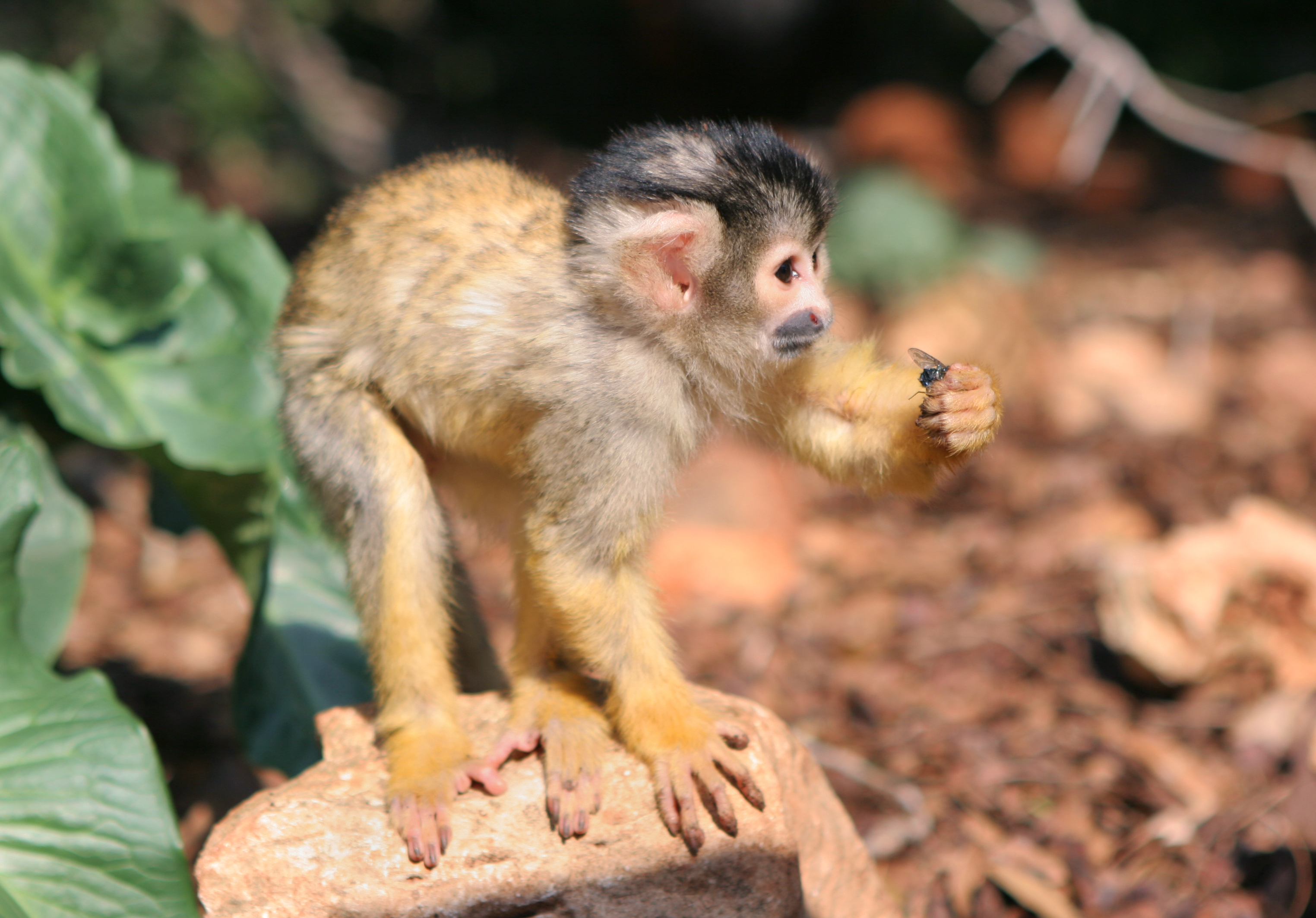
Objects of my recent urges-to-merge have been the documentary Grey Gardens (couldn’t stop watching it for months), the awesome mockumentary Summer Heights High (ditt0), and, right now, monkeys. Like this monkey. And this one. And here’s another one.

What is it about monkeys that has me so obsessed? I don’t really feel like thinking about it. But if I had to guess, I’d say it’s that they’re silly, they’re cute, they do bad things, they’re little athletes and dancers, and they’re just crazy. I’m not sure yet what this means for me, and it’s good not to analyze too much, but surely it means something.

I’d love to hear about your urges to merge.

Image is “Lucky Monkey Caught the Fly”
© Evgene Gitlits | Dreamstime.com

Saving the Worms

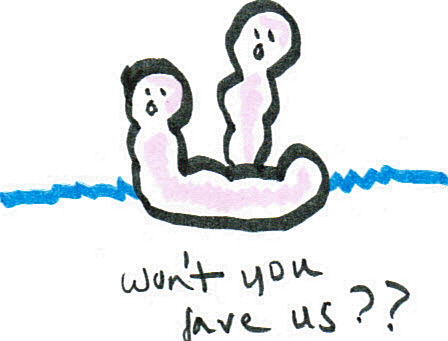
Two weeks ago I was out for one of my long, long Saturday walks. It had rained the night before. I looked down at my shoes and saw worms wriggling on the sidewalk. Oh, no.

I have this thing about worms on the sidewalk after a rain. See, I have to save them. All of them. I pick them up and toss them back onto wet earth somewhere, next to a tree, under the bushes in somebody’s yard. I tell myself this means I have “saved” them from wriggling on the sidewalk, having to crawl their way back to a muddy spot, and possibly getting stepped on or baked in the sun.

One night, after a day in which I’d been out saving worms on my walk, I had a dream. I was on my walk, iPod clicking away, and I saw a worm near my shoe. So I picked it up and tossed it into the mud. A little ways up, I saw another worm. Picked it up, tossed it. Two squares of sidewalk up, more worms. Picked them all up, one by one, etc.

Except the thing was, as I glanced further up the sidewalk and saw the sun glinting off the cement, there were hundreds, maybe thousands of worms, writhing, waiting to be saved. By me. It was like that moment in Raiders of the Lost Ark where Indy and Marion see a snake, then shine a flashlight around them and realize they are surrounded by said-snake times about a million.

So I wanted to save all these worms, and I started to scoop them up by the handful and throw them onto wet earth. But there were too many of them. The further along the sidewalk I got, the more worms there were. Piles of worms, half as tall as I am, rose up and toppled over; I waded through them, wishing I were wearing rubber hip-boots.

So I had to stop. I stood with my head to the sky, my hands in my hair, and had one of those movie moments (except it was a dream moment) where the person yells, “Whhhhyyyy???”

My dream pointed me to one of the recurring themes in my life: It’s All Up to Me. (There is a sub-theme underneath this one which is something like, Nothing Should Suffer or Die, at Least Not on My Watch.)

The It’s All Up to Me theme has several purposes:

 a) it allows me to hang on to the illusion that I have control where I really don’t;

b) in focusing on those areas in which I really have no, or little, control, I excuse myself from focusing on the areas where I actually do have control (i.e., writing this blog post, which I have procrastinated on finishing for two weeks);

c) it reinforces the idea that if I just try hard enough, and if I do everything “right”, I will be granted the gift of certainty in life. (I have never, ever been granted this gift, but I still catch myself working very, very hard for it.)

There’s another purpose to the It’s All Up to Me theme, too: if I buy into it, then I don’t have to ask for help. And I don’t like to ask for help. I’d really rather not. It’s much more comfortable for me to believe I am so powerful, so resourceful, so independent, that I can do it all on my own. But this isn’t true, and deep down I know it.

So for now, I am just noticing. I will likely pick up worms from the sidewalk the next time I’m out walking after a rain. I will probably believe that I am saving them, and it will probably even feel good. But I’ll just try to notice when I cross over into that place of “I’ve got to save them all! It’s all up to me!” I’ll remind myself that it’s really okay — really — if I just pick up two or three worms from the sidewalk and set them gently in the muddy grass. There might even be other kind-hearted souls out walking who notice the worms on the sidewalk. I don’t have to save them all myself.

Feeling Lizardy?

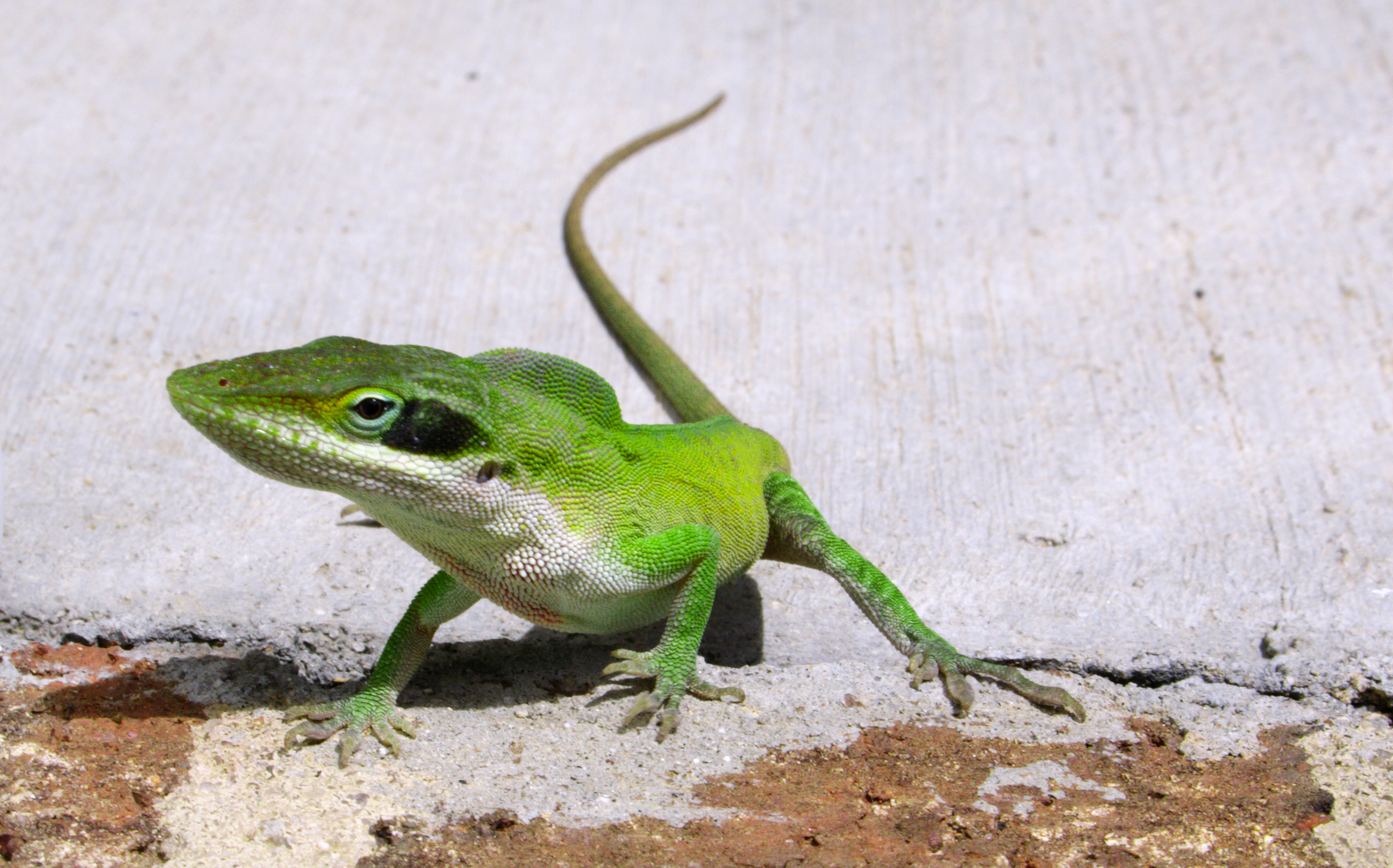
Image is Green Anole © David Huntley | Dreamstime.com

When I went through life coach training with Martha Beck, one of my assignments was to get in touch with my “inner lizard” and give it a name. Up until that point, I didn’t even know I had an inner lizard. But I do. And you have one too.

What Martha Beck terms the “inner lizard” is our reptilian brain. It’s the part of our brain that is purely interested in our physical survival. It’s a really helpful mechanism — when our physical survival is actually at stake. If Krusty the Klown is chasing me down an alley wielding a giant knife (because this is the world I live in), my inner lizard is a wonderful asset: it says, Run! You’re going to die! Krusty wants to kill you! And I do run, because, see, Krusty wants to kill me.

The problem is that our inner lizards react as though our survival is at stake ALL THE TIME, because that’s what they do. But most of the time, my survival is not actually at stake. If I listen to my lizard in these instances, I can quickly turn into an adrenaline-soaked, sleep-deprived sugar junkie (which is where I personally go when I listen to my lizard — you might go to a completely different place, and I hope it’s a happier place than mine. But if you’re listening to your lizard when you don’t need to, it’s probably not.)

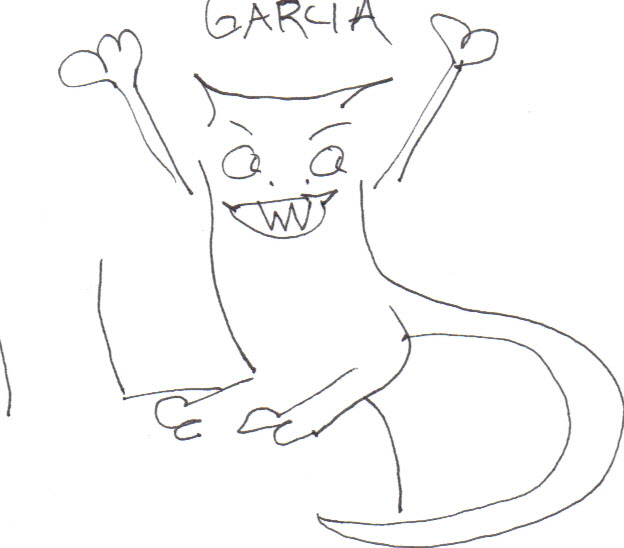
When I got acquainted with my inner lizard, I discovered a raging, shaking, lime-green creature about the size of a squirrel. He sat on my shoulder, breathed his filmy lizard breath into my ear and and threw his little lizard arms up a lot (yes, in my world my lizard has arms). He said things like, “If you don’t return that person’s call right away, they are going to hate you, and then they are going to reject you, and then you are going to be all alone! And then you’re going to die … alone!”

He said things like: “If you don’t get a good night’s sleep tonight, you’re going to be too tired to get through the day! And then you won’t be able to get anything done! And then you’ll never make any money! And then you’ll be on the street! And then you’ll die … alone!”

I named my lizard Garcia (there was this great pizza place called Garcia’s I hung out at more than twenty years ago at Indiana University. They had an ice cream concoction with whipped cream on the top called a Lizard. I had way too many of those. So Garcia seemed like a fittingly nostalgic name for my lizard). Just naming the little guy caused me to feel much more tenderly toward him. I mean, geez, look how scared he is all the time. I’ve learned to talk very tenderly and soothingly to him. When he freaks out, I say things like, “Well, sweetie, let’s see. Is what you’re freaking out about really true? Will we really end up on the street if we don’t get a good night’s sleep tonight? Let’s take a look.”

Garcia on my shoulder

Sometimes, I say to Garcia, “Your concerns are noted, and I’m going to get back to you later. Now have a very nice nap while I go on with my day.”

And sometimes, many times, I totally buy into what Garcia is telling me. “Oh my God, Garcia, you’re right! We are going to be friendless and homeless if we aren’t extra-nice to the neighbor we don’t like!” “Oh, Garcia, you have a point! If we don’t go to that baby shower we really don’t want to go to, we are going to be shunned, and we’ll end up on the street!”

I’ve come to realize that a lot of what underlies my perfectionistic tendencies are survival fears. Garcia and my inner perfectionist have a pretty tight relationship. My inner perfectionist believes that if I’m always doing more, it means I am good, I am productive, I am needed, I am valued. And this pleases Garcia very much (though he’s never really pleased), because he translates this as “survival”. But is it really true that if I am not good, productive, needed and valued, my survival is at stake?

If I can allow Garcia and my inner perfectionist to go off and take a nap together, I can get calm enough to access the part of me that knows that, right in this moment, my survival is not being threatened. I can then go to a place of choosing. I can choose to be good, productive, needed and valued (whatever those things mean to me), if I really want to. Or I can choose not to be. Either way, I am here, breathing. Knife-wielding Krusty is nowhere in sight. If the neighbor shuns me, if my money runs low, I have choices. And I can pat Garcia on his scaly little head and listen to him snore.

Are You Really Procrastinating?

I had planned to write my next blog post on the subject of overwhelm, but inspiration took me in a different direction. Recently I was chatting with my wonderful friend and fellow coach Mackie Schaars about how “procrastinating” and “waiting for the right time” have different energies. “What a great topic for a blog post,” she said. Well, here it is. (There will be plenty more on the subject of overwhelm in coming weeks.)

In our “Just Do It” culture, it took me a while to really get that “not doing it” does not necessarily equal “procrastinating.” There was a time in my life when I firmly believed that if I wasn’t taking action on something, I was procrastinating. Then I would really beat myself up, which inevitably, eventually, led to further, worse procrastinating.

I like to refer to this type of extreme procrastination, triggered by extreme rebellion, as rebellinating. Way back in my teens and up through my early twenties, when I was a dieter (and my inner perfectionist had a deep preference for starvation diets), rebellinating would show up as bingeing on lasagna for six and an entire box of Twinkies after a week of carrots and sugar-free Popsicles. Rebellinating is a good tip-off that something bigger, something deeper, is probably going on.

Because here’s the deal: Sometimes, when I’m not taking action on something, it truly is procrastination. I’ll give you an example: I am long overdue for a visit to the dentist. We’re not talking months here, my friends. How do I know I am procrastinating on seeing the dentist? Because it feels really simple: I want to take care of my teeth, but I’m not doing it. There’s not going to be a “better time” to take care of my teeth. There’s nothing complicated going on. I know it’s a need I want to meet, and I’m not meeting it.

Sometimes, though, a situation feels a little more complex. I might tell myself I’m “procrastinating,” but that might be a lie. I need to look a little more closely. I need to ask questions.

Many years ago, I was having a rough time and I moved back in with my parents. I didn’t have a job, and my attempts to find one were few and far between. I felt lousier and lousier and started hating myself for procrastinating. I made some half-hearted attempts to job hunt, but my energy seemed to be repelling work. When I did get work through a temp agency, I left in the middle of an assignment, in the middle of the day.

The temp agency called and left an angry message. How dare I leave an assignment in the middle of the day? Yes, I thought — how dare I? What is wrong with me? I am ruining my life!

I called my therapist for an emergency session. What became clear as I spewed my stuff to her was that I was really, really tired. It was October, and back in April my immune system had shut down. I’d been sick with fevers for weeks, then months, and had finally ended up in the hospital for a few days when I could no longer eat or drink. Little by little, I’d gotten better physically, but my inability to work when I’d been sick had created quite a bit of debt, and that’s how I’d ended up back in Mom and Dad’s house.

My therapist pointed out that I hadn’t really rested that entire year. “Are you kidding me?” I said. “I’ve spent half the year lying in bed.” “No,” she said with a smile. “You’ve spent half the year fighting an illness.”

She instructed me to go home and dedicate myself to at least two full weeks of true relaxation. No job hunting, no beating myself up for procrastinating. I laughed at her; it was one of those laughs that came out like a snort. Yeah, right. I’d never known how to truly relax. My inner perfectionist enjoyed it when I ran myself into the ground (which, I was beginning to realize, was a big part of the reason I’d gotten so sick in the first place).

But I felt strangely light and free after the therapy session. I did the best I could to put job hunting out of my mind for a full two weeks. Maybe it was three.

What happened over those weeks of not thinking about looking for a job was that I realized I’d been desperate. I hadn’t even had much idea of what kind of job I wanted. I was just throwing spaghetti at the wall to see what would stick. The desperation was still alive in me, but I managed not to act on it. Since my therapist had given me permission (and sometimes I truly need permission from someone I view as very wise to allow myself what I most need), I spent a lot of time curled up in bed and a lot of time taking very long walks.

During that time, I got clear. I got clear on the fact that I was tired, my body still wasn’t at its best, and I needed to respect that. I got clear on what kind of job I wanted. I got clear on why I wanted it. I found some job listings for a couple of jobs that sounded very much like what I wanted. Applying for them didn’t feel heavy or desperate. It felt kind of right.

Within a month of that eye-opening therapy session, I was offered both jobs. Apparently, I was no longer repelling work.

When our energy is aligned, there is movement toward what is right for us. If you think you are procrastinating, it could be that you are not aligned with what you most deeply want. Maybe you don’t know what you most deeply want.

Before you beat yourself up for procrastinating (and I suggest never beating yourself up for any reason if you can possibly avoid it), get clear. You’ll know what your truth is because when you’re in it, no matter what it is, you’ll feel free. If I tell myself I’m procrastinating and my deepest self says, “Yep, that’s right,” I know it’s true. I can then start taking small steps toward whatever it is I want.

But if I tell myself I’m procrastinating and it feels heavy, icky, and like I’m trapped in very tiny box, it just might be a lie. That’s when I need to investigate, to gently ask myself, “Hey, what’s really going on here? Let’s take a look.” It’s always worth it to take that look.

I Ate the Cake: Making it Too Big

So, given the title of my blog, is it a surprise that I procrastinated on my first blog post? My inner perfectionist was perched on the corner of my desk, her little half-glasses sliding down her nose at me (she looks very much like my fifth-grade teacher), saying, “You have to do it right.” Is there a right way to write a blog post? I asked this question of my wonderful mentor Jenna Avery, and she said, “Don’t try to get it right — just be authentic.” Ahhhhh. What a relief. Wanting to do it right stops me in my tracks way too often. I want to do relationships right, I want to do writing right, I want to do coaching right, I want to choose exactly the right brand of cat litter, and I want do it all at exactly the right time. Then I screw a lot of it up anyway, and most of my screw-ups end up leading me exactly where I need to be. (More on this is a future post.)

When I was in the wake of my inner perfectionist wanting to “do it right,” I became intensely overwhelmed, and my inner procrastinator took over. This is usually what happens. My inner perfectionist and my inner procrastinator have a highly symbiotic relationship. They’re like two kids on a see-saw and when one flies up into the air, the other plunks down hard on the grass and says “Ouch!” The perfectionist wants so badly to do it right, and is so married to its perfect vision, that before I know it it has severely overwhelmed me. Now everything seems insurmountable, and this is where the procrastinator comes in to take over. “Screw it,” says the procrastinator. “It’s too hard and it’s not worth the trouble. And by the way, I’m feeling really sleepy.”

When my inner procrastinator (who is a silky, shape-shifting, slug-like creature who just wants to lie down all the time) took the reins the other day, I found myself on the sofa watching Netflixed episodes of “Big Love” while eating an enormous amount of pink frosting off a chocolate cake. This could have been a highly enjoyable way to spend a Tuesday night if I hadn’t been doing it to try to go unconscious, to distract myself from my guilt about what I wasn’t doing. And why hadn’t I done it? Because I’d made it too big, too hard, and I didn’t know how to do it “right.”

So I backed up, a lot. I broke things down into small steps, “turtle steps” as Martha Beck calls them (SARK refers to them as “micromovements”). In fact, I recently completed life coach training with the fabulous Martha Beck, but how quickly I forgot about turtle steps. Actually, the truth is, I didn’t forget about them. It’s just that my inner perfectionist doesn’t have time to break things down into turtle steps! I’ll never get anywhere that way! In fact, for me, making things “too big” is a great way to never get anywhere. Making things too big is a great way for me to drown in the sea of overwhelm.

So this is it. This is my first blog post. It feels a little truncated to me (is that my perfectionist talking?), but it is what it is. I made it “small” enough to get it written. In my next article, I’ll go into more depth about how I get myself to the point where I’m drowning in the sea of  overwhelm, and how I get myself out. And the next time I eat the pink frosting off a chocolate cake, I promise myself, and you, that I will be present for every second of it.