When your downtime doesn’t happen

emptybench

One of the most common issues that comes up for my clients, approximately 90% of whom identify as introverts (and most are also highly sensitive), is what I call Downtime Chasing.

It looks something like this: You were planning to stop working for the day at 5:30 p.m., eat some dinner, and have the evening to just hang out and experience some quiet and revamp your resources in preparation for tomorrow. Or, if you’re like me, maybe you wanted to get in a good solid hour of journaling before going to bed.

But: At 6 p.m., the phone rings. And even though you know you really need tonight’s downtime in order to reconnect with yourself and feel energized for tomorrow, it’s a family member and you wonder if something might be wrong. Or, it’s a work-related thing. Or, it’s a friend in a crisis and you want to be there for him.

So you pick up the phone, and before you know it, it’s time to go to bed and your much-needed downtime hasn’t happened.

Now you’re kind of irritated, maybe even angry, because you wanted downtime the night before, and last Thursday, and the same thing happened. And now you haven’t had any real time to yourself in over a week and you’re starting to feel like you’re running on empty.

Introverts need downtime alone to recharge. This is not optional; it is a necessity. We simply can’t renew our resources by being around other people the way extroverts can.

The tricky thing is, because introverts are usually very good at adapting to more “extroverted” ways, we may easily toss our need for downtime out the window. It might even be habitual for us.

If we’re highly sensitive as well, we’re often so attuned to what others need that it feels sometimes like their needs are just as pressing, if not moreso, than ours. So we jump into “helping” mode before we realize what we’re doing.

And then there’s this sneaky thought: “Well, so-and-so is an introvert, and she doesn’t seem to need the amount of downtime that I do. Maybe I need too much. Maybe I can go without it.”

I often see introverts going to two extremes with this issue:

The first is the introvert who gets angry and frustrated and locked into the “Desperately Seeking Downtime” cycle, which means that trying to get enough downtime becomes the main purpose in her life. Because she feels so deprived of time to herself, everything on her “to-do list” starts to feel like the enemy of downtime. This constant seeking doesn’t actually get her much downtime, but she thinks if she stays angry about not having it, somehow it will magically appear, someday.

The other extreme is the introvert who decides to just forget about downtime altogether and pretend she doesn’t need it. After all, she’s so good at adapting, maybe she doesn’t really need it! Maybe the problem is she’s trying to meet a need that simply can’t be met, and she’d be better off getting rid of that need, letting go of it.

Except … she actually does need downtime. It keeps her sane, keeps her connected to herself, keeps her energized and keeps her life in perspective.

Okay. So what’s the answer?

Well, I wish I could tell you the precise end-all-and-be-all solution to this issue for you. I can’t. Only you can do that. But here are some things I’ve found helpful for me, and my clients.

1) Know yourself.

How much downtime do you truly need to feel sane, to feel like you’re thriving and not just surviving? Be really honest here. 

The answer for me is: a significant amount. Definitely more than fifteen minutes grabbed here or there.

But, I often don’t need as much as I think I do.

When I deprive myself of downtime, I start to feel like I need it all the time. I don’t. Even though I’m pretty up there on the introversion scale, it’s not often that I actually need days of downtime. In fact, if I fully and freely give myself an entire day where my intention is mostly downtime, I usually find a couple of hours of true downtime will do just fine.

2) Notice where you’re getting into comparisons.

You need as much time to yourself as you need.

It doesn’t matter if Jane is also an introvert and doesn’t need as much downtime as you do. She’s not you; her constellation of needs, choices, and wiring is different.

When you can own how much downtime you actually need, without feeling like you “shouldn’t” need it, you are about a hundred times more likely to make that downtime happen.

We live in a world that believes “busy” is good. So we can feel pressure around owning our need to shift into “being mode,” whether we’re introverts or not. Sometimes, it takes real courage to own this need. Take that into account.

3) Notice where you are rigid around only getting your downtime in a certain way.

Be open to fluidity and flexibility around your downtime — without giving it up.

I once heard someone (I think it was Eckhart Tolle? — feel free to correct me!) use this analogy about money: We think money has to come in through the front door, when in fact it might also come in through the windows.

The same is true for downtime. It can come to us in myriad ways if we’re open to that idea.

If we think it must look like sitting in total quiet on the couch in our living room, we might miss out on the opportunity to have absolutely blissful, rejuvenating time to ourselves while walking home from our dentist appointment or cleaning up the kitchen (yes, it’s possible!).

4) There’s a discipline to downtime.

And I’m not a big fan of the word “discipline,” but, for introverts, it’s a commitment.

Notice the ways you’re too willing to break this commitment. Notice why you’re willing to give it up. Are there two tempting social opportunities this weekend, and deep down you know you can only handle one? What makes you want to schedule in both? What do you think you’ll be getting by doing the extra activity and cutting out your downtime?

It’s okay to drop the downtime to do something you want to do — as long as it’s a choice and you have a strategy for how you’re going to replenish yourself (it might mean you need next weekend totally to yourself, with absolutely nothing scheduled, so you can bounce back).

With the holidays right around the corner, it’s a great time to think about your needs for downtime. How do you make sure you get enough? I’d love to hear your thoughts on this.

Image is “Empty Park Bench” © Theresa Martinez | Dreamstime Stock Photos
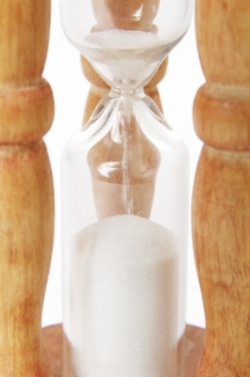
Two kinds of urgency

hourglass2

Have you ever gone through an extended period where nothing felt clear to you, where everything seemed muddled and off and you wondered if it was ever going to end?

I’ve been there — many times (and if you’re going through this right now, I send you so much compassion. Yes, it’s hard.)

Way back when, I thought going through these periods meant there was something wrong with me, or that I just wasn’t trying hard enough. Uggh.

I now know that these periods of sluggishness, lack of clarity, and downright suckiness are simply part of the process of change. They’re what happens when we’re letting go of a version of ourselves that no longer fits, but we haven’t yet stepped into whoever it is we’re becoming.

These are liminal periods, and I’ve written about them quite a bit on this blog (click on the Categories list to the right, particularly Transitions and Letting Go, to read more on liminal periods).

Another term for these transitional periods, which I learned while I trained to become a life coach with Martha Beck, is “Square One.”

During Square One, a kind of urgency can rise up in us. It feels like we’d better do something, now! We’d better get out of this crappy place! We’d better make some kind of decision, now! (Even though usually we have no idea what it is we’re deciding, because one of the hallmarks of Square One is a lack of clarity on what we really want. We know what we don’t want, and the rest of it feels like one giant slog through toffee.)

A frequent reminder that I, and the folks I work with, need while in Square One is this: The faster we try to get out of Square One, the longer we stay in it. It’s the ultimate paradox. Square One needs to be fully processed, fully felt. Yes, it sucks, but it’s the only way to get truly clear.

When we rush forward because our period of transition is so uncomfortable, we inevitably end up in more discomfort.

That’s because instead of moving toward what we want (because we’ve gotten clear on it), we’re moving away from discomfort and confusion because they scare us. And where do we end up? Right back in the discomfort and confusion, scared out of our minds. Wherever we go, there we are.

So, if you’re going through a transition, or approaching one, right now, and it feels scary and like you’ve completely lost your footing, the best path to peace is not to hurry out of the scary place.

It’s to slow down, remind your panicked brain that there is no true urgency here, and realize that (in the ultimate irony), you’ll actually move through this icky transition place much more quickly by embracing an easy, one-day-at-a-time (or, on the worst days, one-hour-at-a-time) pace.

Now, there’s another kind of urgency, too. That kind of urgency is a bit different. It’s what I’d call a “transmission from your soul.”

This kind of urgency has a kind of ache to it. It contains a yearning you can’t stave off or press down, no matter how many months or years you try to do just that.

This is the urgency that recognizes that life is relatively short and there are things your heart longs to be or do, and you’re not being or doing them yet. And you’re tired of putting them off.

Or, it’s the kind of urgency that tells you a certain situation isn’t good for you and it has to stop. And that if you don’t stop it, you’re going to keep on feeling this particular ache.

This kind of urgency is the urgency that signals you’re ready for change. Not ten years from now, but as soon as is humanly possible.

Yes, I know: I just contradicted myself. I suggested that if you’re feeling urgency, you need to slow way down, not speed up. And then I said that if you’re feeling urgency, you need to act, now!

Both are true. Can you allow your mind to wrap itself around that? It’s hard for me, too.

But notice my descriptions of the two kinds of urgency. One kind is about moving away from discomfort. And the other is about moving toward what you want. (An ache or longing points us toward something in us that wants to be born.)

We can feel both these kinds of urgency on the very same day! In the very same hour! And we can accept, and work with, both of them.

The tricky part is that, when we’re feeling a lot of the first type of urgency, we need to come to a place of peace before we take any action.

Otherwise, our actions are likely to be fueled by panic and a need to escape discomfort. (Have you ever quit a job, or left a relationship, and found yourself, almost magically, back in what seemed like the exact same job or relationship six months or a year later? That’s because your actions were fueled by a need to escape discomfort, rather than movement toward what enlivens you.)

So how do you know which urgency is driving you? You might want to share what’s going on with someone you trust, or jot down the thoughts you’re having in a journal. Then ask yourself (or let someone reflect back to you): Does what I just said (or wrote) come from the part of my brain that is strictly concerned with my physical and/or social survival? Or does it feel like a mandate from my soul?

Whichever answer you get, the next step is acceptance. And remembering that fully processing what’s going on for you is, in the long run, the fastest way to actually create what you truly desire.

What do you think? What have you noticed when urgency comes up for you? I’d love to hear, in the comments.

Image is “Time’s Up!” © Nspimages | Dreamstime Stock Photos

What if you didn’t need a reason?

Happy Fall!

Last week, I was talking with the wonderful business coach Kristin Stevens, and I kept telling her about various things I wanted to do, and prefacing them with, “For some reason.”

“For some reason, I want to move into a smaller apartment.”

“For some reason, I want to streamline and simplify my life.”

Now, some coaches would have gone right to “Okay. Why? Let’s get clear on the reason.”

I would have gone there, if I were coaching someone. And it can be a good way to go.

But Kristin said, “You keep saying, ‘For some reason.’ What if you didn’t need a reason?

This stopped me. Because, in this case, I already feel clear. I already know that something in me wants to do these things — but my rational mind tells me I don’t have a good enough reason to do them.

For years, I lived in small apartments and had a great need for more space. In 2005, I moved and got the space I wanted. For the past eight years, I’ve lived in a beautiful space where I have plenty of room.

But now it feels oddly too big, like I’m a kid clomping around in my dad’s work shoes. And I realize I’ve filled it up with things I no longer necessarily want or need.

When I moved here, I had this idea of a life I thought I wanted. But now I realize that maybe that life was about who I wanted to be back then, and not who I actually am today.

My rational mind says, “But why would you want to go back to living in a small space? Isn’t that going backwards?”

Is it? I’m not sure it’s a good question, in this case, because questioning my desire is only keeping me in wheel-spinning mode. A good question sparks curiosity and creates spaciousness and movement.

That’s how I know Kristin’s question — what if you didn’t need a reason? — is a good one for me here.

If I didn’t need a reason, I’d start making plans to move. If I didn’t need a reason, I’d free up my energy to focus on things that are more important to me at this point in my life than having a larger living space and the maintenance that goes along with it.

It’s telling that a while ago on Pinterest I created a board called Cozy Spaces. Something in me longs for cozy right now. Why?

Do I really need to know? What if, in fact, I can’t know the answer to that question until I move toward what I’m longing for?

The nudges I get from my intuition feel simple and straightforward. “Do this.” Or, “Don’t do that.” Or, “Wear something blue today.” “Call about that class.”

Intuition doesn’t explain itself. It lives in the world of trust, not the world of guarantees. And often, when I’m clear but I’m still not taking action on that clarity, it’s because I want a guarantee. I want a guarantee that the direction my intuition is pointing me in will be pain-free, that if I go there, “everything will work out.”

Experience tells me there is no such guarantee. Sometimes, I think I am waiting for clarity but it has already arrived. The truth is, I’m not waiting for clarity — I’m waiting for that guarantee.

“Why?” is a good question if it creates more clarity. But if I’m already clear, I don’t need to ask why. I need to act on what I know.

What do you think? Do you ever second-guess the next step that comes to you from your intuition? I’d love to hear how this works for you, in the comments.

Image ©Jill Winski 2013

How kindness helps you create

ducks

So often when I’m feeling unhappy and stuck (whether in my life or in my creative work), I find myself frantically trying to control circumstances.

My thoughts go something like this: “If I could just get rid of [X circumstance] and find [X circumstance], and get [X amount of money], and if [X person] wasn’t so hard to deal with, I could stop feeling so bad.”

Or sometimes it goes like this: “If I could just figure out if what I really want is [X] or [Z], then I could move forward. But I’m so confused; I can’t figure it out. So I’m unhappy and I’ll be unhappy until I figure it out.”

There’s a kind of paralysis that sets in when I believe that circumstances are causing my unhappiness. It’s often a breed of analysis paralysis, closely tied to perfectionism, where I’m sure that if I choose the “wrong” thing, I’ll increase my current unhappiness in spades. So I don’t choose.

It usually takes me a while in this spin cycle before I remember: Ohhh. Waiiittt.

It’s not about circumstances. It’s not about making the “right” decision.

It’s about kindness. The kindness I’m forgetting to give to myself.

I don’t know about you, but when I remember to treat myself with kindness, there’s a palpable shift within myself. I feel it in my abdomen first, then my jaw — my entire body softens. I literally feel the rigidity seeping out of me, almost like it forms a puddle around my feet. And then I feel a surprising thing: hope.

From this place, there is fluidity — there is movement. How can that be? I haven’t changed my external circumstances, and yet, there’s movement?

Yes. Martha Beck, with whom I trained to become a life coach, likes to remind her coaches that our circumstances do not create our feeling states; it’s the opposite. Our feeling states create our circumstances.

When our focus is outside ourselves, on what we’re sure the “right” circumstances will bring us, we are disconnected from what’s inside us. We forget where our power actually lies — in our ability to choose how we relate to ourselves, and how relate to the world around us.

And here’s how this relates to our creativity: As I’ve often written on this blog, creativity, as I define it, is nothing more or less than the life force within us.

That life force needs to move. It needs to flow, and to ebb.

When I try to control circumstances, or second-guess my decisions, or try to make the “perfect” choice, that life force gets frozen in time. I’m teetering on the edge of the belief that the “reward” lies on the other side of “right” or “wrong” — when, in fact, the “reward” is right here, within me, if I can remember to treat myself with kindness.

Some of my clients say at first that they simply don’t know how to treat themselves with kindness — or that it seems self-indulgent, or a waste of time.

But my clients are often the kindest people I know — they are truly skilled at directing kindness outside of themselves, toward others. They just haven’t practiced directing it toward themselves.

And there’s a distinct difference between kindness toward ourselves and self-indulgence: Kindness creates movement that comes from the heart; it radiates outward. It’s intimately linked to “inspired action.” Self-indulgence, like a clenched fist, closes us off from ourselves, from the world. Rather than engaging the heart, self-indulgence feels like avoidance of something we fear. Kindness feels like an openness to what we love, to what inspires us.

Sometimes, when I think about doing something like, say, write a blog post about the importance of remembering to treat ourselves with kindness, there’s a hard, embittered piece of me that says things like, “Kindness? How cliche and cheesy and abstract is that?”

And then I have to laugh, because that’s exactly the voice that makes treating myself with kindness my last resort so much of the time. I often come to kindness — or it comes to me — because I’m at the end of my rope with treating myself harshly.

I come to kindness because I realize I’ve literally exhausted all my options if I’m viewing myself, and life, with harshness. Most importantly, I’ve forgotten to acknowledge that I am suffering. Of course it seems like I need to manipulate circumstances and choose perfectly if I’m coming from a harsh, rigid place. Wherever I go, there I am.

So, if I feel backed into a corner, if I believe I’m trapped and there are no good options — whether in my real life or in my creative work — it may be that I’ve forgotten this oh-so-basic step: Treat myself kindly. Exquisitely kindly. Time and again, I learn that from that space of kindness, unseen options emerge.

(To learn more about the amazing benefits of treating ourselves with kindness, check out Kristin Neff’s work at http://selfcompassion.org.)

Do you remember to treat yourself with kindness? Do you think it’s worth doing? Do you apply it in your creative process? I’d love to hear, in the comments.

Image is “Hand Feeding” © David Coleman | Dreamstime Stock Photos

When you’re not taking action (even though you want to)

birdonmirror2

Sometimes we’re in a space where there’s something we want to do, but we’re not taking any action toward actually doing it. This space is frustrating and icky. We can spin our wheels here for quite a while.

What I find especially stressful (and confusing) is when I do take a step toward whatever it is I want to do, but I don’t seem to build any momentum. Something feels off. I’m not getting caught up in whatever that thing is; there’s no passion, no fire.

What’s going on when we’re in this space? It’s tempting to try to bulldoze our way through and “just do it!” And there are times when that works.

But sometimes it doesn’t work — and, when we plow forward with sheer force, there’s a nasty lingering side effect: We don’t understand ourselves any better. We may get that thing done, but what happens the next time we’re in the “spinning our wheels” place? We force ourselves to plow through again?

I much prefer asking questions at times like these. More than anything, I want to understand myself better so I can have a better relationship with myself. If that relationship is vital to you, too, here are some questions to ask yourself when you’re spinning your wheels:

Do I truly want to do this thing, or do I believe I “should” want to do this thing?

The presence of a “should” is not necessarily an indication that you don’t want to do it; it often means that you have conflicting voices within you around taking this action. If you can untangle the “should” from the rest of it, you’ll have a much clearer sense of what you really want.

Is this something I used to want, but perhaps no longer do?

Does the person you are today actually want to do this, or is this something you wanted to do five years ago? Are you hanging on to an old dream? (“I can’t go back to yesterday because I was a different person then.” – Alice in Wonderland)

* Is there a deadline issue?

Some of us work better and more effectively with deadlines; some of us get panicky and overwhelmed when we have a deadline situation. And sometimes, the deadline is simply too close or too far away to work for us.

If there’s a deadline by which you’re supposed to do this thing, is it possible to push it back, or push it up? Would doing either of those things make a difference in how you felt about taking action on it? (Sometimes we’ve set our own deadlines. Most of my clients have a perfectionistic streak and expect themselves to complete things way sooner than is reasonable, or necessary.)

Am I making the task too big?

One of my clients had decided to apply to a graduate program, but she wasn’t taking any action toward it. The deadline loomed and the weeks were going by and nothing was happening.

We noticed that every day she had been writing on her to-do list “Grad school application.” But when we broke it down, we found that there were at least twenty individual steps involved in completing the entire application process, and some of those steps could be broken down into even smaller steps. Of course she wasn’t taking action on it when “grad school application” was not an actionable step.

We often don’t want to break things down into small steps because we’re in a hurry. We think we don’t have time to take small steps. Then we proceed to do nothing at all because the giant leap we think we have to take overwhelms us. In the long run, we move more quickly and steadily when we take small steps over time. Think turtle and hare.

Am I in somebody else’s business?

Byron Katie talks about the three kinds of business: My business, your business, and God’s business. Much of the time when I’m feeling stressed, confused, or unfocused, if I remember to ask myself who’s business I’m in, I discover the issue. When I’m in somebody else’s business, as Katie says, there’s no one here taking care of my own.

How does this keep me from moving forward? If I’m worried about what someone else thinks of me, or trying to control someone else’s reaction to my choices in some way, I keep on spinning my wheels. I may not allow myself to do what I truly want to do. It’s human to care about what others think; but if we’re paralyzed because of it, we’re way out of our own business and into somebody else’s.

* Is my creative well empty?

I often mention the creative well on this blog. Julia Cameron likens the creative well to a “trout pond” that, ideally, is fully stocked with fish, except, as artists, we stock our ponds with images that inspire. We stock our ponds with the wordlessness that comes from simply being.

When the pond is empty, we need to restock it. And this means we need to practice great self-care and recognize that there are ebbs and flows to our energy and our creativity. Sometimes, when I’m not taking action, it’s simply because I need to be in a place of inaction for a while.

Any of these questions is a good starting point if you find you’re not taking action on something you want to do. If one question doesn’t seem to apply to you, try the next. And come up with your own, too — write them in a notebook where you can refer to them the next time you’re up against the stuckity-stuck.

How do you deal with it when you want to move forward but can’t seem to take action? I’d love to hear from you!

Image is “Bird on a Mirror” © Shane Link | Dreamstime Stock Photos

Trusting in where your energy takes you

leafwater

One day last week I sat down to write and felt distracted. This is not uncommon. I often experience resistance, confusion, tedium, and occasionally even dread, when it comes to working on my novel.

In fact, I don’t usually call it (in my own head at least) “working on my novel” anymore. I call it “playing with my novel.” This feels much lighter and opens up possibility, curiosity, excitement. When I make it less grave and serious, I’m more in touch with why I actually want to do it in the first place.

That said, sometimes I feel stuck and it feels hard. And I hang in there with it anyway, because it is a commitment. And because sometimes I reach that lovely place of getting lost in my story. And the more I practice hanging in there with it, the more I reach that place.

But on that day last week, something else was going on. I sat and I sat and I sat, and I wrote and revised and tinkered. But my energy was not with the writing. I had the odd sense of pushing something away.

I glanced over at my open notebook, to some morning pages I’d done the day before. Jotted in the margin at the top of the page was a reminder to call a friend of mine, a dear friend whom I’d been meaning to call for a while. But I’d been putting it off because, although I knew that talking to my friend would be nourishing and fun, I’d told myself that she was probably busy and wouldn’t have much time to talk, anyway. I kept telling myself I’d wait and call “when we were both less busy.”

Now, the reminder note jumped off the page at me. And I realized that there was a ton of energy in calling my friend right then, right in that moment.

So, I stepped away from my computer and dialed my friend’s number. She was home and said she’d been thinking about calling me, too — that very morning. But she figured I was probably busy with coaching or writing and she’d wait to call me until the weekend.

We talked for an hour and it felt soooo good. It filled my creative well to — at least — a 10 (read Julia Cameron’s The Artist’s Way to find out more about the creative well). You know those friends who accept and love you so deeply that it doesn’t matter what’s happening for you, or not happening for you, because the connection is about your very essence? That is this friend, for me.

And something important came out of this call. I realized that I often make an assumption that the people I care about are busy and they need to “fit me in.” And this assumption is not reality. In fact, my friend was making the same assumption about me, but in truth I would have welcomed a call from her.

After we talked,  I returned to my novel with a sense of lightness and new possibility, and I no longer had that nagging sensation that there was something important I wasn’t attending to. I could give the writing my full attention.

If I hadn’t followed my energetic pull toward calling my friend, I would have missed out on that connection and that insight.

And yet, my rational mind wondered if I wanted to step away from the novel simply because it was hard and it was my way of “procrastinating.” It can be tempting to “power through” at these times, no matter what. And that’s not necessarily a bad thing to do when we’re developing a habit, whether it’s writing or something else.

But we get to the good stuff in life by acting on what feels juiciest for us in the moment. I don’t mean by acting on our every impulse, but by following our intuitive urges. Often, it’s as simple as asking, “What would light me up right now?”  On that day last week, contacting my friend was that thing. It was “up” for me, calling out for attention. And I needed to listen.

Sometimes, our “creative work” can serve as a means of avoiding doing our inner work. Just as we can avoid our creative work, we can also use our creative work to avoid — or push down the list — other things that are vital to our well-being. Like our relationships. Most particularly, our relationship to ourselves.

So notice the quality of your energy as you create. Is the creating connecting you with yourself, with the world, with that beautiful mysterious space we go to when we create — even if it’s a huge challenge at the moment?

Or, do you have the sense that you are using your writing, artwork, business brainstorming, or whatever it may be, to push something else away, as I did last week? Just notice. You don’t have to stop what you’re doing. Just tell yourself the truth, whatever it is for you.

Because, ultimately, creativity is being connected to what’s true for you in the moment. Because that is when you are most you. And that is what I wish for you — that you be most you as often as possible. That, more than anything else, is your gift to the world.

Image is “Leaf on Steel” © Chris Mccooey | Dreamstime Stock Photos

What gift can you give yourself?

swirlgift

Sometimes I start my day with this question: “What gift can I give myself today?”

On some days, a particular word immediately comes to me. Yesterday it was “stretch.” And I knew I wanted to move my body, so I went for a morning walk, even though we had a sweltering day here.

On another level, I knew stretch meant something else. And I made a phone call I’ve been putting off for a while — the conversation was going to be a stretch for me, but since “stretch” was the gift, I knew it would be okay. And it was.

Sometimes a word doesn’t immediately come to me. So then I let an image bubble up in my mind’s eye.

Once, I saw a heart, with wings. I wasn’t sure what it meant at first, but then some words came to me: courage, Cowardly Lion courage. And flight. On that particular day, flight meant literal flight — I gave myself permission to take a trip I’d been on the fence about, and booked my plane ticket.

And permission is another one. It’s one of the most powerful gifts I can give myself, but I have to be reminded of this often. And, I need to get specific about it. Permission to what? Once, I asked this question and an image of me sleeping bubbled up. I needed permission to rest that day.

Another day I asked, permission to what? And an image of me reading from my novel-in-progress to a large group of people bubbled up. Ahhh. Permission to be seen.

What other gifts have I given myself? The gift of endings, of allowing things to end — even things that have been a success and are still successful. The gift of beginnings, of stepping into what is new, even when I’m unsure of the first step and the second is hazier still.

Some of my favorite gifts are curiosity, wonder, and play. Sometimes the gift is tenacity. Sometimes it’s sovereignty. Sometimes the gift sounds something like “no ground to give.” And I know I want to focus on holding boundaries that day.

The gift can be something concrete and material as well. One time the image that came to me was of an exceptionally gorgeous journal I’d seen in a shop down the street. It had a filigreed gold cover with a turtle on it. The journal was expensive and I knew I didn’t want to spend the money on it right then, but the image of the turtle reminded me of my belief in taking slow, steady steps; that so many of our worthwhile journeys are marathons, not sprints.

One day last week the gift was “soft.” I was feeling extra-hard on myself that morning and my energy felt tight, rigid. I knew I needed to shift into soft energy. And I moved through my day with so much more kindness toward myself, and therefore, toward the world.

That is why I make my focus what I can give to myself. I like to think I’m pretty good at giving to others, but in truth I can’t give what I don’t have.

Want to try it? What gift can you give yourself as you move forward in your day?

Work With Me: I have openings for new coaching clients beginning in September. Need some support in connecting with your gifts? Check out my offerings, here.

Image is “Swirl Gift with Echo Blur” [cropped] © Patricia Ulan | Dreamstime Stock Photos

Can you wrap a system around that?

field

I used to think that I didn’t like systems. Every time I found myself dealing with any kind of system — which implies structureI would rebel.

Part of this probably stems from having a childhood that felt way, way overstructured to me. My heart wanted to lounge in open fields with cows, sheep, books, and my journal (not that I lived near any fields), but my days always felt completely scheduled with activities from morning to night — not just riding the bus (an ordeal in and of itself) to school and back, but with afterschool activities, and then homework.

This seems so nuts to me now, but it was considered normal, and, thirty years later, though I don’t have kids myself, my sense is that many kids are even more overscheduled than I was (plus today’s kids have so much more technology to manage).

I think another reason I’ve tended to rebel against systems and structure is that I’m a Myers-Briggs INFP, and we “P” types like to keep things open-ended. Too much structure can feel overly planned and rigid for a “P” and trigger our rebelliousness.

At the same time, I’ve had to admit over the past several years, especially since becoming a coach and attracting clients who also tend to rebel against structure, that the right amount of structure can be a true godsend for those of us who cling to open-endedness (which can sometimes result in saying things like “I’ll write when I’m feeling inspired” or leaving ourselves one hour to complete something that actually takes four — woops!).

Systems and structure do not have to be elaborate or complicated. There just needs to be enough of a system to get it done — whatever “it” is.

Here’s my (very simple) example:

I was having a huge issue with mowing the lawn. It only takes me about 30 minutes, but it was becoming this thing that I so didn’t want to do and eventually I’d have to force myself to do it, angrily, usually swearing. Even though, once I’m doing it, I don’t hate it (except for that one time I mowed over some dog poop). It actually feels kinda good, moving my body, the smell of grass and dirt around me, the heft of the mower.

About a month ago, I figured out the issue. My brother, who used to live here and used to mow the lawn, had told me I should do it “about every ten days.” And I tried this. But it felt increasingly stressful to me. Because “every ten days” could fall on any day of the week. It might be a Wednesday, and then next time a Saturday, and then next time a Tuesday.

It occurred to me that if I mow the lawn every two weeks, it really doesn’t look all that much worse than if I do it every ten days. So I’ve made every other Sunday afternoon my mowing-the-lawn-time. And I think about it so, so much less. On Saturday, or Wednesday, I’m not thinking, “should I do it today?” because I know Sunday is lawn day. Every other Sunday, “mow lawn” is on my to-do list, and I know I’ll do it, and that’s that.

That was all the system that was required. It was actually way more stressful to keep the “when” I’d mow the lawn up in the air than it was to assign a day to do it.

This applies to anything I want to do on a regular basis, whether that’s writing or yoga or doing the dishes: Keeping the “when” up in the air creates stress and vagueness, and vagueness does not produce specific results.

And I think that’s worth consideration for us “open-ended” types. Is keeping something unstructured and open-ended giving us a feeling of peace and freedom, or stress and confusion?

The way to know you’ve hit on the right amount of “system” for you is that you use the system without a huge desire to rebel. (If you have a very strong inner rebel, as I do, you may be a little bit edgy around any amount of system, but when it’s the right amount, you’ll find yourself using it anyway.)

Your body is an excellent guide for whether or not a certain amount of structure is too much or too little. When I am overstructured, I feel frazzled, frenetic, like I’m on a treadmill. There’s a need to catch my breath (literally). When I have too little structure, I can feel sluggish, unfocused and fatigued.

There’s no right or wrong here; each of us has a “sweet spot” where we have enough structure, but not too much. So when I’m struggling with something that just won’t seem to get done, I’ve started to ask myself, “Can I wrap a system around this?” And then I brainstorm a little about what might feel like enough.

How do you feel about systems and structure? Do you tend to rebel against them, or do you find them helpful, or both? I’d love to know, in the comments.

Image is “Poppy Field with Powerlines” © Peter Gustafson | Dreamstime Stock Photos

A two-step journaling process (for when you’re feeling stuck or scared)

“My writer self is braver than the rest of me.” — Natalie Goldberg

On one of our recent group calls, a fellow participant in Jenna Avery’s Writer’s Circle asked me how I use journaling when I’m feeling stuck on my fiction writing. I thought I’d share my process, in case others might benefit from it.

My journal is one of the safest spaces I know.

And I’m someone who’s struggled a lot with safety. (I remember when I was an undergraduate, a teacher had us do an exercise that started with the sentence “Imagine you’re in a safe space.” At that time, I literally could not think of a safe space, so I couldn’t go on with the exercise.)

Safety is important. We’re often told to “take creative risks” and “really put ourselves out there,” but we’re doing ourselves a disservice if we pretend that isn’t scary, if we pretend that we feel safe, when in fact we do not. Nothing creates a feeling of stuckness like pretending we feel differently than we actually do.

So, a lot of the time, when I’m feeling stuck or scared as I’m trying to write, it’s because I’m not feeling safe.

Safe to what?

Safe to explore. Safe to write the worst crap imaginable. Safe to share only what I’m ready to share. Safe to be with the discomfort of whatever’s coming up for me. Safe to write that thing that brings up the pain of the past.

So getting away from my document on the computer (which can feel so oddly “formal”) and going to my journaling notebook is STEP ONE of creating safety. I think of the journal as a room, a room where there’s only me (and anyone else with whom I feel completely safe).

From this point on (STEP TWO), I ask myself questions on the page.

Any of the following questions are good jumping-off points.

* What do I really want to say that I’m not allowing myself to say?

* What’s the worst thing that can happen if I write the thing I’m afraid to write?

* Why don’t I want to write this thing?

* What’s the worst thing that can happen if I make a wrong turn?

* Do I actually need to step away from the story right now? (If the answer is yes, follow this one up with “How can I make that feel okay?”)

* Where is the tension (fear, stress, sadness) located in my body right now? If that tension had a voice, what would it say?

* What does this particular feeling of stuckness remind me of?

* If I had a guarantee that no one but me would ever read this writing, what would I write now? (This one can really point us to where we are censoring ourselves.)

* Am I truly ready to write this story? Why or why not?

* If I honestly don’t know where to go with the story right now, how might I open myself up to all the possibilities?

Take one of these questions, and run with it. Don’t deliberate too much over which question to choose — they’re all designed to create movement, which is what we need when we’re feeling stuck. Go with one of the questions and keep writing until you feel ready to stop. Often, new questions arise for me while I’m writing, and I ponder those, too, on the page.

A page from my journal: answering the questions, + doodling

A page from my journal: answering the questions, + doodling

This process does not have to take a lot of time — I often do it in ten minutes or so. The idea here is not to find the perfect answer to the question (there isn’t one). The idea is to dig beneath your surface “stuckness” and generate a new perspective. “Feeling stuck” is nothing more than believing something about your writing or yourself that is not helpful.

You can probably come up with other, better questions. Make a master list of them and have it on hand for times when you’re sitting in front of the computer and the sweat on your forehead feels like blood. We don’t have to make the act of writing so dramatic (put that drama on the page!).

(By the way, you can transfer this process to any art form, or anything at all that you’re feeling stuck on.)

What do you do when you’re feeling stuck on your writing, artwork, or any other creative project? Please share in the comments!

On that note, Aug. 15 is the last day I’ll be offering my Free Mini Unsticky Sessions! (I’ll be offering them for a low cost, in a slightly different format, after Aug. 15.) Want to grab one? Check them out, here.

And: This Thursday, Aug. 8, is the last day to register for the next session of Jenna Avery’s Writer’s Circle. I’ve been a member of this group for going on two years now (I’m also one of the coaches) and it’s been an amazing source of support for me. Interested? Read more, here.

Five things I’ve learned about trust

This is my second post for The Declaration of You BlogLovin’ Tour (scroll to the bottom of this post to find out more). This is the final week of the tour, and the topic is Trust.

ferriswheel

I used to think I couldn’t trust others and I couldn’t trust life. It took me a long time to see the turnaround: It was me I thought I couldn’t trust. Once I saw this, I wanted to really know what it meant to trust myself. Here are a few of the things I’ve learned:

1) Trusting myself means that I allow myself to experiment, to stretch, to make mistakes.

I first encountered the idea of trusting myself when I discovered the writing of Geneen Roth in my early twenties. I was a chronic dieter at the time, and Geneen’s concept of trusting myself to know when I was hungry and to stop eating when I was full was a radical thing to me.

When I first tried it, the perfectionist in me wanted to “do this trusting myself thing right.” I thought if I made a mistake, it was proof I couldn’t trust myself.

It took me a few years before I’d integrated the truth that trusting myself is about the way I relate to myself when things don’t go as I want them to — it is about the way I relate to myself, period. It has nothing to do with being “good” or “right” or even wise. It is a way of living in the world. It is a choice.

2) Self-trust is intimately linked to self-acceptance.

If I’m judging myself, you can bet I am not in a place of self-trust. In fact, I’ve found that my intuition will “hide out” when I’m judging myself harshly. Intuition is fierce, but it’s often quiet and subtle in how it comes to us.

My cat usually disappears when someone who speaks loudly and has heavy footsteps enters the house. Intuition is similar — it tends to hide out in the closet when my inner critic starts raging. It’s not that intuition is afraid of the inner critic (intuition fears nothing; it simply is). It’s more that intuition (like my cat) has a very low tolerance for drama. So it goes silent and seems to disappear when that harsh voice within me goes on a rampage.

I can always reconnect with my intuition, though. I just need to get quiet again. Intuition never fails to show up when I’m in a place of peace. And the more deeply I can accept myself, the more peaceful I feel.

3) Trusting myself means having faith that my intuition is there for a reason, and taking the risk to follow it.

It’s the process of acting on my intuition that makes me feel alive, not the outcome, which will never be completely within my control, and which, I’ve found, I often cannot accurately predict.

The more I trust myself to take action on my intuition, the better I get at it, because I create more and more evidence for the fact that it feels good and right and empowering when I trust myself. It’s like strengthening a muscle. (You may not be sure you have the “self-trust” muscle if you haven’t used it a lot — but you do. Trust me.)

4) No one else’s truth is a substitute for my own.

The best help from others is guidance that points me back to my own inner compass, and reminds me how important it is.

It’s good — and often necessary — to gather information and receive advice from others, especially those who’ve been where we are. But at some point, we need to sift through this guidance, integrate it, and check inside ourselves for what feels right for us.

How do we know it’s time to stop going to outside sources? When the information we’re getting is creating more confusion, not contributing to clarity.

5) “Trusting myself” is a belief system.

There are no guarantees of what the outcome will be if I trust myself.

I may trust myself, take action from that place, and find that things happen in a way I couldn’t have predicted.

I’d love to tell you that the way they happen is always better than I could ever have imagined — but while that is sometimes true, it doesn’t always feel like that. Sometimes, I trust myself and things don’t turn out the way I’d like them to — and I don’t understand why things happened the way they did until years later, if at all.

But regardless of outcome, it’s a heck of a lot easier for me to make decisions — and to live with them — when I operate from a platform of self-trust. It comes down to how I want to live: From a space of doubting myself, or from that solid foundation of knowing I’m worthy of my own trust.

I know this: It feels better to trust myself, and to act on that trust, than it does to spin my wheels in the sticky mud of indecision, doubt, and fear.

What have you learned about trust? I’d love to know — feel free to share, in the comments!

TDOY_bloglovintour_banner

The Declaration of You, published by North Light Craft Books and available now, gives readers all the permission they’ve craved to step passionately into their lives, discover how they and their gifts are unique and uncover what they are meant to do. This post is part of The Declaration of You’s BlogLovin’ Tour, which I’m thrilled to participate in alongside over 200 other creative bloggers. Learn more — and join us! — by clicking here.

Top image is “Ferris Wheel” © James Hearn | Dreamstime Stock Photos