Taking action on what you know

doves

One thing that I really like to drive home to my coaching clients is the importance of knowing ourselves.

I mean, really, really knowing ourselves — and particularly, the things we have a tendency to do that create chaos and disconnection for us.

Because very often, we know what doesn’t work for us, but we do it anyway.

Particularly if you are highly sensitive or an introvert, or both, the “general way” our society does things may not work for you. But it’s easy to toss away our particular, unique self-understanding when we convince ourselves that “everybody else” seems to be living, well, differently.

When we’ve been through the hell of learning something that brings us to our knees and connects us with our core (or, to put it another way, our essential self), we need to actually own that and act from what we know.

I call this acting from exquisite self-knowledge.

It is powerful to put this stuff into action. And you can often tell when you’re not putting it into action, by the way you feel.

This is true on both smaller points and large ones.

Like today, I was writing in my journal and I was completely caught up in the flow. As I’ve written about before, when my journal is truly calling to me, I have got to heed that call. Journaling has been, for many years now, the way I process and ultimately integrate what’s happening for me. It is my practice. If I don’t do it — especially when it’s really calling to me — I keep spinning my wheels and I don’t move forward.

But: I get really antsy and am easily distracted when I can feel something big about to come through in my journal. And I have a tendency to sabotage these “hardcore” journaling sessions by reacting to stuff in the external environment.

Today I actually grabbed my iPad in the middle of my journaling session — even though it was going brilliantly — and searched for youtube videos on Jaws 2. (Okay, not even a good movie, but I’ve been feeling oddly nostalgic for it lately.)

Before I knew it, I was watching shark attack videos which were obviously fake (and why in the heck would I do that to my HSP self?), and then somehow I was watching videos of cats stuffing themselves into small boxes (how do I always end up there?).

So I moved away from the iPad and picked the journaling session back up. A couple minutes later, the phone rang. I am like one of Pavlov’s dogs when the phone rings. I don’t know why I think I have to get up and see who it is. But get up I did.

It was a friend of mine who I really wanted to talk to. Normally, when the caller ID comes up as a close friend or a family member, it’s almost impossible for me not to pick up. I pick up as a kind of reflex. I figure I’ll make up the journaling time later; I tell myself the call will only take a couple minutes and then I’ll get back to my writing.

But experience has shown, this isn’t what happens. I get sucked into the call and when I get off the phone it’s hard to get my flow back. I put the journaling off. I toss away my practice. And I feel disconnected from myself.

So today, I didn’t pick up the phone. Why? Because I finally know myself well enough to know that if I pick up the phone during sacred journaling time, I will regret it.

And I have to tell you, acting on that exquisite self-knowledge felt really powerful. It felt congruent.

This might sound like a small point, not picking up the phone during a journaling session, but all these seemingly “small” points add up over the long haul. When I toss the needs of my essential self away on a regular basis and tell myself these “little things” don’t matter, I end up disconnected from myself, over time, in a big way.

There are larger points, too — like going back, out of fear or familiarity, to that job or that relationship we just know in our gut isn’t good for us. Or saying “yes” to something that we know from experience we simply have no desire to do.

None of this is about “doing it right” all the time or never making choices that don’t feel good to us. Part of the process of knowing ourselves is learning through trial and error what doesn’t work for us.

And sometimes, like with my Pavlovian response to the ringing phone, we have a very long learning curve. But when we do finally learn, it’s important to own what we know and take action on that knowing.

Try this: Make a habit of keeping a written record of things you’ve learned — the hard way — about yourself but have a tendency to forget. (I call this my Exquisite Self-Knowledge List.) Then check in with it from time to time, particularly if you’re feeling crappy and you’re not sure why.

What do you absolutely know about yourself that you might put on your own list? I’d love to hear from you.

And: Speaking of putting pen to paper, Thursday, Feb. 21, is the last day to register for the next session of Jenna Avery’s Just Do the Writing Accountability Circle. I’ve been a member of this group for going on a year and a half, and I’m also one of the coaches. You can read about the strides I’ve made with my writing in this group here. We’d love to have you join us! You can check it out here.

Image is “Doves” © Cook | Dreamstime.com

Sometimes it’s simpler than we think

sunriseduck

I often write here about how anything we struggle with is usually more complex, and less black-and-white, than we make it. Which is good news. Black-and-white, all-or-nothing thinking is at least part of the issue about 99% of the time we’re stuck in fear.

But for some of us, and particularly for those of us who fall into my just-created category of “so-beautifully-complex-it’s-ridiculous” (and I say this with deep love and respect because I adore people who are ultra-complex), it can be good to remind ourselves that sometimes it’s actually kinda simple.

I’m thinking of that useful acronym, H.A.L.T. It stands for Hungry, Angry, Lonely, Tired. When we’re feeling crappy, it helps to ask if one of these things is going on for us. Hunger is one that sometimes sneaks up on me. If I don’t catch hunger before it becomes full-blown, I get into low-blood-sugar panic. This happened to me last week and I found myself grabbing food I’d never normally buy off the shelves in CVS, then ripping open a package of cookies in the car. I got so hungry I went into survival mode — food, now!

Luckily, this rarely happens because I don’t allow myself to get that hungry. But it was pretty simple: I derailed my afternoon because I convinced myself it was important to run errands before eating lunch. I didn’t need to make it mean anything other than that, even though I caught myself having thoughts about how clearly my life was spinning out of control as I stared through my windshield eating Mint Milanos in the CVS parking lot.

It’s good to notice what we’re making something mean. (In fact, if I were forced to choose my all-time favorite coaching question, it would be “What are you making that mean?”) Feeling crappy doesn’t always mean so awfully much.

Like today, I was sitting in my office about to start working on this blog post, and I started feeling uncomfortable and vulnerable. I often feel uncomfortable and vulnerable before I start writing a blog post. But in this case, I was also cold. (The heat doesn’t reach from the living room into my office very well, so I need to be extra-bundled-up while I’m in here during the winter months.) I put on a warmer sweater and I felt instantly more comfortable and a lot less vulnerable.

My writer friends and I have noted that when we’re tired, we’re a lot more judgmental about our writing. Geesh, when I’m tired, everything looks a little bit bleaker. And the same for when I’m dehydrated.

Sometimes, things truly are complex and need some heavy untangling. But sometimes, it really is as simple as putting on a sweater or drinking a glass of water or getting more sleep. When you’re so-beautifully-complex-it’s-ridiculous, this can be deeply comforting to remember.

Try this: The next time you find yourself grid-locked by analysis paralysis, apply H.A.L.T. (Hungry, Angry, Lonely, Tired) to your situation and see what you comes up for you. The last time I did this, I discovered I was actually lonely, called a close friend, and emerged from the conversation with an entirely new — and workable — perspective on my situation, even though we hadn’t actually discussed what I was worried about.

You can check out my previous article on analysis paralysis, here.

Image is “Sunrise Solitude” © Lyn Adams | Dreamstime.com

Creating rituals around the tough stuff

coffee&computer

For almost everything we call “hard,” it’s hard in part because our tendency is to force ourselves to jump in and “just do it.” We live in a culture that loves the idea of “just do it”.

And sometimes just doing it is totally helpful and appropriate.

And sometimes it’s not. Sometimes it makes the hard stuff harder.

When we think of something we want to do that scares us as a big, solid mass, like some monolithic thing rising up out of the sea, and we tell ourselves to “just jump over that!”, of course it’s going to feel really hard.

Everything that we think is hard has many, many increments and layers to it. And we can approach it this way, too.

Once, I was asked to create a piece of writing around a photograph in a museum exhibit, then read the piece to an audience as part of a writing festival. I had only about a week to get to the museum, look at the photograph, write the piece, and practice the reading.

A week goes fast, and I had lots of other stuff going on that week, too, so in reality, I knew I’d only have a few hours to do this. But it felt fun and challenging, so I decided to take it on.

Except when I looked at it all as a whole, it felt really hard. And when I say hard, I mean it actually felt hard, like a glinting black bowling ball. I could feel my abdomen contract just thinking about having to write this thing.

And this is what we often do when we’re confronted with something difficult that needs to be done: we get really hard and rigid ourselves around that thing. We set up walls around it and then we talk about “breaking through them.”

What if we set up softness around the tough stuff? What if we created a relationship with it that we enter and exit?

If I go back to my example of that piece of writing, I notice that there was a lot of entering and exiting the hard parts, within the whole process of getting it written.

There was going to the museum to look at the photograph. I made that softer by wandering around the exhibit for a while, letting the work of these photographers sink in and appreciating it. I made it softer by doodling stars and cat faces in my notebook before I started taking notes. I made it softer by treating myself to coffee on the way home.

Then I made the process softer by giving myself some time after I got home to sit with my notes and the feeling I got from the photograph. I let my notebook simmer next to my computer before I sat down to write. I let myself take a little time to get a good sense of what the picture conjured up in me.

And when I sat down to write, I made that process softer by reminding myself that right now, I was just writing, not sharing. I wasn’t thinking about the sharing until I was good and done with the writing. And I was writing one sentence at a time.

And within that writing, I took little breaks from time to time where I exited the process.

On the day of the actual reading, there was a lot of entering and exiting, too.

I didn’t turn it into, “Just do the reading! Just Do It!!!” Instead, it was more like: Get up. Have coffee while taking ten minutes to do a run-through of the reading. Keep enjoying that coffee while choosing an outfit. Ride train to reading, and while on train, start getting into reading mode — start entering reading mode and preparing for the reading.

Ahhh. Being allowed to enter and prepare, and making that a completely separate thing of its own, made the impending reading feel so much more soft.

There was a little period before the reading, where I congregated with the other readers, who were also freaked out, and acknowledging each other’s freaked-out-ness made it all feel much softer.

And then there was the reading itself, and meeting the warm eyes of certain appreciative audience members. And that made the reading itself so much softer, so much less like a glinty, flinty bowling ball and much more like a marshmallow or some Silly Putty.

Fast-forward to the present. When I sit down to work on my novel, it often feels hard, until I remember about creating rituals of softness.

There’s getting coffee and feeling the warm cup in my hand. There’s turning on my computer and watching my wallpaper come up (it’s a picture of my cat stretched out on the couch, sleeping). There’s opening my document and noticing all the other documents alongside this one, documents full of things I’ve written in the past, and that makes me happy and gives me courage: Oh, yeah, I’ve done this before, this writing.

And then there’s the first sentence of the day. I make that softer by allowing it to be a totally crappy sentence. And I make that softer by reminding myself that I can go back and change it later. And then, nine times out of ten, I’m off and writing. If I get stuck (which I often do), I make the stuckness softer by allowing myself another crappy sentence which I can change later. A lot of days, my cat jumps into my lap while I sit at my computer.

Ahhhh. So soft.

How do you create tiny rituals of softness around the tough stuff? I’d love to know.

Image is “Necessities” © Liz Van Steenburgh | Dreamstime.com

Starting 2013: The Bitter and the Sweet

The tree; the culprit.

The tree; the culprit.

I’m welcoming the New Year a few days late, thanks to getting hit with the flu just as the old year was ending.

As usual, I don’t want to take down my Christmas decorations. Sometimes, I love the after-Christmas “hush” more than Christmas itself. I like to sit in my dining room and stare at my little three-foot fiber optic Christmas tree on its table in the corner, where it has sat for the past seven Christmases. I like to reflect and be still, preferably with a manageable coating of snow outside, to make everything sparkly and glistening.

But this may be my little fiber optic tree’s last year of service. Because of:

The Bitter

Eight days ago, while I lay half-asleep in bed and the flu wormed its way through my body and I flashed hot, cold and sweaty, there was a crash in the dining room.

My cat, ever-fascinated with my little Christmas tree, had jumped up on the table, gotten scared by the aluminum foil I’d put around the base of the tree for the sole purpose of keeping him away, and bolted, bringing the tree down with him.

“Good God, no,” I thought. “Don’t do this to me today, when the ibuprofen hasn’t even kicked in yet.”

I shuffled into the dining room and the tree lay on the wood floor like a slain animal, ornaments rolling in all directions. My cat lurked in the bedroom doorway, surveying the destruction with rapt curiosity, as though he had no part in it.

At first I thought that, amazingly, no ornaments had been broken. Everything seemed to be intact. But then, the carnage came into focus: a red flocked deer leg, delicate and tiny, lay on the floor a few inches from the tree. It was from my very favorite ornament ever — my vintage deer with the white wreath around its neck.

“No!” I moaned, cradling the tiny leg in my palm. “No!”

But more carnage was revealed: the Puss ‘n Boots ornament my boyfriend gave me for Christmas last year was smashed to pieces. A paw here, a boot there, his sword flung all the way to the kitchen doorway.

I cleaned up the mess, sweating and shaky. By the time I talked to my boyfriend, I had accepted that things I love had been ruined. Puss ‘n Boots, at least, was beyond repair.

And, I discovered later, the tree no longer lights up.

“That is so terrible,” my boyfriend kept saying into the phone. “That is so terrible.” He’s very into Christmas ornaments, and he’d helped me decorate the tree.

His reaction helped me put things into perspective. It was disappointing, but not terrible. My good friend’s dog had passed away unexpectedly just a couple of days before, and I stared at my little twelve-year-old kitten culprit and felt such deep gratitude that he’s healthy enough to wreak havoc with the Christmas tree.

Fast forward several days, to:

The Sweet

I read a beautiful, magical short story by Kij Johnson, called “26 Monkeys, Also the Abyss.” Of course, it’s a fact that I am completely obsessed with monkeys, but I don’t love this short story just because of the monkeys. I love it because it reminds me of how the everyday and the tragic are always, always, interlaced with the magical and the mysterious, if we look closely enough.

And: New clients to begin the New Year, clients whose authenticity, brilliance, and willingness to go there remind me of why I wanted to become a coach. Thank you, brave souls.

And: I’m flu-free!

I hope that you, too, are starting the New Year with hearty glimpses of health, magic, brilliance, and bravery.

Why creating consistently is so important

artistbox

I’ve been thinking back over the past year and remembering the awesome clients I’ve worked with.

If there’s anything that’s repeatedly reared its head this year for my clients, it’s been the issue of making creativity so BIG that it feels scary, 0verwhelming, and like there just isn’t enough time to take it on. Almost everyone I worked with had a belief that went something like this: “I can’t [write, paint, dance, draw — fill in the blank] unless I have more time available to me. So I need to completely overhaul my life in order to focus on my creativity. But completely overhauling my life isn’t possible right now. So I’m hoping that by next year I’ll be able to let go of something so I can focus on my creativity.”

What I’ve found so interesting — because these beliefs can certainly come up for me as well — is that it’s the beliefs themselves that make the idea of creating feel so hard, not creating itself.

When we make it so big we feel like we need a ton of time in which to do it, we ensure that it will never be done, because we know on some level it’s highly unlikely that we’ll ever have huge blocks of empty time available to us on a regular basis. And when we tell ourselves we need more time in which to do it, and we don’t make that time or don’t see that we can have it, we put off our creative work (I prefer to call it creative play). And when we put something off, we create resistance.

The very act of putting it off (when something deep inside us knows it’s vital that we do it) creates stress around the idea of doing it — our minds spin out stories like, “Well, if I’m putting it off, it must be because it’s terribly hard and scary and BIG, and wow, that feels really frightening, which makes me just want to put it off more.”

We don’t often question thoughts like these. But they start to wield a huge amount of power over us, because these thoughts create feelings, and our feelings create our actions (or lack of actions) in the world. Often, our most powerful thought around our creativity is “I’ll do it when I don’t feel so overwhelmed and uncomfortable around it.”

But the reason we are overwhelmed and uncomfortable around it is because we make it so BIG.

Since September of 2011, I’ve been a participant in Jenna Avery’s Just Do the Writing Accountability Circle. (We like to call it simply The Writer’s Circle). I’ve also been co-coaching the Circle with Jenna for about a year now. In the Circle, we focus on writing a little each day, building our writing habit over time, with group support.

What I’ve learned over my time in this group is that:

1) Writing consistently (even if I’m not always crazy about what I’m writing — and believe me, I’m often not) feels a lot better than writing once every couple of months. When I create regularly, I remind myself of what matters to me, of what makes me me. When I put off creating, I can lose sight of why I create. I create because I have an instinctive drive to make meaning, to understand myself, to understand the world. I create because it’s fun (which isn’t to say it’s not challenging! But I love a good challenge.).

When I put it off until I have “more time,” I get confused about why I do it in the first place. I start to think it has something to do with money, with success, with notoriety. When I actually do it, I’m reminded that it has little to do with this things. It’s an act of adventure, a quest for discovery.

2) When we make our creativity really BIG — as opposed to integrating it into our daily lives in small, sustainable ways — it becomes something outside of ourselves, something to grasp for, something we believe will make us complete if we can only get to it. (Julia Cameron calls this turning our creativity into “Art with a capital A.”)

The truth is, creativity is always inside of us. It’s part of us. The “me” that lives my daily life and does mundane things like doing the dishes is not a completely separate entity from the part of me that sits down and writes. In fact, sitting down and writing is, in some ways, not that much different from doing the dishes. The hardest part is starting. Once I begin, I proceed one sentence — one dish — at a time.

When the parts of us that create and the parts of us that do the dishes are friendly with each other, and not strangers, they work together oh so much better, and we show up in the world as more integrated beings.

3) We all — whether we are seasoned writers, or writing our very first poem, whether we are published writers or not, whether we make our living from our writing, or not — struggle with clusters of the same (or similar) issues. It’s incredibly heartening to realize that that issue you’ve struggled with in isolation, sometimes for years, is not just shared by others, but is deeply understood.

If you’d like support in creating a more regular writing habit — whether you’ve been away from writing for years, or you’re just starting out — check out The Writer’s Circle. Our next session begins December 31, and tomorrow, Dec. 28, is the last day to register. New members can save $30 on their first session with the coupon code NEWYEARWRITE. We’d love to have you there!

Image is “Artist Box 2” © Andreea Stefan | Dreamstime.com

Making Room for Everything

icetree2

Twenty years ago, my father gave me a copy of Women Writers at Work: The Paris Review Interviews. I devoured this book. I was fascinated by the words these writers used to talk about their process, and about their relationship with writing. In some ways, I cared less about what they wrote than I did about what writing meant to them, its connection to who they were, and how it made meaning for them.

One interview stood out for me the most, and that was with the Irish writer Edna O’Brien, author of many novels and short stories. I returned to this interview again and again. Edna O’Brien was so herself, so full of contradictions and so open and accepting of them. The interviewer mentioned Philip Roth’s rumored habit of writing 365 days a year, and asked O’Brien if she shared this habit. O’Brien said that, actually, she did not write 365 days a year, because she wasn’t “that kind of writer”.

She also said that part of her process was moping. “Did Philip Roth say that he moped?” she asked.

I loved this. Permission to mope! I was twenty-one at the time, and for years I’d been trying to get rid of the part of myself that was mopey, the part of myself that actually needed time to just be with whatever I was feeling. Because no one in my life had ever given me permission to just feel bad, and to take that time. And, up until I read that interview with Edna O’Brien,  I wasn’t able to give it to myself.

I didn’t know it could be okay to allow myself to feel like crap, let the feeling be there, and trust that this feeling would move and shift, as feelings do. I’d always been taught to get rid of that stuff — if I allowed myself to get in touch with it at all — and to move on from it as soon as possible.

Which hadn’t worked very well.

Because sometimes I need that. I need to putter around the house with these feelings and just give them space. I need to allow them to be, instead of engaging in the inner tug of war that happens when I feel a little mopey and I tell myself, “You don’t have any real reason to feel that way!”

As a creativity coach, a frequent refrain I hear from clients who feel sad, tired, or drained is, “I know I shouldn’t be letting this get in the way of my [writing, artwork, coaching — fill in the blank].”

We have this idea that “creating” means doing — all the time — and we’re somehow “lesser” writers or artists or coaches if we’re not always doing something that looks like creating. We get into either/or: I’m either doing it, or I’m not.

We don’t see the whole of our process — we might not even be aware of the whole of our process. The root system of a tree plunges deep, deep into the earth — but we only see the leaves, the trunk, the branches. And in winter, we don’t even see leaves.

What if we included all of ourselves in our process? What if we saw all of our emotions as helping our creative process, rather than hurting it?

In attending to, making space for, our own emotional core, we feed our creativity, over time.

We may have days that look like puttering, or moping, or just curling up on the couch, and not much else.

But that doesn’t mean we aren’t creating. We’re just in the unseen part of our process. We’re just underground for a while.

The holidays are a good time to remember this. We often feel frazzled, disconnected from ourselves, due to extra activities and the “stuff” the holidays can bring up for many of us. What part of your process are you in right now? Can you give yourself permission to be there, or at least, to notice where you are? Can you make room for whatever’s coming up?

Happy Holidays to my beautiful readers, clients, and friends.

And here’s a great opportunity for more permission-building insights: My friend and mentor, the wonderful writer and coach Jenna Avery, is offering a free teleseries on Creative Productivity, starting this Wednesday, Dec. 19! You can check it out and sign up, here.

Image is Ice Tree © Brent Hatcher | Dreamstime.com

Practicing Reverent Curiosity

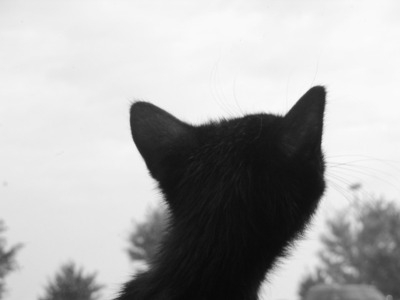
kittenwindow

“Novel-writing is not so much a profession as a yoga, or ‘way’, an alternative to ordinary life-in-the-world.” — John Gardner

On Thanksgiving Day, I was hit with a bad cold. I spent two days pretending the cold wasn’t actually there and that I could go on functioning as if I were well. By the third day, I had to admit that I really was sick — and this meant I had to let go of my need for that thing I fondly call “momentum.”

I like the feeling of momentum. I like the idea that I am moving forward. The trouble comes in when I start to believe I can truly control exactly how things move.

When I returned to working on my novel after being sick, I felt disconnected from what I really wanted to say, at a loss with the story. My characters seemed like they were doing silly things, just marking time, moving around the rooms of my pages for no purpose.

Yesterday, during a group writing sprint with other members of Jenna Avery’s Just Do the Writing Accountability Circle, I went to the page with the same feeling of stuckness and confusion about my story that I’ve had lately. “This is terrible!” a familiar voice inside me piped up. “You have to get over this! You need to make this story work!” (No pressure, or anything.)

When, as a coach, I work with a client who’s stuck, I often use metaphor to help them see their situation clearly. I asked for a helpful image to come to me, and the image that bubbled up in my mind was my cat, when we have a vet visit scheduled and he’s caught on to the fact that the cat carrier has entered the room. Once he gets under the bed, my mission is impossible: he knows he can hide there from me as long as he wants, because I can’t physically pick up the bed and get him out. And we’ve certainly had incidents where I’ve chased him around the house, and sometimes I end up standing the cat carrier on its end and stuffing him into it while he braces his back legs on its sides and writhes furiously. I hate this. And, of course, so does he.

There was this one time, though, when my cat snuck under the bed and I just didn’t have it in me to figure out a way to get him out and stuff him into the cat carrier. I set the carrier on the floor in the living room and sat down in a chair. I called the vet and told them we probably weren’t going to make it to our appointment.

The vet’s assistant was completely laidback about this. “Come on in if you catch him,” she said, laughing.

I sat quietly in my chair. Really, chasing my cat just didn’t seem worth it. He wasn’t ill; it was just a routine check-up since he’s getting into his senior years.

Within fifteen minutes, my cat emerged from beneath the bed and tentatively walked into the living room. He saw me sitting in the chair, looking quite harmless; he approached the cat carrier and sniffed at it. Then he began to investigate the carrier very thoroughly, with a kind of reverent curiosity. It was like he wanted to fully understand this instrument of his impending doom.

I realized that I was treating my story the way I treat my cat when I just want to get him to the damn vet. I stuff him into a box and endure his plaintive meows, feeling like a world-class jerk. Because I want to fix things. Because I want to make sure I’m doing the right thing. Because I’m driven by a kind of urgency.

Obviously, sometimes my cat needs to go to the vet and we do engage in this routine (though I’ve gotten quieter and better at doing sneak attacks, so neither of us struggle as much these days — usually).

But does this pattern work with my novel, with my characters?

I was stuck and overwhelmed because I was invested in the idea that my story needed to be “fixed,” that it contained a problem that needed to be solved. There are certainly plenty of books and advice out there that can tell me how to “fix my novel problem.” And some of them can be very helpful, at certain points in the process. But I realized yesterday that approaching my story in this top-down way, as if it was something I could fix from the outside by forcing it into a box of my choosing, was disconnecting me from anything the story had to show me, from letting it reveal itself.

When I sat back, relaxed, and made the choice to approach my story with that reverent curiosity my cat is so good at, I discovered a fascinating thing: I got really interested in my story again. I wasn’t trying to make it be, or do, anything; I was just interested in it. That all-important question, “What is it about?” welled up in me, and I realized I knew exactly what it was about. I also realized that this novel does not want to be as long as I’ve been thinking it should be. It just might want to be a novella. It knows what it is; and I’ve been so set on “fixing it” that I’ve lost touch with the thread that connects one scene to the next.

My story started to move again. I wrote beyond the 0ne-hour set time of the group sprint, I was so caught up in it.  Hallelujah! I understand my story better. And why did I get into this writing in the first place, if not to better understand?

Can I approach my life, too, from this space of reverent curiosity? Can I step back, breathe for a moment, and give my life the space and kind attention it needs in order to be what it wants to be?

Work With Me: I love helping writers and artists who are feeling stuck. Check out my one-on-one coaching, here.

Image is “Wonder Cat” © Eden Daniel | Dreamstime.com

What It Really Means to be an Introvert

Many of the creators I work with as a coach are introverts. But some of them have a hard time owning this.

I get it. As I was growing up, I learned that there were these “social definitions” of introvert and extrovert. These definitions went something like this: An introvert is quiet, shy, and keeps to herself. She’s not very friendly. She needs to learn to be more outgoing and social. An extrovert is gregarious, charming, engaging. She has lots of friends. People really like her and she’s socially well-adjusted.

Naturally, most people wanted to feel they were the second thing, not the first. I know I absolutely hated being labeled “shy”, and my parents and most of my teachers wanted me to “combat my shyness.” I always felt they were not seeing me for who I was.

I think a lot of people nowadays (I hope, anyway) have a better understanding of what an introvert actually is. But I know here in the U.S. there’s still a cultural bias in favor of extroversion. Recently when I mentioned to someone that I work mostly from home, she said, “Oh, gosh, you don’t want to spend too much time at home. You might become an introvert!”

It hit me once again that the reason some of us struggle to accept ourselves as introverts — and try to live contrary to our nature — is because these old “social definitions” of introvert and extrovert are still intact.

Actually, the definitions of introvert and extrovert that I prefer may be even older. Jung defined introversion as “predominately inward-looking” and extroversion as “predominately outward-looking.” What this means is that introverts are naturally inclined toward delving into their inner worlds, whereas extroverts are more inclined toward interacting in the outer world. And everyone is at a different point on the introvert-extrovert spectrum — we’re all some of both, but to varying degrees.

I am probably not the most extreme of introverts, but I’m way up there on the scale. This DOESN’T mean that I am always quiet and that I dislike being around people. It means that because I take anything I experience in the outer world and turn it inward in order to process it, I need a certain amount of downtime in which to chew on things and recharge my battery.

So, my bandwidth for socializing and being in the “outer world” is finite, and if I don’t respect that and push myself beyond my limits, I’ll become overwhelmed and depleted. What overwhelmed and depleted looks like in me is spacey, irritated, tired, quiet, withdrawn, and yes, sometimes it may look “shy” or create shy behavior — in other words, I may become fearful in situations that normally wouldn’t cause me to be so because my battery isn’t charged and I know I don’t have the energy to deal with them at the moment.

This is why traditional school and work settings are often not ideal for introverts — we run out of steam and feel like we’re running on empty, try to retreat to our inner worlds to get recharged, and discover this isn’t acceptable in the company of (most) others. Then we start judging ourselves for not being able to act like extroverts, who recharge their batteries by being with people and engaging in activities.

Because I understand my introversion so well (though I’m always learning more about my needs) I love the fact that I’m an introvert and I fully embrace it. This hasn’t always been true for me, but now that it is, my life flows so much more smoothly. When I can accept the ebbs and flows of my own energy and give myself the downtime I need — and own that in the company of others — I can show up fully myself.

I’d love to see all introverts embrace their nature and see how it works for them as creators. I’ll talk more about this future posts.

Check out Marti Olsen Laney’s “The Introvert Advantage” or Susan Cain’s “Quiet” if you’d like to read more about embracing your introversion (or understanding a loved one who’s an introvert). And if you struggle with accepting and working with your introverted nature, check out my one-on-one coaching opportunities. I love working with introverts!

Image is FEATHER IN THE FOREST © Paige Foster | Dreamstime.com

Understanding our Limits: Self-care and Creativity

The foundation of a healthy relationship with our creativity is self-care.

And yet, creators know that the act of creativity is also part of our self-care. So how do we negotiate the needs of our physical and emotional selves, and the needs of our spirits?

When I was in my twenties, I thought that all the good feelings I got from creativity meant I could override and ignore pesky things like getting enough sleep, eating well, and having relationships that felt reciprocal and nurturing. I thought I could be this wildly creative being and forget the fact that I am a physical being with physical needs that are not going to go away just because I ignore them.

This turned into a vicious cycle which went something like this: let me create more because it helps me feel bigger and better and then I’ll have more energy to pour into my relationships and I won’t need as much sleep or to slow down and pay attention to what I’m eating and whether or not I really have enough money to support myself. Okay, now I’m really wired and tired and my relationships aren’t very healthy and I don’t have enough money; but let me create more because it makes me feel good and then I don’t have to think about these other annoying things that are part-and-parcel to living.

This was a form of grandiosity, though it took me a while to understand it. I didn’t want to believe that I had limits, that I was a physical being with a body that got tired and emotions with messages like, “I’m burning out here.”

I did burn out on this way of life at about age twenty-five. I ended up in the hospital, dehydrated, with an unbearably sore throat and an enlarged liver and spleen. (“You don’t actually need your spleen,” the doctor told me. “But it’s nice to have it.”)

It took me a couple of years to transition into a different, slower, deeper way of living. At first I thought this way of life would be boring; I kept trying to go back to my old way of burning the candle at both ends and ignoring my physical and emotional needs. But my body wouldn’t let me.

This was the beginning of transforming my definition of creativity and what it means to be “a creative person.” I still created, regularly, but over time I saw that I did it because I wanted to, because it felt good — I stopped using it as a means to avoid the aspects of life that I had previously considered too “mundane” to deal with.

I also realized that I had a deeply held belief that if I wasn’t actively creating something — something tangible in the form of words on paper or paint on canvas or what have you — I had no value as a person. I was so wrapped up in this “doing” mentality that it took me a while to realize that, for me, “creating” had become completely entangled with proving my own worth as a human being.

What I now know is that creativity is a natural extension of my human experience. Though it’s vital to have a regular habit or routine of creating, it’s also important to recognize that I don’t make creativity “happen.” It’s a natural part of being; a regular habit of creating is simply a way of building a container to give our creativity a form and a shape. (If you want to test me on this, try not creating anything for a day and see how impossible it is.)

That’s why, now, when I work with creators, I’m committed to helping them accept not just the natural ebbs and flows of the creative process, but their own personal, internal and external ebbs and flows. When I work with someone and hear something like “I need to be writing eight hours a day,” I ask, why? Because you really love writing all the time and it brings you joy and purpose, or because you believe it’s giving you worth and value to be constantly doing?

It’s so important to examine what we believe and how it drives our actions. What I know for sure is that if I drive myself too hard — even in the name of creating — I will wear out my body, and it’s this body that, ultimately, carries out my purpose on this earth.

The fascinating paradox of all this is that when I build into my life the care for my body that it truly needs, I accomplish more of what I deeply want to accomplish — not less — and I feel better about what I do.

I’d love to hear your thoughts on this. How do you balance self-care and your creative projects?

If you need a reminder to listen to your body, hang out with animals. When they’re tired, they rest.

Image is LOUNGING CAT © April Turner | Dreamstime.com

Rounding Up the Usual Suspects

A few days ago while logging in my daily progress for Jenna Avery’s Just Do the Writing Accountability Circle, I had one of those light-bulb moments where I got something, not just intellectually but viscerally.

One of the questions we group members respond to daily asks us what negative thoughts we noticed that came up around our writing. Time and time again, I find myself writing some variation of this: “My writing isn’t exciting or important enough. It’s not active enough. There’s not enough drama. No one will find it interesting.”

I’ve examined these thoughts for quite a while now. Are they true? Yes, sometimes my writing lacks drama. Sometimes it could be more active. But all the time? No, these things are not always true. As for “it’s not exciting or important enough” and “no one will find it interesting,” well, that’s all subjective. I’ve certainly gotten enough feedback on my writing by this point in my life to know that quite a few people have found it interesting. And, as any writer knows, the most important thing when it comes to writing is that you, the writer, are fascinated by what you’re writing.

But this particular day as I logged in these thoughts once again, cringing at their familiarity, I got it. BUSTED! I said out loud, practically snorting my iced coffee.

These thoughts about my writing are my particular form of resistance.

Here’s how I know this: There have been days when I’ve known, without a doubt, that what I’ve written has been exciting and dramatic. To me, anyway. My whole body felt engaged as I wrote; I could hardly tear myself away from the page. These days don’t happen all that often. When they do, they’re wonderful, but that doesn’t usually completely quiet my inner critic.

On these days, when I logged in my progress, what negative thoughts had I noticed? “This writing isn’t serious enough; it’s too active; it should be quieter and deeper; it moves too quickly.”

Yep, when my inner critic knew it couldn’t convince me the writing wasn’t exciting or active, it just went ahead and criticized the writing for not being other things.

Here’s what I realized: My inner critic just wants to protect me from putting my writing out there for scrutiny. So it dredges up anything it can find “wrong” about the writing that I just might believe. When it knows I won’t buy into the idea that the writing isn’t exciting or active enough, it criticizes the writing for having these very qualities.

My inner critic wants to convince me that unless I’m sure my writing is all things to all people, I shouldn’t put it out there — it’s not good enough yet, it’s not ready. And it’s a lose-lose proposition, a double bind. It’s like not showing up to the party unless you’re sure you can be every kind of guest. Since you know you can’t be, you don’t show up at all.

So I’ve finally gotten it: “Not exciting and active enough, not important enough” or any variations thereof, are my “usual suspects” when it comes to my writing. They’re my go-to thoughts that exist solely to keep me from having faith in my own stories, from investing them with enough importance to go all the way with them, to truly own them. 

Noticing these thoughts — my usual suspects — allows me to round them up, corral and question them. In fact, I’m getting so used to them I don’t even always have to question them anymore. I just notice them and say, ah, there you are again.

One time when I was in grad school, a well-known writer visited one of my writing classes and was asked her best advice for writers. “Know what kind of writer you are,” she said. She said she loved Dickens, but she was never going to write like him.

And I’m probably never going to write action-packed thrillers that pump you full of adrenaline. It’s not the kind of writer I am. Luckily, I don’t have to be every type of writer. Knowing that — finally getting it at a deep level — frees me up to trust in the writing that is mine and mine alone.

Do you need support in creating a daily writing habit? Tomorrow, Aug. 30, is the last day to sign up for the next session of Jenna Avery’s Just Do the Writing Accountability Circle. I’ve been a member of this group for going on a year, and I’m also Jenna’s co-coach. It’s a tremendously powerful way to become aware of what keeps you from writing, and to get group support while you do it. Check it out here!

Image is ANTIQUE BLACK TYPEWRITER PAINTED WITH LIGHT
© Dariusz Sas | Dreamstime.com