The power of tiny new things

bluejay

I was talking with one of my clients the other day about how when we’re getting ready to let go of an old, painful pattern, it usually seems to get worse. It seems worse because (yay!) we notice it more. We’re really, really aware of how terribly incongruent this pattern is with the new-us-we-are-becoming. So of course it feels more painful than it ever has before.

When a pattern is really painful, I know my tendency can be to get really hard on myself about it. “How could you create this mess?” “How can you be here, again?” “Are you never going to learn from your stuff?”

These kinds of thoughts are like a smokescreen, or code, for: big internal changes are happening, and they scare me, so I need to slow down the process by being really hard on myself. Then I have something to struggle with and rail against, so I can ensure that the change is as slow as a part of me needs it to be.

The part of me who is deep and wise knows that I don’t need to do this; I don’t need to make the process harder than it is. Actually, when a pattern is playing itself out and it’s really, really painful, this is the time to step back and be the observer. I don’t have to do anything; I don’t have to fight with the pattern or try to get rid of it.

By the time I’m noticing how acutely painful it is, it’s already on its way out.

Mixed in with the pain of “this so doesn’t work for me anymore” is, believe it or not, some grief — sometimes a lot of grief. A coping mechanism that, on some level, has been useful for (often) many years is being let go. There’s sadness in that. That coping mechanism has become part of my identity, so, truly, I am letting go of something that feels like me (even if it isn’t).

In these periods of watching old patterns rev themselves up to high speed until they burn up and work themselves out of my system, it can be so gratifying to notice tiny new good-feeling things that enter my life. As the old stuff is leaving, I like to set an intention to notice what feels new and good and light.

The new and the good and the light are so often commonplace AND unexpected. Like this morning when I was getting dressed, I saw this sweater in the bottom of my drawer that I’d bought a long time ago but never really worn. I put it on and smelled the sharp, fresh scent of new wool and it felt so snuggly and cocoon-like.

And then when I was reaching into my drawer for my earrings, I noticed this blue jay pin I love but haven’t ever worn much, either, and I put it on the sweater. And it looked like it was made for that sweater, like, how could I not have put these two things together before?

A tiny thing, yes, putting a pin on a sweater. But tiny bits of newness can be powerful. Because I’ve never put this sweater and this blue jay together before, they are already creating a tiny new alchemy that is about now, not then. Good to notice as the old stuff comes up to be kissed goodbye and released.

Try this: Experiment with tiny change. Move two tiny things in your house to new places, or put two things next to each other that have never shared the same space before. Notice what this tiny change sets into motion for you.

Coaching in the New Year: I have limited open slots for new coaching clients. If change is on the horizon for you, or you’re already knee-deep in it and need some support, check out my one-on-one coaching. Consultations are always free!

Making Room for Everything

icetree2

Twenty years ago, my father gave me a copy of Women Writers at Work: The Paris Review Interviews. I devoured this book. I was fascinated by the words these writers used to talk about their process, and about their relationship with writing. In some ways, I cared less about what they wrote than I did about what writing meant to them, its connection to who they were, and how it made meaning for them.

One interview stood out for me the most, and that was with the Irish writer Edna O’Brien, author of many novels and short stories. I returned to this interview again and again. Edna O’Brien was so herself, so full of contradictions and so open and accepting of them. The interviewer mentioned Philip Roth’s rumored habit of writing 365 days a year, and asked O’Brien if she shared this habit. O’Brien said that, actually, she did not write 365 days a year, because she wasn’t “that kind of writer”.

She also said that part of her process was moping. “Did Philip Roth say that he moped?” she asked.

I loved this. Permission to mope! I was twenty-one at the time, and for years I’d been trying to get rid of the part of myself that was mopey, the part of myself that actually needed time to just be with whatever I was feeling. Because no one in my life had ever given me permission to just feel bad, and to take that time. And, up until I read that interview with Edna O’Brien,  I wasn’t able to give it to myself.

I didn’t know it could be okay to allow myself to feel like crap, let the feeling be there, and trust that this feeling would move and shift, as feelings do. I’d always been taught to get rid of that stuff — if I allowed myself to get in touch with it at all — and to move on from it as soon as possible.

Which hadn’t worked very well.

Because sometimes I need that. I need to putter around the house with these feelings and just give them space. I need to allow them to be, instead of engaging in the inner tug of war that happens when I feel a little mopey and I tell myself, “You don’t have any real reason to feel that way!”

As a creativity coach, a frequent refrain I hear from clients who feel sad, tired, or drained is, “I know I shouldn’t be letting this get in the way of my [writing, artwork, coaching — fill in the blank].”

We have this idea that “creating” means doing — all the time — and we’re somehow “lesser” writers or artists or coaches if we’re not always doing something that looks like creating. We get into either/or: I’m either doing it, or I’m not.

We don’t see the whole of our process — we might not even be aware of the whole of our process. The root system of a tree plunges deep, deep into the earth — but we only see the leaves, the trunk, the branches. And in winter, we don’t even see leaves.

What if we included all of ourselves in our process? What if we saw all of our emotions as helping our creative process, rather than hurting it?

In attending to, making space for, our own emotional core, we feed our creativity, over time.

We may have days that look like puttering, or moping, or just curling up on the couch, and not much else.

But that doesn’t mean we aren’t creating. We’re just in the unseen part of our process. We’re just underground for a while.

The holidays are a good time to remember this. We often feel frazzled, disconnected from ourselves, due to extra activities and the “stuff” the holidays can bring up for many of us. What part of your process are you in right now? Can you give yourself permission to be there, or at least, to notice where you are? Can you make room for whatever’s coming up?

Happy Holidays to my beautiful readers, clients, and friends.

And here’s a great opportunity for more permission-building insights: My friend and mentor, the wonderful writer and coach Jenna Avery, is offering a free teleseries on Creative Productivity, starting this Wednesday, Dec. 19! You can check it out and sign up, here.

Image is Ice Tree © Brent Hatcher | Dreamstime.com

Practicing Reverent Curiosity

kittenwindow

“Novel-writing is not so much a profession as a yoga, or ‘way’, an alternative to ordinary life-in-the-world.” — John Gardner

On Thanksgiving Day, I was hit with a bad cold. I spent two days pretending the cold wasn’t actually there and that I could go on functioning as if I were well. By the third day, I had to admit that I really was sick — and this meant I had to let go of my need for that thing I fondly call “momentum.”

I like the feeling of momentum. I like the idea that I am moving forward. The trouble comes in when I start to believe I can truly control exactly how things move.

When I returned to working on my novel after being sick, I felt disconnected from what I really wanted to say, at a loss with the story. My characters seemed like they were doing silly things, just marking time, moving around the rooms of my pages for no purpose.

Yesterday, during a group writing sprint with other members of Jenna Avery’s Just Do the Writing Accountability Circle, I went to the page with the same feeling of stuckness and confusion about my story that I’ve had lately. “This is terrible!” a familiar voice inside me piped up. “You have to get over this! You need to make this story work!” (No pressure, or anything.)

When, as a coach, I work with a client who’s stuck, I often use metaphor to help them see their situation clearly. I asked for a helpful image to come to me, and the image that bubbled up in my mind was my cat, when we have a vet visit scheduled and he’s caught on to the fact that the cat carrier has entered the room. Once he gets under the bed, my mission is impossible: he knows he can hide there from me as long as he wants, because I can’t physically pick up the bed and get him out. And we’ve certainly had incidents where I’ve chased him around the house, and sometimes I end up standing the cat carrier on its end and stuffing him into it while he braces his back legs on its sides and writhes furiously. I hate this. And, of course, so does he.

There was this one time, though, when my cat snuck under the bed and I just didn’t have it in me to figure out a way to get him out and stuff him into the cat carrier. I set the carrier on the floor in the living room and sat down in a chair. I called the vet and told them we probably weren’t going to make it to our appointment.

The vet’s assistant was completely laidback about this. “Come on in if you catch him,” she said, laughing.

I sat quietly in my chair. Really, chasing my cat just didn’t seem worth it. He wasn’t ill; it was just a routine check-up since he’s getting into his senior years.

Within fifteen minutes, my cat emerged from beneath the bed and tentatively walked into the living room. He saw me sitting in the chair, looking quite harmless; he approached the cat carrier and sniffed at it. Then he began to investigate the carrier very thoroughly, with a kind of reverent curiosity. It was like he wanted to fully understand this instrument of his impending doom.

I realized that I was treating my story the way I treat my cat when I just want to get him to the damn vet. I stuff him into a box and endure his plaintive meows, feeling like a world-class jerk. Because I want to fix things. Because I want to make sure I’m doing the right thing. Because I’m driven by a kind of urgency.

Obviously, sometimes my cat needs to go to the vet and we do engage in this routine (though I’ve gotten quieter and better at doing sneak attacks, so neither of us struggle as much these days — usually).

But does this pattern work with my novel, with my characters?

I was stuck and overwhelmed because I was invested in the idea that my story needed to be “fixed,” that it contained a problem that needed to be solved. There are certainly plenty of books and advice out there that can tell me how to “fix my novel problem.” And some of them can be very helpful, at certain points in the process. But I realized yesterday that approaching my story in this top-down way, as if it was something I could fix from the outside by forcing it into a box of my choosing, was disconnecting me from anything the story had to show me, from letting it reveal itself.

When I sat back, relaxed, and made the choice to approach my story with that reverent curiosity my cat is so good at, I discovered a fascinating thing: I got really interested in my story again. I wasn’t trying to make it be, or do, anything; I was just interested in it. That all-important question, “What is it about?” welled up in me, and I realized I knew exactly what it was about. I also realized that this novel does not want to be as long as I’ve been thinking it should be. It just might want to be a novella. It knows what it is; and I’ve been so set on “fixing it” that I’ve lost touch with the thread that connects one scene to the next.

My story started to move again. I wrote beyond the 0ne-hour set time of the group sprint, I was so caught up in it.  Hallelujah! I understand my story better. And why did I get into this writing in the first place, if not to better understand?

Can I approach my life, too, from this space of reverent curiosity? Can I step back, breathe for a moment, and give my life the space and kind attention it needs in order to be what it wants to be?

Work With Me: I love helping writers and artists who are feeling stuck. Check out my one-on-one coaching, here.

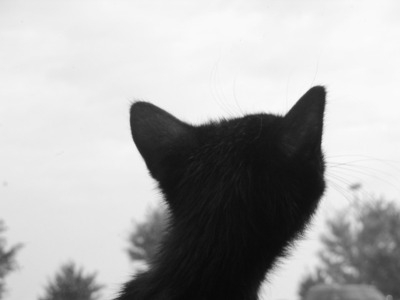
Image is “Wonder Cat” © Eden Daniel | Dreamstime.com

Being in the In-Between + Happy Fall

It occurred to me a while back that part of the reason I love fall (besides the excuse to start wearing my beloved sweaters again) is because fall is about “the great in-between.” To me, it always feels like a passageway, like a crisp tunnel of flaming reds and yellows in which things I no longer need start to fall away, and I begin to get a sense of what will flow in to replace them.

I’ve always been fascinated — and, until recently, tormented by — those in-between, liminal periods in life.

For most of my life, I hated the uncertainty that comes with being “in-between” so much that I rushed to get out of it as quickly as I could — only to end up right back in it. As in, I wanted to get out of the discomfort of “not knowing,” so I took action just to get away from my discomfort, and ended up creating more discomfort. (When we take action based on a desire to avoid something, we actually create more of what we’re hoping to avoid. It’s pretty annoying how that works.)

These days, I’m learning to truly be in the in-between.

And fall is a great reminder of how beautiful the in-between can be, if I open to it, breathe into it. There’s a sacred hush to fall, if I give myself a chance to feel it. The old is dying off, and the “what’s to come” isn’t here yet. When it comes down to it, there’s nothing but uncertainty, but during transitional periods we feel this more acutely. In fact, after fall there will be a winter in which much goes underground. In our personal winters, things are being worked out in us, things we may not be able to see or articulate. And it can feel terrifying, if we look at the unknown as anything but our friend.

I’ve come to feel that this dying-off, if you want to call it that, can be exciting, even exhilarating. And maybe that’s why I see fall as all about beginnings as well.

What are you open to letting go of as the fall season begins? What are you willing to let fall away? What might you be open to beginning?

Announcements:

I have two openings for new coaching clients starting in October. I help sensitive creators who struggle with overwhelm make their creativity a priority  — you can find out more here!

The last day to register for our next session of Jenna Avery’s Just Do the Writing Accountability Circle is this Thursday, Sept. 27. I’ve written quite a bit here about the huge benefits I’ve experienced in being a participant in this group, and I’m also Jenna’s co-coach. If you need to create a regular writing habit, or would like some group support as you write, be sure to check it out!

Image is WET LEAF© Jay O’brien | Dreamstime.com

Your True Supporters

Sometimes, when you’re in a place of confusion and feeling really vulnerable about it, someone else steps in and seems to think they know exactly what’s going on for you. And they label what’s happening for you and because you’re not sure what’s up for you, you start to think, maybe they’re right.

Many years ago, when I’d left college and I was in a total “liminal period”, as Martha Beck would call it, I started seeing a psychotherapist who really liked to label my behavior as “healthy” or “unhealthy”. This produced a pretty strong “ick” in the pit of my stomach (a sure sign that her way of working wasn’t right for my essential self), but back then I had a longstanding habit of ignoring my body and its messages.

So for six sessions, I saw this therapist and kept hoping she’d see me. I thought if I just explained myself well enough, she’d “get me.” I remember sitting in her big black pleather chair, telling her that memories from a particular period of my life had been flooding my thoughts, and they felt vivid and compelling. It felt like there was a message for me in those memories, I told her, and I wanted to be open to it.

She stared at me flatly and said, “You’re focusing on the past so you don’t have to move forward. You’re procrastinating.”

I wondered if she was right.  I mean, it sounded right. But it didn’t feel right.

What I know now, years later, is that for me, moving forward often looks like going back — temporarily. Frequently, before I arrive at my next stop, I need to backtrack a little and gather, process, and integrate what happened “back there.” Maybe I’ve frozen certain emotions that need to be brought up, or maybe so much happened in such a short period of time that I haven’t yet caught up with myself.

I’ve written previously about the importance of trusting your own, unique process. If your process looks like mine at all, and you’re feeling like it’s messy and confusing and you’re pretty raw about it right now, don’t let anyone else tell you you’re “not moving forward.” Trust me: You are moving forward. You’re just doing it in your own circular, zig-zag way. It’s all good.

Your true supporters on your journey will honor, support (and even be enchanted by!) your process, your way of working through and coming out on the other side.

That’s why, a year or so after I stopped seeing the aformentioned therapist, I found an amazing therapist who deeply honored my process. And because she honored my process, I learned to honor it myself. And I came to trust myself. Fiercely.

Your true supporters may not “get you” one hundred percent, but they have faith that you know what’s best for you, and they remind you that you are on your own side. They know, as Rainer Maria Rilke said, that “what goes on in your innermost being is worthy of your whole love.”

But the most important thing, of course, is that you know this.


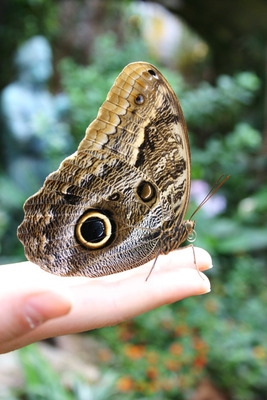
Image is BUTTERFLY © Martina Misar-tummeltshammer | Dreamstime.com

Creative Ebbs: Not the Same as Stuckness

If you think about any relationship you’ve ever had, you’ll notice that there were phases to the relationship. Sometimes you were sitting on the couch shoulder to shoulder eating cookie dough ice cream and watching Netflixed episodes of “The Office” (British version, preferably) and you couldn’t stop laughing and finishing each other’s sentences. Other times, you were kind of quiet and it was just nice. Other times you went rollerskating and you couldn’t stop falling down, in a good way.

And then there were those times when there was just nothing to say. Phone calls felt heavy; there were lots of long pauses, and not the good kind. You got on each other’s nerves without meaning to; previously endearing odd little habits began to seem like dealbreakers.

Maybe in your younger years, the not-so-good times felt like sound reasons to end the relationship; but as you got older and had more experience, you began to see that it was important to ride them out because the ice-cream-on-the-couch times could always come back.

You have a relationship with your creativity, too. And it needs to be accepted, nurtured and protected just like any other relationship you care about. But a lot of times (and what I see happening most often with my clients) is that we either neglect this relationship or ignore it — or, at the other end of the spectrum, we push it so hard and try to control it so much that it withers or hides from us.

Accept that your relationship with your creativity has seasons, cycles, ebbs and flows. You can — believe it or not — trust these ebbs and flows. Most of us are afraid to trust them. We love the flow, but the ebb, not so much.

So I won’t talk about what to do when you’re in creative flow. Most of us love that place. I’ll address the dreaded ebb (though you shouldn’t dread it — it’s really simply the yin to the yang that is the flow).

A creative ebb is a period in which nothing much feels like it’s happening creatively for you. It’s not the same thing as feeling stuck — stuck has to do, usually, with your fears around what you’re creating, or when you’ve reached, say, the middle of your novel and you have no idea what happens next and nothing you try feels right. When we’re stuck, it’s important to bring our fears to light and give them voice so we don’t dig our wheels further into the mud.

An ebb is a bit different. You might feel it for a few days or weeks after you’ve had a period of unusually high creativity. I used to create and sell these little paintings, mostly of cats. The way my process worked was I’d get a very clear picture of what I wanted to paint in my mind, often when I was out walking, and then I’d come home and get out one of my little canvases and the image would flow out onto it, usually quite similar to what I’d envisioned.

For a period of time, I did about three of these paintings a week. And the more people bought them the more I wanted to create them. But after about nine months or so of this, the ideas gradually stopped coming. I didn’t rush to my canvases the way I had. The art I created didn’t feel as inspired to me. Some of it wasn’t selling.

I was at an ebb. How do I know it was an ebb? Well, luckily for me, in this case I’d thought of this artwork as pure fun, not at all my “life’s work” or “serious art” — I didn’t have any of those ideas attached to it that can create stuckness because we make it so big and important. So when the “flow” stopped happening, I didn’t freak out. I just kind of noticed. By now I was about to move into a new home anyway, so I focused on that. The part of me that did the paintings rested.

And within about six weeks, I was ready to go again. I starting getting new ideas and now I was incorporating collage into the paintings. I began selling them again and I got my first overseas customers.

Creative ebbs don’t necessarily last for weeks. The ebb can occur, on a smaller scale, on a daily basis, when you do your writing in the morning, say, and it goes amazingly well but by evening you’re wiped out. That evening time is what Julia Cameron calls “filling the well” time. Although it’s true that the more I create, the more creative energy I tend to have, it’s also true that a prime component to our creativity is this resting phase, whether that’s a few minutes, a few hours, or a few days.

So what do you do when you’re faced with a creative ebb? Ideally, not much of anything — putter, water plants, daydream. But I know that doesn’t sit well with you if you make your living through your creativity, or if you’re on a tight deadline. In those cases, let the resting, “be-ing” energy be there as much as you can, while keeping up a regular creative habit. Sometimes this looks like doing the minimum that needs to be done and calling it a day.

Whatever you do, don’t demand of yourself that you reach for the creative high you experience when you’re in creative flow. That, my friend, is a sure-fire recipe for getting stuck.

Allow the ebb. The ebb is your friend. When the flow returns, you’ll reap the benefits of the ebb and see just how much richness that “fallow” period has brought to your creativity.

Announcement: This Thursday, Aug. 2, is the last day to sign up for the next session of Jenna Avery’s Just Do the Writing Accountability Circle. I’m Jenna’s co-coach, and I’ve also been a participant in this group for nearly a year. It’s a great way to develop a regular writing habit and get group support. Check it out here!

Also: I’ll have openings for new coaching clients starting in mid August. If you’re feeling stuck or scared around your creativity, or it seems like life just won’t stop getting in the way, feel free to set up a free consultation with me.

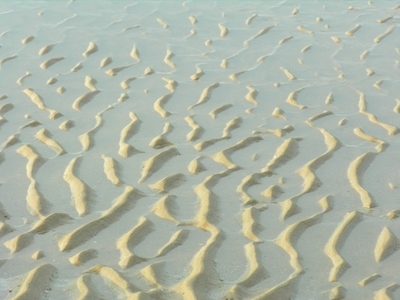
Image is MUD FLATS © Slidepix | Dreamstime.com

Creating: There’s No Right Way to Do It

A friend of mine recently attended her first ever writing class. She was really nervous. She didn’t know if she’d “fit” there. She thought maybe she wasn’t brilliant or wacky or temperamental enough to be a writer.

She showed up, and things were going along okay, and then the teacher said this: “If you’re not willing to reveal everything about yourself, you have no business being a writer.”

Ouch. My friend felt like a hermit crab retreating into its shell. It had been hard enough just getting herself to the class, and now here’s someone in a position of authority saying that if she doesn’t put it all out there, she has no right to write.

Here’s the thing:

When we begin something new, we are tentative. This is normal. Feeling tentative does not mean we are not serious or that we “won’t make it.” We need to start small, and stretch ourselves a little each time we begin again. And little by little, we become less tentative. We take bigger risks.

When we create, we are exposing pieces of ourselves. We are saying, in essence, this is what fascinates me, this is what I struggle with, this is what I really care about. And that can be hard. That can be terrifying. Particularly if we’re just starting out. And even if we’re seasoned creators, we continue to explore new territory and there’s always an element of fear in that.

Starting small and feeling tentative about it is so much better than not starting at all.

And this is exactly why we need to start small if we are really, really afraid. If you get vertigo when you stand on a chair, you don’t climb up a bell tower and look down (well, unless you are Jimmy Stewart in Vertigo, but you get my point).

Some new writers are excited and motivated by the idea of  “laying it all on the line.” And that’s terrific.

But if you’re not excited and motivated by that, if it scares the hell out of you, that doesn’t make you any less a writer. And you shouldn’t have to hide this fear because you’re afraid someone will tell you that if you don’t want to lay it all on the line, it means you “don’t really want it.”

And here’s another truth: The more you care about something, the more tender the subject, the closer it is to your very essence, the harder it’s going to be to write about — or, at least, the harder it’s going to be to share with others.

But this doesn’t mean that, if you’re not feeling ready to do that now, you have no business being a writer. It just means you’re not feeling ready to do that now.

Here’s a question I like: What might help me to feel a little more okay about starting?

Obviously, the idea that she had to be willing to reveal everything about herself shut my friend down. She didn’t want to return to the second writing class; she didn’t even want to write.

So here’s what we worked out together. We changed “I have to be willing to reveal everything about myself” to “I’m willing to reveal some things about myself.” This felt much better to her. And here’s another thought that felt true for her: “I have the right to be a writer because I have a deep desire to write.”

I tell this story because we create resistance when we believe black-and-white, all-or-nothing thoughts about our creativity. There’s no “right” way to create. You can be a “real” writer even if you are not putting one hundred percent of your inner turmoil out there for the world to see.

Here’s what I’ve found: I can usually do more and go farther than I thought I could. But I don’t find that out if I don’t give myself full permission to meet myself where I am. If I set up a challenge for myself that feels insurmountable (or, when it comes down to it, undesirable), I’m going to shut down.

So give yourself full permission to be a beginner (and we’re all beginning, again and again and again). If someone criticizes you for being “too tentative,” or “not serious,” say, “‘I am serious. I’m seriously tentative. I’m trying something new.” And then tell them they have to stop criticizing you. And this goes double if you’re criticizing yourself.

If a belief shuts you down, it’s not the truth for you. There are as many kinds of creators as there are human beings who have the desire to create. And we’re all motivated in different ways. It’s not one-size-fits-all, and thank goodness for that.

Image is MESSY PAINTS © Paige Foster | Dreamstime.com

Getting out of analysis paralysis (or: what to do when you don’t know what to do)

A couple of my clients, both writers, have been struggling with “analysis paralysis.” They’re ultra-verbal, extremely articulate, and live a lot in their heads. And they’re both also funny and intelligent and sensitive and downright awesome. And I don’t like seeing them in so much stress. So, of course, we wanted to find out how to move them out of it.

Both of them said they had reached a point where they just didn’t know what the hell to do about the particular bundle of issues they were wrestling with. Because there were a lot of issues, and they’d gone over every possible option a thousand times, and looked at it all from every possible angle, and nothing solved the problem. And now they felt totally stuck and spent.

And I so, so get it. In fact, I’d been in the process of curling up in that very same corner (the one I’d so handily painted myself into). And it’s always interesting to see what you’re going through mirrored back to you, but when it’s somebody else’s stuff, you have the ability to see it more clearly.

There’s a correlation between people who tend to be perfectionistic (me!) and “mistake-avoidant” (me!) and people who get stuck in analysis paralysis. We think there’s got to be a right option, a right path, and we’re convinced that we can somehow keep ourselves from ever having any regrets if we can just find it, so we go into the spin cycle of analysis. We try to “think” our way out of whatever is overwhelming us, and in the process, we overwhelm ourselves more by imagining every eventuality.

And in the darkest, heaviest times, this is the stuff depression is made of. Because every option we see has a “yeah, but” attached to it, and since we’re using the minds that created the issues in the first place to try to find our way out of them, we’re truly in a stuck-leading-the-stuck place and more thinking is absolutely not going to help us now.

For those of us who tend to be very verbal and in our heads, it is vital that we connect with our bodies when we are freaking out — though this is probably going to be the last thing we “think” we should do.

That’s why the last time I got massively stuck in analysis paralysis, I got up from my desk (where I was surrounded by words: email notifications, my open notebook, my daily planner) and went into the kitchen and did the dishes.

In fact, Byron Katie actually has a concept called “doing the dishes.” It means, just do that one simple thing that needs to be done. That’s all you ever have to do. Everything else is just a thought, usually a thought about the future or the past.

My clients and I came up with several ways to pull ourselves out of an analysis paralysis “emergency state,” all based on the concept of simplifying and getting into the moment. And because, if you’re in this state, it is indeed vital to keep things simple, I’ve kept the list to three things.

1) Do something that requires physical movement. Think manual labor (like my doing the dishes, or vacuuming), or taking a walk to the post office — no mental heavy lifting. (Again: you don’t want to get more verbal at these times — that’s part of the problem. You want to get into your body.)

2) If you only do one thing (remember, we’re focusing on simplifying here), let it be giving yourself permission to stop beating yourself up for getting into analysis paralysis and everything that has contributed to it. Really, that’s all. Permission to stop beating yourself up. You don’t even have to stop. You just have to give yourself permission to do so.

3) Let go of one thing in your physical space. Yes, get rid of it. Take it to the trash. (If you’re like me, and you believe that even empty boxes of Kleenex just might have feelings, be very, very gentle as you do.) And, since our intention is to simplify and not complicate things here, it has to be something you absolutely have been meaning to get rid of. Don’t get caught up in wondering if you really want to get rid of it, because then you’re right back into analysis paralysis. Then: Notice how it feels to have let go of that object, whatever it was. See if you feel just the tiniest bit lighter. If it feels right, you can continue letting go of things. (I did this with two drawers of clothing recently.) But only if it feels right.

What are your techniques for getting yourself out of analysis paralysis? I’d love to know.

This week:

I have two openings for new coaching clients in July. Are you a sensitive creator who feels stuck or overwhelmed? Contact me to set up a free consultation.

And: This Thursday, July 5, is the last day to register for the next session of Jenna Avery’s Just Do the Writing Accountability Circle. I am one of the coaches, and I’ve also been a participant in this group since it started last September. In that time, I’ve completed two previously unfinished novel drafts. If you’re feeling stuck or like you just can’t develop a solid writing habit on your own, I highly recommend you check it out!

Image is TRAFFIC SIGN © Zdenek | Dreamstime.com

Creativity and the selves within us

Lately with the wonderful creators I’m coaching, I’m noticing a theme of “shoulds.”

“I should be taking more risks with my writing.”

“I shouldn’t be spending so much time lolling around on the beach.”

“I shouldn’t be taking on so many creative projects” or, the flipside, “I should be trying harder to get out there and be more creative.”

First of all, creativity isn’t something you do. It’s something you are.

Our projects are simply a way of tapping the creativity that is always within us, giving it a form. It’s important to remember this, because our minds tend to work in a black-and-white way: “I’m creative when I’m sitting at the computer typing the words of my novel, but I’m not creative when I’m doing the dishes.” (Check out my previous post on defining creativity.)

Actually, you are creative when you are doing both. Creativity is simply the energy of life moving through us, and our particular perspective on that energy at that particular moment. It is always available. 

And, we all have different selves within us. I know I have an adventurous self who loves the idea of living on the edge, taking creative risks, going all out in search of a particular truth (I saw the awesome “Prometheus” last night, and I came out of the theater totally in touch with the adventurous risk-taker part of me).

But I also have many other selves within me. One of my core selves is about twelve years old, vulnerable, self-conscious, unsure of her place in the world and wanting very much to feel safe and cherished. This self is often completely at odds with the risk-taker part of me. And she needs a very particular kind of care.

A quick way for me to get into “shoulds” and create big-time resistance is to ignore the needs of one self or another.

If I ignore the needs of the risk-taker, I find I’m playing it safe (this particularly shows in my writing, when I read what I wrote the day before and realize I’m bored; I just don’t care about what I’m writing because the stakes aren’t high enough).

If I ignore the needs of the vulnerable twelve-year-old who craves safety and boundaries, I wear myself out, I throw myself into situations and relationships without questioning whether or not they are good for this part of me. I find I’m pushing and forcing myself a lot. I can also feel angry, teary, and like I am betraying myself. I may attempt to do something (write about a topic that is tough for me, for example) before I have built the inner resources to go there.

But it’s not an either/or. It’s a both/and. Believe it or not, I can meet the needs of both of these aspects of myself (and the many others as well — though I won’t necessarily be able to meet the needs of all of them at the same time). I can fuel the risk-taking needs of my inner adventurer and also reassure my inner twelve-year-old that I won’t drag her along on these risk-taking expeditions unless she is ready and willing.

This might look like, for example, taking on writing material that feels challenging and scary and risky, but promising myself that I will stop for the day if it starts to feel overwhelming and I’m physically tired or emotionally upset. I can continue the next day, if it continues to feel right for all of me.

And listening to as many aspects of ourselves as we can is beautiful for whatever we’re creating. The more we honor our complexity, the more complex and wondrous our creations will be.

How do you meet the needs of the different selves within you, and what impact does this have on your creativity? I’d love to hear your story.

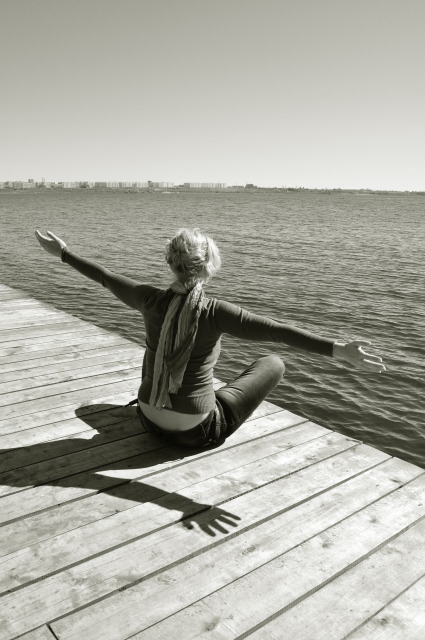
Image is FREE TIME, ENJOYING THE SUN © Svetlana Komolova | Dreamstime.com

Noticing you’re “in it”: what does perfectionism look like?

This is the final post in my May article series on perfectionism and how it interferes with our creativity — and how we can recognize it before it has its way with us! There’s plenty more on this site about perfectionism, as well as its partner in crime, procrastination — just click on the Categories listing on the right.

It can be tricky to recognize when we’re in the grip of perfectionism, because we often applaud ourselves for the very behavior it creates. I struggled so much with overachieving as a child that by the time I was fifteen years old, I burned out and literally had no clue as to why I did anything at all — all I knew was that nothing I did gave me the sense of satisfaction I wanted it to give me for very long. The why beneath what we do is important; in fact, it’s essential.

Perfectionistic behavior is fear-based. We’re acting to secure what we think we’d be lost without. We do more because we fear that if we don’t, we won’t have enough.

When we take action from a place of wholeness and authenticity, we act based on the conviction that we are already secure. We do more because we enjoy it, because it enhances our lives. We stop when we’ve had enough.

So, how can you tell you’re in perfectionism’s clutches?

You can tell by the way you feel. For me, that’s often urgent, anxious, overly driven (I feel I can’t stop or slow down), a tight stomach, clenched jaw, contracted body, slumped-over posture. I physically “clench up”, become smaller than I actually am. Sometimes I feel extra-irritated and want to snap at people.

(Can you imagine the extra burden we place on ourselves when we sit down and try to create from this feeling, from this place?)

Sometimes, though, I’m not necessarily in touch with my feelings or my body. I’m totally in my head, and although I know lots of techniques for getting into my body, I don’t always do them because my mind is telling me I don’t have time, or there’s no point (tricky, tricky mind!).  This is when I can look to my behavior for clues.

For me, perfectionism manifests itself in the following behaviors:

* Going above and beyond just because I can; staying really, really on top of things (i.e. responding to emails immediately; setting daily goals that are way bigger than they actually need to be because my ego likes the way they look).

* Saying YES a lot, when I really mean maybe, or no. Often I do this to avoid conflict. Will saying no really create conflict? I can always say, “Let me think about that,” instead of “yes.”

* Finishing what I’ve planned to do for the day and then doing more, rather than, as we like to say in Jenna Avery’s Writer’s Circle, “declaring myself satisfied!” A similar version of this is sneaking “doing” into time I’ve set aside for “being.”

* People-pleasing and all its graspy little offspring. This can look like refusing to set boundaries around my time and energy, or affecting an “always smiling” persona so I don’t “upset anyone.”

* Cutting back on, or cutting out, fun activities until I’ve “gotten it all done.”

* Using the terms “should” and “have to” a lot.

Any of these behaviors are good pointers, alerting me that I’m “in it.” The value in noticing them is that when they go unchecked, I get further and further cut off from my true feelings, my true needs. Stopping them before they snowball can prevent the build-up that creates “the backlash” (a term I got from Cynthia Curnan, author of “The Care and Feeding of Perfectionists”), where I burnout, crash, and want to remain immobile for hours or days at a time because I’ve pushed and criticized myself for so long.

What behaviors alert you that you’re “in it”? Jot down a list of these (writing them down really helps you remember them) and the next time you notice yourself doing them, pause and course-correct until your actions stem from what you authentically want. It is so worth it.

If you struggle with perfectionism (or what can often be its flipside, procrastination), check out my one-on-coaching, here. I have a ton of tools in my arsenal to help you!

Image is PRICKLY PEAR CACTUS © Ronalesa Salstrand | Dreamstime.com