What It Really Means to be an Introvert

Many of the creators I work with as a coach are introverts. But some of them have a hard time owning this.

I get it. As I was growing up, I learned that there were these “social definitions” of introvert and extrovert. These definitions went something like this: An introvert is quiet, shy, and keeps to herself. She’s not very friendly. She needs to learn to be more outgoing and social. An extrovert is gregarious, charming, engaging. She has lots of friends. People really like her and she’s socially well-adjusted.

Naturally, most people wanted to feel they were the second thing, not the first. I know I absolutely hated being labeled “shy”, and my parents and most of my teachers wanted me to “combat my shyness.” I always felt they were not seeing me for who I was.

I think a lot of people nowadays (I hope, anyway) have a better understanding of what an introvert actually is. But I know here in the U.S. there’s still a cultural bias in favor of extroversion. Recently when I mentioned to someone that I work mostly from home, she said, “Oh, gosh, you don’t want to spend too much time at home. You might become an introvert!”

It hit me once again that the reason some of us struggle to accept ourselves as introverts — and try to live contrary to our nature — is because these old “social definitions” of introvert and extrovert are still intact.

Actually, the definitions of introvert and extrovert that I prefer may be even older. Jung defined introversion as “predominately inward-looking” and extroversion as “predominately outward-looking.” What this means is that introverts are naturally inclined toward delving into their inner worlds, whereas extroverts are more inclined toward interacting in the outer world. And everyone is at a different point on the introvert-extrovert spectrum — we’re all some of both, but to varying degrees.

I am probably not the most extreme of introverts, but I’m way up there on the scale. This DOESN’T mean that I am always quiet and that I dislike being around people. It means that because I take anything I experience in the outer world and turn it inward in order to process it, I need a certain amount of downtime in which to chew on things and recharge my battery.

So, my bandwidth for socializing and being in the “outer world” is finite, and if I don’t respect that and push myself beyond my limits, I’ll become overwhelmed and depleted. What overwhelmed and depleted looks like in me is spacey, irritated, tired, quiet, withdrawn, and yes, sometimes it may look “shy” or create shy behavior — in other words, I may become fearful in situations that normally wouldn’t cause me to be so because my battery isn’t charged and I know I don’t have the energy to deal with them at the moment.

This is why traditional school and work settings are often not ideal for introverts — we run out of steam and feel like we’re running on empty, try to retreat to our inner worlds to get recharged, and discover this isn’t acceptable in the company of (most) others. Then we start judging ourselves for not being able to act like extroverts, who recharge their batteries by being with people and engaging in activities.

Because I understand my introversion so well (though I’m always learning more about my needs) I love the fact that I’m an introvert and I fully embrace it. This hasn’t always been true for me, but now that it is, my life flows so much more smoothly. When I can accept the ebbs and flows of my own energy and give myself the downtime I need — and own that in the company of others — I can show up fully myself.

I’d love to see all introverts embrace their nature and see how it works for them as creators. I’ll talk more about this future posts.

Check out Marti Olsen Laney’s “The Introvert Advantage” or Susan Cain’s “Quiet” if you’d like to read more about embracing your introversion (or understanding a loved one who’s an introvert). And if you struggle with accepting and working with your introverted nature, check out my one-on-one coaching opportunities. I love working with introverts!

Image is FEATHER IN THE FOREST © Paige Foster | Dreamstime.com

Understanding our Limits: Self-care and Creativity

The foundation of a healthy relationship with our creativity is self-care.

And yet, creators know that the act of creativity is also part of our self-care. So how do we negotiate the needs of our physical and emotional selves, and the needs of our spirits?

When I was in my twenties, I thought that all the good feelings I got from creativity meant I could override and ignore pesky things like getting enough sleep, eating well, and having relationships that felt reciprocal and nurturing. I thought I could be this wildly creative being and forget the fact that I am a physical being with physical needs that are not going to go away just because I ignore them.

This turned into a vicious cycle which went something like this: let me create more because it helps me feel bigger and better and then I’ll have more energy to pour into my relationships and I won’t need as much sleep or to slow down and pay attention to what I’m eating and whether or not I really have enough money to support myself. Okay, now I’m really wired and tired and my relationships aren’t very healthy and I don’t have enough money; but let me create more because it makes me feel good and then I don’t have to think about these other annoying things that are part-and-parcel to living.

This was a form of grandiosity, though it took me a while to understand it. I didn’t want to believe that I had limits, that I was a physical being with a body that got tired and emotions with messages like, “I’m burning out here.”

I did burn out on this way of life at about age twenty-five. I ended up in the hospital, dehydrated, with an unbearably sore throat and an enlarged liver and spleen. (“You don’t actually need your spleen,” the doctor told me. “But it’s nice to have it.”)

It took me a couple of years to transition into a different, slower, deeper way of living. At first I thought this way of life would be boring; I kept trying to go back to my old way of burning the candle at both ends and ignoring my physical and emotional needs. But my body wouldn’t let me.

This was the beginning of transforming my definition of creativity and what it means to be “a creative person.” I still created, regularly, but over time I saw that I did it because I wanted to, because it felt good — I stopped using it as a means to avoid the aspects of life that I had previously considered too “mundane” to deal with.

I also realized that I had a deeply held belief that if I wasn’t actively creating something — something tangible in the form of words on paper or paint on canvas or what have you — I had no value as a person. I was so wrapped up in this “doing” mentality that it took me a while to realize that, for me, “creating” had become completely entangled with proving my own worth as a human being.

What I now know is that creativity is a natural extension of my human experience. Though it’s vital to have a regular habit or routine of creating, it’s also important to recognize that I don’t make creativity “happen.” It’s a natural part of being; a regular habit of creating is simply a way of building a container to give our creativity a form and a shape. (If you want to test me on this, try not creating anything for a day and see how impossible it is.)

That’s why, now, when I work with creators, I’m committed to helping them accept not just the natural ebbs and flows of the creative process, but their own personal, internal and external ebbs and flows. When I work with someone and hear something like “I need to be writing eight hours a day,” I ask, why? Because you really love writing all the time and it brings you joy and purpose, or because you believe it’s giving you worth and value to be constantly doing?

It’s so important to examine what we believe and how it drives our actions. What I know for sure is that if I drive myself too hard — even in the name of creating — I will wear out my body, and it’s this body that, ultimately, carries out my purpose on this earth.

The fascinating paradox of all this is that when I build into my life the care for my body that it truly needs, I accomplish more of what I deeply want to accomplish — not less — and I feel better about what I do.

I’d love to hear your thoughts on this. How do you balance self-care and your creative projects?

If you need a reminder to listen to your body, hang out with animals. When they’re tired, they rest.

Image is LOUNGING CAT © April Turner | Dreamstime.com

Your True Supporters

Sometimes, when you’re in a place of confusion and feeling really vulnerable about it, someone else steps in and seems to think they know exactly what’s going on for you. And they label what’s happening for you and because you’re not sure what’s up for you, you start to think, maybe they’re right.

Many years ago, when I’d left college and I was in a total “liminal period”, as Martha Beck would call it, I started seeing a psychotherapist who really liked to label my behavior as “healthy” or “unhealthy”. This produced a pretty strong “ick” in the pit of my stomach (a sure sign that her way of working wasn’t right for my essential self), but back then I had a longstanding habit of ignoring my body and its messages.

So for six sessions, I saw this therapist and kept hoping she’d see me. I thought if I just explained myself well enough, she’d “get me.” I remember sitting in her big black pleather chair, telling her that memories from a particular period of my life had been flooding my thoughts, and they felt vivid and compelling. It felt like there was a message for me in those memories, I told her, and I wanted to be open to it.

She stared at me flatly and said, “You’re focusing on the past so you don’t have to move forward. You’re procrastinating.”

I wondered if she was right.  I mean, it sounded right. But it didn’t feel right.

What I know now, years later, is that for me, moving forward often looks like going back — temporarily. Frequently, before I arrive at my next stop, I need to backtrack a little and gather, process, and integrate what happened “back there.” Maybe I’ve frozen certain emotions that need to be brought up, or maybe so much happened in such a short period of time that I haven’t yet caught up with myself.

I’ve written previously about the importance of trusting your own, unique process. If your process looks like mine at all, and you’re feeling like it’s messy and confusing and you’re pretty raw about it right now, don’t let anyone else tell you you’re “not moving forward.” Trust me: You are moving forward. You’re just doing it in your own circular, zig-zag way. It’s all good.

Your true supporters on your journey will honor, support (and even be enchanted by!) your process, your way of working through and coming out on the other side.

That’s why, a year or so after I stopped seeing the aformentioned therapist, I found an amazing therapist who deeply honored my process. And because she honored my process, I learned to honor it myself. And I came to trust myself. Fiercely.

Your true supporters may not “get you” one hundred percent, but they have faith that you know what’s best for you, and they remind you that you are on your own side. They know, as Rainer Maria Rilke said, that “what goes on in your innermost being is worthy of your whole love.”

But the most important thing, of course, is that you know this.


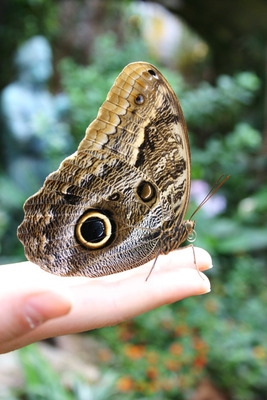
Image is BUTTERFLY © Martina Misar-tummeltshammer | Dreamstime.com

Creative Ebbs: Not the Same as Stuckness

If you think about any relationship you’ve ever had, you’ll notice that there were phases to the relationship. Sometimes you were sitting on the couch shoulder to shoulder eating cookie dough ice cream and watching Netflixed episodes of “The Office” (British version, preferably) and you couldn’t stop laughing and finishing each other’s sentences. Other times, you were kind of quiet and it was just nice. Other times you went rollerskating and you couldn’t stop falling down, in a good way.

And then there were those times when there was just nothing to say. Phone calls felt heavy; there were lots of long pauses, and not the good kind. You got on each other’s nerves without meaning to; previously endearing odd little habits began to seem like dealbreakers.

Maybe in your younger years, the not-so-good times felt like sound reasons to end the relationship; but as you got older and had more experience, you began to see that it was important to ride them out because the ice-cream-on-the-couch times could always come back.

You have a relationship with your creativity, too. And it needs to be accepted, nurtured and protected just like any other relationship you care about. But a lot of times (and what I see happening most often with my clients) is that we either neglect this relationship or ignore it — or, at the other end of the spectrum, we push it so hard and try to control it so much that it withers or hides from us.

Accept that your relationship with your creativity has seasons, cycles, ebbs and flows. You can — believe it or not — trust these ebbs and flows. Most of us are afraid to trust them. We love the flow, but the ebb, not so much.

So I won’t talk about what to do when you’re in creative flow. Most of us love that place. I’ll address the dreaded ebb (though you shouldn’t dread it — it’s really simply the yin to the yang that is the flow).

A creative ebb is a period in which nothing much feels like it’s happening creatively for you. It’s not the same thing as feeling stuck — stuck has to do, usually, with your fears around what you’re creating, or when you’ve reached, say, the middle of your novel and you have no idea what happens next and nothing you try feels right. When we’re stuck, it’s important to bring our fears to light and give them voice so we don’t dig our wheels further into the mud.

An ebb is a bit different. You might feel it for a few days or weeks after you’ve had a period of unusually high creativity. I used to create and sell these little paintings, mostly of cats. The way my process worked was I’d get a very clear picture of what I wanted to paint in my mind, often when I was out walking, and then I’d come home and get out one of my little canvases and the image would flow out onto it, usually quite similar to what I’d envisioned.

For a period of time, I did about three of these paintings a week. And the more people bought them the more I wanted to create them. But after about nine months or so of this, the ideas gradually stopped coming. I didn’t rush to my canvases the way I had. The art I created didn’t feel as inspired to me. Some of it wasn’t selling.

I was at an ebb. How do I know it was an ebb? Well, luckily for me, in this case I’d thought of this artwork as pure fun, not at all my “life’s work” or “serious art” — I didn’t have any of those ideas attached to it that can create stuckness because we make it so big and important. So when the “flow” stopped happening, I didn’t freak out. I just kind of noticed. By now I was about to move into a new home anyway, so I focused on that. The part of me that did the paintings rested.

And within about six weeks, I was ready to go again. I starting getting new ideas and now I was incorporating collage into the paintings. I began selling them again and I got my first overseas customers.

Creative ebbs don’t necessarily last for weeks. The ebb can occur, on a smaller scale, on a daily basis, when you do your writing in the morning, say, and it goes amazingly well but by evening you’re wiped out. That evening time is what Julia Cameron calls “filling the well” time. Although it’s true that the more I create, the more creative energy I tend to have, it’s also true that a prime component to our creativity is this resting phase, whether that’s a few minutes, a few hours, or a few days.

So what do you do when you’re faced with a creative ebb? Ideally, not much of anything — putter, water plants, daydream. But I know that doesn’t sit well with you if you make your living through your creativity, or if you’re on a tight deadline. In those cases, let the resting, “be-ing” energy be there as much as you can, while keeping up a regular creative habit. Sometimes this looks like doing the minimum that needs to be done and calling it a day.

Whatever you do, don’t demand of yourself that you reach for the creative high you experience when you’re in creative flow. That, my friend, is a sure-fire recipe for getting stuck.

Allow the ebb. The ebb is your friend. When the flow returns, you’ll reap the benefits of the ebb and see just how much richness that “fallow” period has brought to your creativity.

Announcement: This Thursday, Aug. 2, is the last day to sign up for the next session of Jenna Avery’s Just Do the Writing Accountability Circle. I’m Jenna’s co-coach, and I’ve also been a participant in this group for nearly a year. It’s a great way to develop a regular writing habit and get group support. Check it out here!

Also: I’ll have openings for new coaching clients starting in mid August. If you’re feeling stuck or scared around your creativity, or it seems like life just won’t stop getting in the way, feel free to set up a free consultation with me.

Image is MUD FLATS © Slidepix | Dreamstime.com

Creating: There’s No Right Way to Do It

A friend of mine recently attended her first ever writing class. She was really nervous. She didn’t know if she’d “fit” there. She thought maybe she wasn’t brilliant or wacky or temperamental enough to be a writer.

She showed up, and things were going along okay, and then the teacher said this: “If you’re not willing to reveal everything about yourself, you have no business being a writer.”

Ouch. My friend felt like a hermit crab retreating into its shell. It had been hard enough just getting herself to the class, and now here’s someone in a position of authority saying that if she doesn’t put it all out there, she has no right to write.

Here’s the thing:

When we begin something new, we are tentative. This is normal. Feeling tentative does not mean we are not serious or that we “won’t make it.” We need to start small, and stretch ourselves a little each time we begin again. And little by little, we become less tentative. We take bigger risks.

When we create, we are exposing pieces of ourselves. We are saying, in essence, this is what fascinates me, this is what I struggle with, this is what I really care about. And that can be hard. That can be terrifying. Particularly if we’re just starting out. And even if we’re seasoned creators, we continue to explore new territory and there’s always an element of fear in that.

Starting small and feeling tentative about it is so much better than not starting at all.

And this is exactly why we need to start small if we are really, really afraid. If you get vertigo when you stand on a chair, you don’t climb up a bell tower and look down (well, unless you are Jimmy Stewart in Vertigo, but you get my point).

Some new writers are excited and motivated by the idea of  “laying it all on the line.” And that’s terrific.

But if you’re not excited and motivated by that, if it scares the hell out of you, that doesn’t make you any less a writer. And you shouldn’t have to hide this fear because you’re afraid someone will tell you that if you don’t want to lay it all on the line, it means you “don’t really want it.”

And here’s another truth: The more you care about something, the more tender the subject, the closer it is to your very essence, the harder it’s going to be to write about — or, at least, the harder it’s going to be to share with others.

But this doesn’t mean that, if you’re not feeling ready to do that now, you have no business being a writer. It just means you’re not feeling ready to do that now.

Here’s a question I like: What might help me to feel a little more okay about starting?

Obviously, the idea that she had to be willing to reveal everything about herself shut my friend down. She didn’t want to return to the second writing class; she didn’t even want to write.

So here’s what we worked out together. We changed “I have to be willing to reveal everything about myself” to “I’m willing to reveal some things about myself.” This felt much better to her. And here’s another thought that felt true for her: “I have the right to be a writer because I have a deep desire to write.”

I tell this story because we create resistance when we believe black-and-white, all-or-nothing thoughts about our creativity. There’s no “right” way to create. You can be a “real” writer even if you are not putting one hundred percent of your inner turmoil out there for the world to see.

Here’s what I’ve found: I can usually do more and go farther than I thought I could. But I don’t find that out if I don’t give myself full permission to meet myself where I am. If I set up a challenge for myself that feels insurmountable (or, when it comes down to it, undesirable), I’m going to shut down.

So give yourself full permission to be a beginner (and we’re all beginning, again and again and again). If someone criticizes you for being “too tentative,” or “not serious,” say, “‘I am serious. I’m seriously tentative. I’m trying something new.” And then tell them they have to stop criticizing you. And this goes double if you’re criticizing yourself.

If a belief shuts you down, it’s not the truth for you. There are as many kinds of creators as there are human beings who have the desire to create. And we’re all motivated in different ways. It’s not one-size-fits-all, and thank goodness for that.

Image is MESSY PAINTS © Paige Foster | Dreamstime.com

Getting out of analysis paralysis (or: what to do when you don’t know what to do)

A couple of my clients, both writers, have been struggling with “analysis paralysis.” They’re ultra-verbal, extremely articulate, and live a lot in their heads. And they’re both also funny and intelligent and sensitive and downright awesome. And I don’t like seeing them in so much stress. So, of course, we wanted to find out how to move them out of it.

Both of them said they had reached a point where they just didn’t know what the hell to do about the particular bundle of issues they were wrestling with. Because there were a lot of issues, and they’d gone over every possible option a thousand times, and looked at it all from every possible angle, and nothing solved the problem. And now they felt totally stuck and spent.

And I so, so get it. In fact, I’d been in the process of curling up in that very same corner (the one I’d so handily painted myself into). And it’s always interesting to see what you’re going through mirrored back to you, but when it’s somebody else’s stuff, you have the ability to see it more clearly.

There’s a correlation between people who tend to be perfectionistic (me!) and “mistake-avoidant” (me!) and people who get stuck in analysis paralysis. We think there’s got to be a right option, a right path, and we’re convinced that we can somehow keep ourselves from ever having any regrets if we can just find it, so we go into the spin cycle of analysis. We try to “think” our way out of whatever is overwhelming us, and in the process, we overwhelm ourselves more by imagining every eventuality.

And in the darkest, heaviest times, this is the stuff depression is made of. Because every option we see has a “yeah, but” attached to it, and since we’re using the minds that created the issues in the first place to try to find our way out of them, we’re truly in a stuck-leading-the-stuck place and more thinking is absolutely not going to help us now.

For those of us who tend to be very verbal and in our heads, it is vital that we connect with our bodies when we are freaking out — though this is probably going to be the last thing we “think” we should do.

That’s why the last time I got massively stuck in analysis paralysis, I got up from my desk (where I was surrounded by words: email notifications, my open notebook, my daily planner) and went into the kitchen and did the dishes.

In fact, Byron Katie actually has a concept called “doing the dishes.” It means, just do that one simple thing that needs to be done. That’s all you ever have to do. Everything else is just a thought, usually a thought about the future or the past.

My clients and I came up with several ways to pull ourselves out of an analysis paralysis “emergency state,” all based on the concept of simplifying and getting into the moment. And because, if you’re in this state, it is indeed vital to keep things simple, I’ve kept the list to three things.

1) Do something that requires physical movement. Think manual labor (like my doing the dishes, or vacuuming), or taking a walk to the post office — no mental heavy lifting. (Again: you don’t want to get more verbal at these times — that’s part of the problem. You want to get into your body.)

2) If you only do one thing (remember, we’re focusing on simplifying here), let it be giving yourself permission to stop beating yourself up for getting into analysis paralysis and everything that has contributed to it. Really, that’s all. Permission to stop beating yourself up. You don’t even have to stop. You just have to give yourself permission to do so.

3) Let go of one thing in your physical space. Yes, get rid of it. Take it to the trash. (If you’re like me, and you believe that even empty boxes of Kleenex just might have feelings, be very, very gentle as you do.) And, since our intention is to simplify and not complicate things here, it has to be something you absolutely have been meaning to get rid of. Don’t get caught up in wondering if you really want to get rid of it, because then you’re right back into analysis paralysis. Then: Notice how it feels to have let go of that object, whatever it was. See if you feel just the tiniest bit lighter. If it feels right, you can continue letting go of things. (I did this with two drawers of clothing recently.) But only if it feels right.

What are your techniques for getting yourself out of analysis paralysis? I’d love to know.

This week:

I have two openings for new coaching clients in July. Are you a sensitive creator who feels stuck or overwhelmed? Contact me to set up a free consultation.

And: This Thursday, July 5, is the last day to register for the next session of Jenna Avery’s Just Do the Writing Accountability Circle. I am one of the coaches, and I’ve also been a participant in this group since it started last September. In that time, I’ve completed two previously unfinished novel drafts. If you’re feeling stuck or like you just can’t develop a solid writing habit on your own, I highly recommend you check it out!

Image is TRAFFIC SIGN © Zdenek | Dreamstime.com

Creativity and the selves within us

Lately with the wonderful creators I’m coaching, I’m noticing a theme of “shoulds.”

“I should be taking more risks with my writing.”

“I shouldn’t be spending so much time lolling around on the beach.”

“I shouldn’t be taking on so many creative projects” or, the flipside, “I should be trying harder to get out there and be more creative.”

First of all, creativity isn’t something you do. It’s something you are.

Our projects are simply a way of tapping the creativity that is always within us, giving it a form. It’s important to remember this, because our minds tend to work in a black-and-white way: “I’m creative when I’m sitting at the computer typing the words of my novel, but I’m not creative when I’m doing the dishes.” (Check out my previous post on defining creativity.)

Actually, you are creative when you are doing both. Creativity is simply the energy of life moving through us, and our particular perspective on that energy at that particular moment. It is always available. 

And, we all have different selves within us. I know I have an adventurous self who loves the idea of living on the edge, taking creative risks, going all out in search of a particular truth (I saw the awesome “Prometheus” last night, and I came out of the theater totally in touch with the adventurous risk-taker part of me).

But I also have many other selves within me. One of my core selves is about twelve years old, vulnerable, self-conscious, unsure of her place in the world and wanting very much to feel safe and cherished. This self is often completely at odds with the risk-taker part of me. And she needs a very particular kind of care.

A quick way for me to get into “shoulds” and create big-time resistance is to ignore the needs of one self or another.

If I ignore the needs of the risk-taker, I find I’m playing it safe (this particularly shows in my writing, when I read what I wrote the day before and realize I’m bored; I just don’t care about what I’m writing because the stakes aren’t high enough).

If I ignore the needs of the vulnerable twelve-year-old who craves safety and boundaries, I wear myself out, I throw myself into situations and relationships without questioning whether or not they are good for this part of me. I find I’m pushing and forcing myself a lot. I can also feel angry, teary, and like I am betraying myself. I may attempt to do something (write about a topic that is tough for me, for example) before I have built the inner resources to go there.

But it’s not an either/or. It’s a both/and. Believe it or not, I can meet the needs of both of these aspects of myself (and the many others as well — though I won’t necessarily be able to meet the needs of all of them at the same time). I can fuel the risk-taking needs of my inner adventurer and also reassure my inner twelve-year-old that I won’t drag her along on these risk-taking expeditions unless she is ready and willing.

This might look like, for example, taking on writing material that feels challenging and scary and risky, but promising myself that I will stop for the day if it starts to feel overwhelming and I’m physically tired or emotionally upset. I can continue the next day, if it continues to feel right for all of me.

And listening to as many aspects of ourselves as we can is beautiful for whatever we’re creating. The more we honor our complexity, the more complex and wondrous our creations will be.

How do you meet the needs of the different selves within you, and what impact does this have on your creativity? I’d love to hear your story.

Image is FREE TIME, ENJOYING THE SUN © Svetlana Komolova | Dreamstime.com

Noticing you’re “in it”: what does perfectionism look like?

This is the final post in my May article series on perfectionism and how it interferes with our creativity — and how we can recognize it before it has its way with us! There’s plenty more on this site about perfectionism, as well as its partner in crime, procrastination — just click on the Categories listing on the right.

It can be tricky to recognize when we’re in the grip of perfectionism, because we often applaud ourselves for the very behavior it creates. I struggled so much with overachieving as a child that by the time I was fifteen years old, I burned out and literally had no clue as to why I did anything at all — all I knew was that nothing I did gave me the sense of satisfaction I wanted it to give me for very long. The why beneath what we do is important; in fact, it’s essential.

Perfectionistic behavior is fear-based. We’re acting to secure what we think we’d be lost without. We do more because we fear that if we don’t, we won’t have enough.

When we take action from a place of wholeness and authenticity, we act based on the conviction that we are already secure. We do more because we enjoy it, because it enhances our lives. We stop when we’ve had enough.

So, how can you tell you’re in perfectionism’s clutches?

You can tell by the way you feel. For me, that’s often urgent, anxious, overly driven (I feel I can’t stop or slow down), a tight stomach, clenched jaw, contracted body, slumped-over posture. I physically “clench up”, become smaller than I actually am. Sometimes I feel extra-irritated and want to snap at people.

(Can you imagine the extra burden we place on ourselves when we sit down and try to create from this feeling, from this place?)

Sometimes, though, I’m not necessarily in touch with my feelings or my body. I’m totally in my head, and although I know lots of techniques for getting into my body, I don’t always do them because my mind is telling me I don’t have time, or there’s no point (tricky, tricky mind!).  This is when I can look to my behavior for clues.

For me, perfectionism manifests itself in the following behaviors:

* Going above and beyond just because I can; staying really, really on top of things (i.e. responding to emails immediately; setting daily goals that are way bigger than they actually need to be because my ego likes the way they look).

* Saying YES a lot, when I really mean maybe, or no. Often I do this to avoid conflict. Will saying no really create conflict? I can always say, “Let me think about that,” instead of “yes.”

* Finishing what I’ve planned to do for the day and then doing more, rather than, as we like to say in Jenna Avery’s Writer’s Circle, “declaring myself satisfied!” A similar version of this is sneaking “doing” into time I’ve set aside for “being.”

* People-pleasing and all its graspy little offspring. This can look like refusing to set boundaries around my time and energy, or affecting an “always smiling” persona so I don’t “upset anyone.”

* Cutting back on, or cutting out, fun activities until I’ve “gotten it all done.”

* Using the terms “should” and “have to” a lot.

Any of these behaviors are good pointers, alerting me that I’m “in it.” The value in noticing them is that when they go unchecked, I get further and further cut off from my true feelings, my true needs. Stopping them before they snowball can prevent the build-up that creates “the backlash” (a term I got from Cynthia Curnan, author of “The Care and Feeding of Perfectionists”), where I burnout, crash, and want to remain immobile for hours or days at a time because I’ve pushed and criticized myself for so long.

What behaviors alert you that you’re “in it”? Jot down a list of these (writing them down really helps you remember them) and the next time you notice yourself doing them, pause and course-correct until your actions stem from what you authentically want. It is so worth it.

If you struggle with perfectionism (or what can often be its flipside, procrastination), check out my one-on-coaching, here. I have a ton of tools in my arsenal to help you!

Image is PRICKLY PEAR CACTUS © Ronalesa Salstrand | Dreamstime.com

How to tell if perfectionism is running the show

Here’s the second article in my May perfectionism series. You can read the first one here. And there’s plenty more on this site about perfectionism — just check the “categories” listing on the right.

Sometimes — often — I get into a space of confusion where I’m aware that a rather ugly shift has occurred, but I’m not sure why.

It’s when I’ve been doing something I’m really excited about — something, like writing, that may be hard and challenging, but it’s also energizing because it feels like I’m doing what I’m meant to do. I’m humming along, excited, full of enthusiasm, with a feeling of deep rightness. Or maybe I’m just feeling pretty okay. It’s going well. Well enough.

And then: the shift. Something starts to nag at me. I feel a tightness in my head, my chest. I notice I’m tired. I notice I’m a little angry. Suddenly, that feeling of deep rightness is gone and in its place is fatigue, a bad mood, depletion.

When this used to “happen to me,” I thought it was because I was just moody. I thought it was because I was emotionally unstable. I thought it was because I was doing something wrong.

Now, I know it’s because perfectionism has taken over. Without my awareness, I’ve shifted from the challenge and joy of the aims of my inner enthusiast, to the futile agenda of my inner perfectionist.

The truth is, I don’t “suddenly” shift from a space of enthusiasm and energy to Suckville. There are some “middlemen” that I typically don’t notice because they’re so subtle and automatic. Those middlemen are: 1) my physical sensations and 2) my thoughts.

“The shift” happened to me last night. I was at my computer working on something with my cat in my lap, feeling content, peaceful, energized. Everything was humming along; for about an hour or so, I was in a pretty blissful place.

And then: I started to get a little bit sleepy. That was all. Just a little sign from my body that it was beginning to be time to call it a night. (Middleman #1 — physical sensation.)

Not a problem, right? I’d put in a good hour of work (and it’s unusual for me to get much done in the evening anyway, so this was a plus after a day that had been pretty “productive” already.)

However, when I started feeling physically tired, my mind spewed out the following thoughts: You’ll never get anywhere if you always stop when you’re tired. You know tomorrow is a busy day and you won’t have the evening free to work. Why don’t you ever have the energy to make a real dent in the important stuff? You really need to push yourself to do more. (Middleman #2 — my thoughts.)

This was just a sampling of my thoughts — there were probably dozens triggered by the simple fact that my body was ready to call it a day and my inner perfectionist, a.k.a. that part of me that believes I’m not enough and I must constantly prove myself by doing more, wasn’t having it.

Last night, I was able to catch the poor little inner perfectionist and assure her that we’d done more than enough for the day and she was going to have to take a nap, which she badly needed. Sometimes, I don’t catch onto her as quickly. I believe she is telling me the truth. I push myself to do more and more, and I burn out.

The aims of my inner enthusiast feel inspiring, expansive. They challenge me, open me up, make me feel “greater than” I was before. The aims of my inner perfectionist feel like a clamping down. They tighten and close me. They make me feel “less than.” They may look like valuable ideals that are meant to get me to a better place (this is the tricky part), but the truth is in how they feel.

During my life coach training, Martha Beck liked to remind us, “You can tell it’s enlightenment because it tastes of freedom.” The pursuits of my inner enthusiast ultimately feel like freedom — even when they’re challenging as hell. The agenda of my inner perfectionist feels like punishment — even when it looks good on paper, even when it looks awfully appealing to my “social self.”

Saying “enough for now” does not mean my inner enthusiast won’t propel me toward my dreams again tomorrow.

I’d love to hear from you. How do you know when you’re in the grip of perfectionism? And how do you move out of it?

For more on this topic, check out my article on how to tell if you’re stretching or pushing yourself, here.

Don’t let perfectionism keep you from getting started (or from finishing)

This is the first in a series of several articles I’ll be publishing on perfectionism and how it keeps us from doing what we most want to do, or from enjoying it when we do accomplish it!

I finished a first draft of my novel yesterday. I had to declare myself finished. This draft had been sitting for more than three years when I returned to it early this year.

I had a hard time starting the novel way back when because I wasn’t sure I had the “just right” story, and I wasn’t sure I had the “just right” point of view (I even wrote 200 pages of it in third person and then rewrote it all in first, which, if you write fiction, you know is a lot harder than just changing “she” to “I”). I kept rehashing and rewriting these 200 pages, polishing scenes, cutting scenes and creating new ones, changing the order. At one point I went back to third person and wrote from multiple points of view. Then I went back to first.

At some point, I realized I needed to make some choices, stick with them, and continue — even if the draft wasn’t exactly the way I envisioned it.

So I did. And as I finally neared the end of my draft this week, everything felt bittersweet. I didn’t want to say goodbye to the writing of it (generating the writing is my favorite part; I like editing and rewriting much less). But mostly, I wanted to feel I had the best possible ending. I wanted to feel like, wow! This ending rocks. (That was how I felt when I finished the first draft of my other novel, a few months ago, which you can read about here.) I’d venture to say we all want that from our endings, and our readers, of course, want that too.

But this was a first draft, and at some point, I realized I needed to call it enough. As Anne Lamott tells us, it’s totally okay for first drafts to be shitty. My friend and mentor Jenna Avery said, “How about calling it enough for now?”

Yep. “Enough for now” felt exactly right.

Those of us who tend to be perfectionists can forget the concepts of “enough” and “for now.” We want it to be right, we want it to be brilliant, we want it to be perfect. Only the thing is, in wanting that so badly, we often don’t actually do our work, don’t get it to those who can benefit from it and appreciate it, because we don’t get started, or we don’t ever allow ourselves to finish.

A first draft is just that. It’s something rough, something messy, something that takes chances and probably contains lots of mistakes.

That is good. What if we could apply a “first draft” mentality not only to our first drafts of our writing, but to our lives? I know I love the things I love in part because they are messy, and rough around the edges, and imperfect. Not because they’re polished to a high shine, but because they move me, in all their imperfection.

I’d love to hear about your experiences with starting and finishing. What helps you begin something you’re afraid of, and what helps you say I’m done, for now?

Also: Today, May 10, is the last day to register for Jenna Avery’s Just Do the Writing Accountability Circle. It’s through my participation in this group that I’ve now completed drafts of two novels. (I’m also one of the coaches.) If you can’t seem to get started on something you’d love to create, or you’ve gotten stuck, check it out here!

And: I have a couple of spots open for new one-on-one coaching clients. Find out more here.