A two-step journaling process (for when you’re feeling stuck or scared)

“My writer self is braver than the rest of me.” — Natalie Goldberg

On one of our recent group calls, a fellow participant in Jenna Avery’s Writer’s Circle asked me how I use journaling when I’m feeling stuck on my fiction writing. I thought I’d share my process, in case others might benefit from it.

My journal is one of the safest spaces I know.

And I’m someone who’s struggled a lot with safety. (I remember when I was an undergraduate, a teacher had us do an exercise that started with the sentence “Imagine you’re in a safe space.” At that time, I literally could not think of a safe space, so I couldn’t go on with the exercise.)

Safety is important. We’re often told to “take creative risks” and “really put ourselves out there,” but we’re doing ourselves a disservice if we pretend that isn’t scary, if we pretend that we feel safe, when in fact we do not. Nothing creates a feeling of stuckness like pretending we feel differently than we actually do.

So, a lot of the time, when I’m feeling stuck or scared as I’m trying to write, it’s because I’m not feeling safe.

Safe to what?

Safe to explore. Safe to write the worst crap imaginable. Safe to share only what I’m ready to share. Safe to be with the discomfort of whatever’s coming up for me. Safe to write that thing that brings up the pain of the past.

So getting away from my document on the computer (which can feel so oddly “formal”) and going to my journaling notebook is STEP ONE of creating safety. I think of the journal as a room, a room where there’s only me (and anyone else with whom I feel completely safe).

From this point on (STEP TWO), I ask myself questions on the page.

Any of the following questions are good jumping-off points.

* What do I really want to say that I’m not allowing myself to say?

* What’s the worst thing that can happen if I write the thing I’m afraid to write?

* Why don’t I want to write this thing?

* What’s the worst thing that can happen if I make a wrong turn?

* Do I actually need to step away from the story right now? (If the answer is yes, follow this one up with “How can I make that feel okay?”)

* Where is the tension (fear, stress, sadness) located in my body right now? If that tension had a voice, what would it say?

* What does this particular feeling of stuckness remind me of?

* If I had a guarantee that no one but me would ever read this writing, what would I write now? (This one can really point us to where we are censoring ourselves.)

* Am I truly ready to write this story? Why or why not?

* If I honestly don’t know where to go with the story right now, how might I open myself up to all the possibilities?

Take one of these questions, and run with it. Don’t deliberate too much over which question to choose — they’re all designed to create movement, which is what we need when we’re feeling stuck. Go with one of the questions and keep writing until you feel ready to stop. Often, new questions arise for me while I’m writing, and I ponder those, too, on the page.

A page from my journal: answering the questions, + doodling

A page from my journal: answering the questions, + doodling

This process does not have to take a lot of time — I often do it in ten minutes or so. The idea here is not to find the perfect answer to the question (there isn’t one). The idea is to dig beneath your surface “stuckness” and generate a new perspective. “Feeling stuck” is nothing more than believing something about your writing or yourself that is not helpful.

You can probably come up with other, better questions. Make a master list of them and have it on hand for times when you’re sitting in front of the computer and the sweat on your forehead feels like blood. We don’t have to make the act of writing so dramatic (put that drama on the page!).

(By the way, you can transfer this process to any art form, or anything at all that you’re feeling stuck on.)

What do you do when you’re feeling stuck on your writing, artwork, or any other creative project? Please share in the comments!

On that note, Aug. 15 is the last day I’ll be offering my Free Mini Unsticky Sessions! (I’ll be offering them for a low cost, in a slightly different format, after Aug. 15.) Want to grab one? Check them out, here.

And: This Thursday, Aug. 8, is the last day to register for the next session of Jenna Avery’s Writer’s Circle. I’ve been a member of this group for going on two years now (I’m also one of the coaches) and it’s been an amazing source of support for me. Interested? Read more, here.

Five things I’ve learned about trust

This is my second post for The Declaration of You BlogLovin’ Tour (scroll to the bottom of this post to find out more). This is the final week of the tour, and the topic is Trust.

ferriswheel

I used to think I couldn’t trust others and I couldn’t trust life. It took me a long time to see the turnaround: It was me I thought I couldn’t trust. Once I saw this, I wanted to really know what it meant to trust myself. Here are a few of the things I’ve learned:

1) Trusting myself means that I allow myself to experiment, to stretch, to make mistakes.

I first encountered the idea of trusting myself when I discovered the writing of Geneen Roth in my early twenties. I was a chronic dieter at the time, and Geneen’s concept of trusting myself to know when I was hungry and to stop eating when I was full was a radical thing to me.

When I first tried it, the perfectionist in me wanted to “do this trusting myself thing right.” I thought if I made a mistake, it was proof I couldn’t trust myself.

It took me a few years before I’d integrated the truth that trusting myself is about the way I relate to myself when things don’t go as I want them to — it is about the way I relate to myself, period. It has nothing to do with being “good” or “right” or even wise. It is a way of living in the world. It is a choice.

2) Self-trust is intimately linked to self-acceptance.

If I’m judging myself, you can bet I am not in a place of self-trust. In fact, I’ve found that my intuition will “hide out” when I’m judging myself harshly. Intuition is fierce, but it’s often quiet and subtle in how it comes to us.

My cat usually disappears when someone who speaks loudly and has heavy footsteps enters the house. Intuition is similar — it tends to hide out in the closet when my inner critic starts raging. It’s not that intuition is afraid of the inner critic (intuition fears nothing; it simply is). It’s more that intuition (like my cat) has a very low tolerance for drama. So it goes silent and seems to disappear when that harsh voice within me goes on a rampage.

I can always reconnect with my intuition, though. I just need to get quiet again. Intuition never fails to show up when I’m in a place of peace. And the more deeply I can accept myself, the more peaceful I feel.

3) Trusting myself means having faith that my intuition is there for a reason, and taking the risk to follow it.

It’s the process of acting on my intuition that makes me feel alive, not the outcome, which will never be completely within my control, and which, I’ve found, I often cannot accurately predict.

The more I trust myself to take action on my intuition, the better I get at it, because I create more and more evidence for the fact that it feels good and right and empowering when I trust myself. It’s like strengthening a muscle. (You may not be sure you have the “self-trust” muscle if you haven’t used it a lot — but you do. Trust me.)

4) No one else’s truth is a substitute for my own.

The best help from others is guidance that points me back to my own inner compass, and reminds me how important it is.

It’s good — and often necessary — to gather information and receive advice from others, especially those who’ve been where we are. But at some point, we need to sift through this guidance, integrate it, and check inside ourselves for what feels right for us.

How do we know it’s time to stop going to outside sources? When the information we’re getting is creating more confusion, not contributing to clarity.

5) “Trusting myself” is a belief system.

There are no guarantees of what the outcome will be if I trust myself.

I may trust myself, take action from that place, and find that things happen in a way I couldn’t have predicted.

I’d love to tell you that the way they happen is always better than I could ever have imagined — but while that is sometimes true, it doesn’t always feel like that. Sometimes, I trust myself and things don’t turn out the way I’d like them to — and I don’t understand why things happened the way they did until years later, if at all.

But regardless of outcome, it’s a heck of a lot easier for me to make decisions — and to live with them — when I operate from a platform of self-trust. It comes down to how I want to live: From a space of doubting myself, or from that solid foundation of knowing I’m worthy of my own trust.

I know this: It feels better to trust myself, and to act on that trust, than it does to spin my wheels in the sticky mud of indecision, doubt, and fear.

What have you learned about trust? I’d love to know — feel free to share, in the comments!

TDOY_bloglovintour_banner

The Declaration of You, published by North Light Craft Books and available now, gives readers all the permission they’ve craved to step passionately into their lives, discover how they and their gifts are unique and uncover what they are meant to do. This post is part of The Declaration of You’s BlogLovin’ Tour, which I’m thrilled to participate in alongside over 200 other creative bloggers. Learn more — and join us! — by clicking here.

Top image is “Ferris Wheel” © James Hearn | Dreamstime Stock Photos

Allowing your idea of success to change (as you do)

TDOY_bloglovintour_banner

This post is part of The Declaration of You’s BlogLovin’ Tour, which I’m thrilled to participate in alongside over 200 other creative bloggers. This week’s theme is “Success.”

rainbowmanhattan

When I was eighteen, I visited New York City for the first time. (Technically it was the second time, but the first time I was three and literally all I remember from that visit is staring at an array of pastel-colored plush kittens in a little shop that also sold candy and newspapers, and crying because I couldn’t decide which color of kitten I wanted. Ultimately I chose yellow).

My best friend had an audition for music school there, and my father and I journeyed to NYC from our home in the Chicago suburbs to hang out with her during her audition process, and SEE THE BIG CITY.

Although I lived in the Chicago area, my life was suburban. Only very rarely at this point had I ventured into the actual city of Chicago, to see a Cubs game or go to a museum. But New York! As a diehard fan of Woody Allen movies, New York City was a place I was, surely, born to experience.

I loved it. I saw “Cats” and “A Chorus Line” on Broadway (yes, this was a long, long time ago), and hung out at coffeehouses and saw iconic landmarks I’d only seen in movies. I even had a celebrity sighting – film critic Gene Siskel (ironically, a Chicagoan and to me right up there with Bruce Springsteen in terms of awesomeness) walked right in front of our hotel.

That was it, I decided then and there – I was destined to live in New York City! There, I would experience success. There, I would experience BRILLIANCE!

My friend got accepted into music school in NYC, and although I was starting college as a theater major at Indiana University in the fall, I was now convinced New York was the place for me to be. Over the next several years, I visited my friend in New York from time to time and we kept scheming on the phone about how, after college, I’d join her there.

Except that didn’t happen. Every time I went to New York, I had tons of fun and I loved being with my friend and pretending I was in “Manhattan” or “Hannah and Her Sisters.”

But I never truly considered living in New York City. I never seemed to take any concrete steps to get myself there.

The reality, at this point, was that I had set up a life for myself in Chicago. And I liked it. A lot. But, Chicago was no New York, my brain nagged, and some part of me believed that I was “playing small” and somehow not living the life I was meant to live by remaining in Chicago.

At twenty-six, I visited my friend in New York for what turned out to be the last time. And, for the first time, I didn’t like it. It felt overwhelming, loud, and expensive. I listened to my friend complain about her exorbitant rent fee and endured shoulder-to-shoulder subway rides I’d once found exhilarating.

On a cab ride, I rolled down the window and peered out and the city rose up around me, beautiful and decadent and amazing. And I still loved New York. I just didn’t want to live there. After eight years of believing I wanted to live in New York, I had to tell myself the truth — I was perfectly happy where I already was.

We do this to ourselves – we fixate on an idea of what it means to be successful, to “live in the big city,” to have the stellar career (whatever it may be) that has us leaping into the stratosphere.

And this is good – it’s part of discovering ourselves. It’s part of listening to our longings and yearnings and understanding what they mean.

But sometimes our longings and yearnings point us toward something not so we can do it or possess it, but so we can own the qualities it represents to us in order to be who we are.

Our definitions of success are usually strongly merged with our perceptions of ourselves. This is why when we talk about success, we’re often really talking about identity, about what we know about who we are.

So at age eighteen, my definition of success was something like “being a sought-after actress who lives in New York City.”

Twenty-plus years down the road, my version of success is radically different — today, it’s “knowing and understanding myself better and better, and helping others do the same.” (Read more about defining your version of success, here.)

When it comes down to it, for me, success is a feeling within me that reinforces to me who I truly am.

Something about New York City – its aliveness, its diversity, its bigness, its vibrance – felt like what I wanted. And I thought I needed to live there to have it.

But as I began to recognize that that same aliveness, diversity, bigness and vibrance that I associated with NYC was actually within me already – as I started to own those aspects of myself – I no longer needed to be in New York to feel that way.

As a coach, so often I see clients cling to a dream, to a version of success, that they have started to outgrow, or that they’ve always been sure they need in order to be happy. But they’ve never really asked themselves if this is actually true.

How do you find out if you really want that thing?

By asking yourself how you think you would feel if you had it.

It’s the feeling of having that thing that you want, not necessarily the thing itself. (Get really specific here about what feelings you think having that thing would bring you.)

Once you’re in touch with the feeling you want – once you realize you can generate that feeling inside yourself without any particular circumstances attached to it – ask yourself if you still truly want that thing, if that “thing” is still a valuable part of your path. The answer may be “yes.” And if so, go for it!

But you may find out it’s like me and New York City: it may be something you thought you needed when you didn’t know yourself as well as you do today — when you simply weren’t owning the brilliance that, today, you know you possess. Whether you live in New York City or Timbuktu.

What about you? Are there any old definitions of success you’re ready to let go of? Does your current definition of success support who you are today? I’d love to hear, in the comments.

(Below, living vicariously through Woody: I still love New York.)

___________________________________________________________________

The Declaration of You, published by North Light Craft Books and available now, gives readers all the permission they’ve craved to step passionately into their lives, discover how they and their gifts are unique and uncover what they are meant to do.  This post is part of The Declaration of You’s BlogLovin’ Tour. Learn more – and join us! – by clicking here.

Image is “Rainbow Over Manhattan” © Andrew Kazmierski | Dreamstime Stock Photos

Two ways to deal with “idea paralysis”

sepiabulb2

A while ago, I had a session with someone who had so many ideas, she felt paralyzed as to which to choose and where to begin. Every time she took a little action on an idea, another one of her ideas started to haunt her and she was sure that one was better. So she’d stop working on the current thing and start this other thing. And then the other thing wouldn’t feel quite right, and some shiny new idea would start hovering and she’d drop the current thing and start in on the shiny new thing. And so on.

I so relate to this. It doesn’t happen to me that frequently, but when it does, it is crazymaking. What’s going on when we’re knee-deep in a sea of ideas and we just can’t choose, or stick with one long enough to bring it to completion?

For me, there are one of a couple of things happening:

1) Perfectionism has reared its oh-so-troublesome head.

We’re wanting the idea to be the be-all and end-all of ideas, rather than a stepping stone to what the idea can become. There’s no way an idea won’t transform as we work on it, so most of the time, it’s not going to stay the same as the seedling in our heads. But if we have perfectionistic tendencies, we want to know it’s going to be great, it’s going to knock everybody’s socks off. We can’t know that at the beginning of the process. We can’t know that at the end of the process.

Our own interest in the idea has to be enough. The only thing we have an absolute guarantee of is that we will check in with ourselves about how we are responding to our idea, from day to day. And I can guarantee you that our relationship to it will change from day to day, week to week.

Perfectionists often feel “it’s not quite right, so I’m not ready to begin.” My question to perfectionists (and that includes myself!) is: Is there enough here for me to work with? Is there enough here to sustain my interest, for now?

When I was in college, I had a screenwriting teacher I remember really well because he talked a lot about things that I sensed were true, but didn’t yet have the life experience to know were true. He looked at twenty or so pages of the screenplay I was writing and said, “You don’t have to telegraph your themes to the audience. The themes that are important to you as a writer are going to be there because they’re important to you. They can’t not be there. So stop telegraphing your themes and just tell the story.”

This felt like a huge relief. And I think this applies to those of us who struggle over choosing the “perfect” idea. No matter which idea we pick, the common theme behind it is going to be US. Just because you decide to tell the story about the guy who goes fishing with his estranged father instead of the story about the woman who learns her teenage son is in trouble with the law doesn’t mean your usual themes of loss, loneliness, heartache and redemption are not going to be there. They’ll be there because you will be there.

So relax. You, and the things that are important to you, will be there, in spades, no matter what path you choose.

And, on the flipside:

2) You may be knee-deep in ideas because you are only knee-deep. And what you really need is to be completely submerged in one idea, so your heart is engaged. In other words, there may be a bunch of ideas swirling around your ankles but they’re not really involving the whole of you, so it’s easy to jump off of one and onto another.

I’m reminded of someone I know who, many years ago, was caught up in romantic involvements with two different guys. Time went on and on, and she just couldn’t decide between the two. Finally, she ended both relationships, realizing that neither of these guys was a “hell, yes!” for her and that was why she couldn’t decide. The question wasn’t actually “which of these men is the better choice?” but “who am I and what do I really care about?”

If you’re flitting from one idea to the next, stop. Take some time out and ask yourself, what do I really want? Why am I doing this (writing, artwork, coaching, whatever it may be)? How can you engage the whole of you — starting with your heart, which tells you what you care about the most — in your creative process? And go from there.

Looking at it this way, you’re not choosing the idea so much as letting it choose you. And when something chooses us, there’s no contest.

(On this topic, I highly recommend Miranda July’s wonderful memoir, “It Chooses You.”)

Do you struggle with “idea paralysis”? How do you decide which idea to choose? Or do you let it choose you? I’d love to hear, in the comments.

Work With Me: I have a couple of openings for new coaching clients, starting in July. Interested? See if we might be a good fit, here.

Image is “Sepia Bulb” © Graham Stewart | Dreamstime Stock Photos

Honoring the pace of your dream

caterpillar

Often I hear from my clients that their dreams are progressing much more slowly than they’d like. Because I love to work with people on clearing out the “stuck stuff” that keeps them from deeply engaging with their creative work (or play, as I prefer to call it), clients usually come to me when they are in this space. Either they feel disconnected from their creativity, or they are judging their process for being “too slow” and therefore creating a feeling of stuckness around their process.

Our creative projects, our creative visions and dreams, have different ways of unfolding. Some of these unfold very quickly, so quickly it can feel frightening. I remember writing a short story that poured out of me so fast I felt like the top of my head was going to come off. Truly, it felt like I did not “write” this story — it had its own momentum and its own timing, and that happened to be an extremely fast “birth” from inside of me into the physical world.

I’ve experienced this type of velocity with other creative projects, but more often than not, the pace of my creative projects and dreams tends to be much slower. When the dream is large, like writing a book or creating a business, we often have a huge learning curve, even if it is something we’ve done before. The new book (or business) is a completely different entity from the old one, and the guideposts we created in the process of doing the previous thing may no longer apply. We must discover new ones.

It’s important to accept that we are not necessarily in control of the pace of a creative project. I know that can feel frustrating to hear when we have deadlines we want to meet, or if we feel we haven’t put our creative work into the world as much as we’d like, but it’s still important to honor. My friend and fellow writer and coach Terri Fedonczak (with whom I participate in Jenna Avery’s Writer’s Circle*), often said during the process of writing her forthcoming book, “I am not the timekeeper.”

I love this. It’s true — we can plan and plan, but within each creative dream lies the knowledge of its own unfolding. When we allow a dream to unfold at the pace that feels right and juicy to us — no matter how slow or fast we judge it to be — we are creating a solid foundation for that dream. We’re creating a dream that’s got legs.

If we rush our vision, or, at the other extreme, try to halt its momentum because the momentum is unsettling to us, the project can either burn itself out before it has a chance to truly take root within us, or lose its glow for us because it’s not allowed to fly as fast as it wants to.

If the process of creating your dream feels like it is moving too slow, ask yourself:

* Slow by whose standards?

* Why do I think I need to move faster? What do I believe would be gained, or lost, by moving faster? Is this true?

* Do I have enough support (inner and outer) for this project or dream?

* If I totally trusted myself and the unfolding of this dream, would I be okay with this pace?

If your project, vision or dream feels like it’s moving too fast and you’re getting scared, here are some things to remember:

* It’s essential to develop a practice of grounding and centering yourself regularly, particularly if you are highly sensitive. Your nervous system is going to be more reactive to rapid change than that of the “average” person, and you are going to need to practice radical self-care now more than ever.

* It’s important — and totally valid — to feel safe. At the same time, we can feel unsafe when in fact we truly are safe. Ask yourself: How can I create a feeling of deep inner safety for myself, even if my external world feels like it’s moving too quickly for me right now?

* When change is moving quickly — and that change feels like it is good for us — we are also growing and changing very quickly. When I’m in a period of rapid change, I know that the “me” who does not feel capable of handling the change today will be more than capable of handling that change tomorrow, or tonight, in the moment I am called on to handle it.

Accepting the pace of our dreams starts with deep self-acceptance. When we’re not accepting of an aspect of ourselves, we are going to project that onto our dream and thwart the growth of that dream.

Think of your creative dream as a child: some kids need lots of time to play in blissful solitude; others run right out into the throng and play until they drop. If the kid who needs to play mostly alone, at her own pace, is forced out into the throng, she suffers and withdraws. If the kid who wants to immediately join the pack and play hard until the sun sets is forced into slower, solitary play, he feels isolated and suffers.

If you can accept your own needs AND the needs of your particular vision, your dream will unfold in a way that’s good for you AND the dream.

How do you deal with the unfolding of your creative projects? What have you learned about yourself along the way? I’d love to hear in the comments.

Work With Me: Need some support in allowing your creative vision to unfold? I have openings for new coaching clients. Find out more, here!

*And: Tomorrow, June 13, is the last day to register for the next session of Jenna Avery’s Writer’s Circle. If you’d like to develop a more regular writing habit with group support, check it out here.

Image is “Caterpillar” © Christy Mitchell | Dreamstime Stock Photos

Overwhelmed? Step back, then scale back.

bench&sky

So I spent the last three days trying to write a blog post. Now, I happen to truly enjoy writing blog posts. I look forward to writing them. They are fun and exciting for me, because I’m always discovering something about myself while I write them. Discovery! So much a “why” for me when it comes to writing.

And usually I can sit down and write a rough draft of a post in about an hour or so. The process doesn’t always work that way. But often, it does.

This week, however, it didn’t. I arrived at the computer determined to work on a blog post and I couldn’t manage to crank out more than a paragraph or two. And then I got frustrated. And then I got angry. And this happened three days in a row.

I said to my boyfriend,  “Maybe I’ve said all I want to say in my blog posts already. Maybe that’s it.”

“No way,” he said. “I don’t believe that.”

And I didn’t believe it either. But something was off, very off, and it made me panicky.

And I’ve been here before — maybe not recently in relation to blog posts, but in relation to other things. Like my novels. Like my relationships. Like cleaning the house, or taking that trip I’d planned. That place where I think that something is supposed to be happening and it shouldn’t be so hard, but it’s terribly, terribly hard. It’s a feeling of spinning my wheels in mud and just getting further entrenched. A feeling of doing and doing and nothing actually getting done.

I call it “the spin cycle.”

I found myself staring out the window instead of looking at the computer screen as I tried to write the blog post, and I realized my body, in its infinite wisdom, was pointing me to the fact that it was not time to write, it was time to be. Regardless of how “behind schedule” I was.

So, I went to the sofa and I lay down, staring at the ceiling for a while. And I began to relax. And I began to get it.

This time around in the spin cycle, here’s what I’ve learned:

1) When I feel this way, more often than not there is some type of resistance going on. Resistance to what is: a sure route to insanity. What have I been resisting this week? What’s the reality of this week?

Well, my parents came to visit one week ago and left today. And I had a freelance project I was working on in addition to my usual daily routine.

But I didn’t factor any of this in and kept right on with my “usual” schedule. I didn’t factor in the fact that I’m an introvert and I need alone time to recharge and I wasn’t getting much of it this week. I didn’t factor in the extra hours and toll on my energy the freelance project took.

The reality of my personal energy: I am a finite being with limited energy, much as I fantasize about being able to “do it all,” seamlessly.

The reality of time: There are 24 hours in a day.

2) When something that is usually enjoyable and do-able feels really hard, it is not a sign to step it up and push it harder. It is a sign to step back and ease up and ask what is going on.

But my mind will tell me I need to keep pushing and that easing up is a sign of weakness and a lack of discipline and commitment. This is what my mind does, and how it thwarts my need for self-care. But it is a lie.

How do I know it’s a lie? Because of the way it feels. If stepping it up and pushing harder were the truth in this case, it would feel challenging but expansive, like doing it was helping me grow. But that’s not how it felt. It felt like pushing myself to do it was diminishing me. (Interestingly, I kept getting an image of myself writing on a tiny notebook with a tiny flashlight inside of a tiny black tent, my legs bursting out of the flaps like Alice in Wonderland after she drank the potion that turned her into a giant.)

So, after I lay on the couch for half an hour or so, allowing myself to space out (and giving myself full permission NOT to write the blog post), I realized that writing just one paragraph of a blog post would actually feel good. And so what if I am “usually” able to write more than that? Different week, different guidelines. I went to the computer, wrote one paragraph, and then, as it turned out, I wrote the whole darned thing.

Which brings me to the third thing I learned, this time around in the spin cycle:

3) When I keep trying to get something done and it’s just not happening, it may be because I’ve lost my connection with why I’m doing it at all.

“Because it’s time to publish a blog post” was not enough motivation for me to write one when my creative well was empty and I was in spin. When I’m in that space, I’m like a ship without a rudder. Doing for the sake of doing is meaningless if I’m totally out of touch with why I’m doing it. My “why” is what propels me into inspired action.

As it turned out, giving myself what I really needed — a time-out — connected me back to my “why”.  And my “why” led me right back to writing the blog post that had felt so impossible to write only hours earlier.

What are your ways of dealing with “the spin cycle”? I’d love to hear your thoughts in the comments.

Work With Me: Do you need some support in practicing better self-care? I’d love to help. See if we might be a good fit, here.

Image is “Outlook” © Guyerwood | Dreamstime Stock Photos

Making it ridiculously easy

sharpenedpencil3

When I went through life coach training with the wonderful Martha Beck, I learned about what Martha calls “turtle steps.” Turtle steps are teeny-tiny increments that help us reach a goal. The main thing about a turtle step is it has to feel do-able. It has to feel, as Martha puts it, ridiculously easy.

When I coached my very first client, I suggested she break that overwhelming goal down into turtle steps, and she said, “Turtle steps sound great, but I’m forty-five years old. I don’t have time to move that slowly.”

The coaching session came — for a moment — to a screeching halt. She’d triggered one of my own big fears. She’s right! I thought. At the time, I had two unfinished novel drafts and an image of them sitting in the corner of my office flanked by dust bunnies and cat hair popped into my mind. If I use turtle steps with my novels, I’ll be ninety before I finish them!

Luckily, by then I had enough evidence from the experiences of Martha and my fellow coaches to know that turtle steps worked. In fact, the more ridiculously easy they felt, the better they worked.

My client wasn’t ready to try turtle steps — yet. A month later, when she’d done nothing to move her goal forward because she kept approaching it with her familiar “bite off more than I can chew” method, she showed up for a session and said, “I think I’m ready to try out turtle steps.”

That’s the funny thing about the way our minds tend to work: We’d rather hold on to the idea of taking giant leaps forward that only exist in our fantasies than take smaller, less glamorous steps that we actually do complete.

If you have a tenacious inner perfectionist (as I do), know that you are probably going to have a tough time accepting the idea of turtle steps.

When I was an undergraduate in college, literally every semester I signed up for five or six classes, even though by my third semester it became blatantly obvious that I could not take on more than four classes without feeling overwhelmed and scattered. My inner perfectionist (who is best friends with my “social self”) loved the idea that I was tackling a huge course load — and besides, other people took six classes and aced them all, so why couldn’t I?

Almost every semester I ended up withdrawing from a class or two at the last minute because I felt completely overwhelmed. Twice, I withdrew past the deadline and therefore received a grade of a big fat F. Twice. The person who couldn’t stand the thought of getting less than an A+ actually ended up with F’s on her transcripts simply because she voluntarily took on too much.

The idea that we can take small, easy steps is anathema to the perfectionist, whose identity is formed out of the belief that if she can take on more than is necessary and excel at it, she will finally be worthy, and therefore, loved.

But it doesn’t work this way, my sweet little inner perfectionist is slowly discovering. She is loved, deeply, simply for existing and for being who she is. And she does not get more accomplished when she takes on more — she actually accomplishes less that way.

Back to my two unfinished novels: they have long since stopped communing with the dust bunnies in the corner of my office. They’re up and dancing around now, dust-free and shiny. How did this miracle happen? Since September of 2011, I’ve been taking ridiculously easy steps, on a regular basis, to finish my novels. (Read more about how I’ve done that at the end of this post.)

Yes, sometimes that means I write for fifteen minutes a day. Yes, sometimes that means I write one sentence. And no, I do not write every single day. But I’ve completed two novel drafts and I’m 240 pages into a third.

The key is making it ridiculously easy, step by teeny-tiny step. Any step can feel ridiculously easy if it is small enough.

Ridiculously easy isn’t as easy as it could be, though, because we live in a culture that tells us that for something to have value, it has to feel impossibly hard. And so we take on enormous “to-do” steps like “write novel” or “get new job” or “lose twenty pounds.” Seriously! These are actual items I’ve seen on clients’ to-do lists. But they’re not action steps, they’re long-term goals. In fact, I’m loath to call them goals — they’re actually processes, ways of life, daily habits we develop.

So a huge part of all this is allowing ourselves to do what feels ridiculously easy. That might mean a daily goal of “write one paragraph” rather than “write ten pages.” But it’s one paragraph that gets written, rather then ten pages that don’t.

Often our minds won’t allow us to embrace ridiculously easy. It’s a total shift for most of us, right? If it feels easy — or, at the very least, not hard, we don’t trust it. “But life isn’t easy!” we think. And that is certainly true. But we don’t need to add hard to the hard.

This is one of my favorite beliefs to challenge with my clients. When we make the shift from “It has to be hard” to “I can allow it to be easier,” amazing things happen. Believe me. I’ve seen it.

If you need support in allowing your process to feel easier, I’d love to help. See if we might be a good fit, here.

And: One of the biggest reasons I’ve moved forward with my novels is due to my participation in Jenna Avery’s Writer’s Circle. This is where I’ve put my writing turtle steps into action. This group offers me daily support, accountability and community around my writing. The last day to register for the next session of the Writer’s Circle is tomorrow, May 16. Check it out, here!

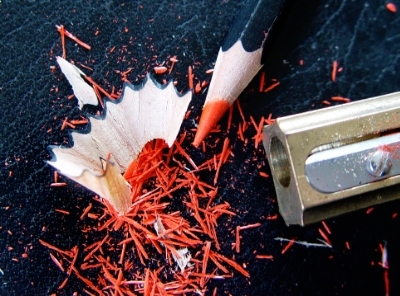
Image is Sharpened Pencil © Uschi Hering | Dreamstime Stock Photos

Pausing is not the same as stopping

stopsign

Sometimes it is incredibly, excruciatingly hard for me to step away from something, when stepping away is exactly what I need to do.

Step away from that phone call that is not going anywhere and sucking up a lot of time.

Step away from my novel when I keep forcing it even though I’m beyond frustrated and realize I have gotten so far away from the heart of the story that I have no investment in what I’m writing.

Step away from the problem I’m desperately trying to solve (when it’s becoming more and more obvious that the mind that created the problem is not the one that can solve it).

Step away from the internet. Because, it’s the internet. And I need sizeable breaks from it if I’m going to remain sane.

I think one of the reasons it’s hard for me to step away is because of the idea that I am supposed to tackle things. Take control of them, wrestle them to the ground, and force them to cry uncle. This is the way I was taught to solve problems when I was very small, and, even though I’ve never been very good at it,  it’s deeply engrained in me.

Only, sometimes — often — it just isn’t effective. There’s a point where I’m trying so hard to control the outcome of something that I am way too emotional to be effective. It’s at this point that pressing the pause button can be so essential.

But there’s another reason it’s hard for me to step away. It’s because of trust, or the lack of it. Allowing myself to step away means I am trusting that I will get back to whatever it is I’m struggling with — whether it’s a phone conversation or a tough scene in my novel.

And this kind of trust takes some practice to cultivate. I’ve been working with this for years and yet I can still go way too far out of fear.

We can never solve an internal problem by changing an external circumstance. If something within me feels out of control, no amount of controlling the external world will change that. This is the recipe for compulsion and, eventually, addiction. I’ve got to get back into balance within myself before I meet the world again.

This is why I suggest to my coaching clients that they not make huge decisions when they’re feeling intense emotions. We don’t know what the truth is for us until we come back to center. Our emotions are messengers, but they’re often not the message. (Extreme anger at your boss may just be saying, hey, let’s take a look at what’s happening here, not hey, let’s quit!)

So we’ve got to make it okay for ourselves to step away when we’re getting into a place that feels out of balance — no matter how important we’re making what we’re doing. Stepping away for now does not mean stopping altogether — in fact, it can mean letting another part of us — our subconscious — take the wheel for a while.

So, how do we do this?

1) If you’re struggling with something you’re creating (a painting, a novel, a website) and you’re ready to take a knife to the canvas or put your fist through the computer screen, know you’ve reached that point where you need a little less perspiration and a little more inspiration.

I know, I know, there’s that awful saying about how creating is one percent inspiration and 99% perspiration. Please. I don’t believe we need to feel inspired all the time to create — inspiration often comes in the course of creating, and some days it doesn’t come at all — but if, in the long haul, you’re only feeling one-percent inspired, you need more inspiration. If the whole thing feels like a struggle every step of the way, you’re forgetting how important it is to fill your creative well.

2) If you’re having a really hard time in several areas of your life (if you’re in what we Martha Beck life coaches refer to as “Square One”, where you’re going through a massive identity shift and you don’t know what the hell is happening), realize you may need to move much more slowly.

You may need to take more time-outs. You need to practice really good self-care during these times. If you’re in Square One, the question is never “how can I get out of Square One?” but “how can I make it okay to go slow?” (I love Kristin Neff’s guided meditations on self-compassion for these times, and all times, really.)

3) Know the point at which you are getting in your own way. See if you can step outside of your emotional self and be the observer. What do you look like when you’re in need of pressing the pause button? What happens with your body, your behavior?

A few years ago, I was walking home in a seriously foul mood, and a car rolled through the stop instead of letting me cross the street. I actually reached out and hit the back of the car as I walked behind it. Feeling the sting of the hot metal on my fingers (it was like a 100-degree day, which was part of why I was ready to maim), I knew I’d crossed one of my personal boundaries into nutso territory, territory I did not want to stay in. It was time for me to stop wrestling and take a time out. Know these places in yourself, and find ways to clue yourself in to when you’re getting into this territory. Hopefully you will not have to slap a defenseless Honda Civic to know you’ve entered “that zone.”

4) Above all, cultivate trust in yourself. Take baby steps. If you’d normally force yourself through something to the point of frustration, try stepping back even five minutes before you usually would.

One of my clients recently made the decision, for a number of reasons, to take a month off from her artwork. (Namely, because it was feeling too much like art-WORK. She said she didn’t want to return to it until it felt like art-PLAY. I love this!) She was afraid a month was too long, but she felt like she needed it. The need for the break felt like it was coming from her intuition, not from a place of fear. It felt deeply right.

A week into the month off, she emailed me. As of today, she said, I am back to my art-PLAY. It turned out she didn’t need an entire month off after all. Something in her was more than willing to return to creating when it was ready. Now that’s self-trust.

For an article on a similar theme, check out Practicing Reverent Curiosity.

Image is “Reflected Stop Sign” © Vladimir Zanadvorov | Dreamstime Stock Photos

What triggers your resistance?

brick wall

One of the benefits of being a rabid journaler is that I have ample evidence of my patterns and habits and defaults. All that stuff I “tend to do” when I’m scared, overwhelmed, panicked, what have you. It’s there in ink on actual, physical pages. Hard evidence.

A client who also journals told me recently that he picked up a notebook from ten years ago and was depressed to see that he was struggling with exactly the same stuff as he is today. He thought it meant that he hadn’t changed at all, had been stagnating for ten whole years.

Which is so not the case.

Of course you were struggling with the same stuff back then, I said. Those are your core issues.

We all have core issues, those deep, resonant conflicts within us that we’re on this earth to be with, work with, and, over time, learn from. These issues are our teachers. It’s not about overcoming them or even letting go of them. The work is to become more and more intimate with our core issues as we cycle through them again and again in our lives. We peel our layers like an onion, each time getting closer and closer to our center.

I still struggle with much of the same stuff I did at twenty — it just doesn’t throw me as much, because I understand it better. I know how to work with it, play with it, in ways I didn’t then. In fact, some of the areas where I’m strongest now are the areas I had most difficulty with at twenty, even if those areas still cause me trouble.

For me, this is the work of my life. This is my real work, above, beyond, and beneath any other “work” I do in the world.

It’s these core issues, though, that trigger our resistance. Of course they do. They’re painful. Nobody wants to delve into pain. When I feel like I’m spinning my wheels and I just don’t see a way out, I can be pretty sure that some core issue has risen to the forefront and I’m in resistance to it.

What’s tricky is that we can often be blind to our core issues when they’re “up” for us. This is why I keep lists of my “resistance triggers” in my journals.

When I’m feeling stuck, I go to one of my lists. Resistance triggers basically boil down to painful thoughts that reflect our core issues. Here are some sample triggers from one of my lists:

You have to write something special, original and amazing or there’s no point. People have to be totally wowed by your writing or why are you doing it?

If you take too much time to yourself, people you love won’t understand and they’ll leave you. You have to be available to others when they need you or you’ll end up alone.

Even when you work really hard, it isn’t enough — what’s the point?

It doesn’t matter if you’re tired. Just keep going.

These are some of the biggies for me. You get the idea. The reason I write this stuff down is because I often don’t recognize that these issues are “up” for me. All I know is I’m feeling sad, empty, or pissed off and like I can’t move forward. Often, when I consult one of my lists I immediately see the thought causing the resistance jump off the page at me. Ahhh. Now I have something to work with.

So let me show you how this resistance thing plays out: If I’m in the grip of a thought like, “If you take too much time to yourself, people you love won’t understand and they’ll leave you,” but I don’t know it, I’m often over-responding to others, overscheduling myself, saying yes more than feels good to me.

Pretty soon I’m fed up, angry, withdrawing from and resisting interaction — even interaction that could be helpful and nourishing to me (such as taking time to truly connect with myself or with a friend who deeply wants to hear me).

If I’m in the grip of a belief like, “You have to write something special, original and amazing or there’s no point,” I become extra-hard on my writing. I become unwilling to experiment. I belabor every sentence. Everything feels squeezed and distorted, like I’m trying to fit my words through a teeny, tiny keyhole and hope they can make it through to the other side as magical, life-altering prose.

Pretty soon I don’t want to sit down at my desk at all. Writing has become painful, not life-enhancing. And certainly not fun. So now I’m resisting writing at all; I’ve become disconnected from why I ever wanted to do it in the first place.

Writing these triggers down as we become aware of them is a huge act of self-care. It’s about knowing ourselves. Seeing your thoughts on paper is a good way to cut them down to size — sometimes, thoughts that feel horrifying when they’re stuck in our heads can look absolutely ridiculous when you see them written down.

Just the act of noticing that I’m being triggered by one of these thoughts can create a huge shift for me. I’m no longer merged with the thought — I’m now outside of it, observing it, so it’s over there where I can question it, and not a driving force within me. The next step is to question these thoughts, look for evidence of where they are not true. (The Work of Byron Katie is an excellent way to question your painful thoughts.)

What triggers resistance for you? How do you know you’re “in it”? Let me know in the comments!

Image is “Stone and Brick Wall” © Peter Szucs | Dreamstime Stock Photos

What one thing can you let go of?

lizards1

I’ve noticed a pattern with myself and some of my clients. We want to add new things to our lives and we’re excited about that. But our current lives are so full that there literally isn’t any space for that newness. We try to stuff the newness into the cracks in our current lives, but our lives start to feel like they’re bursting at the seams. Ouch. The newness can’t truly take root and grow because there’s no rich soil for it to anchor itself to.

We need to actually make space in our lives for the newness. We need to create room where the future can enter. If we keep ourselves constantly busy and scheduled every day, if we choose not to notice our need to let go of something which no longer feels good or serves us, we spin our wheels.

I know, this sounds mildly upsetting and maybe even scary. Change can suck, even when you desperately want it.

But you can open up this space in your life, this space in which to allow for the new, bit by bit. You don’t have to do a massive overhaul of your entire life.

One of my clients who felt ready for change but completely burdened by her schedule had been taking a weekly Pilates class for more than two years. It wasn’t feeling great to her anymore, but how could she let go of it? It was Pilates, and therefore, good for her! Right?

After some poking around on the issue, we realized that the energy of the group in the class had shifted significantly and it didn’t resonate for her anymore. What had once felt like a supportive habit no longer did. She quit the class, and just that one open evening a week began to pave the way for change. She found herself using the open time to sit quietly and within a couple of weeks she started cleaning out a closet and packing up some very old stuff to donate to charity.

Sometimes the “one thing” might just be a one-time letting go, too. A friend of mine who never, ever takes a day off work recently decided she would take just one day off. She’d been convinced that things would “go to hell in a handbasket” (I love that phrase! — what does it mean?) at her office if whe wasn’t there.

As it turned out, everything went smoothly in her absence and it occurred to her that she could loosen her grip on things around there a little, delegate more, and maybe take a day off here and there in the future. (If you have perfectionistic tendencies, you are likely addicted to “showing up”. See what happens when you don’t. Just once.)

So, I know you’re thinking, what if the one thing you choose to let go of is on a grander scale, like a job, a relationship, a project near and dear to your heart? I know. That is so, so hard. But, while there’s no denying letting go can feel utterly crappy, the way we think about letting go can make it either harder or easier.

Letting go happens in layers. You don’t have to do it all at once. Even the big things we let go of are full of tiny things you can let go of one at a time.

Years ago, I left a job I’d been at for a long time, and it was hard. I knew in my heart that letting go was the thing I needed to do, but the thought of it was so overwhelming. The change! The massive change! For several months, I spun around in this cycle: I want to leave. But it’s so hard. It’s so overwhelming. I can’t do it! I won’t. But I want to leave. But it’s so hard. I can’t do it!

Then one day it occurred to me that I could make the decision to leave without having to act on it. I know, it sounds counterintuitive, right? But that’s what I did. Making the decision to leave was my “one thing.” And as soon as the decision was made, my entire body felt lighter. I didn’t actually give my notice at the job until almost a month after I’d made the decision to do it. Giving notice was another “one thing” in a series of “one things” that needed to happen for me to exit the job.

Note that my making the decision to leave — even before I’d actually given my notice at work, before I’d actually physically left the job — created space for newness to enter. Because I was no longer spinning my wheels — do I or don’t I? — my energy was freed up to magnetize itself to my not-yet-created future. And because I could see a finite end to the work situation, it became far more bearable for the remaining time I was there.

As I write this, I remember, too, that another “one thing” that helped me make the decision to leave was that I had decided to sit on the blue chair in my apartment instead of the couch where I usually sat. Yep, that was it. I looked at the chair and thought, I’m sitting here while I write in my journal today. Not there. And from that journaling space on the blue chair came my decision to leave my job.

Do not underestimate the power of letting go of one thing. Even if it’s only for today.

For a variation on this theme, check out my previous article, “The power of tiny new things.”

Work With Me: Are you in transition and feeling stuck or scared about moving forward? I have two openings for new coaching clients. Read more here to see if we might be a good fit.

Image is “Lizard 1” © Alexey Lisovoy | Dreamstime Stock Photos