Ways to shift your energy when you’re stuck or overwhelmed

frozen berries

That feeling that you’re up against a wall and there’s nowhere to go: it’s the worst. It’s enough to keep you up nights, and then you’re sleep deprived, which makes everything look about a hundred times bleaker than it is.

Feelings of overwhelm and “stuckness” do not come from our circumstances; they come from our thoughts. That’s not to say that our circumstances do not trigger feelings of overwhelm and stuckness — they definitely can. The holidays, for example, trigger overwhelm for many of us. That’s because they add that much more to our to-do list.

But it’s the thoughts we’re having about everything on the to-do list that create the feeling of overwhelm, not the to-do list itself.

Now, you can try crossing things off the to-do list to lessen the overwhelm. And it can work, sometimes very well.

But I suggest doing something else first: shifting your energy.

The quality of the energy we bring to our circumstances interacts with those circumstances and transforms them. Sometimes, we try to change circumstances, only to end up in the same energetic space: stagnant, heavy.

So before we go about manipulating our circumstances by crossing things off the to-do list or diving in headfirst to “get it all done,” let’s look at ways to shift our energy.

1) Trim tabs!

Martha Beck wrote this article for O Magazine where she talked about how Buckminster Fuller invented something called the trim tab for large ships. The trim tab is this teeny-tiny rudder placed on the ship’s large rudder that allows the ship to turn with a very slight amount of pressure.

I like to remind myself of trim tabs when everything feels like too much. I don’t have to move the earth in order to create change; I only need to make one tiny change that creates new direction.

Every time I remember trim tabs, I realize that there is NO WAY I can make all the changes I think I need to make right now. And I don’t need to. I just need to focus on one small change that tilts my course in the right direction. And go from there. (As a bonus, thinking TRIM TABS! reminds me that it’s not all up to me. When I make one small choice, other forces are set into motion, and I’m not in control of all of them. This is good news! )

2) Think marathon, not sprint.

Back when I was in life coach training, Pam Slim was teaching us a class on marketing our businesses, and she said, “It’s a lot more helpful to think of marketing as a marathon, not a sprint.”

This knocked me upside the head. At the time, it was quite the revelation for me. I’d always been a sprinter. If I had an idea, I wanted to make it happen, fast. My sprinting ways made me extremely impatient, particularly in my twenties, when I gave up routinely when something I wanted to happen seemed to be “taking too long.”

The fact is, large-scale changes take time. Even small changes often do not occur within a day or a week. Humans are resistant to change (it’s part of our built-in survival mechanism), and change very often takes longer than we predict. (I usually find that if I want it to happen in six months, it will actually happen in a year. But it will happen.)

Remembering “marathon, not sprint” — taking the long view — reminds us that progress is not always immediately apparent, and allows us to take the pressure off.

I bet if I challenged you to write down all the progress you’ve made in your life in the past five years, you could easily fill an entire page without having to think too hard. But you probably wouldn’t have been able to recognize all of it while it was “progress in process.”

3) Move your body.

This is one of the simplest ways to shift energy — the trick is, you can’t let your mind talk you out of doing it! Taking a ten-minute walk and focusing on your stride, your breath visible in the cold air, the dog in the sweater who just trotted by, is an amazing way to get out of your mind and press the reset button. But your mind will tell you it won’t make a difference, there’s no time, yadda yadda. Don’t listen to it!

4) Water.

Taking a shower is one of my favorite ways to shift my energy. Even washing my hands can do it. And doing dishes! Yes, I actually enjoy doing dishes because it allows me to be in proximity to water. Standing near a body of water, or sitting near an aquarium, can do it, too. Or just drinking a glass of water. Again, give it a chance — don’t let your mind talk you out of it! It works.

5) Write it down.

There’s power to seeing something in words, on paper. (The act of moving your hand across paper also ties into point #3 — it moves your body. It’s a much more physical act than typing.) When you can get whatever’s keeping you up at night out of your head and allow it to be held by the paper, you’re reminded that it is not bigger than you are.

Another way to approach this is to do what Natalie Goldberg calls “writing practice.” Just write what you see, what’s in front of you right now. “My Christmas-tree-scented candle is flickering; my cat is staring out the window even though it’s dark outside; there’s a Jackie Chan marathon on TV and I have the sound down; I can hear the downstairs neighbor coughing.”

Just keep your hand moving and keep on writing whatever engages your five senses. This creates an anchor for your mind, putting you solidly in the present moment, the only place where you actually DO have any power.

Once you’ve shifted your energy — even if just a bit — you can take a look at that to-do list.

What are some ways you’ve noticed that help you shift your energy when you’re overwhelmed or in a stagnant place? I’d love to learn more.

Work With Me: I’ll have some openings for new one-on-one clients starting in mid January, 2014. Interested in working together? Find out more, here.

Image is Frozen Berries © Rod Chronister | Dreamstime Stock Photos
When you’re not taking action (even though you want to)

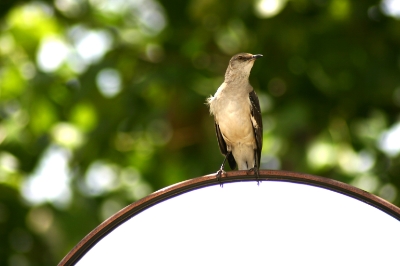
birdonmirror2

Sometimes we’re in a space where there’s something we want to do, but we’re not taking any action toward actually doing it. This space is frustrating and icky. We can spin our wheels here for quite a while.

What I find especially stressful (and confusing) is when I do take a step toward whatever it is I want to do, but I don’t seem to build any momentum. Something feels off. I’m not getting caught up in whatever that thing is; there’s no passion, no fire.

What’s going on when we’re in this space? It’s tempting to try to bulldoze our way through and “just do it!” And there are times when that works.

But sometimes it doesn’t work — and, when we plow forward with sheer force, there’s a nasty lingering side effect: We don’t understand ourselves any better. We may get that thing done, but what happens the next time we’re in the “spinning our wheels” place? We force ourselves to plow through again?

I much prefer asking questions at times like these. More than anything, I want to understand myself better so I can have a better relationship with myself. If that relationship is vital to you, too, here are some questions to ask yourself when you’re spinning your wheels:

Do I truly want to do this thing, or do I believe I “should” want to do this thing?

The presence of a “should” is not necessarily an indication that you don’t want to do it; it often means that you have conflicting voices within you around taking this action. If you can untangle the “should” from the rest of it, you’ll have a much clearer sense of what you really want.

Is this something I used to want, but perhaps no longer do?

Does the person you are today actually want to do this, or is this something you wanted to do five years ago? Are you hanging on to an old dream? (“I can’t go back to yesterday because I was a different person then.” – Alice in Wonderland)

* Is there a deadline issue?

Some of us work better and more effectively with deadlines; some of us get panicky and overwhelmed when we have a deadline situation. And sometimes, the deadline is simply too close or too far away to work for us.

If there’s a deadline by which you’re supposed to do this thing, is it possible to push it back, or push it up? Would doing either of those things make a difference in how you felt about taking action on it? (Sometimes we’ve set our own deadlines. Most of my clients have a perfectionistic streak and expect themselves to complete things way sooner than is reasonable, or necessary.)

Am I making the task too big?

One of my clients had decided to apply to a graduate program, but she wasn’t taking any action toward it. The deadline loomed and the weeks were going by and nothing was happening.

We noticed that every day she had been writing on her to-do list “Grad school application.” But when we broke it down, we found that there were at least twenty individual steps involved in completing the entire application process, and some of those steps could be broken down into even smaller steps. Of course she wasn’t taking action on it when “grad school application” was not an actionable step.

We often don’t want to break things down into small steps because we’re in a hurry. We think we don’t have time to take small steps. Then we proceed to do nothing at all because the giant leap we think we have to take overwhelms us. In the long run, we move more quickly and steadily when we take small steps over time. Think turtle and hare.

Am I in somebody else’s business?

Byron Katie talks about the three kinds of business: My business, your business, and God’s business. Much of the time when I’m feeling stressed, confused, or unfocused, if I remember to ask myself who’s business I’m in, I discover the issue. When I’m in somebody else’s business, as Katie says, there’s no one here taking care of my own.

How does this keep me from moving forward? If I’m worried about what someone else thinks of me, or trying to control someone else’s reaction to my choices in some way, I keep on spinning my wheels. I may not allow myself to do what I truly want to do. It’s human to care about what others think; but if we’re paralyzed because of it, we’re way out of our own business and into somebody else’s.

* Is my creative well empty?

I often mention the creative well on this blog. Julia Cameron likens the creative well to a “trout pond” that, ideally, is fully stocked with fish, except, as artists, we stock our ponds with images that inspire. We stock our ponds with the wordlessness that comes from simply being.

When the pond is empty, we need to restock it. And this means we need to practice great self-care and recognize that there are ebbs and flows to our energy and our creativity. Sometimes, when I’m not taking action, it’s simply because I need to be in a place of inaction for a while.

Any of these questions is a good starting point if you find you’re not taking action on something you want to do. If one question doesn’t seem to apply to you, try the next. And come up with your own, too — write them in a notebook where you can refer to them the next time you’re up against the stuckity-stuck.

How do you deal with it when you want to move forward but can’t seem to take action? I’d love to hear from you!

Image is “Bird on a Mirror” © Shane Link | Dreamstime Stock Photos

Don’t forget to check inside

girlwalking

As part of my practice of observing my thoughts and feelings and the patterns they create, I’ve noticed an interesting thing lately: I feel more upbeat, hopeful, and just plain happier, in the early part of the day.

Part of this is just my own personal rhythm — my most energetic time of day tends to be between about 9 a.m. and 3 p.m. But it’s something else, too.

I start off almost every day with a walk (only in the most extreme weather do I forgo my daily walk). Depending on what I have to do that day, the walk (which I combine with getting my morning coffee) is anywhere from fifteen to forty-five minutes long.

My walk is all about noticing — the morning sounds of traffic and squirrels and birds, the feel of the sidewalk beneath my sandals, the super-slow beetle who somehow avoids being crushed by pedestrians as he makes his journey from one side of a cement square to the other. I also notice what’s going on within me — am I sad, joyful, serene? Are my thoughts fixated on that interaction I had yesterday that felt kind of icky? Am I grinding my teeth again? Did I get great sleep, or not quite enough?

When I return from my walk, I do a few minutes of journaling (or morning pages, as Julia Cameron calls them) and record anything I noticed on the walk, anything really taking my interest and “up” for me.

Then, I’m ready to start my day, and most of the time, not always, but frequently, I feel really good.

At 7 p.m., not so much. That 6 p.m.  to bedtime window tends to be the toughest time of day for me. Why?

It’s taken me a while to get this, but I understand now.

Evening time is iPad time for me. I “reward” myself for doing my priority stuff during the day by sporadically checking my iPad throughout the evening. Some of this is fun and feels good; much of it involves checking Facebook, Twitter, and various blog articles; getting caught up in trails of links from one blog to the next; absorbing lots of “expert advice” that may or may not apply to me; listening to recordings from classes and coaches and writers and others I’ve been meaning to get to.

All of this is good, to a point. Information can be profoundly helpful at the right times. And I think we all understand the dangers of information overload and the overwhelm it can wreak.

But the problem is not the information itself.

The problem is forgetting to check inside ourselves to gauge whether or not this information a) is worth our time, b) actually supports our own values, and c) actually applies to us at all.

The crappy mood I tend to get into in the evenings — so much to the extreme of my “morning self” — has much to do with the fact that, in the mornings, I make a conscious choice to connect with myself, to check inside. My morning walk, the steady repetitive rhythm of my steps, creates a great space in which to observe myself, while also connecting me to my surroundings, and particularly, the natural world.

In the evenings, I’m letting go of that conscious choice to check inside myself, and as a result, I turn into a kind of ping-pong ball bounced around by the information I absorb online. I find myself getting agitated, confused — this “expert” says to do this, and this one over here says the opposite; this friend on Facebook is annoyed that people are posting X, while this other friend wishes people would post more of X; this writer seems to know a lot about X and has tons of followers but in fact I feel depressed every time I read one of her posts.

It’s a lot to take in — and a lot of it doesn’t matter.

In the morning, I reconnect with me. I remember to check inside. I realize what I really value and what I don’t. I’m able to make a distinction between what information is helpful and what isn’t, and how much information is too much. I remember what’s true for me.

Can I carry that morning connection I establish with myself into the evening? Can I unsubscribe from lists that don’t add to my life, even if some panicky part of me believes this information is “practical” and I “just might need it someday”? (No matter how “practical” information is, if it doesn’t feel good and right to me, it’s not practical for me.)

Tonight, I’m going to begin an evening ritual of reconnecting to myself. This doesn’t mean I won’t pick up my iPad — I have a lot of fun there. It just means my evening intention will be to notice how I’m feeling when I absorb information, and to recognize I can choose to reconnect with myself at any moment. Information can be helpful, even crucial, but only when I’ve established a solid connection with my own inner compass first.

(And by the way, some of what I connect with online definitely helps me reconnect to myself — and certainly helps me connect to others. I love many of the ways I connect online. The important thing is to notice, to check in.)

What about you? How do you remember to check in with yourself in a world where it’s increasingly easy to look outside ourselves for advice, for “the truth”? I’d love to hear, in the comments.

Image is “A Walk in the Park” © Janet Best | Dreamstime Stock Photos

Two ways to deal with “idea paralysis”

sepiabulb2

A while ago, I had a session with someone who had so many ideas, she felt paralyzed as to which to choose and where to begin. Every time she took a little action on an idea, another one of her ideas started to haunt her and she was sure that one was better. So she’d stop working on the current thing and start this other thing. And then the other thing wouldn’t feel quite right, and some shiny new idea would start hovering and she’d drop the current thing and start in on the shiny new thing. And so on.

I so relate to this. It doesn’t happen to me that frequently, but when it does, it is crazymaking. What’s going on when we’re knee-deep in a sea of ideas and we just can’t choose, or stick with one long enough to bring it to completion?

For me, there are one of a couple of things happening:

1) Perfectionism has reared its oh-so-troublesome head.

We’re wanting the idea to be the be-all and end-all of ideas, rather than a stepping stone to what the idea can become. There’s no way an idea won’t transform as we work on it, so most of the time, it’s not going to stay the same as the seedling in our heads. But if we have perfectionistic tendencies, we want to know it’s going to be great, it’s going to knock everybody’s socks off. We can’t know that at the beginning of the process. We can’t know that at the end of the process.

Our own interest in the idea has to be enough. The only thing we have an absolute guarantee of is that we will check in with ourselves about how we are responding to our idea, from day to day. And I can guarantee you that our relationship to it will change from day to day, week to week.

Perfectionists often feel “it’s not quite right, so I’m not ready to begin.” My question to perfectionists (and that includes myself!) is: Is there enough here for me to work with? Is there enough here to sustain my interest, for now?

When I was in college, I had a screenwriting teacher I remember really well because he talked a lot about things that I sensed were true, but didn’t yet have the life experience to know were true. He looked at twenty or so pages of the screenplay I was writing and said, “You don’t have to telegraph your themes to the audience. The themes that are important to you as a writer are going to be there because they’re important to you. They can’t not be there. So stop telegraphing your themes and just tell the story.”

This felt like a huge relief. And I think this applies to those of us who struggle over choosing the “perfect” idea. No matter which idea we pick, the common theme behind it is going to be US. Just because you decide to tell the story about the guy who goes fishing with his estranged father instead of the story about the woman who learns her teenage son is in trouble with the law doesn’t mean your usual themes of loss, loneliness, heartache and redemption are not going to be there. They’ll be there because you will be there.

So relax. You, and the things that are important to you, will be there, in spades, no matter what path you choose.

And, on the flipside:

2) You may be knee-deep in ideas because you are only knee-deep. And what you really need is to be completely submerged in one idea, so your heart is engaged. In other words, there may be a bunch of ideas swirling around your ankles but they’re not really involving the whole of you, so it’s easy to jump off of one and onto another.

I’m reminded of someone I know who, many years ago, was caught up in romantic involvements with two different guys. Time went on and on, and she just couldn’t decide between the two. Finally, she ended both relationships, realizing that neither of these guys was a “hell, yes!” for her and that was why she couldn’t decide. The question wasn’t actually “which of these men is the better choice?” but “who am I and what do I really care about?”

If you’re flitting from one idea to the next, stop. Take some time out and ask yourself, what do I really want? Why am I doing this (writing, artwork, coaching, whatever it may be)? How can you engage the whole of you — starting with your heart, which tells you what you care about the most — in your creative process? And go from there.

Looking at it this way, you’re not choosing the idea so much as letting it choose you. And when something chooses us, there’s no contest.

(On this topic, I highly recommend Miranda July’s wonderful memoir, “It Chooses You.”)

Do you struggle with “idea paralysis”? How do you decide which idea to choose? Or do you let it choose you? I’d love to hear, in the comments.

Work With Me: I have a couple of openings for new coaching clients, starting in July. Interested? See if we might be a good fit, here.

Image is “Sepia Bulb” © Graham Stewart | Dreamstime Stock Photos

Overwhelmed? Step back, then scale back.

bench&sky

So I spent the last three days trying to write a blog post. Now, I happen to truly enjoy writing blog posts. I look forward to writing them. They are fun and exciting for me, because I’m always discovering something about myself while I write them. Discovery! So much a “why” for me when it comes to writing.

And usually I can sit down and write a rough draft of a post in about an hour or so. The process doesn’t always work that way. But often, it does.

This week, however, it didn’t. I arrived at the computer determined to work on a blog post and I couldn’t manage to crank out more than a paragraph or two. And then I got frustrated. And then I got angry. And this happened three days in a row.

I said to my boyfriend,  “Maybe I’ve said all I want to say in my blog posts already. Maybe that’s it.”

“No way,” he said. “I don’t believe that.”

And I didn’t believe it either. But something was off, very off, and it made me panicky.

And I’ve been here before — maybe not recently in relation to blog posts, but in relation to other things. Like my novels. Like my relationships. Like cleaning the house, or taking that trip I’d planned. That place where I think that something is supposed to be happening and it shouldn’t be so hard, but it’s terribly, terribly hard. It’s a feeling of spinning my wheels in mud and just getting further entrenched. A feeling of doing and doing and nothing actually getting done.

I call it “the spin cycle.”

I found myself staring out the window instead of looking at the computer screen as I tried to write the blog post, and I realized my body, in its infinite wisdom, was pointing me to the fact that it was not time to write, it was time to be. Regardless of how “behind schedule” I was.

So, I went to the sofa and I lay down, staring at the ceiling for a while. And I began to relax. And I began to get it.

This time around in the spin cycle, here’s what I’ve learned:

1) When I feel this way, more often than not there is some type of resistance going on. Resistance to what is: a sure route to insanity. What have I been resisting this week? What’s the reality of this week?

Well, my parents came to visit one week ago and left today. And I had a freelance project I was working on in addition to my usual daily routine.

But I didn’t factor any of this in and kept right on with my “usual” schedule. I didn’t factor in the fact that I’m an introvert and I need alone time to recharge and I wasn’t getting much of it this week. I didn’t factor in the extra hours and toll on my energy the freelance project took.

The reality of my personal energy: I am a finite being with limited energy, much as I fantasize about being able to “do it all,” seamlessly.

The reality of time: There are 24 hours in a day.

2) When something that is usually enjoyable and do-able feels really hard, it is not a sign to step it up and push it harder. It is a sign to step back and ease up and ask what is going on.

But my mind will tell me I need to keep pushing and that easing up is a sign of weakness and a lack of discipline and commitment. This is what my mind does, and how it thwarts my need for self-care. But it is a lie.

How do I know it’s a lie? Because of the way it feels. If stepping it up and pushing harder were the truth in this case, it would feel challenging but expansive, like doing it was helping me grow. But that’s not how it felt. It felt like pushing myself to do it was diminishing me. (Interestingly, I kept getting an image of myself writing on a tiny notebook with a tiny flashlight inside of a tiny black tent, my legs bursting out of the flaps like Alice in Wonderland after she drank the potion that turned her into a giant.)

So, after I lay on the couch for half an hour or so, allowing myself to space out (and giving myself full permission NOT to write the blog post), I realized that writing just one paragraph of a blog post would actually feel good. And so what if I am “usually” able to write more than that? Different week, different guidelines. I went to the computer, wrote one paragraph, and then, as it turned out, I wrote the whole darned thing.

Which brings me to the third thing I learned, this time around in the spin cycle:

3) When I keep trying to get something done and it’s just not happening, it may be because I’ve lost my connection with why I’m doing it at all.

“Because it’s time to publish a blog post” was not enough motivation for me to write one when my creative well was empty and I was in spin. When I’m in that space, I’m like a ship without a rudder. Doing for the sake of doing is meaningless if I’m totally out of touch with why I’m doing it. My “why” is what propels me into inspired action.

As it turned out, giving myself what I really needed — a time-out — connected me back to my “why”.  And my “why” led me right back to writing the blog post that had felt so impossible to write only hours earlier.

What are your ways of dealing with “the spin cycle”? I’d love to hear your thoughts in the comments.

Work With Me: Do you need some support in practicing better self-care? I’d love to help. See if we might be a good fit, here.

Image is “Outlook” © Guyerwood | Dreamstime Stock Photos

Making it ridiculously easy

sharpenedpencil3

When I went through life coach training with the wonderful Martha Beck, I learned about what Martha calls “turtle steps.” Turtle steps are teeny-tiny increments that help us reach a goal. The main thing about a turtle step is it has to feel do-able. It has to feel, as Martha puts it, ridiculously easy.

When I coached my very first client, I suggested she break that overwhelming goal down into turtle steps, and she said, “Turtle steps sound great, but I’m forty-five years old. I don’t have time to move that slowly.”

The coaching session came — for a moment — to a screeching halt. She’d triggered one of my own big fears. She’s right! I thought. At the time, I had two unfinished novel drafts and an image of them sitting in the corner of my office flanked by dust bunnies and cat hair popped into my mind. If I use turtle steps with my novels, I’ll be ninety before I finish them!

Luckily, by then I had enough evidence from the experiences of Martha and my fellow coaches to know that turtle steps worked. In fact, the more ridiculously easy they felt, the better they worked.

My client wasn’t ready to try turtle steps — yet. A month later, when she’d done nothing to move her goal forward because she kept approaching it with her familiar “bite off more than I can chew” method, she showed up for a session and said, “I think I’m ready to try out turtle steps.”

That’s the funny thing about the way our minds tend to work: We’d rather hold on to the idea of taking giant leaps forward that only exist in our fantasies than take smaller, less glamorous steps that we actually do complete.

If you have a tenacious inner perfectionist (as I do), know that you are probably going to have a tough time accepting the idea of turtle steps.

When I was an undergraduate in college, literally every semester I signed up for five or six classes, even though by my third semester it became blatantly obvious that I could not take on more than four classes without feeling overwhelmed and scattered. My inner perfectionist (who is best friends with my “social self”) loved the idea that I was tackling a huge course load — and besides, other people took six classes and aced them all, so why couldn’t I?

Almost every semester I ended up withdrawing from a class or two at the last minute because I felt completely overwhelmed. Twice, I withdrew past the deadline and therefore received a grade of a big fat F. Twice. The person who couldn’t stand the thought of getting less than an A+ actually ended up with F’s on her transcripts simply because she voluntarily took on too much.

The idea that we can take small, easy steps is anathema to the perfectionist, whose identity is formed out of the belief that if she can take on more than is necessary and excel at it, she will finally be worthy, and therefore, loved.

But it doesn’t work this way, my sweet little inner perfectionist is slowly discovering. She is loved, deeply, simply for existing and for being who she is. And she does not get more accomplished when she takes on more — she actually accomplishes less that way.

Back to my two unfinished novels: they have long since stopped communing with the dust bunnies in the corner of my office. They’re up and dancing around now, dust-free and shiny. How did this miracle happen? Since September of 2011, I’ve been taking ridiculously easy steps, on a regular basis, to finish my novels. (Read more about how I’ve done that at the end of this post.)

Yes, sometimes that means I write for fifteen minutes a day. Yes, sometimes that means I write one sentence. And no, I do not write every single day. But I’ve completed two novel drafts and I’m 240 pages into a third.

The key is making it ridiculously easy, step by teeny-tiny step. Any step can feel ridiculously easy if it is small enough.

Ridiculously easy isn’t as easy as it could be, though, because we live in a culture that tells us that for something to have value, it has to feel impossibly hard. And so we take on enormous “to-do” steps like “write novel” or “get new job” or “lose twenty pounds.” Seriously! These are actual items I’ve seen on clients’ to-do lists. But they’re not action steps, they’re long-term goals. In fact, I’m loath to call them goals — they’re actually processes, ways of life, daily habits we develop.

So a huge part of all this is allowing ourselves to do what feels ridiculously easy. That might mean a daily goal of “write one paragraph” rather than “write ten pages.” But it’s one paragraph that gets written, rather then ten pages that don’t.

Often our minds won’t allow us to embrace ridiculously easy. It’s a total shift for most of us, right? If it feels easy — or, at the very least, not hard, we don’t trust it. “But life isn’t easy!” we think. And that is certainly true. But we don’t need to add hard to the hard.

This is one of my favorite beliefs to challenge with my clients. When we make the shift from “It has to be hard” to “I can allow it to be easier,” amazing things happen. Believe me. I’ve seen it.

If you need support in allowing your process to feel easier, I’d love to help. See if we might be a good fit, here.

And: One of the biggest reasons I’ve moved forward with my novels is due to my participation in Jenna Avery’s Writer’s Circle. This is where I’ve put my writing turtle steps into action. This group offers me daily support, accountability and community around my writing. The last day to register for the next session of the Writer’s Circle is tomorrow, May 16. Check it out, here!

Image is Sharpened Pencil © Uschi Hering | Dreamstime Stock Photos

Sometimes it’s simpler than we think

sunriseduck

I often write here about how anything we struggle with is usually more complex, and less black-and-white, than we make it. Which is good news. Black-and-white, all-or-nothing thinking is at least part of the issue about 99% of the time we’re stuck in fear.

But for some of us, and particularly for those of us who fall into my just-created category of “so-beautifully-complex-it’s-ridiculous” (and I say this with deep love and respect because I adore people who are ultra-complex), it can be good to remind ourselves that sometimes it’s actually kinda simple.

I’m thinking of that useful acronym, H.A.L.T. It stands for Hungry, Angry, Lonely, Tired. When we’re feeling crappy, it helps to ask if one of these things is going on for us. Hunger is one that sometimes sneaks up on me. If I don’t catch hunger before it becomes full-blown, I get into low-blood-sugar panic. This happened to me last week and I found myself grabbing food I’d never normally buy off the shelves in CVS, then ripping open a package of cookies in the car. I got so hungry I went into survival mode — food, now!

Luckily, this rarely happens because I don’t allow myself to get that hungry. But it was pretty simple: I derailed my afternoon because I convinced myself it was important to run errands before eating lunch. I didn’t need to make it mean anything other than that, even though I caught myself having thoughts about how clearly my life was spinning out of control as I stared through my windshield eating Mint Milanos in the CVS parking lot.

It’s good to notice what we’re making something mean. (In fact, if I were forced to choose my all-time favorite coaching question, it would be “What are you making that mean?”) Feeling crappy doesn’t always mean so awfully much.

Like today, I was sitting in my office about to start working on this blog post, and I started feeling uncomfortable and vulnerable. I often feel uncomfortable and vulnerable before I start writing a blog post. But in this case, I was also cold. (The heat doesn’t reach from the living room into my office very well, so I need to be extra-bundled-up while I’m in here during the winter months.) I put on a warmer sweater and I felt instantly more comfortable and a lot less vulnerable.

My writer friends and I have noted that when we’re tired, we’re a lot more judgmental about our writing. Geesh, when I’m tired, everything looks a little bit bleaker. And the same for when I’m dehydrated.

Sometimes, things truly are complex and need some heavy untangling. But sometimes, it really is as simple as putting on a sweater or drinking a glass of water or getting more sleep. When you’re so-beautifully-complex-it’s-ridiculous, this can be deeply comforting to remember.

Try this: The next time you find yourself grid-locked by analysis paralysis, apply H.A.L.T. (Hungry, Angry, Lonely, Tired) to your situation and see what you comes up for you. The last time I did this, I discovered I was actually lonely, called a close friend, and emerged from the conversation with an entirely new — and workable — perspective on my situation, even though we hadn’t actually discussed what I was worried about.

You can check out my previous article on analysis paralysis, here.

Image is “Sunrise Solitude” © Lyn Adams | Dreamstime.com

Why creating consistently is so important

artistbox

I’ve been thinking back over the past year and remembering the awesome clients I’ve worked with.

If there’s anything that’s repeatedly reared its head this year for my clients, it’s been the issue of making creativity so BIG that it feels scary, 0verwhelming, and like there just isn’t enough time to take it on. Almost everyone I worked with had a belief that went something like this: “I can’t [write, paint, dance, draw — fill in the blank] unless I have more time available to me. So I need to completely overhaul my life in order to focus on my creativity. But completely overhauling my life isn’t possible right now. So I’m hoping that by next year I’ll be able to let go of something so I can focus on my creativity.”

What I’ve found so interesting — because these beliefs can certainly come up for me as well — is that it’s the beliefs themselves that make the idea of creating feel so hard, not creating itself.

When we make it so big we feel like we need a ton of time in which to do it, we ensure that it will never be done, because we know on some level it’s highly unlikely that we’ll ever have huge blocks of empty time available to us on a regular basis. And when we tell ourselves we need more time in which to do it, and we don’t make that time or don’t see that we can have it, we put off our creative work (I prefer to call it creative play). And when we put something off, we create resistance.

The very act of putting it off (when something deep inside us knows it’s vital that we do it) creates stress around the idea of doing it — our minds spin out stories like, “Well, if I’m putting it off, it must be because it’s terribly hard and scary and BIG, and wow, that feels really frightening, which makes me just want to put it off more.”

We don’t often question thoughts like these. But they start to wield a huge amount of power over us, because these thoughts create feelings, and our feelings create our actions (or lack of actions) in the world. Often, our most powerful thought around our creativity is “I’ll do it when I don’t feel so overwhelmed and uncomfortable around it.”

But the reason we are overwhelmed and uncomfortable around it is because we make it so BIG.

Since September of 2011, I’ve been a participant in Jenna Avery’s Just Do the Writing Accountability Circle. (We like to call it simply The Writer’s Circle). I’ve also been co-coaching the Circle with Jenna for about a year now. In the Circle, we focus on writing a little each day, building our writing habit over time, with group support.

What I’ve learned over my time in this group is that:

1) Writing consistently (even if I’m not always crazy about what I’m writing — and believe me, I’m often not) feels a lot better than writing once every couple of months. When I create regularly, I remind myself of what matters to me, of what makes me me. When I put off creating, I can lose sight of why I create. I create because I have an instinctive drive to make meaning, to understand myself, to understand the world. I create because it’s fun (which isn’t to say it’s not challenging! But I love a good challenge.).

When I put it off until I have “more time,” I get confused about why I do it in the first place. I start to think it has something to do with money, with success, with notoriety. When I actually do it, I’m reminded that it has little to do with this things. It’s an act of adventure, a quest for discovery.

2) When we make our creativity really BIG — as opposed to integrating it into our daily lives in small, sustainable ways — it becomes something outside of ourselves, something to grasp for, something we believe will make us complete if we can only get to it. (Julia Cameron calls this turning our creativity into “Art with a capital A.”)

The truth is, creativity is always inside of us. It’s part of us. The “me” that lives my daily life and does mundane things like doing the dishes is not a completely separate entity from the part of me that sits down and writes. In fact, sitting down and writing is, in some ways, not that much different from doing the dishes. The hardest part is starting. Once I begin, I proceed one sentence — one dish — at a time.

When the parts of us that create and the parts of us that do the dishes are friendly with each other, and not strangers, they work together oh so much better, and we show up in the world as more integrated beings.

3) We all — whether we are seasoned writers, or writing our very first poem, whether we are published writers or not, whether we make our living from our writing, or not — struggle with clusters of the same (or similar) issues. It’s incredibly heartening to realize that that issue you’ve struggled with in isolation, sometimes for years, is not just shared by others, but is deeply understood.

If you’d like support in creating a more regular writing habit — whether you’ve been away from writing for years, or you’re just starting out — check out The Writer’s Circle. Our next session begins December 31, and tomorrow, Dec. 28, is the last day to register. New members can save $30 on their first session with the coupon code NEWYEARWRITE. We’d love to have you there!

Image is “Artist Box 2” © Andreea Stefan | Dreamstime.com

Practicing Reverent Curiosity

kittenwindow

“Novel-writing is not so much a profession as a yoga, or ‘way’, an alternative to ordinary life-in-the-world.” — John Gardner

On Thanksgiving Day, I was hit with a bad cold. I spent two days pretending the cold wasn’t actually there and that I could go on functioning as if I were well. By the third day, I had to admit that I really was sick — and this meant I had to let go of my need for that thing I fondly call “momentum.”

I like the feeling of momentum. I like the idea that I am moving forward. The trouble comes in when I start to believe I can truly control exactly how things move.

When I returned to working on my novel after being sick, I felt disconnected from what I really wanted to say, at a loss with the story. My characters seemed like they were doing silly things, just marking time, moving around the rooms of my pages for no purpose.

Yesterday, during a group writing sprint with other members of Jenna Avery’s Just Do the Writing Accountability Circle, I went to the page with the same feeling of stuckness and confusion about my story that I’ve had lately. “This is terrible!” a familiar voice inside me piped up. “You have to get over this! You need to make this story work!” (No pressure, or anything.)

When, as a coach, I work with a client who’s stuck, I often use metaphor to help them see their situation clearly. I asked for a helpful image to come to me, and the image that bubbled up in my mind was my cat, when we have a vet visit scheduled and he’s caught on to the fact that the cat carrier has entered the room. Once he gets under the bed, my mission is impossible: he knows he can hide there from me as long as he wants, because I can’t physically pick up the bed and get him out. And we’ve certainly had incidents where I’ve chased him around the house, and sometimes I end up standing the cat carrier on its end and stuffing him into it while he braces his back legs on its sides and writhes furiously. I hate this. And, of course, so does he.

There was this one time, though, when my cat snuck under the bed and I just didn’t have it in me to figure out a way to get him out and stuff him into the cat carrier. I set the carrier on the floor in the living room and sat down in a chair. I called the vet and told them we probably weren’t going to make it to our appointment.

The vet’s assistant was completely laidback about this. “Come on in if you catch him,” she said, laughing.

I sat quietly in my chair. Really, chasing my cat just didn’t seem worth it. He wasn’t ill; it was just a routine check-up since he’s getting into his senior years.

Within fifteen minutes, my cat emerged from beneath the bed and tentatively walked into the living room. He saw me sitting in the chair, looking quite harmless; he approached the cat carrier and sniffed at it. Then he began to investigate the carrier very thoroughly, with a kind of reverent curiosity. It was like he wanted to fully understand this instrument of his impending doom.

I realized that I was treating my story the way I treat my cat when I just want to get him to the damn vet. I stuff him into a box and endure his plaintive meows, feeling like a world-class jerk. Because I want to fix things. Because I want to make sure I’m doing the right thing. Because I’m driven by a kind of urgency.

Obviously, sometimes my cat needs to go to the vet and we do engage in this routine (though I’ve gotten quieter and better at doing sneak attacks, so neither of us struggle as much these days — usually).

But does this pattern work with my novel, with my characters?

I was stuck and overwhelmed because I was invested in the idea that my story needed to be “fixed,” that it contained a problem that needed to be solved. There are certainly plenty of books and advice out there that can tell me how to “fix my novel problem.” And some of them can be very helpful, at certain points in the process. But I realized yesterday that approaching my story in this top-down way, as if it was something I could fix from the outside by forcing it into a box of my choosing, was disconnecting me from anything the story had to show me, from letting it reveal itself.

When I sat back, relaxed, and made the choice to approach my story with that reverent curiosity my cat is so good at, I discovered a fascinating thing: I got really interested in my story again. I wasn’t trying to make it be, or do, anything; I was just interested in it. That all-important question, “What is it about?” welled up in me, and I realized I knew exactly what it was about. I also realized that this novel does not want to be as long as I’ve been thinking it should be. It just might want to be a novella. It knows what it is; and I’ve been so set on “fixing it” that I’ve lost touch with the thread that connects one scene to the next.

My story started to move again. I wrote beyond the 0ne-hour set time of the group sprint, I was so caught up in it.  Hallelujah! I understand my story better. And why did I get into this writing in the first place, if not to better understand?

Can I approach my life, too, from this space of reverent curiosity? Can I step back, breathe for a moment, and give my life the space and kind attention it needs in order to be what it wants to be?

Work With Me: I love helping writers and artists who are feeling stuck. Check out my one-on-one coaching, here.

Image is “Wonder Cat” © Eden Daniel | Dreamstime.com

Support, Part 2: Reaching Out of the Vortex

In my last post, I talked about how things that look, sound and smell like support may not actually be support. And I mentioned that dark, swirling, sucking vortex I can get into when I need support but I’m not sure how to get the kind I need — or maybe I’m not even sure what kind of support I need to begin with.

So, if we find ourselves in the vortex, how do we get out?

First, remember that being in the vortex is only scary because we believe we shouldn’t be there and we need to get out, now.

As Byron Katie might say, we should be there because we are there. Being there is just another opportunity to look around and learn.

Second, there are two parts to support — self-support and support from others that feels supportive. (Hiro Boga commented, brilliantly, in a recording I listened to on her site recently, that it’s not support if it doesn’t feel supportive!)

So, when you’re swirling in the Vortex of Need, ask the wise part of yourself: What might feel truly supportive right now? And see what bubbles up. (It’s really important to ask your inner wisdom for this information, and not the part of you that is spinning in need and angry or sad or desperate that it’s not getting its needs met. This part of you does not need to be burdened with questions right now.)

Usually, I get a response that is very simple. It might be to call a particular person I trust. It might be to tell any one of my private, virtual support networks that I’m feeling like crap. It might be to do the dishes, watch a movie, take a nap, open a particular book. It’s never about the long-term– it’s always a very small, specific thing I can do in this moment.

Thinking too long-term can make getting the kind of support we need feel completely overwhelming. It’s not possible to know what kind of support we’re going to need next year, or even next week. We can only know what we need in this moment.

So, what if it feels hard to get in touch with our inner wisdom? What if it’s crowded out by the voice of need? What if our inner wisdom suggests calling Suzy, but even though we know we deeply trust Suzy, we’re so far into the vortex that, in this moment, calling Suzy feels unsafe?

This is where the self-support piece comes in. Sometimes, I need to practice self-support before I can reach out for support from others. This is one of those steps that often gets left out. “Reach out, ask for help, have courage,” we’re told. But there’s an intermediate step that gets skipped over, and that’s kindness.

Can I access that space within me that is exquisitely kind, warm, and accepting — toward myself? It’s often easy to generate this type of kindness toward others, but what about turning it inward, toward me? This means having total reverence and respect for whatever it is I’m feeling. Giving it permission to be there, and legitimacy, and validity.

We often skip completely over this step, and then wonder why, when someone else does offer support, it doesn’t “land.” Usually it doesn’t land because there’s still a part of us judging and beating ourselves up for feeling whatever it is in the first place — for needing to begin with.

The beautiful thing is that when I practice this type of kindness toward myself, I am put immediately in touch with my inner wisdom. There’s nothing like kindness to lift me out of the vortex of need. In fact, reminding myself to treat myself with exquisite kindness points out the places where I’ve been harsh, or where others (not meaning to) have triggered my own harshness toward myself. But it’s hard to see the harshness when I’m living by its rules. I need to shift into kindness in order to see it.

So, the quick version of this process:

1) Accept that you are In the Vortex of Need, and it’s totally okay. You should be there because you are there.

2) Ask your inner wisdom, what might feel truly supportive right now? See what bubbles up. Take action on whatever comes.

3) If you can’t access your inner wisdom, or if what bubbles up from your inner wisdom feels too scary, practice kindness toward yourself. Deep, radical, kindness. Notice what shifts in practicing this. If it feels hard or awkward, imagine the kindness you’d feel toward a struggling friend, or your cat or dog — someone you find it really easy to be deeply kind to — and direct that kindness toward yourself.

The quick and dirty version:

Skip to number #3 and keep doing it. From deep, radical kindness, all Vortexes of Need dissolve and transform into Foundations of Support.

I’d love to hear your thoughts on how you reach out for support. What makes it feel easier?

And: Wednesday, Nov. 21, is the last day to sign up for Jenna Avery’s Just Do the Writing Accountability Circle. I’m both a participant and a coach for this group, and I highly recommend checking it out if you’re looking for support in creating a daily writing habit!

Image is YELLOW VORTEX © Carsten Erler | Dreamstime.com