Understanding our Limits: Self-care and Creativity

The foundation of a healthy relationship with our creativity is self-care.

And yet, creators know that the act of creativity is also part of our self-care. So how do we negotiate the needs of our physical and emotional selves, and the needs of our spirits?

When I was in my twenties, I thought that all the good feelings I got from creativity meant I could override and ignore pesky things like getting enough sleep, eating well, and having relationships that felt reciprocal and nurturing. I thought I could be this wildly creative being and forget the fact that I am a physical being with physical needs that are not going to go away just because I ignore them.

This turned into a vicious cycle which went something like this: let me create more because it helps me feel bigger and better and then I’ll have more energy to pour into my relationships and I won’t need as much sleep or to slow down and pay attention to what I’m eating and whether or not I really have enough money to support myself. Okay, now I’m really wired and tired and my relationships aren’t very healthy and I don’t have enough money; but let me create more because it makes me feel good and then I don’t have to think about these other annoying things that are part-and-parcel to living.

This was a form of grandiosity, though it took me a while to understand it. I didn’t want to believe that I had limits, that I was a physical being with a body that got tired and emotions with messages like, “I’m burning out here.”

I did burn out on this way of life at about age twenty-five. I ended up in the hospital, dehydrated, with an unbearably sore throat and an enlarged liver and spleen. (“You don’t actually need your spleen,” the doctor told me. “But it’s nice to have it.”)

It took me a couple of years to transition into a different, slower, deeper way of living. At first I thought this way of life would be boring; I kept trying to go back to my old way of burning the candle at both ends and ignoring my physical and emotional needs. But my body wouldn’t let me.

This was the beginning of transforming my definition of creativity and what it means to be “a creative person.” I still created, regularly, but over time I saw that I did it because I wanted to, because it felt good — I stopped using it as a means to avoid the aspects of life that I had previously considered too “mundane” to deal with.

I also realized that I had a deeply held belief that if I wasn’t actively creating something — something tangible in the form of words on paper or paint on canvas or what have you — I had no value as a person. I was so wrapped up in this “doing” mentality that it took me a while to realize that, for me, “creating” had become completely entangled with proving my own worth as a human being.

What I now know is that creativity is a natural extension of my human experience. Though it’s vital to have a regular habit or routine of creating, it’s also important to recognize that I don’t make creativity “happen.” It’s a natural part of being; a regular habit of creating is simply a way of building a container to give our creativity a form and a shape. (If you want to test me on this, try not creating anything for a day and see how impossible it is.)

That’s why, now, when I work with creators, I’m committed to helping them accept not just the natural ebbs and flows of the creative process, but their own personal, internal and external ebbs and flows. When I work with someone and hear something like “I need to be writing eight hours a day,” I ask, why? Because you really love writing all the time and it brings you joy and purpose, or because you believe it’s giving you worth and value to be constantly doing?

It’s so important to examine what we believe and how it drives our actions. What I know for sure is that if I drive myself too hard — even in the name of creating — I will wear out my body, and it’s this body that, ultimately, carries out my purpose on this earth.

The fascinating paradox of all this is that when I build into my life the care for my body that it truly needs, I accomplish more of what I deeply want to accomplish — not less — and I feel better about what I do.

I’d love to hear your thoughts on this. How do you balance self-care and your creative projects?

If you need a reminder to listen to your body, hang out with animals. When they’re tired, they rest.

Image is LOUNGING CAT © April Turner | Dreamstime.com

Rounding Up the Usual Suspects

A few days ago while logging in my daily progress for Jenna Avery’s Just Do the Writing Accountability Circle, I had one of those light-bulb moments where I got something, not just intellectually but viscerally.

One of the questions we group members respond to daily asks us what negative thoughts we noticed that came up around our writing. Time and time again, I find myself writing some variation of this: “My writing isn’t exciting or important enough. It’s not active enough. There’s not enough drama. No one will find it interesting.”

I’ve examined these thoughts for quite a while now. Are they true? Yes, sometimes my writing lacks drama. Sometimes it could be more active. But all the time? No, these things are not always true. As for “it’s not exciting or important enough” and “no one will find it interesting,” well, that’s all subjective. I’ve certainly gotten enough feedback on my writing by this point in my life to know that quite a few people have found it interesting. And, as any writer knows, the most important thing when it comes to writing is that you, the writer, are fascinated by what you’re writing.

But this particular day as I logged in these thoughts once again, cringing at their familiarity, I got it. BUSTED! I said out loud, practically snorting my iced coffee.

These thoughts about my writing are my particular form of resistance.

Here’s how I know this: There have been days when I’ve known, without a doubt, that what I’ve written has been exciting and dramatic. To me, anyway. My whole body felt engaged as I wrote; I could hardly tear myself away from the page. These days don’t happen all that often. When they do, they’re wonderful, but that doesn’t usually completely quiet my inner critic.

On these days, when I logged in my progress, what negative thoughts had I noticed? “This writing isn’t serious enough; it’s too active; it should be quieter and deeper; it moves too quickly.”

Yep, when my inner critic knew it couldn’t convince me the writing wasn’t exciting or active, it just went ahead and criticized the writing for not being other things.

Here’s what I realized: My inner critic just wants to protect me from putting my writing out there for scrutiny. So it dredges up anything it can find “wrong” about the writing that I just might believe. When it knows I won’t buy into the idea that the writing isn’t exciting or active enough, it criticizes the writing for having these very qualities.

My inner critic wants to convince me that unless I’m sure my writing is all things to all people, I shouldn’t put it out there — it’s not good enough yet, it’s not ready. And it’s a lose-lose proposition, a double bind. It’s like not showing up to the party unless you’re sure you can be every kind of guest. Since you know you can’t be, you don’t show up at all.

So I’ve finally gotten it: “Not exciting and active enough, not important enough” or any variations thereof, are my “usual suspects” when it comes to my writing. They’re my go-to thoughts that exist solely to keep me from having faith in my own stories, from investing them with enough importance to go all the way with them, to truly own them. 

Noticing these thoughts — my usual suspects — allows me to round them up, corral and question them. In fact, I’m getting so used to them I don’t even always have to question them anymore. I just notice them and say, ah, there you are again.

One time when I was in grad school, a well-known writer visited one of my writing classes and was asked her best advice for writers. “Know what kind of writer you are,” she said. She said she loved Dickens, but she was never going to write like him.

And I’m probably never going to write action-packed thrillers that pump you full of adrenaline. It’s not the kind of writer I am. Luckily, I don’t have to be every type of writer. Knowing that — finally getting it at a deep level — frees me up to trust in the writing that is mine and mine alone.

Do you need support in creating a daily writing habit? Tomorrow, Aug. 30, is the last day to sign up for the next session of Jenna Avery’s Just Do the Writing Accountability Circle. I’ve been a member of this group for going on a year, and I’m also Jenna’s co-coach. It’s a tremendously powerful way to become aware of what keeps you from writing, and to get group support while you do it. Check it out here!

Image is ANTIQUE BLACK TYPEWRITER PAINTED WITH LIGHT
© Dariusz Sas | Dreamstime.com

Your True Supporters

Sometimes, when you’re in a place of confusion and feeling really vulnerable about it, someone else steps in and seems to think they know exactly what’s going on for you. And they label what’s happening for you and because you’re not sure what’s up for you, you start to think, maybe they’re right.

Many years ago, when I’d left college and I was in a total “liminal period”, as Martha Beck would call it, I started seeing a psychotherapist who really liked to label my behavior as “healthy” or “unhealthy”. This produced a pretty strong “ick” in the pit of my stomach (a sure sign that her way of working wasn’t right for my essential self), but back then I had a longstanding habit of ignoring my body and its messages.

So for six sessions, I saw this therapist and kept hoping she’d see me. I thought if I just explained myself well enough, she’d “get me.” I remember sitting in her big black pleather chair, telling her that memories from a particular period of my life had been flooding my thoughts, and they felt vivid and compelling. It felt like there was a message for me in those memories, I told her, and I wanted to be open to it.

She stared at me flatly and said, “You’re focusing on the past so you don’t have to move forward. You’re procrastinating.”

I wondered if she was right.  I mean, it sounded right. But it didn’t feel right.

What I know now, years later, is that for me, moving forward often looks like going back — temporarily. Frequently, before I arrive at my next stop, I need to backtrack a little and gather, process, and integrate what happened “back there.” Maybe I’ve frozen certain emotions that need to be brought up, or maybe so much happened in such a short period of time that I haven’t yet caught up with myself.

I’ve written previously about the importance of trusting your own, unique process. If your process looks like mine at all, and you’re feeling like it’s messy and confusing and you’re pretty raw about it right now, don’t let anyone else tell you you’re “not moving forward.” Trust me: You are moving forward. You’re just doing it in your own circular, zig-zag way. It’s all good.

Your true supporters on your journey will honor, support (and even be enchanted by!) your process, your way of working through and coming out on the other side.

That’s why, a year or so after I stopped seeing the aformentioned therapist, I found an amazing therapist who deeply honored my process. And because she honored my process, I learned to honor it myself. And I came to trust myself. Fiercely.

Your true supporters may not “get you” one hundred percent, but they have faith that you know what’s best for you, and they remind you that you are on your own side. They know, as Rainer Maria Rilke said, that “what goes on in your innermost being is worthy of your whole love.”

But the most important thing, of course, is that you know this.


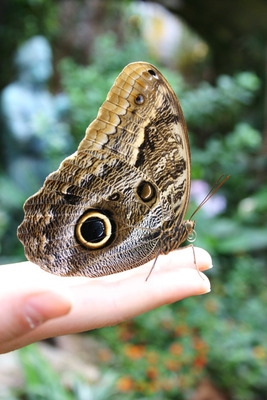
Image is BUTTERFLY © Martina Misar-tummeltshammer | Dreamstime.com

Creativity and the selves within us

Lately with the wonderful creators I’m coaching, I’m noticing a theme of “shoulds.”

“I should be taking more risks with my writing.”

“I shouldn’t be spending so much time lolling around on the beach.”

“I shouldn’t be taking on so many creative projects” or, the flipside, “I should be trying harder to get out there and be more creative.”

First of all, creativity isn’t something you do. It’s something you are.

Our projects are simply a way of tapping the creativity that is always within us, giving it a form. It’s important to remember this, because our minds tend to work in a black-and-white way: “I’m creative when I’m sitting at the computer typing the words of my novel, but I’m not creative when I’m doing the dishes.” (Check out my previous post on defining creativity.)

Actually, you are creative when you are doing both. Creativity is simply the energy of life moving through us, and our particular perspective on that energy at that particular moment. It is always available. 

And, we all have different selves within us. I know I have an adventurous self who loves the idea of living on the edge, taking creative risks, going all out in search of a particular truth (I saw the awesome “Prometheus” last night, and I came out of the theater totally in touch with the adventurous risk-taker part of me).

But I also have many other selves within me. One of my core selves is about twelve years old, vulnerable, self-conscious, unsure of her place in the world and wanting very much to feel safe and cherished. This self is often completely at odds with the risk-taker part of me. And she needs a very particular kind of care.

A quick way for me to get into “shoulds” and create big-time resistance is to ignore the needs of one self or another.

If I ignore the needs of the risk-taker, I find I’m playing it safe (this particularly shows in my writing, when I read what I wrote the day before and realize I’m bored; I just don’t care about what I’m writing because the stakes aren’t high enough).

If I ignore the needs of the vulnerable twelve-year-old who craves safety and boundaries, I wear myself out, I throw myself into situations and relationships without questioning whether or not they are good for this part of me. I find I’m pushing and forcing myself a lot. I can also feel angry, teary, and like I am betraying myself. I may attempt to do something (write about a topic that is tough for me, for example) before I have built the inner resources to go there.

But it’s not an either/or. It’s a both/and. Believe it or not, I can meet the needs of both of these aspects of myself (and the many others as well — though I won’t necessarily be able to meet the needs of all of them at the same time). I can fuel the risk-taking needs of my inner adventurer and also reassure my inner twelve-year-old that I won’t drag her along on these risk-taking expeditions unless she is ready and willing.

This might look like, for example, taking on writing material that feels challenging and scary and risky, but promising myself that I will stop for the day if it starts to feel overwhelming and I’m physically tired or emotionally upset. I can continue the next day, if it continues to feel right for all of me.

And listening to as many aspects of ourselves as we can is beautiful for whatever we’re creating. The more we honor our complexity, the more complex and wondrous our creations will be.

How do you meet the needs of the different selves within you, and what impact does this have on your creativity? I’d love to hear your story.

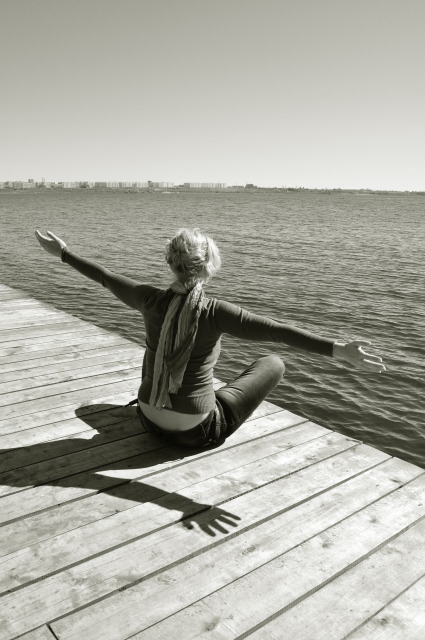
Image is FREE TIME, ENJOYING THE SUN © Svetlana Komolova | Dreamstime.com