A journaling experiment for the New Year

littledeer2

I’m staring out my window taking in the snow-globe-soft snow that’s falling in the street light, thinking about what I’d like to share as this New Year begins.

And what I most want is to help you trigger some discoveries for yourself this year.

I’ve never been much on resolutions, but I do love open-ended intentions, or simply focusing on things that hold mysterious and positive questioning for me.

So here’s a little experiment I tried in my journal yesterday, and I thought I’d share it with you — if it feels good, see if it sparks anything for you as you move into 2014.

Step one:

Look around the room you’re in right now, or out your window if you’re near one. Choose three objects that light you up, that resonate for you in some way. Not necessarily the objects that you “like” the most, or are the most beautiful, but the ones that speak to you or call to you or trigger something in you that feels good.

Step two:

For each object, write down three adjectives that describe the object. (Hint: it helps if the adjectives work on two different levels — i.e., “solid” as opposed to “brown”.) Quick, off the top of your head — don’t think too hard about this! Do this for each object, one right after the other.

Step three:

Look through your list of adjectives — you should have nine words total. Pick the three from this list that resonate for you the most. Again, don’t think too long about this — pick the ones that jump out at you, quick!

Step four:

Take your list of three adjectives and look at it for a few moments. Now you can slow down a bit and get reflective. These words represent qualities that mean something to you, qualities you may want to bring into your life in 2014. 

Take out a fresh piece of paper and write each of these words across the top of the page. Now, draw an arrow from each word down the page and come up with at least one way you’d like to bring each of these qualities into your life this year.

Let your intuitive self take over here — allow yourself to make unexpected connections.

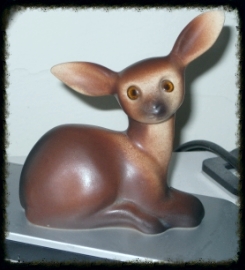
For example, one of my objects was the ceramic deer pictured above. It sits on my desk beneath my computer screen. The words I got from it were wide-eyed, healed (it has a broken ear that I’ve glued back on) and plump.

I like all of those words, but “plump” jumped out at me as the important one, so it went on my final list.

My logical mind thought, plump? Really? But intuitively, I know that plump, for me, represents robustness, stability, exuberance. How can I bring more of this “plumpness” into my life this year?

The first thing that popped into my head was “play around with more physical exercise.” So I wrote that down. (Ah, a clue! Any new form of exercise I try out needs to feel like play. And isn’t it funny how the idea of bringing MORE “plumpness” into my life — not less — led to me to exercise?)

Actually, I love “wide-eyed”, too. I want to face this year with even more curiosity, beginner’s mind, and freshness. How can I bring this wide-eyed quality into my life this year? The first thing that comes to mind is “Slow down and listen even more closely when people share with you.” Yes. That feels right.

If you give this a try, I’d love to hear how it went for you, in the comments.

Wishing you a beautiful start to your 2014! Whether we connected here on my blog or we worked together or we’re only “meeting” now for the first time, I’m truly grateful you’re a part of my experience as the New Year begins.

How kindness helps you create

ducks

So often when I’m feeling unhappy and stuck (whether in my life or in my creative work), I find myself frantically trying to control circumstances.

My thoughts go something like this: “If I could just get rid of [X circumstance] and find [X circumstance], and get [X amount of money], and if [X person] wasn’t so hard to deal with, I could stop feeling so bad.”

Or sometimes it goes like this: “If I could just figure out if what I really want is [X] or [Z], then I could move forward. But I’m so confused; I can’t figure it out. So I’m unhappy and I’ll be unhappy until I figure it out.”

There’s a kind of paralysis that sets in when I believe that circumstances are causing my unhappiness. It’s often a breed of analysis paralysis, closely tied to perfectionism, where I’m sure that if I choose the “wrong” thing, I’ll increase my current unhappiness in spades. So I don’t choose.

It usually takes me a while in this spin cycle before I remember: Ohhh. Waiiittt.

It’s not about circumstances. It’s not about making the “right” decision.

It’s about kindness. The kindness I’m forgetting to give to myself.

I don’t know about you, but when I remember to treat myself with kindness, there’s a palpable shift within myself. I feel it in my abdomen first, then my jaw — my entire body softens. I literally feel the rigidity seeping out of me, almost like it forms a puddle around my feet. And then I feel a surprising thing: hope.

From this place, there is fluidity — there is movement. How can that be? I haven’t changed my external circumstances, and yet, there’s movement?

Yes. Martha Beck, with whom I trained to become a life coach, likes to remind her coaches that our circumstances do not create our feeling states; it’s the opposite. Our feeling states create our circumstances.

When our focus is outside ourselves, on what we’re sure the “right” circumstances will bring us, we are disconnected from what’s inside us. We forget where our power actually lies — in our ability to choose how we relate to ourselves, and how relate to the world around us.

And here’s how this relates to our creativity: As I’ve often written on this blog, creativity, as I define it, is nothing more or less than the life force within us.

That life force needs to move. It needs to flow, and to ebb.

When I try to control circumstances, or second-guess my decisions, or try to make the “perfect” choice, that life force gets frozen in time. I’m teetering on the edge of the belief that the “reward” lies on the other side of “right” or “wrong” — when, in fact, the “reward” is right here, within me, if I can remember to treat myself with kindness.

Some of my clients say at first that they simply don’t know how to treat themselves with kindness — or that it seems self-indulgent, or a waste of time.

But my clients are often the kindest people I know — they are truly skilled at directing kindness outside of themselves, toward others. They just haven’t practiced directing it toward themselves.

And there’s a distinct difference between kindness toward ourselves and self-indulgence: Kindness creates movement that comes from the heart; it radiates outward. It’s intimately linked to “inspired action.” Self-indulgence, like a clenched fist, closes us off from ourselves, from the world. Rather than engaging the heart, self-indulgence feels like avoidance of something we fear. Kindness feels like an openness to what we love, to what inspires us.

Sometimes, when I think about doing something like, say, write a blog post about the importance of remembering to treat ourselves with kindness, there’s a hard, embittered piece of me that says things like, “Kindness? How cliche and cheesy and abstract is that?”

And then I have to laugh, because that’s exactly the voice that makes treating myself with kindness my last resort so much of the time. I often come to kindness — or it comes to me — because I’m at the end of my rope with treating myself harshly.

I come to kindness because I realize I’ve literally exhausted all my options if I’m viewing myself, and life, with harshness. Most importantly, I’ve forgotten to acknowledge that I am suffering. Of course it seems like I need to manipulate circumstances and choose perfectly if I’m coming from a harsh, rigid place. Wherever I go, there I am.

So, if I feel backed into a corner, if I believe I’m trapped and there are no good options — whether in my real life or in my creative work — it may be that I’ve forgotten this oh-so-basic step: Treat myself kindly. Exquisitely kindly. Time and again, I learn that from that space of kindness, unseen options emerge.

(To learn more about the amazing benefits of treating ourselves with kindness, check out Kristin Neff’s work at http://selfcompassion.org.)

Do you remember to treat yourself with kindness? Do you think it’s worth doing? Do you apply it in your creative process? I’d love to hear, in the comments.

Image is “Hand Feeding” © David Coleman | Dreamstime Stock Photos

What gift can you give yourself?

swirlgift

Sometimes I start my day with this question: “What gift can I give myself today?”

On some days, a particular word immediately comes to me. Yesterday it was “stretch.” And I knew I wanted to move my body, so I went for a morning walk, even though we had a sweltering day here.

On another level, I knew stretch meant something else. And I made a phone call I’ve been putting off for a while — the conversation was going to be a stretch for me, but since “stretch” was the gift, I knew it would be okay. And it was.

Sometimes a word doesn’t immediately come to me. So then I let an image bubble up in my mind’s eye.

Once, I saw a heart, with wings. I wasn’t sure what it meant at first, but then some words came to me: courage, Cowardly Lion courage. And flight. On that particular day, flight meant literal flight — I gave myself permission to take a trip I’d been on the fence about, and booked my plane ticket.

And permission is another one. It’s one of the most powerful gifts I can give myself, but I have to be reminded of this often. And, I need to get specific about it. Permission to what? Once, I asked this question and an image of me sleeping bubbled up. I needed permission to rest that day.

Another day I asked, permission to what? And an image of me reading from my novel-in-progress to a large group of people bubbled up. Ahhh. Permission to be seen.

What other gifts have I given myself? The gift of endings, of allowing things to end — even things that have been a success and are still successful. The gift of beginnings, of stepping into what is new, even when I’m unsure of the first step and the second is hazier still.

Some of my favorite gifts are curiosity, wonder, and play. Sometimes the gift is tenacity. Sometimes it’s sovereignty. Sometimes the gift sounds something like “no ground to give.” And I know I want to focus on holding boundaries that day.

The gift can be something concrete and material as well. One time the image that came to me was of an exceptionally gorgeous journal I’d seen in a shop down the street. It had a filigreed gold cover with a turtle on it. The journal was expensive and I knew I didn’t want to spend the money on it right then, but the image of the turtle reminded me of my belief in taking slow, steady steps; that so many of our worthwhile journeys are marathons, not sprints.

One day last week the gift was “soft.” I was feeling extra-hard on myself that morning and my energy felt tight, rigid. I knew I needed to shift into soft energy. And I moved through my day with so much more kindness toward myself, and therefore, toward the world.

That is why I make my focus what I can give to myself. I like to think I’m pretty good at giving to others, but in truth I can’t give what I don’t have.

Want to try it? What gift can you give yourself as you move forward in your day?

Work With Me: I have openings for new coaching clients beginning in September. Need some support in connecting with your gifts? Check out my offerings, here.

Image is “Swirl Gift with Echo Blur” [cropped] © Patricia Ulan | Dreamstime Stock Photos

Embracing the everyday + the Sunshine Award!

childsshoes

Something that often comes up when I work with one of my lovely clients is the creative visionary’s resistance to accepting “the everyday”. Sometimes I call it “the mundane.” One of my clients calls it “real world crap.”

In my twenties, I ignored “real world crap” to the point that I became ill and had to be hospitalized. I was defining “real world crap” at the time as: paying bills, eating decent meals, getting good sleep, doing the dishes, doing the laundry.

The creative visionary part of me said: that stuff is boring and it won’t get me where I want to go. Focusing on that stuff is a drag.

Fast-forward fifteen years and I realize that the “everyday stuff” that I loathed so much back then is actually my friend.

Doing the dishes is an excellent way of being in the present moment and dealing with analysis paralysis.

Doing laundry is a great way of getting grounded, of coming back to earth, to the things of this rich material world, when my creativity has taken me far, far away from it.

Getting good sleep allows my physical body the rejuvenation it needs to move through another day with hope and resilience.

Paying bills is a way of acknowledging that money is part of the energy that supports me in living the life I love. (I didn’t want to accept this back then — money was boring, and “unspiritual.”)

And: because I, and many of my clients, are highly sensitive people, we tend to become easily overstimulated by the very creative work we love. There’s a point where, if we don’t stop when we’ve done enough, we are at risk of becoming ungrounded and burning out.

The “mundane” things of everyday life — walking to the mailbox to get the mail, mowing the lawn, saying hello to the neighbor — are actually vital ways of rooting us in the fabric of this earth, this world, the here and now.

So, if you feel like you’re spinning off away from yourself or swept up in a creative wave that feels a little scary, remember that “the mundane” can be your friend, dear highly sensitive creative visionary.

And, because you are who you are, I have no doubt that you will quickly discover the magic in the mundane, too.

And: The Sunshine Award!

The lovely Harula of wordsthatserve, who writes such amazingly true poetry, kindly nominated me for the Sunshine Award. Yay! I’m thrilled — thanks, Harula!

So, here’s me accepting, gratefully. 🙂

sunshineaward

Rules:

* Post a picture of the award on your blog
* Link back to the person who nominated you
* List ten random facts about yourself
* Nominate ten fellow bloggers who “positively and creatively inspire others in the blogosphere.” (I’m actually nominating six.)
* Comment on their blogs to notify them of their nomination

So here are ten random facts about me:

1) One of my earliest memories is getting sick on giant marshmallow chicks on Easter day. And of my mother warning me not to eat so many.

2) Last month, I achieved one of my lifelong dreams: seeing “Jaws” on the big screen — twice. Chills.

3) My favorite actress is Crystal the Monkey. Few human actors have this monkey’s range of expression — seriously.

4) My current favorite thing to watch on MeTV: “Rhoda.” The opening theme music is so whimsically weird.

5) I am happiest in weather between 30 and 70 degrees F. I love fall when it is brisk and slightly overcast.

6) My favorite book I’ve read recently is “It Chooses You” by Miranda July. So achingly real — and talk about embracing the everyday! This book proves that the extraordinary hides out in the ordinary.

7) Most of my favorite foods involve the potato in some form.

8) My shoe size is 7.5 M.

9) I’m kind of a chatty hermit. One of my gifts is connecting with others, but it needs to be balanced by lots of alone time.

10) I miss my grandparents more than I ever thought I would.

And my Sunshine Award nominees: every time I read one of their posts, I feel nourished and enlivened.

http://thesoulstoryjournal.wordpress.com

http://thisrosylife.com

http://alifeinbalance.com/blog

http://yourjoyfulheart.wordpress.com

http://kristinnador.wordpress.com

http://beautifullyzen.wordpress.com

Happy Saturday!

Top image is “Child’s Shoes” © Laukas | Dreamstime Stock Photos

Don’t forget to check inside

girlwalking

As part of my practice of observing my thoughts and feelings and the patterns they create, I’ve noticed an interesting thing lately: I feel more upbeat, hopeful, and just plain happier, in the early part of the day.

Part of this is just my own personal rhythm — my most energetic time of day tends to be between about 9 a.m. and 3 p.m. But it’s something else, too.

I start off almost every day with a walk (only in the most extreme weather do I forgo my daily walk). Depending on what I have to do that day, the walk (which I combine with getting my morning coffee) is anywhere from fifteen to forty-five minutes long.

My walk is all about noticing — the morning sounds of traffic and squirrels and birds, the feel of the sidewalk beneath my sandals, the super-slow beetle who somehow avoids being crushed by pedestrians as he makes his journey from one side of a cement square to the other. I also notice what’s going on within me — am I sad, joyful, serene? Are my thoughts fixated on that interaction I had yesterday that felt kind of icky? Am I grinding my teeth again? Did I get great sleep, or not quite enough?

When I return from my walk, I do a few minutes of journaling (or morning pages, as Julia Cameron calls them) and record anything I noticed on the walk, anything really taking my interest and “up” for me.

Then, I’m ready to start my day, and most of the time, not always, but frequently, I feel really good.

At 7 p.m., not so much. That 6 p.m.  to bedtime window tends to be the toughest time of day for me. Why?

It’s taken me a while to get this, but I understand now.

Evening time is iPad time for me. I “reward” myself for doing my priority stuff during the day by sporadically checking my iPad throughout the evening. Some of this is fun and feels good; much of it involves checking Facebook, Twitter, and various blog articles; getting caught up in trails of links from one blog to the next; absorbing lots of “expert advice” that may or may not apply to me; listening to recordings from classes and coaches and writers and others I’ve been meaning to get to.

All of this is good, to a point. Information can be profoundly helpful at the right times. And I think we all understand the dangers of information overload and the overwhelm it can wreak.

But the problem is not the information itself.

The problem is forgetting to check inside ourselves to gauge whether or not this information a) is worth our time, b) actually supports our own values, and c) actually applies to us at all.

The crappy mood I tend to get into in the evenings — so much to the extreme of my “morning self” — has much to do with the fact that, in the mornings, I make a conscious choice to connect with myself, to check inside. My morning walk, the steady repetitive rhythm of my steps, creates a great space in which to observe myself, while also connecting me to my surroundings, and particularly, the natural world.

In the evenings, I’m letting go of that conscious choice to check inside myself, and as a result, I turn into a kind of ping-pong ball bounced around by the information I absorb online. I find myself getting agitated, confused — this “expert” says to do this, and this one over here says the opposite; this friend on Facebook is annoyed that people are posting X, while this other friend wishes people would post more of X; this writer seems to know a lot about X and has tons of followers but in fact I feel depressed every time I read one of her posts.

It’s a lot to take in — and a lot of it doesn’t matter.

In the morning, I reconnect with me. I remember to check inside. I realize what I really value and what I don’t. I’m able to make a distinction between what information is helpful and what isn’t, and how much information is too much. I remember what’s true for me.

Can I carry that morning connection I establish with myself into the evening? Can I unsubscribe from lists that don’t add to my life, even if some panicky part of me believes this information is “practical” and I “just might need it someday”? (No matter how “practical” information is, if it doesn’t feel good and right to me, it’s not practical for me.)

Tonight, I’m going to begin an evening ritual of reconnecting to myself. This doesn’t mean I won’t pick up my iPad — I have a lot of fun there. It just means my evening intention will be to notice how I’m feeling when I absorb information, and to recognize I can choose to reconnect with myself at any moment. Information can be helpful, even crucial, but only when I’ve established a solid connection with my own inner compass first.

(And by the way, some of what I connect with online definitely helps me reconnect to myself — and certainly helps me connect to others. I love many of the ways I connect online. The important thing is to notice, to check in.)

What about you? How do you remember to check in with yourself in a world where it’s increasingly easy to look outside ourselves for advice, for “the truth”? I’d love to hear, in the comments.

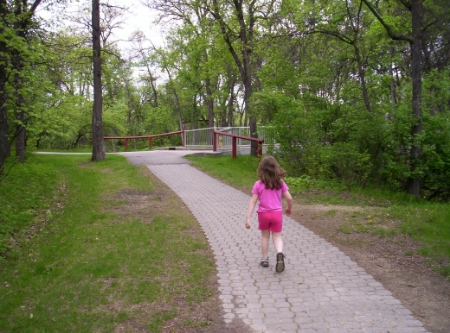
Image is “A Walk in the Park” © Janet Best | Dreamstime Stock Photos

Starting 2013: The Bitter and the Sweet

The tree; the culprit.

The tree; the culprit.

I’m welcoming the New Year a few days late, thanks to getting hit with the flu just as the old year was ending.

As usual, I don’t want to take down my Christmas decorations. Sometimes, I love the after-Christmas “hush” more than Christmas itself. I like to sit in my dining room and stare at my little three-foot fiber optic Christmas tree on its table in the corner, where it has sat for the past seven Christmases. I like to reflect and be still, preferably with a manageable coating of snow outside, to make everything sparkly and glistening.

But this may be my little fiber optic tree’s last year of service. Because of:

The Bitter

Eight days ago, while I lay half-asleep in bed and the flu wormed its way through my body and I flashed hot, cold and sweaty, there was a crash in the dining room.

My cat, ever-fascinated with my little Christmas tree, had jumped up on the table, gotten scared by the aluminum foil I’d put around the base of the tree for the sole purpose of keeping him away, and bolted, bringing the tree down with him.

“Good God, no,” I thought. “Don’t do this to me today, when the ibuprofen hasn’t even kicked in yet.”

I shuffled into the dining room and the tree lay on the wood floor like a slain animal, ornaments rolling in all directions. My cat lurked in the bedroom doorway, surveying the destruction with rapt curiosity, as though he had no part in it.

At first I thought that, amazingly, no ornaments had been broken. Everything seemed to be intact. But then, the carnage came into focus: a red flocked deer leg, delicate and tiny, lay on the floor a few inches from the tree. It was from my very favorite ornament ever — my vintage deer with the white wreath around its neck.

“No!” I moaned, cradling the tiny leg in my palm. “No!”

But more carnage was revealed: the Puss ‘n Boots ornament my boyfriend gave me for Christmas last year was smashed to pieces. A paw here, a boot there, his sword flung all the way to the kitchen doorway.

I cleaned up the mess, sweating and shaky. By the time I talked to my boyfriend, I had accepted that things I love had been ruined. Puss ‘n Boots, at least, was beyond repair.

And, I discovered later, the tree no longer lights up.

“That is so terrible,” my boyfriend kept saying into the phone. “That is so terrible.” He’s very into Christmas ornaments, and he’d helped me decorate the tree.

His reaction helped me put things into perspective. It was disappointing, but not terrible. My good friend’s dog had passed away unexpectedly just a couple of days before, and I stared at my little twelve-year-old kitten culprit and felt such deep gratitude that he’s healthy enough to wreak havoc with the Christmas tree.

Fast forward several days, to:

The Sweet

I read a beautiful, magical short story by Kij Johnson, called “26 Monkeys, Also the Abyss.” Of course, it’s a fact that I am completely obsessed with monkeys, but I don’t love this short story just because of the monkeys. I love it because it reminds me of how the everyday and the tragic are always, always, interlaced with the magical and the mysterious, if we look closely enough.

And: New clients to begin the New Year, clients whose authenticity, brilliance, and willingness to go there remind me of why I wanted to become a coach. Thank you, brave souls.

And: I’m flu-free!

I hope that you, too, are starting the New Year with hearty glimpses of health, magic, brilliance, and bravery.

Things I’m noticing while I write, list #1

I’m fascinated by the challenges creators face, which is why I coach creators. And I’m my own client — in fact, I’m the one client I’d better love working with, because I’m kinda stuck with me, for life. So every now and then I’m going to post some brief lists of things I’m noticing while I work on my novel draft. Just little tidbits that might spark you to say, hey, that’s true for me too. Or, hmm — that’s not true for me at all. Interesting.

Here’s today’s list.

1. When the writing feels really daunting, there’s only one thing to do: Write one sentence. Really. And there’s only one thing to do after that: write one sentence. I can go the whole way that way.

2. Sometimes, I worry I’ve gone in the wrong direction with a scene. But the problem isn’t that I’ve gone in the wrong direction. The problem is the worrying about it. I don’t have to worry. When I’m clear that it’s wrong enough, I will change it. That’s all I need to know.

3. Discomfort is okay. It’s not a sign I should stop, or that what I’m writing is terrible. It does mean I need to be extra-compassionate with myself in order to keep moving forward. Yes, my dear. This is hard. The fact that it’s hard doesn’t mean something is wrong.

4. I love the process. And I thank my lucky stars that I do. When I get very results-focused, I can forget that I write to begin with because I love it. Because it’s my particular way of expressing what I value, who I am. The process can be its own reward, even when I desire a certain outcome. Valuing, even relishing, the process does not mean I am giving up on results. It just means I get to be happy now, instead of then.

What are you noticing while you create? I’d love to hear from you.

Also: while I’m on the subject of writing, as I’ve mentioned previously, I’m both a participant and a coach for Jenna Avery’s Just Do the Writing Accountability Circle. Tomorrow, March 15, is the last day to sign up for the next session. If you’re having trouble committing to a daily writing habit, I highly recommend you check out this group! Click here to find out more.

And: I offer free Creativity Consultations. If you’re feeling stuck or scared and having a hard time moving forward on your creative project, check them out here.

There’s Enough Time. Really.

This week, I had quite a few conversations with creators around the idea of time. The general consensus seemed to be: There’s not enough. I have too much to do — which, by the way, I wish I’d done ten years ago — and there’s too little time in which to do it. Frequently when I hear people say this, I want to agree with them, so they know that I sympathize. “Oh, I know, isn’t it true? There’s just not enough. There’s too much to do. No wonder I can’t get to my (fill in the blank — novel, artwork, yoga, relationship).”

Here’s the thing, though: It’s not true that there isn’t enough. Whether we’re talking about time or money or love.

What we really mean when we say “There’s not enough time” is: I’m trying to outrun my painful thoughts about not accomplishing enough. I’ve got to hurry up. So let me add more and more to my to-do list, so I don’t see more evidence for what I haven’t accomplished. If I can get it ALL DONE, I’ll feel better.

Do you see how backwards this kind of thinking really is? (Because, fellow creators, it doesn’t come down to time — it comes down to our thinking. Always.) The thought “There isn’t enough” creates feelings of urgency, anxiety, sadness, regret. In a nutshell, fear. Then we take desperate, urgent, anxious actions based on these feelings. And no matter what results we get, they don’t feel like enough, because all of these results have, as their backdrop, the belief that there just isn’t enough. We’ve cycled right back into our original thought, and it all continues — no matter what we have, no matter what we’ve created, it isn’t enough, because our belief is that there isn’t enough.

Unless: We look at our thoughts about time. Is it true that there isn’t enough? How much time do I need to feel good about creating today? To feel good about anything today?

I’m going to suggest that the “time issue” is not about time at all. It’s really about our stressful thought that, at some point, our lives will be over and we won’t have done what we wanted to do with them. It’s really about our lack of self-acceptance, about the fact that we’re afraid to meet ourselves, to accept ourselves, exactly where we are. It’s about a belief that there’s a finish line we should have crossed years ago, and we haven’t even made our way to the starting gate.

What if we were to believe that what we need more of is not time, but acceptance — of ourselves, of our lives, of where we are, who we are, now? How would we move forward from that belief? If we are okay exactly as we are, my hunch is that we are more likely to create for thirty minutes today and celebrate that, rather than wait two years for the day when we have a block of six hours to create.

As my awesome mentor Jenna Avery says, “Start small and start now.” What we really fear is not that there isn’t enough time, but that we won’t accept ourselves if we don’t live up to our perfectionistic standards, if we don’t do more, more, more. Do me a favor: do less. Write for fifteen minutes. Sketch for fifteen minutes. Dance for fifteen minutes. And do it today. It takes no time to accept yourself exactly where you are, right now.

A couple of announcements, & gratitude!

A while ago, a coaching buddy of mine and I were talking about how it’s difficult to experience a feeling of abundance in our lives when we don’t take time to really feel it, don’t slow down enough to be with it, don’t take a moment to say “thank you.”

I can forget. I can get so focused on what I don’t have that I get into “lack” mode. And then I see evidence of lack, everywhere. When I remember, when I notice what I have been given — often with no conscious effort on my part –I see evidence of this in my life, everywhere.

We can practice this. We can practice by noticing. Yesterday I noticed I was a little bit tired, and although I felt a tremendous urge to rush over to the computer to respond to email, I decided to sit quietly on my couch. My cat woke up from his nap, looked at me, and immediately came over and jumped into lap. I listened to his purr and felt it reverberate through my hands, my chest, my abdomen.

I breathed in the abundance of this moment. I was sitting on a soft down throw my mother gave me for Christmas last year. My living room felt warm, even though it’s in the 40s outside. The sun was sneaking out, after a clouded-over, gray morning. It felt good, to just be, to realize I had all I needed in that moment. And in this one.

Here’s to noticing what we have. Here’s to saying “thank you.”

And here’s to more abundance — a couple of announcements:

* Last week, I officially became a Martha Beck Certified Life Coach (woo-hoo!).  In celebration, I’m offering four FREE half-hour coaching sessions — first come, first-served. Bring me any issue (it doesn’t have to be related to creativity, but it certainly can be) and we’ll do a little exploring and get you a little less stuck. To get your free session, email me at jillwinskicoaching@gmail.com and mention “free session” in the subject line.

* Also, I am super-excited to announce that I will be a coach for the next session of Jenna Avery’s Just Do the Writing Accountability Circle, which begins Nov. 28. I’d love for you to join us — it was the amazing encouragement of this circle that helped me finish a first draft of my novel last session, which I wrote about here. To sign up for the Writer’s Circle, click here. The last day to register is tomorrow, Nov. 23, so don’t wait!

Wishing you the gift of noticing what’s beautiful, good and right in your life.

Image is PUMPKINS © Paul-andré Belle-isle | Dreamstime.com