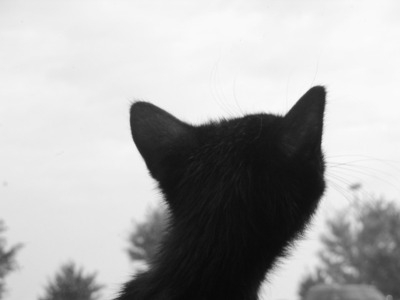
Practicing Reverent Curiosity

kittenwindow

“Novel-writing is not so much a profession as a yoga, or ‘way’, an alternative to ordinary life-in-the-world.” — John Gardner

On Thanksgiving Day, I was hit with a bad cold. I spent two days pretending the cold wasn’t actually there and that I could go on functioning as if I were well. By the third day, I had to admit that I really was sick — and this meant I had to let go of my need for that thing I fondly call “momentum.”

I like the feeling of momentum. I like the idea that I am moving forward. The trouble comes in when I start to believe I can truly control exactly how things move.

When I returned to working on my novel after being sick, I felt disconnected from what I really wanted to say, at a loss with the story. My characters seemed like they were doing silly things, just marking time, moving around the rooms of my pages for no purpose.

Yesterday, during a group writing sprint with other members of Jenna Avery’s Just Do the Writing Accountability Circle, I went to the page with the same feeling of stuckness and confusion about my story that I’ve had lately. “This is terrible!” a familiar voice inside me piped up. “You have to get over this! You need to make this story work!” (No pressure, or anything.)

When, as a coach, I work with a client who’s stuck, I often use metaphor to help them see their situation clearly. I asked for a helpful image to come to me, and the image that bubbled up in my mind was my cat, when we have a vet visit scheduled and he’s caught on to the fact that the cat carrier has entered the room. Once he gets under the bed, my mission is impossible: he knows he can hide there from me as long as he wants, because I can’t physically pick up the bed and get him out. And we’ve certainly had incidents where I’ve chased him around the house, and sometimes I end up standing the cat carrier on its end and stuffing him into it while he braces his back legs on its sides and writhes furiously. I hate this. And, of course, so does he.

There was this one time, though, when my cat snuck under the bed and I just didn’t have it in me to figure out a way to get him out and stuff him into the cat carrier. I set the carrier on the floor in the living room and sat down in a chair. I called the vet and told them we probably weren’t going to make it to our appointment.

The vet’s assistant was completely laidback about this. “Come on in if you catch him,” she said, laughing.

I sat quietly in my chair. Really, chasing my cat just didn’t seem worth it. He wasn’t ill; it was just a routine check-up since he’s getting into his senior years.

Within fifteen minutes, my cat emerged from beneath the bed and tentatively walked into the living room. He saw me sitting in the chair, looking quite harmless; he approached the cat carrier and sniffed at it. Then he began to investigate the carrier very thoroughly, with a kind of reverent curiosity. It was like he wanted to fully understand this instrument of his impending doom.

I realized that I was treating my story the way I treat my cat when I just want to get him to the damn vet. I stuff him into a box and endure his plaintive meows, feeling like a world-class jerk. Because I want to fix things. Because I want to make sure I’m doing the right thing. Because I’m driven by a kind of urgency.

Obviously, sometimes my cat needs to go to the vet and we do engage in this routine (though I’ve gotten quieter and better at doing sneak attacks, so neither of us struggle as much these days — usually).

But does this pattern work with my novel, with my characters?

I was stuck and overwhelmed because I was invested in the idea that my story needed to be “fixed,” that it contained a problem that needed to be solved. There are certainly plenty of books and advice out there that can tell me how to “fix my novel problem.” And some of them can be very helpful, at certain points in the process. But I realized yesterday that approaching my story in this top-down way, as if it was something I could fix from the outside by forcing it into a box of my choosing, was disconnecting me from anything the story had to show me, from letting it reveal itself.

When I sat back, relaxed, and made the choice to approach my story with that reverent curiosity my cat is so good at, I discovered a fascinating thing: I got really interested in my story again. I wasn’t trying to make it be, or do, anything; I was just interested in it. That all-important question, “What is it about?” welled up in me, and I realized I knew exactly what it was about. I also realized that this novel does not want to be as long as I’ve been thinking it should be. It just might want to be a novella. It knows what it is; and I’ve been so set on “fixing it” that I’ve lost touch with the thread that connects one scene to the next.

My story started to move again. I wrote beyond the 0ne-hour set time of the group sprint, I was so caught up in it.  Hallelujah! I understand my story better. And why did I get into this writing in the first place, if not to better understand?

Can I approach my life, too, from this space of reverent curiosity? Can I step back, breathe for a moment, and give my life the space and kind attention it needs in order to be what it wants to be?

Work With Me: I love helping writers and artists who are feeling stuck. Check out my one-on-one coaching, here.

Image is “Wonder Cat” © Eden Daniel | Dreamstime.com

Support, Part 2: Reaching Out of the Vortex

In my last post, I talked about how things that look, sound and smell like support may not actually be support. And I mentioned that dark, swirling, sucking vortex I can get into when I need support but I’m not sure how to get the kind I need — or maybe I’m not even sure what kind of support I need to begin with.

So, if we find ourselves in the vortex, how do we get out?

First, remember that being in the vortex is only scary because we believe we shouldn’t be there and we need to get out, now.

As Byron Katie might say, we should be there because we are there. Being there is just another opportunity to look around and learn.

Second, there are two parts to support — self-support and support from others that feels supportive. (Hiro Boga commented, brilliantly, in a recording I listened to on her site recently, that it’s not support if it doesn’t feel supportive!)

So, when you’re swirling in the Vortex of Need, ask the wise part of yourself: What might feel truly supportive right now? And see what bubbles up. (It’s really important to ask your inner wisdom for this information, and not the part of you that is spinning in need and angry or sad or desperate that it’s not getting its needs met. This part of you does not need to be burdened with questions right now.)

Usually, I get a response that is very simple. It might be to call a particular person I trust. It might be to tell any one of my private, virtual support networks that I’m feeling like crap. It might be to do the dishes, watch a movie, take a nap, open a particular book. It’s never about the long-term– it’s always a very small, specific thing I can do in this moment.

Thinking too long-term can make getting the kind of support we need feel completely overwhelming. It’s not possible to know what kind of support we’re going to need next year, or even next week. We can only know what we need in this moment.

So, what if it feels hard to get in touch with our inner wisdom? What if it’s crowded out by the voice of need? What if our inner wisdom suggests calling Suzy, but even though we know we deeply trust Suzy, we’re so far into the vortex that, in this moment, calling Suzy feels unsafe?

This is where the self-support piece comes in. Sometimes, I need to practice self-support before I can reach out for support from others. This is one of those steps that often gets left out. “Reach out, ask for help, have courage,” we’re told. But there’s an intermediate step that gets skipped over, and that’s kindness.

Can I access that space within me that is exquisitely kind, warm, and accepting — toward myself? It’s often easy to generate this type of kindness toward others, but what about turning it inward, toward me? This means having total reverence and respect for whatever it is I’m feeling. Giving it permission to be there, and legitimacy, and validity.

We often skip completely over this step, and then wonder why, when someone else does offer support, it doesn’t “land.” Usually it doesn’t land because there’s still a part of us judging and beating ourselves up for feeling whatever it is in the first place — for needing to begin with.

The beautiful thing is that when I practice this type of kindness toward myself, I am put immediately in touch with my inner wisdom. There’s nothing like kindness to lift me out of the vortex of need. In fact, reminding myself to treat myself with exquisite kindness points out the places where I’ve been harsh, or where others (not meaning to) have triggered my own harshness toward myself. But it’s hard to see the harshness when I’m living by its rules. I need to shift into kindness in order to see it.

So, the quick version of this process:

1) Accept that you are In the Vortex of Need, and it’s totally okay. You should be there because you are there.

2) Ask your inner wisdom, what might feel truly supportive right now? See what bubbles up. Take action on whatever comes.

3) If you can’t access your inner wisdom, or if what bubbles up from your inner wisdom feels too scary, practice kindness toward yourself. Deep, radical, kindness. Notice what shifts in practicing this. If it feels hard or awkward, imagine the kindness you’d feel toward a struggling friend, or your cat or dog — someone you find it really easy to be deeply kind to — and direct that kindness toward yourself.

The quick and dirty version:

Skip to number #3 and keep doing it. From deep, radical kindness, all Vortexes of Need dissolve and transform into Foundations of Support.

I’d love to hear your thoughts on how you reach out for support. What makes it feel easier?

And: Wednesday, Nov. 21, is the last day to sign up for Jenna Avery’s Just Do the Writing Accountability Circle. I’m both a participant and a coach for this group, and I highly recommend checking it out if you’re looking for support in creating a daily writing habit!

Image is YELLOW VORTEX © Carsten Erler | Dreamstime.com

Support: What it is, what it’s not

I’ve been thinking a lot lately about the concept of support. There are few things more frustrating and alienating than reaching out for support and getting something that feels like the opposite, even if support is what’s intended.

I like to say, “It begins with us.”

And this is true. Self-support is the cornerstone of any true support. Sometimes it’s impossible to let support from “out there” truly land if we aren’t first practicing self-support.

But, said one of my dear clients the other day, what if I’m in a place where I simply can’t access my self-support system? What if I’m so turned around and upside down and frantic that I just can’t get to that place in myself?

Of course. This happens. That’s when support from “the outside” can be most valuable. That gentleness from a trusted friend that we can’t seem to manage to give ourselves. That perspective we just never would have considered if left to our own devices. So. Important.

But: sometimes it’s when I’m in need of support the most that I am the most reluctant to reach out for it. In fact, this is usually what happens. The more I feel like a black hole of sucking need and desperation, the less I want to reach out, and the more I get sucked down, down, down into the vortex.

And, sometimes, into that vortex is exactly where I need to go. It’s not about “forcing myself” out of the vortex to ask for help. This doesn’t necessarily feel safe, and I’m also not necessarily in a place where I can receive any external support when I’ve gotten to this point. (More on this in my next post.)

True support meets us where we are. It doesn’t force, criticize, or project. It’s curious, interested; it asks open-ended questions. (See my previous post on true support, here).

There are, however, a few things I’ve learned that can contribute to getting into the vortex of swirling, sucking need that feels like it will never end and will never be met. Here are some I’ve noticed:

1) Calling something “support” that doesn’t feel like support. For example, the internet. There’s more than enough information for any of us to digest on any topic we want to do a search on for the next bazillion years. But information is not the same thing as support. And getting overwhelmed by information definitely doesn’t feel like being supported. Posting a question on Facebook and getting fifty different “here’s what I’d do” responses is not necessarily support; it just might be overwhelm — more to process, more to weed through.

2) Going for support, again and again, to people who just aren’t able to provide the kind of support you need. Different people provide different types of support. One of my ingenious ways of alienating myself for many years was going to people who weren’t able to give me the kind of support I needed in the past, hoping that this time they’d show up for me the way I wanted them to. It didn’t happen. Embracing reality: always a good thing.

3) Expecting people to support you exactly the way you’d like them to, without telling them the kind of support you need. If you just want to vent and you don’t want to be coached, you can let someone know that — even if they’re your coach. I used to have a habit of just accepting whatever support was offered, even if it was so not what I needed in that moment. I’d feel alienated by the other person, but really I was alienating myself by not stating what I needed. (This isn’t always, easy, of course. Sometimes, we’re just not sure what we need. We need to be really, really compassionate with ourselves here. We’ll figure it out.)

4) Thinking we need a LOT of support, when what we actually need is the right KIND of support. (See #1.)

5) Thinking that what feels supportive to others should feel supportive to us — even when it doesn’t. The same week my cat died two years ago, I had a trip planned. I literally had no energy for travel and wanted to be at home with my grief, even though other people told me the trip “might be just what you need!” It wasn’t; puttering at home feeling totally safe to burst into tears at any moment was.

In my next post, I’ll write about what to do — or not do — when we’re swirling in the vortex of need and we don’t know how to support ourselves.

What are your thoughts about support? Where do you look for it? What works for you and what doesn’t? I’d love to know.

Work with me! Check out my one-on-one coaching opportunities.

Image is LADY-BIRD © Nikolajs Strigins | Dreamstime.com

How to Take a Pretend Vacation

I realized this afternoon that, kind of without being totally aware of it, I’ve slid into one of my oh-so-rare “pretend vacations.”

A Pretend Vacation is something I give myself when I’m a little overwhelmed, a little run-down, or maybe just feeling more reflective and inward than usual. It might last a day; it might last three. It’s never a planned thing. It’s like a need that asserts itself in a small voice; if I don’t listen, it speaks up more sharply.

I suspect the need for a Pretend Vacation has been coming on for several weeks. Maybe it’s kicked in because of the events of this past weekend: Saturday morning, while eating a Larabar, my crown popped off and I almost swallowed it. Did you know when a crown comes completely off, it has a little pointy screw thing sticking out of it? Be warned.

Then, Saturday night, there was a party. I have an interesting relationship with parties. If I can get myself to them, I like them. For about twenty minutes. I stayed at this one for three hours. (But it was a Halloween party! Costumes! Gummy worms soaked in vodka! And “Poltergeist” and “The Exorcist” on TV all night! My inner scary-movie-lover was happy; my inner HSP-introvert was overstimulated.)

I spent Wednesday morning in my lovely dentist’s office as she dealt with the gaping hole in my gum. Throw in a couple other unexpected and stress-inducing issues over the past few days and, on cue, need for Pretend Vacation makes itself known.

A real vacation is planned in advance. It involves taking time away from work, maybe more time with family or friends, or not, maybe traveling to another place, or not, but there is an interruption of one’s normal routine.

In my Pretend Vacations, my normal routine goes on. I just scale it back as much as possible. I do everything that’s a priority — keep my appointments with clients, do my writing, feed my cat. But I cut out anything I might normally do but don’t really need to. Today, for example, laundry and the dishes fell right off the list so I could sit quietly and drink Midnight Velvet tea. I haven’t been on social media much. I let a couple of phone calls go to voice mail.

The intention behind a Pretend Vacation is to create a container for the part of me that is vulnerable, tired, and wants to move inward to reflect or rest, while not completely removing myself from my life. I’ve noticed on a Pretend Vacation, choices I might usually waver over become really, really clear. I also notice I’m gentler with myself than I usually am, and I’m less likely to respond to things that don’t really require a response from me.

There’s something to be learned here, methinks. Can I invoke this Pretend Vacation mindset for the parts of me that are vulnerable, overwhelmed, or scared, while still attending to the parts of me that don’t want to leave the party because “The Exorcist” hasn’t gotten to the really good parts yet?

I can’t necessarily care for all these parts of myself — all these selves — on the same day, in the same moment, but I can let them all know that they will get their say, they will be heard by me, and none of them will be left out.

I can also let the sensation-seeking parts of me — my inner adventurer, my inner scary movie buff — and the driven, perfectionistic parts — know that, in the long run, a Pretend Vacation is good for all of us.

And a Real Vacation is even better.

For a related article, click here.

Image is TOY ON THE BEACH © Cristina | Dreamstime.com

What It Really Means to be an Introvert

Many of the creators I work with as a coach are introverts. But some of them have a hard time owning this.

I get it. As I was growing up, I learned that there were these “social definitions” of introvert and extrovert. These definitions went something like this: An introvert is quiet, shy, and keeps to herself. She’s not very friendly. She needs to learn to be more outgoing and social. An extrovert is gregarious, charming, engaging. She has lots of friends. People really like her and she’s socially well-adjusted.

Naturally, most people wanted to feel they were the second thing, not the first. I know I absolutely hated being labeled “shy”, and my parents and most of my teachers wanted me to “combat my shyness.” I always felt they were not seeing me for who I was.

I think a lot of people nowadays (I hope, anyway) have a better understanding of what an introvert actually is. But I know here in the U.S. there’s still a cultural bias in favor of extroversion. Recently when I mentioned to someone that I work mostly from home, she said, “Oh, gosh, you don’t want to spend too much time at home. You might become an introvert!”

It hit me once again that the reason some of us struggle to accept ourselves as introverts — and try to live contrary to our nature — is because these old “social definitions” of introvert and extrovert are still intact.

Actually, the definitions of introvert and extrovert that I prefer may be even older. Jung defined introversion as “predominately inward-looking” and extroversion as “predominately outward-looking.” What this means is that introverts are naturally inclined toward delving into their inner worlds, whereas extroverts are more inclined toward interacting in the outer world. And everyone is at a different point on the introvert-extrovert spectrum — we’re all some of both, but to varying degrees.

I am probably not the most extreme of introverts, but I’m way up there on the scale. This DOESN’T mean that I am always quiet and that I dislike being around people. It means that because I take anything I experience in the outer world and turn it inward in order to process it, I need a certain amount of downtime in which to chew on things and recharge my battery.

So, my bandwidth for socializing and being in the “outer world” is finite, and if I don’t respect that and push myself beyond my limits, I’ll become overwhelmed and depleted. What overwhelmed and depleted looks like in me is spacey, irritated, tired, quiet, withdrawn, and yes, sometimes it may look “shy” or create shy behavior — in other words, I may become fearful in situations that normally wouldn’t cause me to be so because my battery isn’t charged and I know I don’t have the energy to deal with them at the moment.

This is why traditional school and work settings are often not ideal for introverts — we run out of steam and feel like we’re running on empty, try to retreat to our inner worlds to get recharged, and discover this isn’t acceptable in the company of (most) others. Then we start judging ourselves for not being able to act like extroverts, who recharge their batteries by being with people and engaging in activities.

Because I understand my introversion so well (though I’m always learning more about my needs) I love the fact that I’m an introvert and I fully embrace it. This hasn’t always been true for me, but now that it is, my life flows so much more smoothly. When I can accept the ebbs and flows of my own energy and give myself the downtime I need — and own that in the company of others — I can show up fully myself.

I’d love to see all introverts embrace their nature and see how it works for them as creators. I’ll talk more about this future posts.

Check out Marti Olsen Laney’s “The Introvert Advantage” or Susan Cain’s “Quiet” if you’d like to read more about embracing your introversion (or understanding a loved one who’s an introvert). And if you struggle with accepting and working with your introverted nature, check out my one-on-one coaching opportunities. I love working with introverts!

Image is FEATHER IN THE FOREST © Paige Foster | Dreamstime.com

Being Patient with Impatience

Two Saturdays ago, I had one of my marathon journaling sessions where I seemed to be taking dictation from the universe, and I made a long list of things I want to do to move forward with my coaching practice, my writing, and my life in general. All the things on this list felt exciting, organic, juicy. Enthusiasm flooded through me. Clarity! Momentum! I couldn’t wait to get started. I was sure that in, say, a week, all these things would be effortlessly accomplished and I’d be “on my way” — whatever it is that means.

Fast-forward nine days, to this past Monday evening. I’d spent the most of the day, and the night before, in frustration, confused, vaguely panicked, complaining to my boyfriend that I just couldn’t get anything done and I didn’t know why. This shouldn’t be so hard, I kept hearing myself say. I’m so behind schedule, I kept hearing myself say. Somehow my exuberance, enthusiasm and excitement had become — what? I couldn’t pinpoint it at first, and then I realized what it was: Impatience. Of the extreme variety.

There’s a line from the movie “Postcards from the Edge” — I’m paraphrasing here, but it goes something like this: “In the movies, you have a big realization and your life changes. In life, you have a big realization and six months later your life changes.”

Sigh. Yes, it’s true — things generally do not happen as quickly as I think I would like them to happen. And often, I get clear on a vision of what I want, and then realize — thud! — that there’s a lot of letting go and restructuring that has to happen before that vision can actually become reality. And sometimes, in the process of moving toward that vision, I change, or I understand myself better, and I realize that what I thought I wanted is no longer what I do want.

Sometimes it really will be six months before the change I want is ready to be born. Sometimes it will be a year. Sometimes (as in this case — I think!), it just means I have to do what I want to do over the course of a month instead of a week.

What’s clear is that that graspy, impatient, want-it-yesterday voice inside me is not the voice of my inner wisdom — though it certainly seems like the truth when I’m in the grip of it. But I can tell it is not the truth by the behavior and results it creates — haste, confusion, spinning in circles, accidentally deleting almost-finished blog posts, stubbing my toe on the chair leg.

Impatience is one of the most common themes with my coaching clients. And I’m right there with them. We want to hurry the process so we can get to the reward, forgetting that the only tangible reward is right here, in the process.

The voice of impatience ruins the process.

I picked up SARK’s wonderful book “Make Your Creative Dreams Real” last night for a little bit of guidance. I knew I needed to get grounded. Can you believe the book actually opened to a section titled “Impatience”? I didn’t even remember ever reading this section of the book before, but there it was.

She writes: “Being patient with our creative dreams, our lives, and ourselves can only shelter and nourish us. I am learning ways to be patient with myself and my creative dreams.”

Most of us are pretty familiar with impatience. Our culture teaches us impatience and instant gratification. Be counter-culture. Nurture patience in yourself, even though it may feel unnatural and unfamiliar.

There’s an upside to impatience, too, though. It means you’re opening up to bigger stuff. It means you’re getting ready for newness. Sometimes, it means you’re no longer willing for things to be as they have been because you’ve outgrown them.

And that is all good! But if it’s not moving as quickly as you’d like it to, see if you can hold that impatience in patience’s wider lens. See if you can take a more expansive view — what Martha Beck calls “eagle vision” — and allow yourself to feel that deep knowing that you are exactly where you are supposed to be right now, doing exactly what you are supposed to do in this moment.

Image is AUTUMN STAIRCASE © Lbwhaples | Dreamstime.com

Being in the In-Between + Happy Fall

It occurred to me a while back that part of the reason I love fall (besides the excuse to start wearing my beloved sweaters again) is because fall is about “the great in-between.” To me, it always feels like a passageway, like a crisp tunnel of flaming reds and yellows in which things I no longer need start to fall away, and I begin to get a sense of what will flow in to replace them.

I’ve always been fascinated — and, until recently, tormented by — those in-between, liminal periods in life.

For most of my life, I hated the uncertainty that comes with being “in-between” so much that I rushed to get out of it as quickly as I could — only to end up right back in it. As in, I wanted to get out of the discomfort of “not knowing,” so I took action just to get away from my discomfort, and ended up creating more discomfort. (When we take action based on a desire to avoid something, we actually create more of what we’re hoping to avoid. It’s pretty annoying how that works.)

These days, I’m learning to truly be in the in-between.

And fall is a great reminder of how beautiful the in-between can be, if I open to it, breathe into it. There’s a sacred hush to fall, if I give myself a chance to feel it. The old is dying off, and the “what’s to come” isn’t here yet. When it comes down to it, there’s nothing but uncertainty, but during transitional periods we feel this more acutely. In fact, after fall there will be a winter in which much goes underground. In our personal winters, things are being worked out in us, things we may not be able to see or articulate. And it can feel terrifying, if we look at the unknown as anything but our friend.

I’ve come to feel that this dying-off, if you want to call it that, can be exciting, even exhilarating. And maybe that’s why I see fall as all about beginnings as well.

What are you open to letting go of as the fall season begins? What are you willing to let fall away? What might you be open to beginning?

Announcements:

I have two openings for new coaching clients starting in October. I help sensitive creators who struggle with overwhelm make their creativity a priority  — you can find out more here!

The last day to register for our next session of Jenna Avery’s Just Do the Writing Accountability Circle is this Thursday, Sept. 27. I’ve written quite a bit here about the huge benefits I’ve experienced in being a participant in this group, and I’m also Jenna’s co-coach. If you need to create a regular writing habit, or would like some group support as you write, be sure to check it out!

Image is WET LEAF© Jay O’brien | Dreamstime.com

Understanding our Limits: Self-care and Creativity

The foundation of a healthy relationship with our creativity is self-care.

And yet, creators know that the act of creativity is also part of our self-care. So how do we negotiate the needs of our physical and emotional selves, and the needs of our spirits?

When I was in my twenties, I thought that all the good feelings I got from creativity meant I could override and ignore pesky things like getting enough sleep, eating well, and having relationships that felt reciprocal and nurturing. I thought I could be this wildly creative being and forget the fact that I am a physical being with physical needs that are not going to go away just because I ignore them.

This turned into a vicious cycle which went something like this: let me create more because it helps me feel bigger and better and then I’ll have more energy to pour into my relationships and I won’t need as much sleep or to slow down and pay attention to what I’m eating and whether or not I really have enough money to support myself. Okay, now I’m really wired and tired and my relationships aren’t very healthy and I don’t have enough money; but let me create more because it makes me feel good and then I don’t have to think about these other annoying things that are part-and-parcel to living.

This was a form of grandiosity, though it took me a while to understand it. I didn’t want to believe that I had limits, that I was a physical being with a body that got tired and emotions with messages like, “I’m burning out here.”

I did burn out on this way of life at about age twenty-five. I ended up in the hospital, dehydrated, with an unbearably sore throat and an enlarged liver and spleen. (“You don’t actually need your spleen,” the doctor told me. “But it’s nice to have it.”)

It took me a couple of years to transition into a different, slower, deeper way of living. At first I thought this way of life would be boring; I kept trying to go back to my old way of burning the candle at both ends and ignoring my physical and emotional needs. But my body wouldn’t let me.

This was the beginning of transforming my definition of creativity and what it means to be “a creative person.” I still created, regularly, but over time I saw that I did it because I wanted to, because it felt good — I stopped using it as a means to avoid the aspects of life that I had previously considered too “mundane” to deal with.

I also realized that I had a deeply held belief that if I wasn’t actively creating something — something tangible in the form of words on paper or paint on canvas or what have you — I had no value as a person. I was so wrapped up in this “doing” mentality that it took me a while to realize that, for me, “creating” had become completely entangled with proving my own worth as a human being.

What I now know is that creativity is a natural extension of my human experience. Though it’s vital to have a regular habit or routine of creating, it’s also important to recognize that I don’t make creativity “happen.” It’s a natural part of being; a regular habit of creating is simply a way of building a container to give our creativity a form and a shape. (If you want to test me on this, try not creating anything for a day and see how impossible it is.)

That’s why, now, when I work with creators, I’m committed to helping them accept not just the natural ebbs and flows of the creative process, but their own personal, internal and external ebbs and flows. When I work with someone and hear something like “I need to be writing eight hours a day,” I ask, why? Because you really love writing all the time and it brings you joy and purpose, or because you believe it’s giving you worth and value to be constantly doing?

It’s so important to examine what we believe and how it drives our actions. What I know for sure is that if I drive myself too hard — even in the name of creating — I will wear out my body, and it’s this body that, ultimately, carries out my purpose on this earth.

The fascinating paradox of all this is that when I build into my life the care for my body that it truly needs, I accomplish more of what I deeply want to accomplish — not less — and I feel better about what I do.

I’d love to hear your thoughts on this. How do you balance self-care and your creative projects?

If you need a reminder to listen to your body, hang out with animals. When they’re tired, they rest.

Image is LOUNGING CAT © April Turner | Dreamstime.com

Rounding Up the Usual Suspects

A few days ago while logging in my daily progress for Jenna Avery’s Just Do the Writing Accountability Circle, I had one of those light-bulb moments where I got something, not just intellectually but viscerally.

One of the questions we group members respond to daily asks us what negative thoughts we noticed that came up around our writing. Time and time again, I find myself writing some variation of this: “My writing isn’t exciting or important enough. It’s not active enough. There’s not enough drama. No one will find it interesting.”

I’ve examined these thoughts for quite a while now. Are they true? Yes, sometimes my writing lacks drama. Sometimes it could be more active. But all the time? No, these things are not always true. As for “it’s not exciting or important enough” and “no one will find it interesting,” well, that’s all subjective. I’ve certainly gotten enough feedback on my writing by this point in my life to know that quite a few people have found it interesting. And, as any writer knows, the most important thing when it comes to writing is that you, the writer, are fascinated by what you’re writing.

But this particular day as I logged in these thoughts once again, cringing at their familiarity, I got it. BUSTED! I said out loud, practically snorting my iced coffee.

These thoughts about my writing are my particular form of resistance.

Here’s how I know this: There have been days when I’ve known, without a doubt, that what I’ve written has been exciting and dramatic. To me, anyway. My whole body felt engaged as I wrote; I could hardly tear myself away from the page. These days don’t happen all that often. When they do, they’re wonderful, but that doesn’t usually completely quiet my inner critic.

On these days, when I logged in my progress, what negative thoughts had I noticed? “This writing isn’t serious enough; it’s too active; it should be quieter and deeper; it moves too quickly.”

Yep, when my inner critic knew it couldn’t convince me the writing wasn’t exciting or active, it just went ahead and criticized the writing for not being other things.

Here’s what I realized: My inner critic just wants to protect me from putting my writing out there for scrutiny. So it dredges up anything it can find “wrong” about the writing that I just might believe. When it knows I won’t buy into the idea that the writing isn’t exciting or active enough, it criticizes the writing for having these very qualities.

My inner critic wants to convince me that unless I’m sure my writing is all things to all people, I shouldn’t put it out there — it’s not good enough yet, it’s not ready. And it’s a lose-lose proposition, a double bind. It’s like not showing up to the party unless you’re sure you can be every kind of guest. Since you know you can’t be, you don’t show up at all.

So I’ve finally gotten it: “Not exciting and active enough, not important enough” or any variations thereof, are my “usual suspects” when it comes to my writing. They’re my go-to thoughts that exist solely to keep me from having faith in my own stories, from investing them with enough importance to go all the way with them, to truly own them. 

Noticing these thoughts — my usual suspects — allows me to round them up, corral and question them. In fact, I’m getting so used to them I don’t even always have to question them anymore. I just notice them and say, ah, there you are again.

One time when I was in grad school, a well-known writer visited one of my writing classes and was asked her best advice for writers. “Know what kind of writer you are,” she said. She said she loved Dickens, but she was never going to write like him.

And I’m probably never going to write action-packed thrillers that pump you full of adrenaline. It’s not the kind of writer I am. Luckily, I don’t have to be every type of writer. Knowing that — finally getting it at a deep level — frees me up to trust in the writing that is mine and mine alone.

Do you need support in creating a daily writing habit? Tomorrow, Aug. 30, is the last day to sign up for the next session of Jenna Avery’s Just Do the Writing Accountability Circle. I’ve been a member of this group for going on a year, and I’m also Jenna’s co-coach. It’s a tremendously powerful way to become aware of what keeps you from writing, and to get group support while you do it. Check it out here!

Image is ANTIQUE BLACK TYPEWRITER PAINTED WITH LIGHT
© Dariusz Sas | Dreamstime.com

Your True Supporters

Sometimes, when you’re in a place of confusion and feeling really vulnerable about it, someone else steps in and seems to think they know exactly what’s going on for you. And they label what’s happening for you and because you’re not sure what’s up for you, you start to think, maybe they’re right.

Many years ago, when I’d left college and I was in a total “liminal period”, as Martha Beck would call it, I started seeing a psychotherapist who really liked to label my behavior as “healthy” or “unhealthy”. This produced a pretty strong “ick” in the pit of my stomach (a sure sign that her way of working wasn’t right for my essential self), but back then I had a longstanding habit of ignoring my body and its messages.

So for six sessions, I saw this therapist and kept hoping she’d see me. I thought if I just explained myself well enough, she’d “get me.” I remember sitting in her big black pleather chair, telling her that memories from a particular period of my life had been flooding my thoughts, and they felt vivid and compelling. It felt like there was a message for me in those memories, I told her, and I wanted to be open to it.

She stared at me flatly and said, “You’re focusing on the past so you don’t have to move forward. You’re procrastinating.”

I wondered if she was right.  I mean, it sounded right. But it didn’t feel right.

What I know now, years later, is that for me, moving forward often looks like going back — temporarily. Frequently, before I arrive at my next stop, I need to backtrack a little and gather, process, and integrate what happened “back there.” Maybe I’ve frozen certain emotions that need to be brought up, or maybe so much happened in such a short period of time that I haven’t yet caught up with myself.

I’ve written previously about the importance of trusting your own, unique process. If your process looks like mine at all, and you’re feeling like it’s messy and confusing and you’re pretty raw about it right now, don’t let anyone else tell you you’re “not moving forward.” Trust me: You are moving forward. You’re just doing it in your own circular, zig-zag way. It’s all good.

Your true supporters on your journey will honor, support (and even be enchanted by!) your process, your way of working through and coming out on the other side.

That’s why, a year or so after I stopped seeing the aformentioned therapist, I found an amazing therapist who deeply honored my process. And because she honored my process, I learned to honor it myself. And I came to trust myself. Fiercely.

Your true supporters may not “get you” one hundred percent, but they have faith that you know what’s best for you, and they remind you that you are on your own side. They know, as Rainer Maria Rilke said, that “what goes on in your innermost being is worthy of your whole love.”

But the most important thing, of course, is that you know this.


Image is BUTTERFLY © Martina Misar-tummeltshammer | Dreamstime.com