Being in the In-Between + Happy Fall

It occurred to me a while back that part of the reason I love fall (besides the excuse to start wearing my beloved sweaters again) is because fall is about “the great in-between.” To me, it always feels like a passageway, like a crisp tunnel of flaming reds and yellows in which things I no longer need start to fall away, and I begin to get a sense of what will flow in to replace them.

I’ve always been fascinated — and, until recently, tormented by — those in-between, liminal periods in life.

For most of my life, I hated the uncertainty that comes with being “in-between” so much that I rushed to get out of it as quickly as I could — only to end up right back in it. As in, I wanted to get out of the discomfort of “not knowing,” so I took action just to get away from my discomfort, and ended up creating more discomfort. (When we take action based on a desire to avoid something, we actually create more of what we’re hoping to avoid. It’s pretty annoying how that works.)

These days, I’m learning to truly be in the in-between.

And fall is a great reminder of how beautiful the in-between can be, if I open to it, breathe into it. There’s a sacred hush to fall, if I give myself a chance to feel it. The old is dying off, and the “what’s to come” isn’t here yet. When it comes down to it, there’s nothing but uncertainty, but during transitional periods we feel this more acutely. In fact, after fall there will be a winter in which much goes underground. In our personal winters, things are being worked out in us, things we may not be able to see or articulate. And it can feel terrifying, if we look at the unknown as anything but our friend.

I’ve come to feel that this dying-off, if you want to call it that, can be exciting, even exhilarating. And maybe that’s why I see fall as all about beginnings as well.

What are you open to letting go of as the fall season begins? What are you willing to let fall away? What might you be open to beginning?

Announcements:

I have two openings for new coaching clients starting in October. I help sensitive creators who struggle with overwhelm make their creativity a priority  — you can find out more here!

The last day to register for our next session of Jenna Avery’s Just Do the Writing Accountability Circle is this Thursday, Sept. 27. I’ve written quite a bit here about the huge benefits I’ve experienced in being a participant in this group, and I’m also Jenna’s co-coach. If you need to create a regular writing habit, or would like some group support as you write, be sure to check it out!

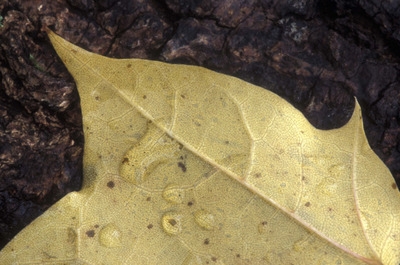
Image is WET LEAF© Jay O’brien | Dreamstime.com

Understanding our Limits: Self-care and Creativity

The foundation of a healthy relationship with our creativity is self-care.

And yet, creators know that the act of creativity is also part of our self-care. So how do we negotiate the needs of our physical and emotional selves, and the needs of our spirits?

When I was in my twenties, I thought that all the good feelings I got from creativity meant I could override and ignore pesky things like getting enough sleep, eating well, and having relationships that felt reciprocal and nurturing. I thought I could be this wildly creative being and forget the fact that I am a physical being with physical needs that are not going to go away just because I ignore them.

This turned into a vicious cycle which went something like this: let me create more because it helps me feel bigger and better and then I’ll have more energy to pour into my relationships and I won’t need as much sleep or to slow down and pay attention to what I’m eating and whether or not I really have enough money to support myself. Okay, now I’m really wired and tired and my relationships aren’t very healthy and I don’t have enough money; but let me create more because it makes me feel good and then I don’t have to think about these other annoying things that are part-and-parcel to living.

This was a form of grandiosity, though it took me a while to understand it. I didn’t want to believe that I had limits, that I was a physical being with a body that got tired and emotions with messages like, “I’m burning out here.”

I did burn out on this way of life at about age twenty-five. I ended up in the hospital, dehydrated, with an unbearably sore throat and an enlarged liver and spleen. (“You don’t actually need your spleen,” the doctor told me. “But it’s nice to have it.”)

It took me a couple of years to transition into a different, slower, deeper way of living. At first I thought this way of life would be boring; I kept trying to go back to my old way of burning the candle at both ends and ignoring my physical and emotional needs. But my body wouldn’t let me.

This was the beginning of transforming my definition of creativity and what it means to be “a creative person.” I still created, regularly, but over time I saw that I did it because I wanted to, because it felt good — I stopped using it as a means to avoid the aspects of life that I had previously considered too “mundane” to deal with.

I also realized that I had a deeply held belief that if I wasn’t actively creating something — something tangible in the form of words on paper or paint on canvas or what have you — I had no value as a person. I was so wrapped up in this “doing” mentality that it took me a while to realize that, for me, “creating” had become completely entangled with proving my own worth as a human being.

What I now know is that creativity is a natural extension of my human experience. Though it’s vital to have a regular habit or routine of creating, it’s also important to recognize that I don’t make creativity “happen.” It’s a natural part of being; a regular habit of creating is simply a way of building a container to give our creativity a form and a shape. (If you want to test me on this, try not creating anything for a day and see how impossible it is.)

That’s why, now, when I work with creators, I’m committed to helping them accept not just the natural ebbs and flows of the creative process, but their own personal, internal and external ebbs and flows. When I work with someone and hear something like “I need to be writing eight hours a day,” I ask, why? Because you really love writing all the time and it brings you joy and purpose, or because you believe it’s giving you worth and value to be constantly doing?

It’s so important to examine what we believe and how it drives our actions. What I know for sure is that if I drive myself too hard — even in the name of creating — I will wear out my body, and it’s this body that, ultimately, carries out my purpose on this earth.

The fascinating paradox of all this is that when I build into my life the care for my body that it truly needs, I accomplish more of what I deeply want to accomplish — not less — and I feel better about what I do.

I’d love to hear your thoughts on this. How do you balance self-care and your creative projects?

If you need a reminder to listen to your body, hang out with animals. When they’re tired, they rest.

Image is LOUNGING CAT © April Turner | Dreamstime.com