Why creating consistently is so important

artistbox

I’ve been thinking back over the past year and remembering the awesome clients I’ve worked with.

If there’s anything that’s repeatedly reared its head this year for my clients, it’s been the issue of making creativity so BIG that it feels scary, 0verwhelming, and like there just isn’t enough time to take it on. Almost everyone I worked with had a belief that went something like this: “I can’t [write, paint, dance, draw — fill in the blank] unless I have more time available to me. So I need to completely overhaul my life in order to focus on my creativity. But completely overhauling my life isn’t possible right now. So I’m hoping that by next year I’ll be able to let go of something so I can focus on my creativity.”

What I’ve found so interesting — because these beliefs can certainly come up for me as well — is that it’s the beliefs themselves that make the idea of creating feel so hard, not creating itself.

When we make it so big we feel like we need a ton of time in which to do it, we ensure that it will never be done, because we know on some level it’s highly unlikely that we’ll ever have huge blocks of empty time available to us on a regular basis. And when we tell ourselves we need more time in which to do it, and we don’t make that time or don’t see that we can have it, we put off our creative work (I prefer to call it creative play). And when we put something off, we create resistance.

The very act of putting it off (when something deep inside us knows it’s vital that we do it) creates stress around the idea of doing it — our minds spin out stories like, “Well, if I’m putting it off, it must be because it’s terribly hard and scary and BIG, and wow, that feels really frightening, which makes me just want to put it off more.”

We don’t often question thoughts like these. But they start to wield a huge amount of power over us, because these thoughts create feelings, and our feelings create our actions (or lack of actions) in the world. Often, our most powerful thought around our creativity is “I’ll do it when I don’t feel so overwhelmed and uncomfortable around it.”

But the reason we are overwhelmed and uncomfortable around it is because we make it so BIG.

Since September of 2011, I’ve been a participant in Jenna Avery’s Just Do the Writing Accountability Circle. (We like to call it simply The Writer’s Circle). I’ve also been co-coaching the Circle with Jenna for about a year now. In the Circle, we focus on writing a little each day, building our writing habit over time, with group support.

What I’ve learned over my time in this group is that:

1) Writing consistently (even if I’m not always crazy about what I’m writing — and believe me, I’m often not) feels a lot better than writing once every couple of months. When I create regularly, I remind myself of what matters to me, of what makes me me. When I put off creating, I can lose sight of why I create. I create because I have an instinctive drive to make meaning, to understand myself, to understand the world. I create because it’s fun (which isn’t to say it’s not challenging! But I love a good challenge.).

When I put it off until I have “more time,” I get confused about why I do it in the first place. I start to think it has something to do with money, with success, with notoriety. When I actually do it, I’m reminded that it has little to do with this things. It’s an act of adventure, a quest for discovery.

2) When we make our creativity really BIG — as opposed to integrating it into our daily lives in small, sustainable ways — it becomes something outside of ourselves, something to grasp for, something we believe will make us complete if we can only get to it. (Julia Cameron calls this turning our creativity into “Art with a capital A.”)

The truth is, creativity is always inside of us. It’s part of us. The “me” that lives my daily life and does mundane things like doing the dishes is not a completely separate entity from the part of me that sits down and writes. In fact, sitting down and writing is, in some ways, not that much different from doing the dishes. The hardest part is starting. Once I begin, I proceed one sentence — one dish — at a time.

When the parts of us that create and the parts of us that do the dishes are friendly with each other, and not strangers, they work together oh so much better, and we show up in the world as more integrated beings.

3) We all — whether we are seasoned writers, or writing our very first poem, whether we are published writers or not, whether we make our living from our writing, or not — struggle with clusters of the same (or similar) issues. It’s incredibly heartening to realize that that issue you’ve struggled with in isolation, sometimes for years, is not just shared by others, but is deeply understood.

If you’d like support in creating a more regular writing habit — whether you’ve been away from writing for years, or you’re just starting out — check out The Writer’s Circle. Our next session begins December 31, and tomorrow, Dec. 28, is the last day to register. New members can save $30 on their first session with the coupon code NEWYEARWRITE. We’d love to have you there!

Image is “Artist Box 2” © Andreea Stefan | Dreamstime.com

Making Room for Everything

icetree2

Twenty years ago, my father gave me a copy of Women Writers at Work: The Paris Review Interviews. I devoured this book. I was fascinated by the words these writers used to talk about their process, and about their relationship with writing. In some ways, I cared less about what they wrote than I did about what writing meant to them, its connection to who they were, and how it made meaning for them.

One interview stood out for me the most, and that was with the Irish writer Edna O’Brien, author of many novels and short stories. I returned to this interview again and again. Edna O’Brien was so herself, so full of contradictions and so open and accepting of them. The interviewer mentioned Philip Roth’s rumored habit of writing 365 days a year, and asked O’Brien if she shared this habit. O’Brien said that, actually, she did not write 365 days a year, because she wasn’t “that kind of writer”.

She also said that part of her process was moping. “Did Philip Roth say that he moped?” she asked.

I loved this. Permission to mope! I was twenty-one at the time, and for years I’d been trying to get rid of the part of myself that was mopey, the part of myself that actually needed time to just be with whatever I was feeling. Because no one in my life had ever given me permission to just feel bad, and to take that time. And, up until I read that interview with Edna O’Brien,  I wasn’t able to give it to myself.

I didn’t know it could be okay to allow myself to feel like crap, let the feeling be there, and trust that this feeling would move and shift, as feelings do. I’d always been taught to get rid of that stuff — if I allowed myself to get in touch with it at all — and to move on from it as soon as possible.

Which hadn’t worked very well.

Because sometimes I need that. I need to putter around the house with these feelings and just give them space. I need to allow them to be, instead of engaging in the inner tug of war that happens when I feel a little mopey and I tell myself, “You don’t have any real reason to feel that way!”

As a creativity coach, a frequent refrain I hear from clients who feel sad, tired, or drained is, “I know I shouldn’t be letting this get in the way of my [writing, artwork, coaching — fill in the blank].”

We have this idea that “creating” means doing — all the time — and we’re somehow “lesser” writers or artists or coaches if we’re not always doing something that looks like creating. We get into either/or: I’m either doing it, or I’m not.

We don’t see the whole of our process — we might not even be aware of the whole of our process. The root system of a tree plunges deep, deep into the earth — but we only see the leaves, the trunk, the branches. And in winter, we don’t even see leaves.

What if we included all of ourselves in our process? What if we saw all of our emotions as helping our creative process, rather than hurting it?

In attending to, making space for, our own emotional core, we feed our creativity, over time.

We may have days that look like puttering, or moping, or just curling up on the couch, and not much else.

But that doesn’t mean we aren’t creating. We’re just in the unseen part of our process. We’re just underground for a while.

The holidays are a good time to remember this. We often feel frazzled, disconnected from ourselves, due to extra activities and the “stuff” the holidays can bring up for many of us. What part of your process are you in right now? Can you give yourself permission to be there, or at least, to notice where you are? Can you make room for whatever’s coming up?

Happy Holidays to my beautiful readers, clients, and friends.

And here’s a great opportunity for more permission-building insights: My friend and mentor, the wonderful writer and coach Jenna Avery, is offering a free teleseries on Creative Productivity, starting this Wednesday, Dec. 19! You can check it out and sign up, here.

Image is Ice Tree © Brent Hatcher | Dreamstime.com

Practicing Reverent Curiosity

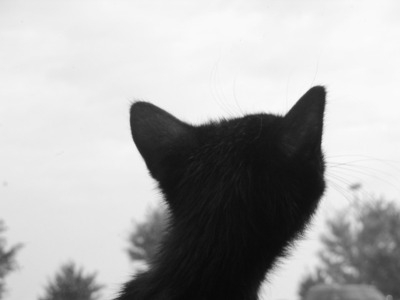
kittenwindow

“Novel-writing is not so much a profession as a yoga, or ‘way’, an alternative to ordinary life-in-the-world.” — John Gardner

On Thanksgiving Day, I was hit with a bad cold. I spent two days pretending the cold wasn’t actually there and that I could go on functioning as if I were well. By the third day, I had to admit that I really was sick — and this meant I had to let go of my need for that thing I fondly call “momentum.”

I like the feeling of momentum. I like the idea that I am moving forward. The trouble comes in when I start to believe I can truly control exactly how things move.

When I returned to working on my novel after being sick, I felt disconnected from what I really wanted to say, at a loss with the story. My characters seemed like they were doing silly things, just marking time, moving around the rooms of my pages for no purpose.

Yesterday, during a group writing sprint with other members of Jenna Avery’s Just Do the Writing Accountability Circle, I went to the page with the same feeling of stuckness and confusion about my story that I’ve had lately. “This is terrible!” a familiar voice inside me piped up. “You have to get over this! You need to make this story work!” (No pressure, or anything.)

When, as a coach, I work with a client who’s stuck, I often use metaphor to help them see their situation clearly. I asked for a helpful image to come to me, and the image that bubbled up in my mind was my cat, when we have a vet visit scheduled and he’s caught on to the fact that the cat carrier has entered the room. Once he gets under the bed, my mission is impossible: he knows he can hide there from me as long as he wants, because I can’t physically pick up the bed and get him out. And we’ve certainly had incidents where I’ve chased him around the house, and sometimes I end up standing the cat carrier on its end and stuffing him into it while he braces his back legs on its sides and writhes furiously. I hate this. And, of course, so does he.

There was this one time, though, when my cat snuck under the bed and I just didn’t have it in me to figure out a way to get him out and stuff him into the cat carrier. I set the carrier on the floor in the living room and sat down in a chair. I called the vet and told them we probably weren’t going to make it to our appointment.

The vet’s assistant was completely laidback about this. “Come on in if you catch him,” she said, laughing.

I sat quietly in my chair. Really, chasing my cat just didn’t seem worth it. He wasn’t ill; it was just a routine check-up since he’s getting into his senior years.

Within fifteen minutes, my cat emerged from beneath the bed and tentatively walked into the living room. He saw me sitting in the chair, looking quite harmless; he approached the cat carrier and sniffed at it. Then he began to investigate the carrier very thoroughly, with a kind of reverent curiosity. It was like he wanted to fully understand this instrument of his impending doom.

I realized that I was treating my story the way I treat my cat when I just want to get him to the damn vet. I stuff him into a box and endure his plaintive meows, feeling like a world-class jerk. Because I want to fix things. Because I want to make sure I’m doing the right thing. Because I’m driven by a kind of urgency.

Obviously, sometimes my cat needs to go to the vet and we do engage in this routine (though I’ve gotten quieter and better at doing sneak attacks, so neither of us struggle as much these days — usually).

But does this pattern work with my novel, with my characters?

I was stuck and overwhelmed because I was invested in the idea that my story needed to be “fixed,” that it contained a problem that needed to be solved. There are certainly plenty of books and advice out there that can tell me how to “fix my novel problem.” And some of them can be very helpful, at certain points in the process. But I realized yesterday that approaching my story in this top-down way, as if it was something I could fix from the outside by forcing it into a box of my choosing, was disconnecting me from anything the story had to show me, from letting it reveal itself.

When I sat back, relaxed, and made the choice to approach my story with that reverent curiosity my cat is so good at, I discovered a fascinating thing: I got really interested in my story again. I wasn’t trying to make it be, or do, anything; I was just interested in it. That all-important question, “What is it about?” welled up in me, and I realized I knew exactly what it was about. I also realized that this novel does not want to be as long as I’ve been thinking it should be. It just might want to be a novella. It knows what it is; and I’ve been so set on “fixing it” that I’ve lost touch with the thread that connects one scene to the next.

My story started to move again. I wrote beyond the 0ne-hour set time of the group sprint, I was so caught up in it.  Hallelujah! I understand my story better. And why did I get into this writing in the first place, if not to better understand?

Can I approach my life, too, from this space of reverent curiosity? Can I step back, breathe for a moment, and give my life the space and kind attention it needs in order to be what it wants to be?

Work With Me: I love helping writers and artists who are feeling stuck. Check out my one-on-one coaching, here.

Image is “Wonder Cat” © Eden Daniel | Dreamstime.com